


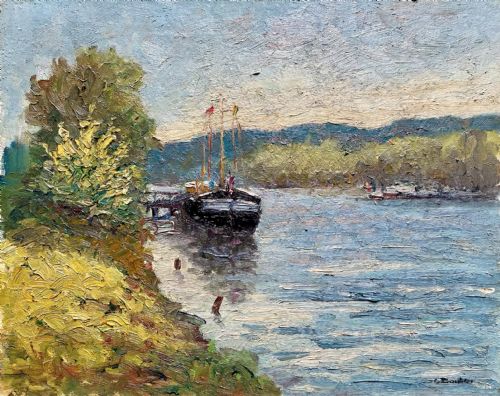
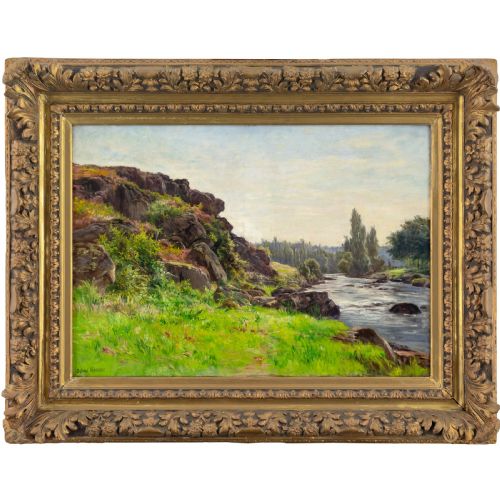
Canvas River Art
Canvas river art brings historic waterways into a room through oil paint applied directly to woven fabric.
Canvas River Art
Canvas river art comprises oil paintings depicting waterways, bridges, and riparian scenes created across the nineteenth and twentieth centuries. These works range from grand Victorian depictions of the Thames to quieter French Impressionist studies of the Seine and Dutch canalscapes.
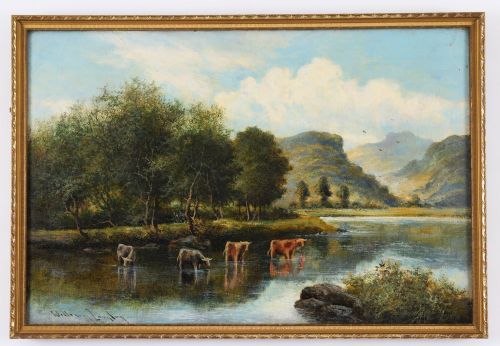
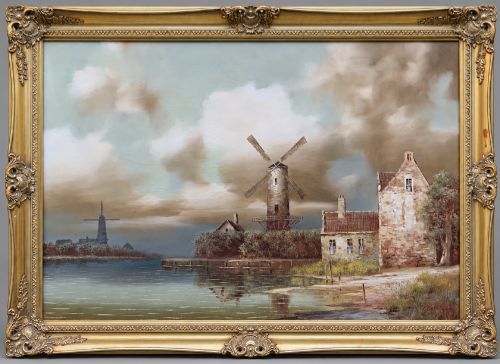
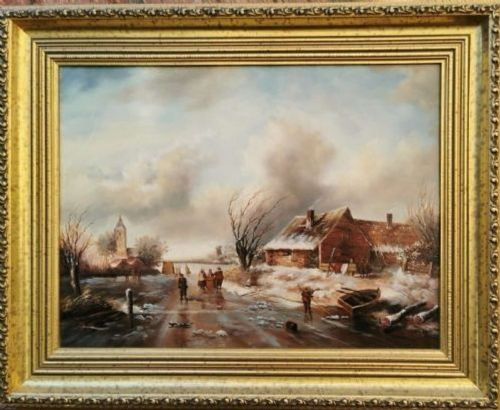
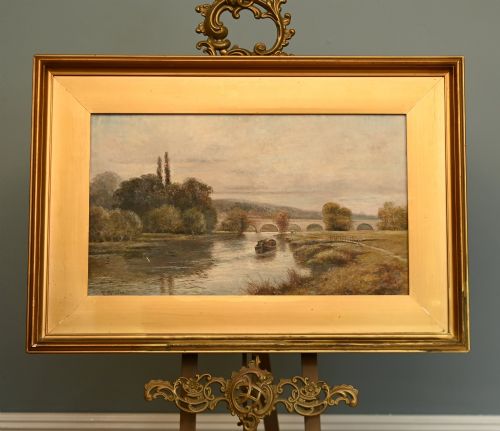
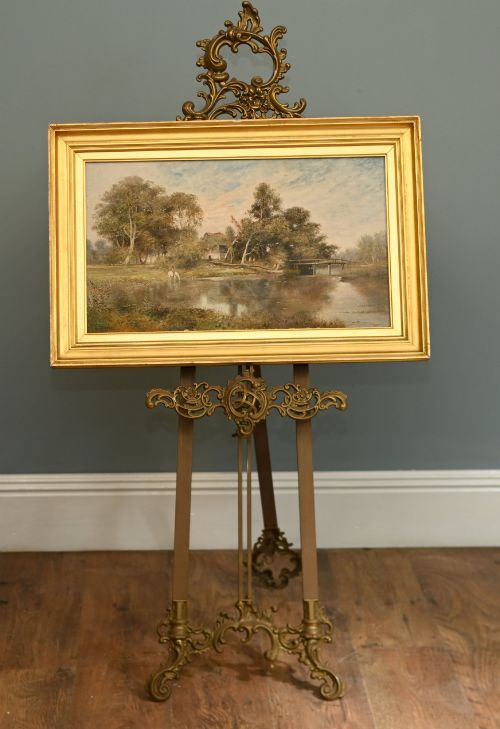
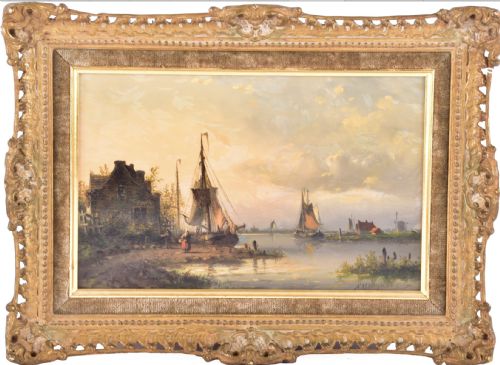
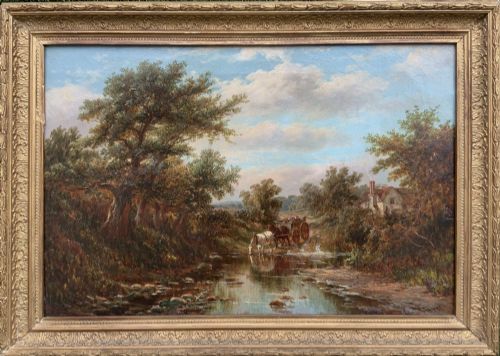
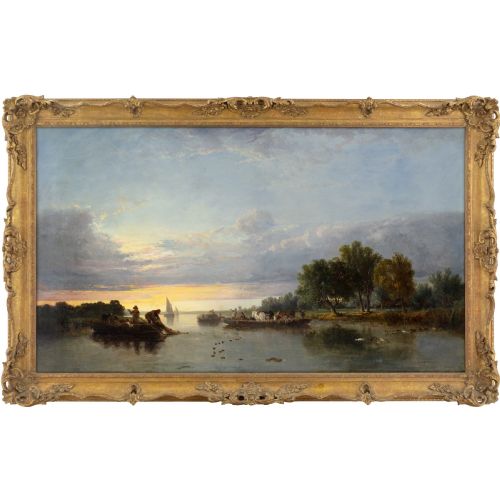
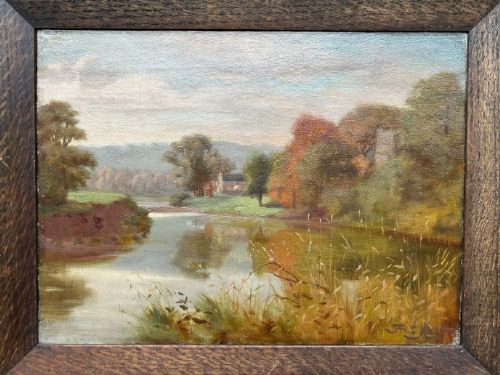
Buyers seeking this phrase encounter framed oils on canvas or canvas board, frequently capturing atmospheric light over water. Landscapes featuring figures fishing, boats moored near stone arches, or rural streams dominate the selection available.
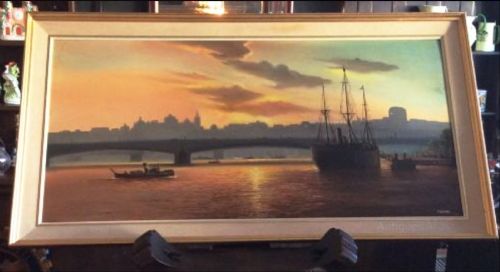
The selection spans British and European schools, moving from early nineteenth-century Romantic studies to mid-twentieth-century Post-Impressionist views. Each piece records a specific topography, whether a Scottish river in the Highlands or a bustling Parisian bridge.
Materials and construction
Makers built these works using oil paint applied to prepared canvas stretched across wooden frames, occasionally utilising gesso grounds to seal the weave. The physical support provided a textured surface that held thick impasto and allowed artists to manipulate light across water and sky.
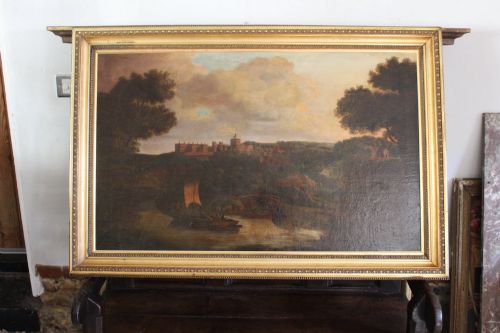
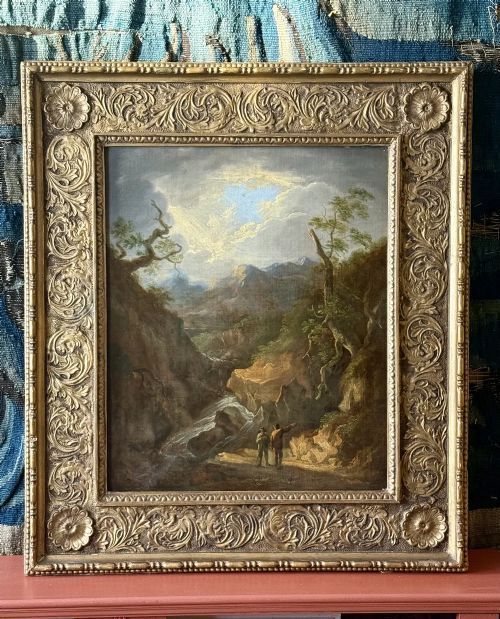
Gold leaf frames frequently accompany the canvases, adding structural weight and a distinct visual border that reflects the period of creation. The combination of oil pigments, organic canvas, and timber stretcher bars defines the material reality of every piece.
Several canvases swap human subjects entirely for working dogs, capturing Labradors and collies keeping watch near rural waterways.
Distinctions in quality
Quality rests in the handling of light and the surety of the brushwork, where confident application distinguishes a masterly river scene from a routine topographical record. The best works capture atmospheric movement in the water and sky rather than relying on dry, mechanical transcription.
The harmony between the canvas and its original frame plays a part in the overall integrity of the piece. Superior examples retain their early or period frames without heavy restoration to the painted surface.
Kenneth Cozens·George Graham·Frederick Marriott·Gabriel Mathieu·Francis Moltino·Albert Bierstadt·Willem Bos·Henri Ottmann·Sir Alfred East·Albert Rieger·Herbert Royle·Paul Desire Trouillebert·Henry H Parker·Sydney Yates Johnson·John Horace Hooper·John Ferneley Senior·Honore Cavaroc·Archibald Kay·James Edward Grace
The Canvas River Art Glossary
- Canvas
- A heavy woven fabric used as a support for oil painting. It provides a flexible yet durable surface that artists tension over wooden stretcher bars.
- Impasto
- Paint applied thickly to a canvas so that it stands out in relief. This technique allows brush marks or palette knife strokes to catch the light.
- Gesso
- A primer mixture consisting of a binder mixed with chalk or plaster. Painters applied it to raw canvas to create a smooth, stable ground for oil pigments.
- Impressionism
- A nineteenth-century art movement characterised by relatively small, thin, yet visible brush strokes. Artists focused on accurate depiction of light and its changing qualities in outdoor river settings.
- Stretcher bars
- The internal wooden framework that holds a canvas taut. Traditional frames allow the maker to adjust the tension of the fabric as it ages.
Canvas River Art: Frequently Asked Questions
How old are these paintings?
The works span from the early nineteenth century through to the mid-twentieth century. Many date from the Victorian and Edwardian eras, reflecting changing artistic movements across Britain and Europe.
Earlier pieces from the eighteenth century appear alongside modern modernist interpretations from the nineteen-fifties and sixties.
Where were these river scenes painted?
The locations include notable British waterways such as the Thames, northern rivers, and Welsh streams. Continental European spots like the Seine near Giverny and Dutch canals also feature prominently.
Artists frequently painted en plein air or developed studio works from detailed preparatory oil studies made directly on location.
How do I hang a heavy oil painting?
These works require secure wall fixings suited to the weight of both the canvas and its wooden frame. Picture hooks rated for the specific weight distribution ensure safe support.
Positioning the painting away from direct sunlight and damp environments protects the oil pigments and the underlying canvas weave over time.
How can I tell a Victorian painting from a later one?
Victorian river scenes often employ a tighter, more narrative realism with rich, darker earth tones. Subject matter frequently includes figures in period dress working boats or crossing stone bridges.
Later twentieth-century works lean towards impressionistic brushwork and lighter palettes, focusing primarily on light and reflection rather than precise topographical detail.