





Riverside Landscape Painting
A riverside landscape painting captures the quiet light and water of riverbanks, bringing a sense of open air and tranquil depth into a room.
Riverside Landscape Painting
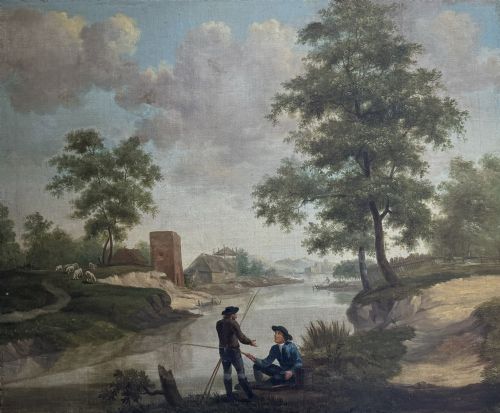
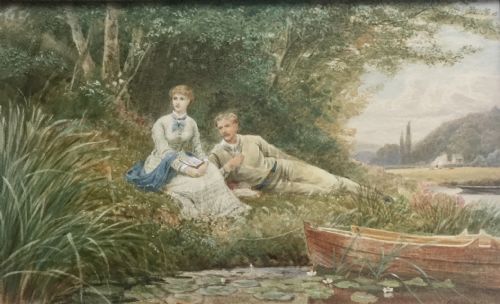
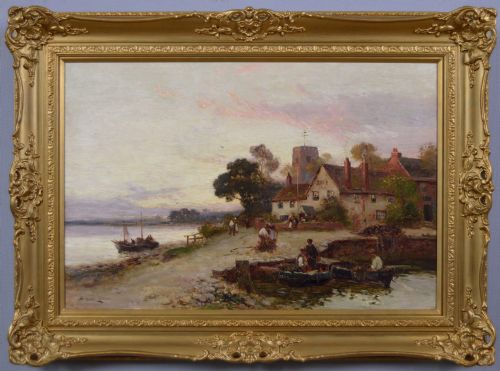
A riverside landscape painting depicts river scenes ranging from figures fishing under trees to rural inns, towpaths, and distant city views along the water. These works appear in various mediums, capturing pastoral calm and busy waterways alike.
The versions most commonly met on this page span the eighteenth century up through the early twentieth century, taking the form of oil paintings on canvas or board and delicate watercolours on paper. Artists recorded these views with varying degrees of realism and impressionist light.
Styles represented here stretch from early British school and Georgian works to Victorian, Edwardian, and British Impressionist pieces, alongside European realism and Dutch school examples. Each period brings its own palette and handling of river light.
How they were made
Artists painted these works primarily in oil paint on canvas, linen canvas, or wood panels, building rich textures and deep tones. Watercolours on paper offered a lighter, more fluid method for capturing the transparent qualities of river water and sky.
Frames frequently complement the artwork using giltwood and gold leaf, adding a traditional metallic border that enhances the warmth of the pigments within. The ground materials range from stretched canvas to solid wood supports.
Several canvases quietly record cows pausing to drink and small boys fishing, reminding us that riverbanks have long been places of absolute idleness.
What varies in quality
The distinction between ordinary and exceptional works rests on the artist's handling of light reflected off water and atmospheric perspective in the sky. Stronger compositions command attention through confident brushwork and a balanced sense of space.
Material preservation also sets pieces apart, particularly the stability of the oil paint or watercolour pigments and the integrity of the original wood or giltwood frames. The sensitivity of touch in depicting figures or architecture along the riverbank reveals the hand of a more accomplished painter.
George Graham·Noel Harry Leaver·Alois Arnegger·Ebenezer Wake Cook·Stuart Lloyd·R. E. Richardson·G E Roberts·Thomas James Lloyd
The Riverside Landscape Painting Glossary
- Watercolour painting
- A work executed with water-soluble pigments on paper. This medium allows for luminous washes that suit the depiction of skies and moving water.
- Oil painting
- A piece created using pigments bound in a drying oil, typically applied to canvas, linen, or wood. This medium permits thick impasto or thin glazing.
- Giltwood
- Wood carved and covered with a thin layer of gold leaf or gold paint. It is commonly found on traditional frames surrounding antique paintings.
- Impressionism
- A style focused on capturing light and fleeting moments with visible brushstrokes. This approach appears frequently in nineteenth and early twentieth century works.
Riverside Landscape Painting: Frequently Asked Questions
How do I date a riverside landscape painting?
Dating relies on stylistic clues in the clothing of any figures, the architectural details of buildings like inns or castles, and the framing methods used. Material tests on the canvas or paper also help confirm the active period of the artist.
Signatures, inscriptions on the reverse, and historical records of the painter provide the most precise markers for establishing when the work was created.
What is the difference between oil and watercolour river scenes?
Oil paintings use heavy pigments suspended in oil on canvas or wood, offering rich textures and deep colour saturation. They tend to have a robust surface that reflects light differently than works on paper.
Watercolours utilise translucent pigments on paper, creating a bright, airy effect that relies on the white paper beneath to shine through the washes of river and sky.
Where were these river scenes typically painted?
Many works depict British rivers, canals, and Norfolk waterways, reflecting local pastoral life, rural bridges, and bustling town quays. Other examples look to European rivers, such as Parisian views.
Artists often worked plein air along the waterbanks to capture accurate natural light before finishing the composition in the studio.
How should I display an antique landscape painting?
Hang the painting away from direct sunlight and damp environments to protect both the canvas or paper and the wooden frame from warping or fading. Stable indoor humidity is essential for preserving organic materials.
Pairing the piece with appropriate wall lighting highlights the brushwork and gold leaf gilding without generating excessive heat that could damage the paint surface.