

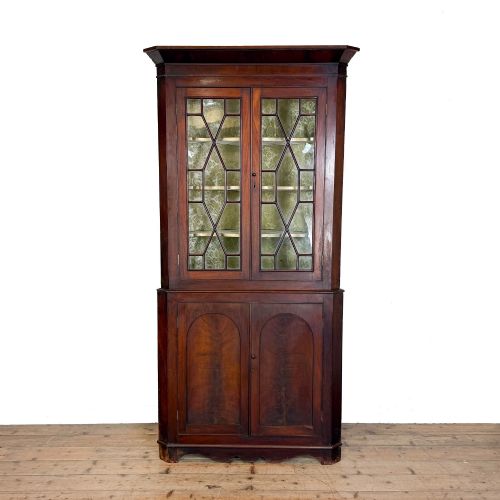
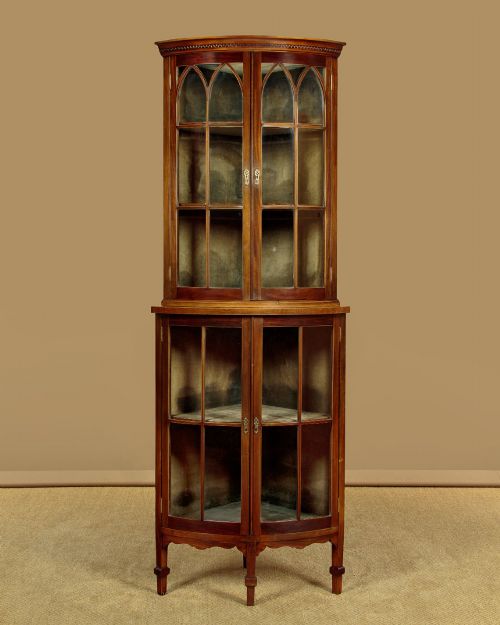


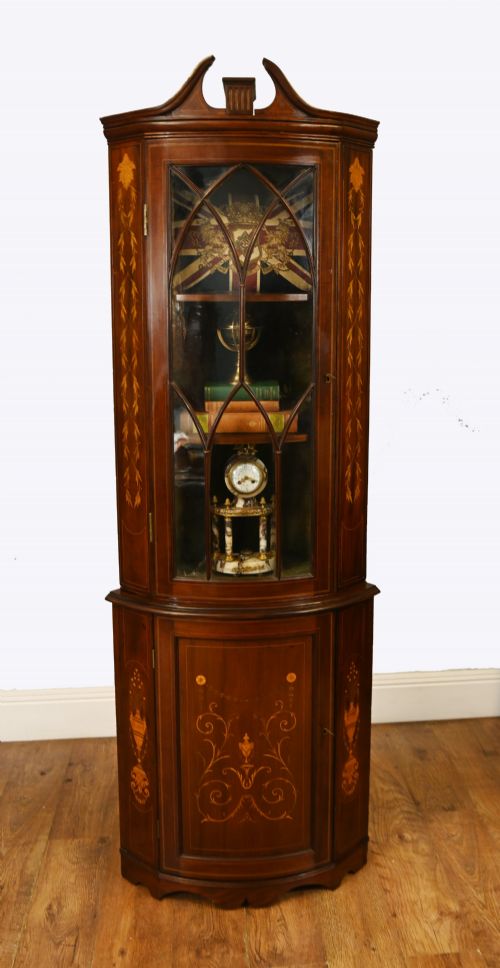


Vintage Corner Bookcase
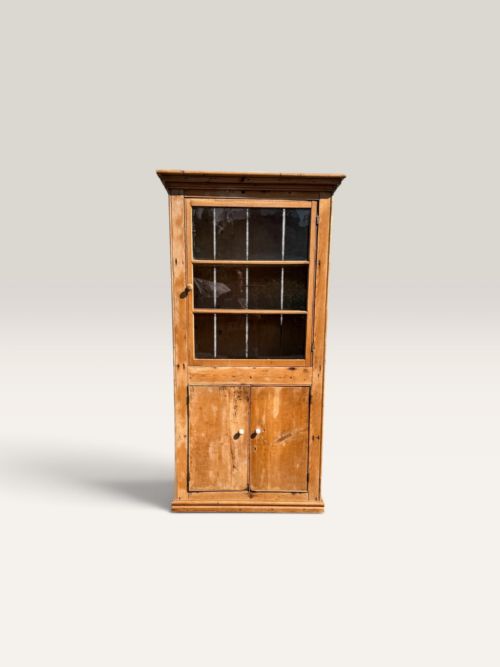
A vintage corner bookcase makes use of neglected angles, holding books and display pieces within mahogany, walnut and oak frames.
Vintage Corner Bookcase
A vintage corner bookcase serves to utilise idle room angles by housing volumes and display objects within fitted wall or freestanding structures. When searching for a vintage corner bookcase, buyers encounter forms ranging from simple open shelving units to double-height glazed cabinets.
The pieces on this page span the eighteenth, nineteenth and twentieth centuries, incorporating Edwardian, Victorian, Georgian and Art Deco examples. Mahogany and oak dominate the selection, appearing alongside burr walnut, rosewood and satinwood inlay.
Cabinets, whatnots, cupboards and etageres share the category, reflecting diverse domestic storage needs across eras. Edwardian inlaid pieces and Victorian tiered whatnots emerge most frequently in the current selection.
Materials and construction methods
Carpenters utilised solid hardwoods and selected veneers, primarily mahogany and oak, building frames designed to fit room angles precisely. Satinwood inlay, brass mounts and glass panels decorate surfaces, while barley twist turnings and marquetry add texture.
Multi-tiered whatnots and standing corner units rely on structural uprights and fitted shelves, joined to support heavy volumes and porcelain collections. Glazed doors utilise timber framing to protect contents while maintaining visibility.
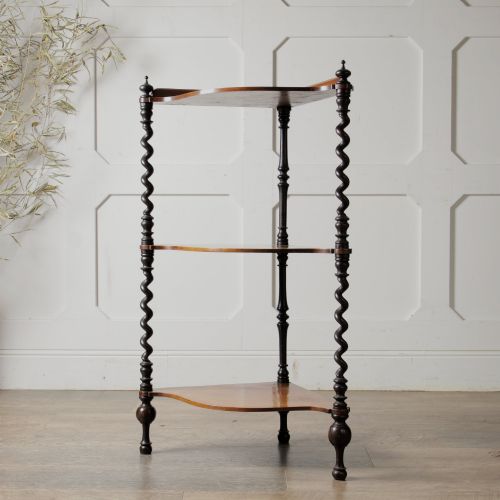
Several whatnots feature barley twist legs, adding a cheerful spiral bounce to otherwise solemn corners.
Markers of construction quality
Quality rests in the precision of the timber selection, such as figured burr walnut or carefully matched mahogany veneers, alongside the crispness of marquetry inlay. Superior pieces exhibit refined detailing around cornices, door framing and brass hardware.
Structural integrity in multi-tiered whatnots and heavy corner cupboards depends on solid joinery that prevents wobbling across upright supports. Finer examples balance decorative flourish with robust functionality, maintaining alignment in doors and shelves.
Edwards And Roberts·Maurice Adams
The Vintage Corner Bookcase Glossary
- Whatnot
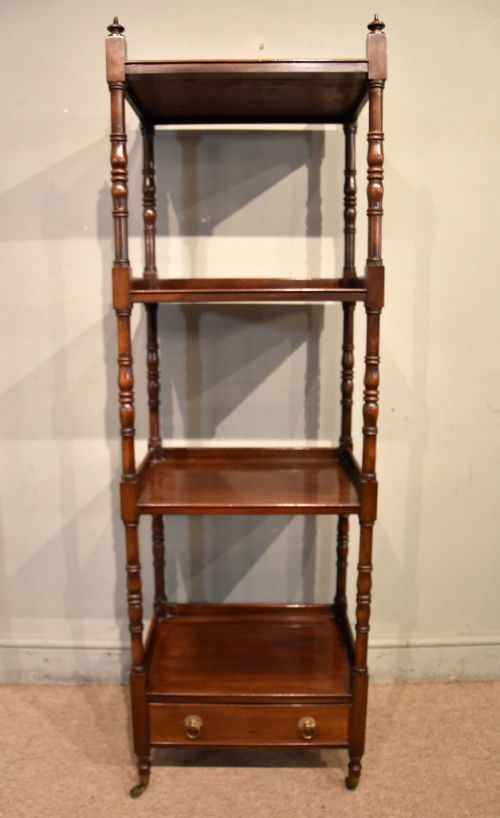
- An open set of tiered shelves used for displaying ornaments and books. These pieces stand independently or fit into corners.
- Marquetry
- Decorative veneer work forming pictures or patterns using various woods. Craftsmen apply these designs to cabinet doors and friezes.
- Vitrine
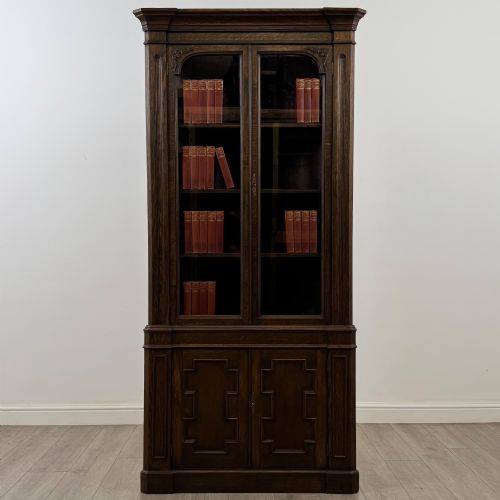
- A glass-fronted cabinet designed for displaying fine objects. These pieces often feature glazed sides to maximise light.
- Etagere
- A piece of furniture consisting of a series of open shelves for display. The form gains popularity during the nineteenth century.
- Barley twist
- A type of turning shaped like a spiral rope. This decorative detail appears on upright supports of Victorian furniture.
Vintage Corner Bookcase: Frequently Asked Questions
How do I place a corner bookcase?
These units slide directly into ninety-degree room angles, anchoring themselves against two adjoining walls to save floor space.
Freestanding models require level flooring, while wall-mounted variants need secure fixings into solid masonry or studs to bear the weight of heavy volumes.
What is a whatnot shelf?
A whatnot is an open tiered shelving unit designed to hold books, ceramics and decorative objects within domestic rooms.
Victorian and Edwardian examples frequently feature three to five tiers supported by turned columns, often shaped to fit corner spaces.
Are these cabinets enclosed or open?
The selection includes both open shelving formats and enclosed cupboards featuring glazed or solid timber doors.
Glazed vitrines and display cabinets protect delicate collections from dust, whereas open variants provide immediate access to frequently read books.
How do I identify Edwardian pieces?
Edwardian furniture often incorporates lighter timbers, delicate satinwood inlay and Sheraton Revival motifs inspired by eighteenth-century designs.
These pieces typically date from around nineteen hundred to nineteen ten, displaying refined proportions and polished mahogany surfaces.