
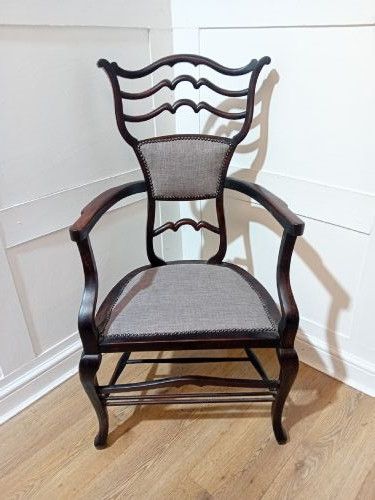
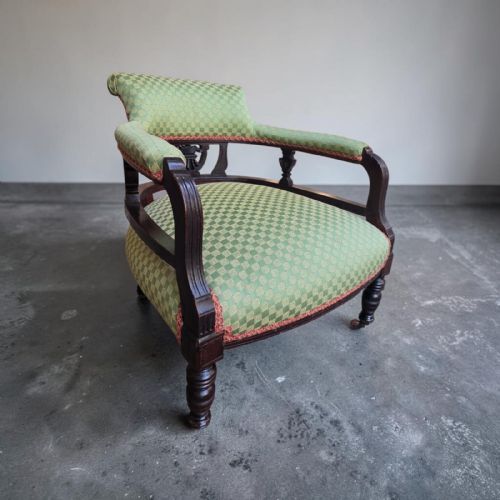


Vintage Corner Armchair
A vintage corner armchair fits snugly into domestic dead space while offering an unusual seating angle.
Vintage Corner Armchair
A vintage corner armchair is designed specifically to occupy the junction of two walls, featuring a diagonal orientation that turns an awkward architectural angle into a functional seat. When you search for a vintage corner armchair, you encounter pieces spanning from the eighteenth century through the Edwardian period and into the nineteen-twenties.
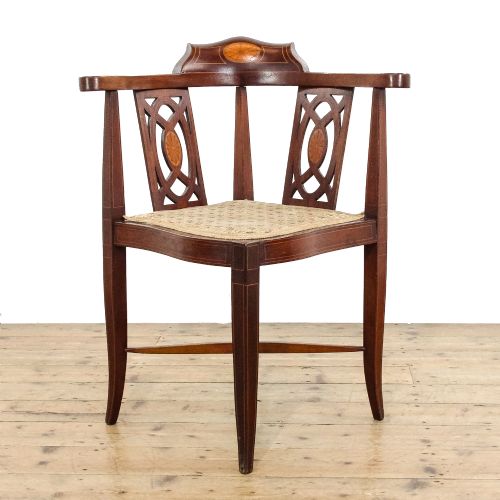
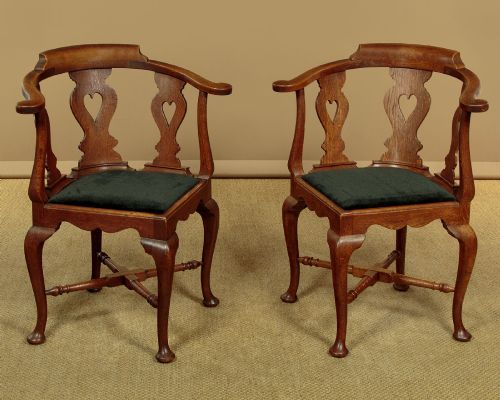
The selection ranges from robust oak vernacular pieces and heavily turned Victorian frames to refined Georgian mahogany models and inlaid Edwardian salon chairs. Many examples function as occasional chairs, desk chairs, or dressing seats, often incorporating upholstered drop-in pads, squab cushions, or woven rush seats.
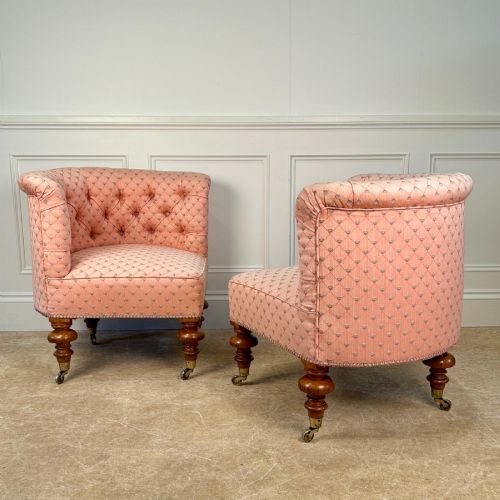
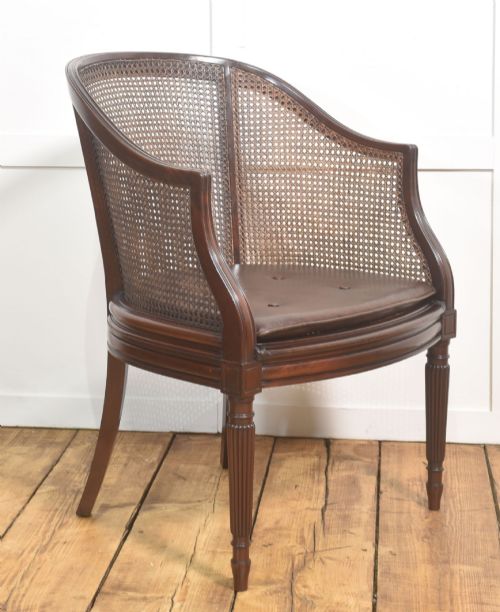
You will also find related forms such as tub chairs, bergères, and burgermeister's chairs sharing the characteristic diagonal footprint. These items serve equally well in hallways, studies, and drawing rooms where floor space remains at a premium.
Materials and construction methods
Cabinetmakers constructed these frames primarily in solid mahogany, oak, and walnut, frequently enhancing the surfaces with decorative wood inlay, boxwood stringing, and marquetry. Workshops employed dense hardwoods to withstand the compound angles inherent in a corner frame, utilising sturdy jointing to maintain structural rigidity over centuries of use.
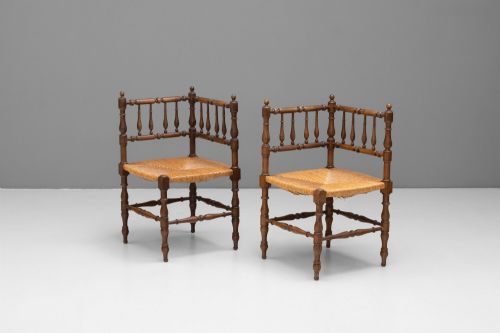
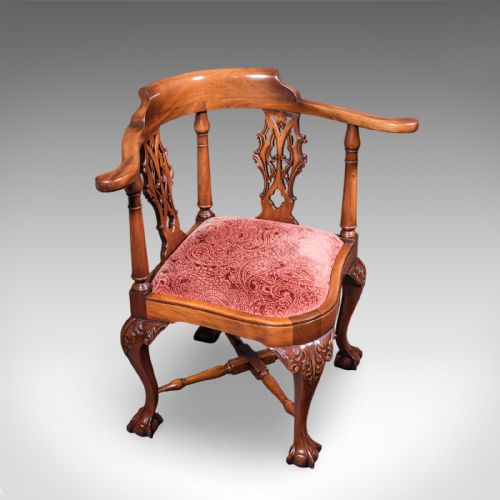
Upholstered variants rely on traditional stuffing and webbing beneath fabrics like purple velvet and various period textiles, while other models feature shaped cane panels or turned spindles. Specialised seating surfaces utilise rush work wound tightly around wooden rails to create a durable, textured base.
Detailing often includes hand-carved motifs, brass hardware, and intricate spindle turnings reminiscent of older Saxon styles. French polish and wax finishes protect the timber while highlighting the natural grain patterns of mahogany and oak.
The inventory records corner armchairs spanning the eighteenth, nineteenth, and early twentieth centuries, constructed in mahogany, oak, walnut, and rosewood.
Markers of superior craftsmanship
Quality rests upon the integrity of the frame's corner joints and the precision of the turnings or carved details. Superior examples exhibit tight joinery that resists the wobbling common in seating subject to diagonal stress.
The choice of timber and the fineness of any wood inlay dictate the aesthetic tier of the piece. Well-figured mahogany, crisp marquetry, and balanced proportions elevate an occasional chair from a simple utility item to a refined focal point.
Originality of components, including rush seats, turned spindles, and upholstered squab pads, separates untouched survivals from heavily restored or composite examples.
S&H Jewell·Miles & Edward's
The Vintage Corner Armchair Glossary
- Bergère
- An enclosed upholstered armchair with wooden framing exposed around the sides and back. French examples often incorporate cane panels alongside upholstered seat cushions.
- Turner's chair
- A heavy wooden armchair constructed almost entirely from turned cylindrical spindles and posts, sometimes known as an old Saxon chair. These pieces draw on traditional seventeenth-century joinery techniques.
- Marquetry
- The art of applying decorative veneer pieces to a structure to form ornamental patterns and pictures. Craftsmen utilise various coloured woods to create contrast across flat surfaces.
- Squab seat
- A loose, removable cushion placed directly onto the wooden or rush base of a chair for padding. These cushions allow for straightforward reupholstery without altering the core frame.
Vintage Corner Armchair: Frequently Asked Questions
Where should I place a corner armchair?
These chairs find their natural home in empty room junctions, unused hallway alcoves, or flanking a fireplace at an oblique angle.
Because of their compact diagonal footprint, they utilise awkward architectural spaces without protruding into the main circulation path of a room.
Are these chairs comfortable for daily sitting?
Most period examples function primarily as occasional, desk, or dressing seats rather than deep lounge furniture. Their upright backs and supportive arms encourage an alert posture suited to writing or conversation.
Models featuring upholstered squab seats or padded tub backs offer a softer sit than solid wood or rush-bottomed variants.
How do I distinguish a Georgian corner chair from an Edwardian revival piece?
Georgian models generally display heavier structural timbers, simpler structural lines, and deep patination acquired over centuries. They rely on proportion and timber quality rather than surface ornamentation.
Edwardian revival pieces frequently incorporate delicate inlay, boxwood stringing, lighter mahogany scantlings, and machine-assisted turnings characteristic of early twentieth-century production.
Can I reupholster a drop-in seat pad myself?
Many corner chairs utilise a drop-in wooden frame that lifts out of the seat rails independently. This removable construction makes recovering the textile padding straightforward for anyone with basic upholstery skills.
Fixed upholstered frames require more traditional webbing and tacking techniques to preserve the original profile of the edges.