





Vintage Copper Pitcher
A vintage copper pitcher brings warmth and weight to a room, serving water, measuring wine, or catching the light on an open shelf.

Vintage Copper Pitcher
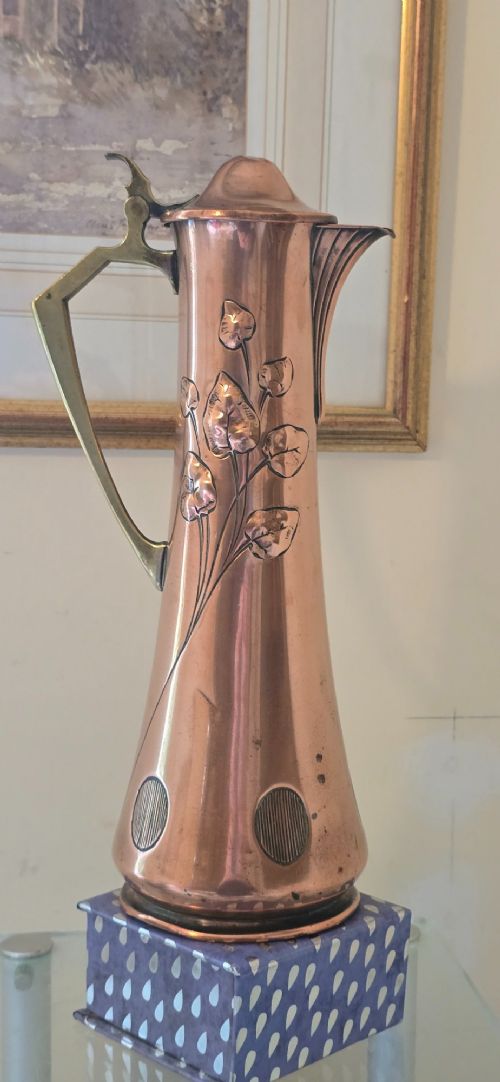
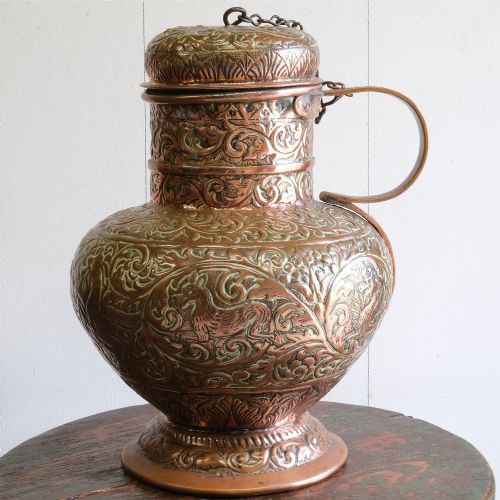
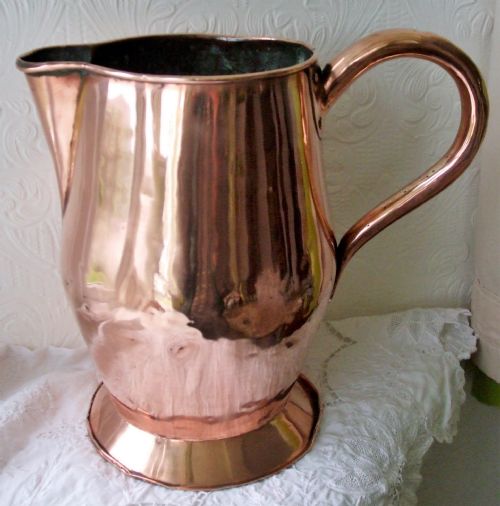
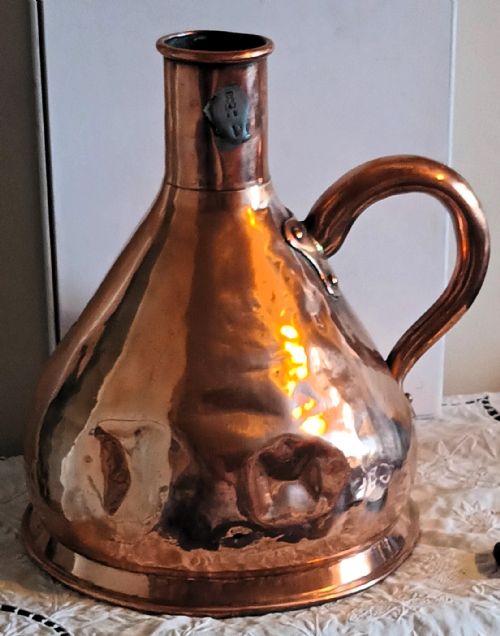
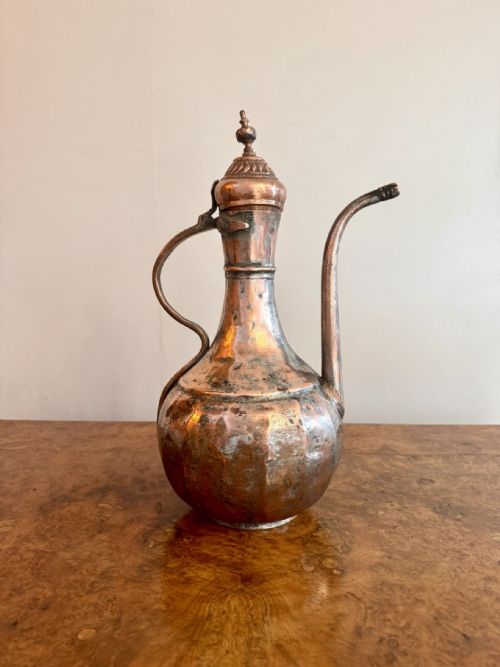
When you search for a vintage copper pitcher, you find vessels shaped for utility and hospitality across centuries, from humble farmhouses to grand kitchens. The selection spans robust Georgian liquid measures to ornate Art Nouveau ewers.
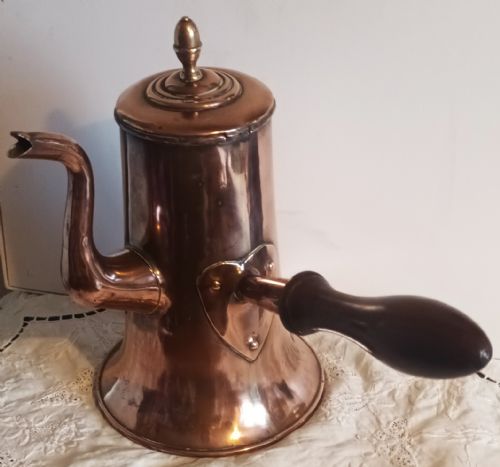
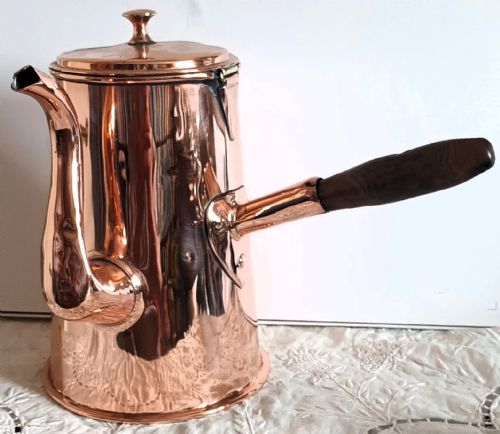
You meet heavy Georgian holding vessels alongside tall Victorian watering cans and Middle Eastern coffee pots. Many examples come in graduated sets, designed to nest together on a dresser or hearth.
How They Were Made
Metalsmiths hammered and spun sheet copper into fluid forms, joining seams with folded edges and lead or tin solder. Brass handles and feet provide sturdy contrast, fixed securely with copper rivets.
Artisans applied relief decoration through hand-chasing and repoussé, particularly during the Arts and Crafts and Art Nouveau periods. Some functional pieces received interior tinning to keep consumable liquids safe from oxidation.
Listings feature copper alongside brass, tin, and ironstone, spanning the Georgian, Victorian, and Edwardian eras.
What Varies in Quality
The integrity of the construction separates standard utility vessels from masterworks. Gauge thickness dictates weight, with heavy-walled jugs holding their form through centuries of lifting and scouring.
The crispness of hand-hammered surfaces and the proportion of brass mounts dictate artistic merit. Maker-stamped bases and verified capacity marks separate utilitarian kitchenware from exhibition pieces.
Joseph Sankey·J Bower·Livesley Powell And Co·Orme Evans And Co·Loftus of Oxford Street London·S Hancock
The Vintage Copper Pitcher Glossary
- Ewer
- A large pitcher with a wide spout and curved handle, historically used for pouring water at a washstand or table.
- Haystack measure
- A British liquid capacity measure with a distinctive tapered body resembling a piled stack of hay.
- Repoussé
- A metalworking technique where the artisan hammers a design from the reverse side to form a raised relief on the front.
- Graduated set
- A group of matching vessels sizing down progressively so the smaller pieces nest inside the larger ones.
Vintage Copper Pitcher: Frequently Asked Questions
How do I clean a copper pitcher?
Wash the metal gently with warm soapy water and a soft cloth to remove surface dust. Avoid harsh chemical abrasive dips that strip the characterful historical patina accumulated over generations.
Dry the vessel thoroughly after washing to prevent spotting. A light application of microcrystalline wax can help stabilise the surface finish if desired.
Are antique copper pitchers safe for drinking water?
Many older vessels feature an original internal lining of tin to prevent copper from leaching into consumable liquids. Over long periods of use, this protective layer may wear thin or expose the base metal underneath.
For daily drinking, inspect the interior for intact tinning or use the pitcher solely for dry display and cut flowers. Fresh flowers adapt particularly well to copper containers.
How can I tell a Georgian measure from a Victorian one?
Georgian examples often display simple, heavy-gauge hand-beaten construction with stamped royal crown or capacity ciphers. Their silhouettes prioritise functional utility in taverns and coaching inns.
Victorian pieces frequently incorporate decorative brass spouts, stamped maker cartouches, or ornate aesthetic movement relief patterns. Graduated sets also became more common toward the middle of the nineteenth century.
Where should I display a large copper ewer?
Position large vessels on low hearths, open kitchen dressers, or deep floor-level shelves where their warm metallic tones reflect ambient light. Ensure the display surface remains dry and stable given the substantial weight of heavy gauge metal.
Grouping graduated sets together creates visual rhythm and highlights the range of patination. Keep pieces out of direct, harsh chemical sun exposure to preserve surface colour.