


Vintage Copper Measure
These vintage copper measure examples bring heavy metalwork and domestic history straight into modern spaces.

Vintage Copper Measure
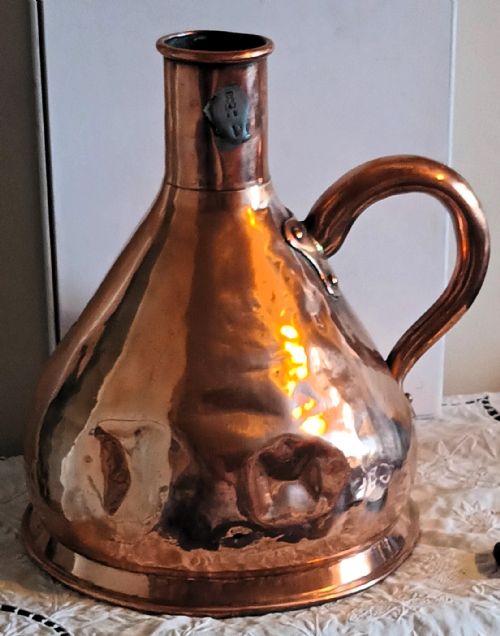
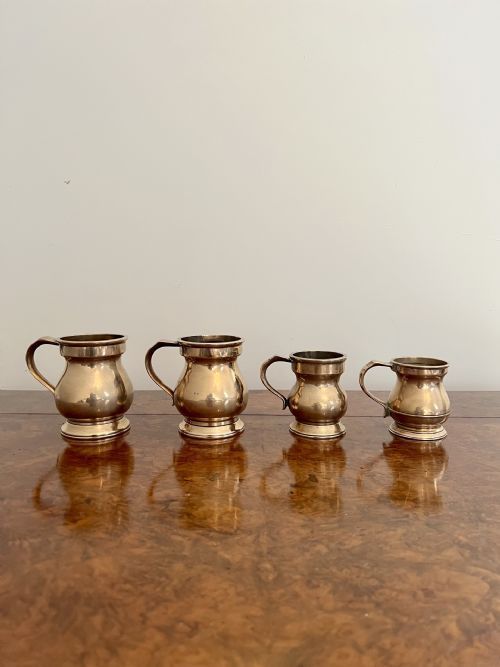
A vintage copper measure serves as a functional liquid container or grain receptacle, originating in periods from the Georgian era through the early twentieth century. Buyers seeking a vintage copper measure typically encounter forms such as graduated jugs, bell shaped tankards, and haystack measures.
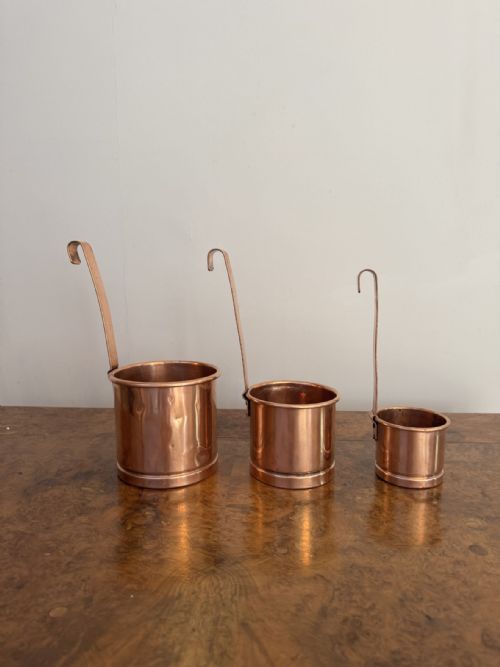
The selection ranges from single large vessels like one gallon and two gallon flagons to graduated sets of multiple pieces. Common stylistic influences include Victorian provincial designs, Arts and Crafts groupings, and Georgian utilitarian work.
Origin points span English, Scottish, and Anglo-Indian workshops, reflecting domestic, commercial, and industrial daily use. Most items combine robust utilitarian construction with patinated metal surfaces developed over decades of handling.
Materials and construction
Makers constructed these vessels primarily from heavy gauge sheet copper, often incorporating brass for rims, handles, and reinforcement bands. Lead and tin solder frequently seal the seams and interior joints of liquid containers.
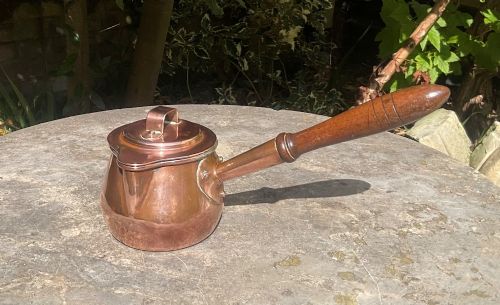
Sheet metal was beaten, rolled, and seamed together by hand or with early industrial machinery, producing visible joins and rivets. Wood handles occasionally appear on specific warming vessels and specialised jugs.
Listings feature items spanning the Georgian, Victorian, and Arts and Crafts periods, constructed from copper, brass, lead, tin, and wood.
Assessing quality and finish
The standard of a piece depends on the weight of the metal sheet utilised and the integrity of its original soldered construction. Heavier gauges retain their structural form and resist denting better than thin, lightweight alternatives.
Finely executed handles, well proportioned spouts, and clear capacity stamps or maker marks distinguish superior examples from standard utilitarian stock. Surface patination and the preservation of original touchmarks also influence the overall character of each vessel.
Joseph Sankey·J Bower·Loftus of Oxford Street·S Hancock
The Vintage Copper Measure Glossary
- Haystack measure
- A distinctively shaped British liquid measure featuring a bulbous body tapering toward the top, resembling a traditional stack of hay. These pieces often bear regional verification stamps.
- Graduated set
- A group of multiple measures decreasing in capacity that nest or line up together by size. Such sets were standard equipment for commercial trade.
- Brandy warmer
- A small-capacity vessel with a long handle designed for heating spirits over a direct heat source. Georgian examples frequently display hand-beaten surfaces.
- Imperial measure
- A container calibrated to official British imperial standards of volume, such as pints or gallons. Many pieces carry crown verification marks.
- Seamed measuring jug
- A vessel whose body is formed from rolled sheet metal joined down the side with a visible seam. This method of construction is typical of nineteenth-century workshop production.
Vintage Copper Measure: Frequently Asked Questions
How do I clean a vintage copper measure?
Wash the metal gently with warm soapy water and a soft cloth to remove surface dust. Avoid harsh abrasive cleaners that strip away the historical patination.
Dry the surface thoroughly immediately after washing to prevent water spotting. Many collectors prefer to leave the aged oxidation untouched.
Were these measures used for cooking?
Certain specialised forms like brandy warmers and specific pans were utilised for heating liquids over a fire. Most standard measures, however, served strictly for dry goods or liquid retail trade.
Check the interior for tinning before using any vintage vessel with food or drink. Historic tin linings protect against copper reactivity.
What do VR marks mean?
Stamps reading VR stand for Victoria Regina, indicating the reign of Queen Victoria. Government inspectors applied these crown ciphers to verify legal capacities for trade.
Such marks confirm that a vessel met official weights and measures standards during the nineteenth century. They add helpful documentary context for dating.
How are different periods identified?
Georgian pieces generally exhibit hand-beaten construction traits and simpler joinery techniques. Victorian and later examples often incorporate stricter standardisation and factory stamped verification marks.
Form, handle design, and accompanying maker stamps also help narrow down the decade of production.