




Antique Copper Flagon
An antique copper flagon brings weight and warm metal tones to a room, offering a functional vessel shaped by centuries of daily use.
Antique Copper Flagon
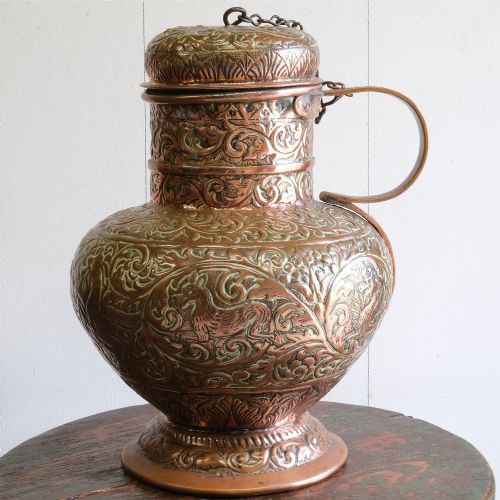
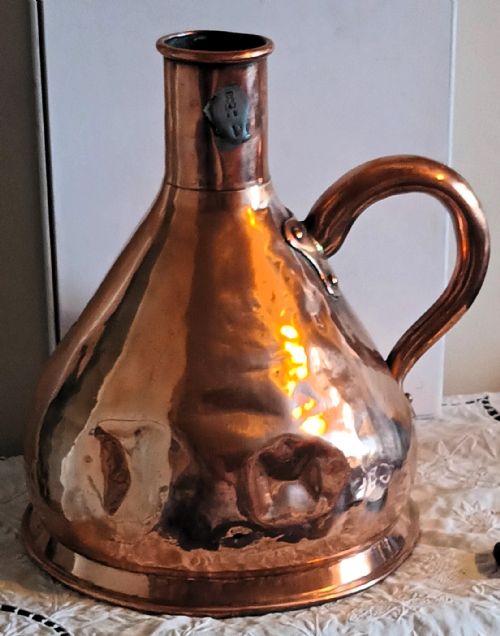
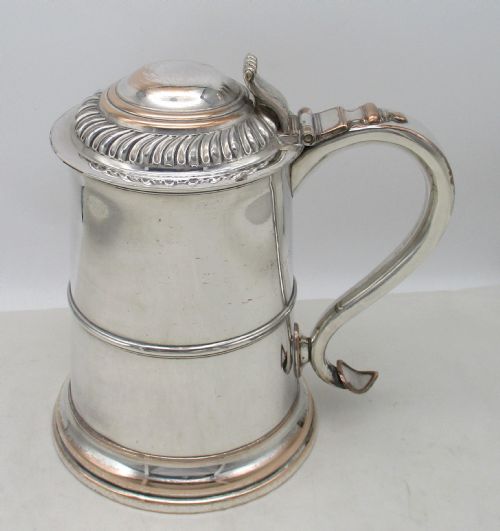
When you search for an antique copper flagon, you are looking at substantial vessels designed for holding and measuring liquids, appearing here in forms such as jugs, harvest flagons, tankards, and imperial measures. The pieces you are most likely to meet on this page span the eighteenth and nineteenth centuries, alongside specific Victorian industrial and Arts and Crafts examples.
The selection ranges from large two-gallon flagons down to smaller three-pint jugs, taking shapes associated with Georgian Liverpool measures and lidded pitchers. These items originate from British and Indo-Persian traditions, reflecting both domestic household service and public tavern use.
Many of these objects carry capacity markings or names like S. Hancock, while others show regional utility as Blackpool imperial measures. They combine utilitarian strength with the decorative patination accumulated over generations of handling.
Materials and construction
The core material across these listings is copper, frequently paired with contrasting brass for handles, rims, and fixings. Certain refined examples utilise Old Sheffield plate and silver to achieve a more formal appearance suitable for display.
Makers shaped sheet metal using traditional beating and joining techniques to create watertight cylindrical and bulbous bodies capable of holding substantial liquid volumes. Structural reinforcement around the base and collar ensured the vessels could withstand heavy commercial and domestic routines.
The listings span the 18th century, the 19th century, and the 1950s, utilising copper, brass, Old Sheffield plate, silver, and lead.
Distinctions in quality
Quality in an antique copper flagon reveals itself through the integrity of its proportions and the skill of the metalworker in forming clean, strong seams. Heavier gauge metal and crisp capacity stamping distinguish superior examples from simpler utilitarian wares.
The character of the surface patination also plays a role, with naturally aged copper surfaces demonstrating depth and honesty that mechanical polishing diminishes. Decorative restraint, balanced handles, and well-executed brass attachments set the finer Arts and Crafts and Georgian pieces apart.
The Antique Copper Flagon Glossary
- Flagon
- A large vessel with a handle and often a lid, traditionally used for holding drinks.
- Old Sheffield Plate
- A composite material made by fusing a thin layer of silver to a thicker copper base, popular in the eighteenth and nineteenth centuries.
- Imperial Measure
- A standardised British capacity measurement system introduced in the nineteenth century, frequently stamped onto tavern and trade vessels.
- Harvest Jug
- A large ceramic or metal jug used to carry ale or cider to workers in the fields during harvest time.
- Tankard
- A tall drinking vessel with a single handle, commonly cylindrical and made of metal.
Antique Copper Flagon: Frequently Asked Questions
What is a copper flagon?
A copper flagon is a large metal container with a handle, built to hold liquids for serving or measurement.
Historically used in homes and public houses, these vessels combine robust construction with practical utility.
How were these flagons used?
They served primarily as vessels for storing, measuring, and pouring liquids such as ale, water, or cider.
Many functioned as official capacity measures in taverns and markets before becoming decorative objects.
How do I clean antique copper?
Most collectors prefer to leave copper unpolished to preserve the dark, natural patination built up over centuries.
If cleaning is necessary, use a mild, non-abrasive cleaner designed specifically for historical metals to avoid removing the surface layer.
How do I date a copper flagon?
Dating relies on examining the construction methods, handle attachments, and any stamped capacity marks or maker names.
Stylistic cues from the Georgian, Victorian, and Arts and Crafts periods also help place the piece in time.