


Vintage Copper Jam Pot
These vintage copper jam pot selections bring heavy-gauge metal and period utility straight into modern kitchens.
Vintage Copper Jam Pot
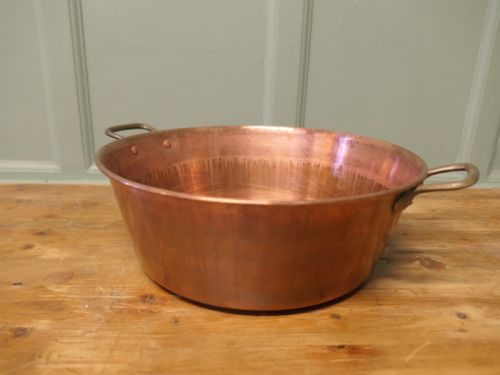
A vintage copper jam pot typically takes the form of a heavy preserving pan, cauldron, or cooking vessel dating from the nineteenth century. These items include George III and Victorian examples, often featuring generous proportions and sturdy handles designed for hearth or stove use.
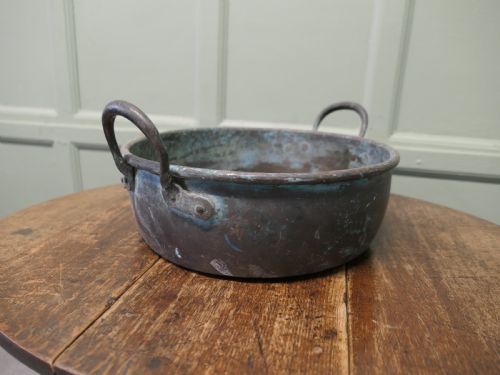
The versions most commonly met here span Georgian and Victorian periods, manifesting as large open bowls or basins intended for boiling fruit and sugar. Many incorporate brass or wrought iron fittings, whilst others appear as simple, deep-sided vessels with characteristic riveted construction.
Materials and construction
Construction relies heavily on thick-sheet copper shaped into deep vessels, often joined with visible rivets along the seams. Smiths reinforced rims and bases to withstand intense heat and heavy stirring during preserve making.
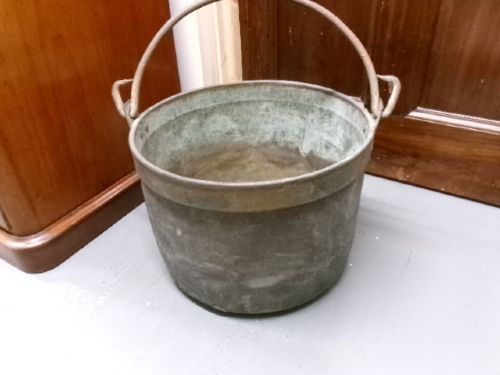
Handles introduce contrasting metals such as brass, iron, or wrought iron, attached securely via rivets or swung from fixed lugs. Some pieces display embossed brass detailing or tin linings applied to the interior surface for culinary safety.
The inventory spans George III and Victorian periods, grouping utilitarian cookware alongside decorative fireplace accessories.
Judging quality in copper cookware
Quality rests primarily on metal gauge and the integrity of the original construction rather than decorative flourishes. Heavier walls and substantial base plates indicate vessels intended for professional or estate kitchens, which survive in better structural condition.
Fine craftsmanship shows in the neatness of the hand-beating, the careful placement of rivets, and the proportion of attached swing handles. Maker marks, such as stamps on specific saucepans, separate standard utilitarian output from superior workshop production.
Hodges and Sons·Liptons
The Vintage Copper Jam Pot Glossary
- Preserving pan
- A wide, open vessel designed for boiling fruits and sugar to make jams and preserves. The shallow depth encourages rapid evaporation during cooking.
- Swing handle
- A movable bail handle attached to opposite sides of a pot via fixed lugs. This allows the vessel to hang over a hearth fire or fold flat when stored.
- Riveted
- A method of joining metal sheets where pins are inserted through overlapping sections and hammered flat. This technique provides durable joins before modern welding.
- George III
- The period spanning from 1760 to 1820, characterised by robust Georgian craftsmanship in domestic metalware. Pieces from this era often feature heavy copper construction and simple functional forms.
Vintage Copper Jam Pot: Frequently Asked Questions
Can I still cook jam in these pans?
These vessels were originally designed for culinary use over open hearths or stoves. Many retain their structural integrity for modern kitchen tasks, though interior tin linings should be inspected before food preparation.
Collectors often prefer to use them as decorative planters or display pieces in rustic interiors. If intended for cooking, gentle cleaning without abrasive pads preserves the historic surface metal.
How do I date an old copper pan?
Dating relies on observing construction details such as handmade dovetail joints, heavy hand-beating marks, and the style of iron or brass handles. George III and Victorian pieces show distinct handle fixings and rim formations compared to later manufacturing.
Maker stamps and touchmarks can also narrow down the production era. Comparing the weight and thickness of the copper helps distinguish eighteenth-century examples from later nineteenth-century country pieces.
Why do some pans have iron handles?
Wrought iron and cast iron provided the strength needed to lift heavy, liquid-filled vessels safely from the fire. These robust handles could withstand direct heat exposure better than softer metals.
Iron bail handles typically swing on folded copper lugs, allowing the pot to tilt easily. Over time, the iron developed a dark, pitted surface texture that contrasts with the warm reddish tone of the copper body.
How should I clean antique copper?
Maintenance depends entirely on whether you prefer a bright polished finish or a deep, aged patina. Traditional cleaning pastes remove active oxidation, but many collectors leave the natural darkening untouched.
Avoid harsh wire wool or abrasive chemicals that scratch the historic metal surface. Rinsing thoroughly and drying immediately prevents water spotting on both the copper body and any attached brass fittings.