
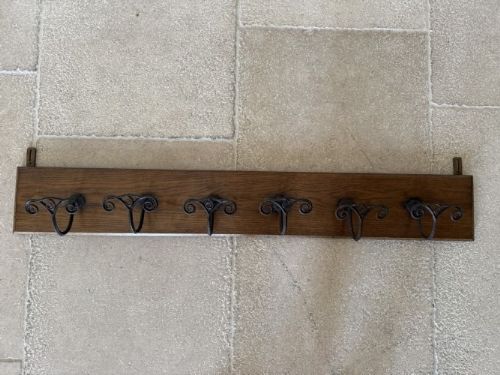


Vintage Coat Peg Rail
These vintage coat peg rail pieces combine utility with period charm, offering a practical way to hang garments while bringing authentic historical character to your hallway.
Vintage Coat Peg Rail
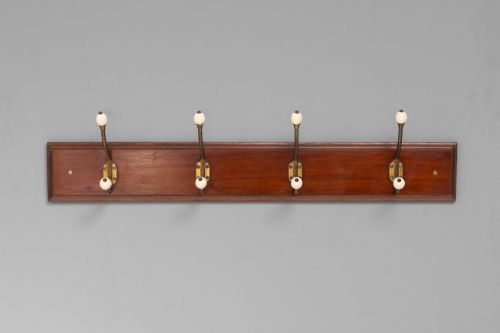
A vintage coat peg rail provides wall-mounted hanging space using sturdy timber backboards fitted with metal, ceramic, or wooden hooks. These functional items served hallways, cloakrooms, and reception areas in homes across the nineteenth and twentieth centuries.
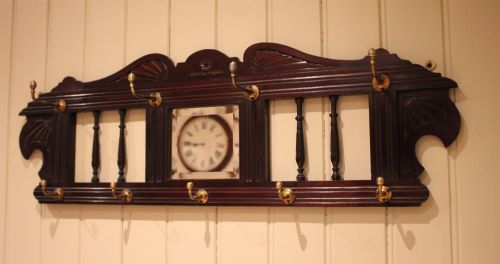
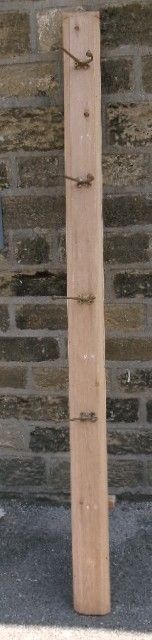
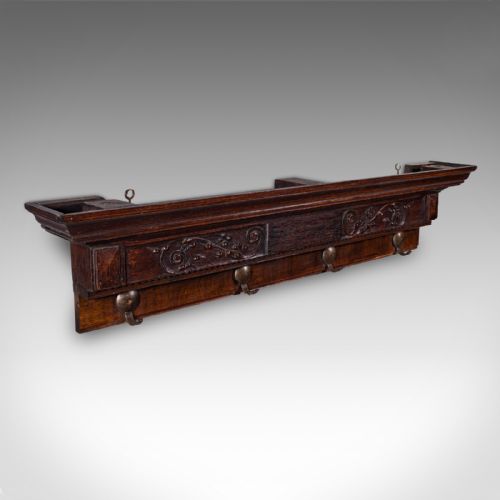
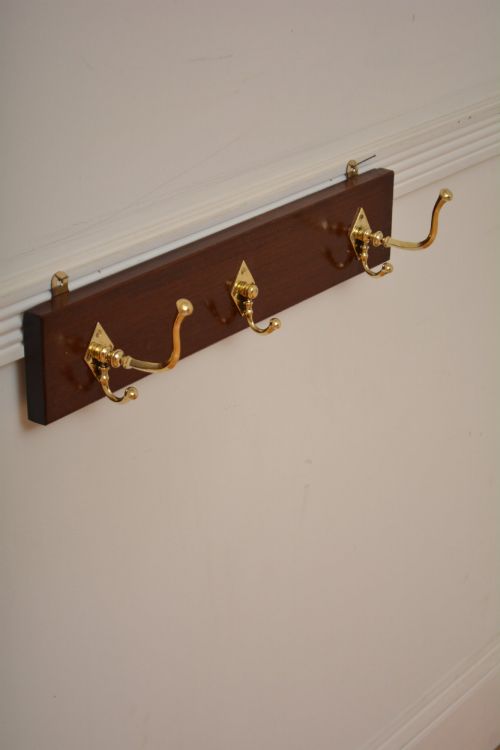
The selections available range from long pine boards with brass hooks to rich mahogany rails featuring cast brass and ceramic fittings. Many examples date from the Victorian and Edwardian eras, alongside occasional Georgian, William IV, and Art Deco interpretations.
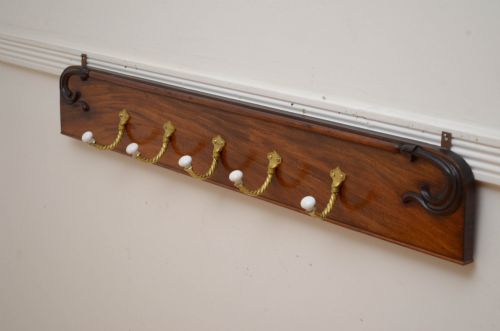
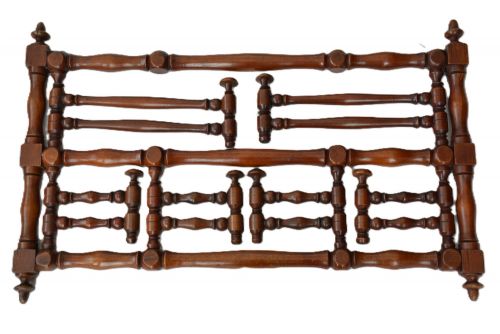
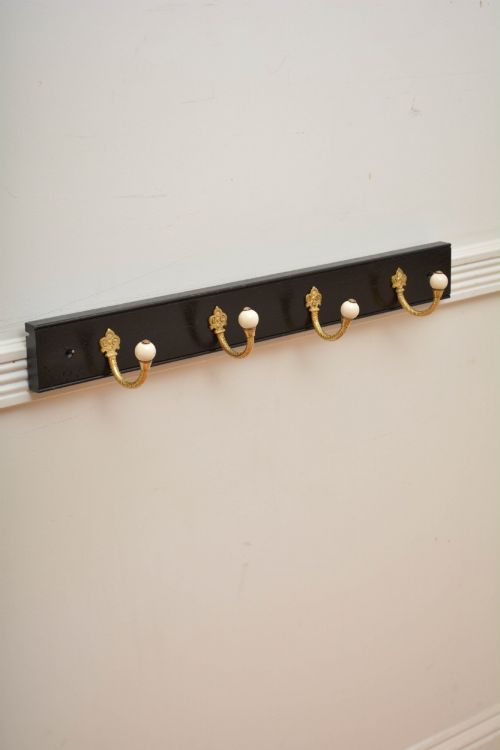
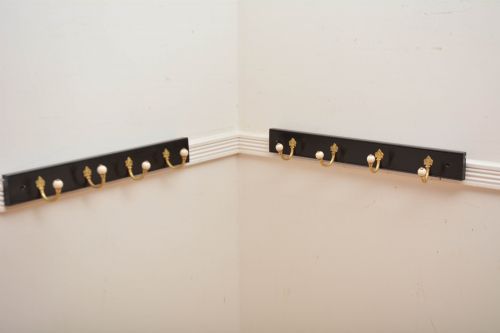
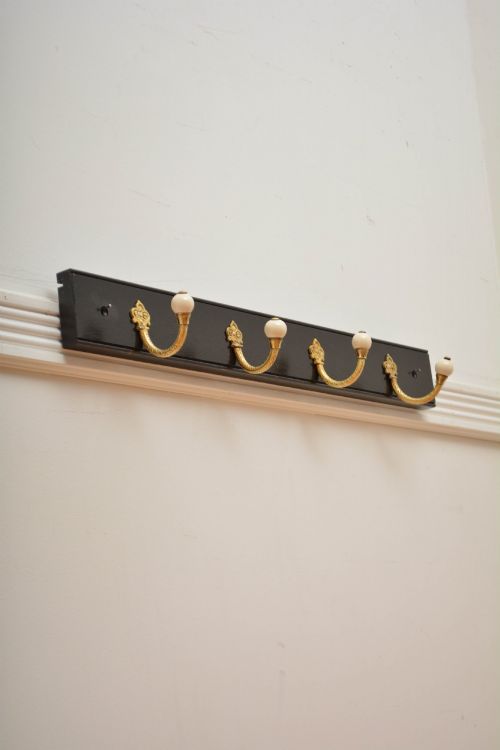
Simpler versions carry a small number of hooks on plain boards, whilst grander variants incorporate twisted rope details, ebonised finishes, or painted surfaces. Buyers encounter both single hooks mounted directly to walls and complete architectural racks designed for daily utility.
Materials and construction
Makers utilised solid timbers including pine, oak, and mahogany for the supporting backboards, occasionally applying ebonised finishes or decorative paint to the wood. These backboards provided a stable foundation to span wall studs and distribute the weight of heavy winter garments.
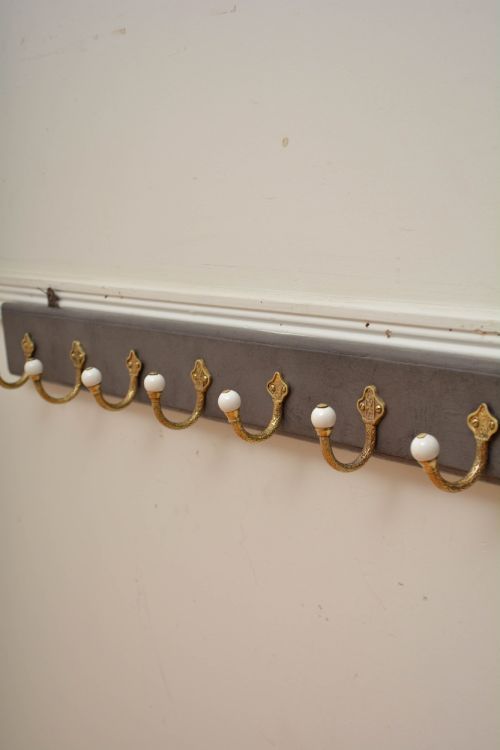
Hooks were cast from brass or iron, frequently complemented by ceramic details or mounted via decorative brass plates. Screws and fixings secured the hooks firmly to the wooden rails, ensuring durability for everyday household use.
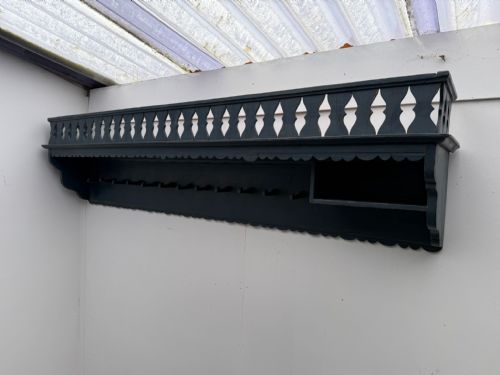
Some rails wear old blue paint from Hungarian country workshops, proving that even a humble coat hook can travel.
Quality and craftsmanship
Superior examples distinguish themselves through the quality of their cast metalwork and the selection of dense, figured hardwoods like mahogany or early oak. Well-cast mounting plates and robust ceramic elements indicate a higher standard of manufacture.
The integrity of the original joints and the secure attachment of the hooks dictate the practical longevity of each piece. Retaining original surfaces, whether polished wood or old painted finishes, adds to the desirability of an antique rail.
The Vintage Coat Peg Rail Glossary
- Backboard
- The horizontal timber plank that carries the hooks and mounts to the wall. It provides structural support and distributes weight evenly across the fixing points.
- Ebonised
- Wood treated with a dark stain or finish to imitate ebony. This technique was popular in Victorian design for creating striking contrast against brass or ceramic hardware.
- Cast brass
- Molten brass poured into a mould to form decorative hooks and mounting plates. This process allowed makers to incorporate intricate surface detail and robust structural forms.
- Cloakroom
- A dedicated domestic reception space for hanging outdoor garments. Peg rails found in these areas often utilised multiple hooks set onto long boards.
- Bentwood
- Wood steamed and bent into curved shapes, frequently utilised for lightweight hooks and frames. This technique became prominent in nineteenth-century production.
Vintage Coat Peg Rail: Frequently Asked Questions
How do I hang a heavy coat rack securely?
Fix the backboard directly into wall studs or use appropriate heavy-duty wall anchors suitable for your wall type. Ensure the screws match the diameter of the original mounting holes to prevent shifting under weight.
Distribute heavier garments evenly across the length of the rail to maintain balance. Checking the stability of the individual hooks periodically will ensure safe daily use.
How do I clean an old wooden peg rail?
Dust the timber gently with a dry, soft cloth to remove surface particles without disturbing the finish. Avoid harsh chemical cleaners that can strip aged wax or dry out historic wood.
Apply a traditional beeswax polish sparingly to nourish hardwoods like oak and mahogany. Buff gently with a clean cloth to maintain a natural, protective sheen.
How can I tell a Victorian rail from an Edwardian one?
Victorian rails often feature denser hardwoods, ebonised surfaces, or heavy brass and ceramic combinations. The metalwork tends to display ornate casting and robust proportions suited to heavy garments.
Edwardian examples frequently utilise lighter pine backboards and simpler silhouettes suited to domestic cloakrooms and reception halls. The overall aesthetic shifted towards brighter, cleaner lines during the early twentieth century.
Can I use these in a modern hallway?
These functional rails integrate smoothly into contemporary interiors by offering practical storage with authentic historical texture. They provide an immediate visual anchor for minimalist entrance spaces.
Ensure the length matches your available wall space and allows clearance for doors and furniture. The mixture of brass, ceramic, and timber complements various interior colour schemes.