


Victorian Brass Coat Hooks
Victorian brass coat hooks offer robust utility and genuine period character, bringing practical charm to hallways and boot rooms.
Victorian Brass Coat Hooks
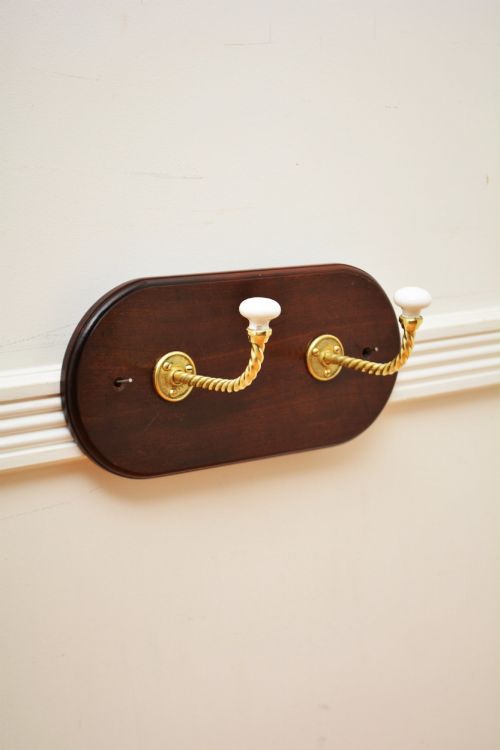
When you search for victorian brass coat hooks, you encounter a specialised selection of functional ironmongery and wall furniture dating primarily from the nineteenth century. These pieces range from individual double hooks mounted on timber backboards to extensive hall stands and long wall racks designed for busy entrances.
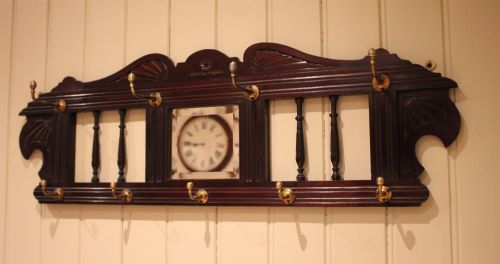
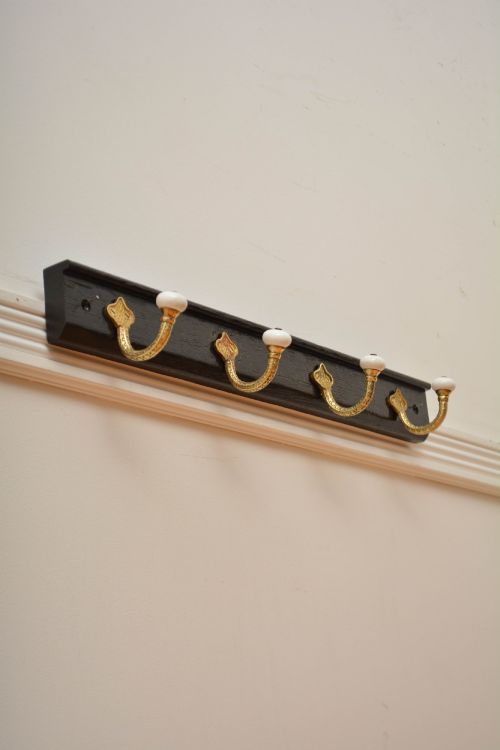
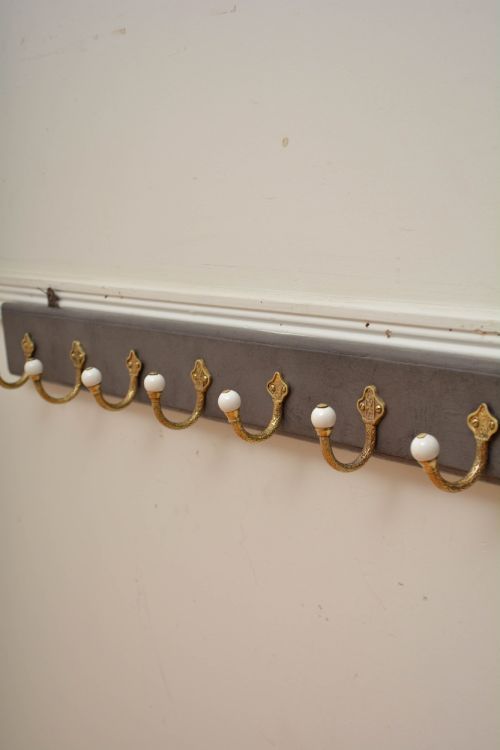
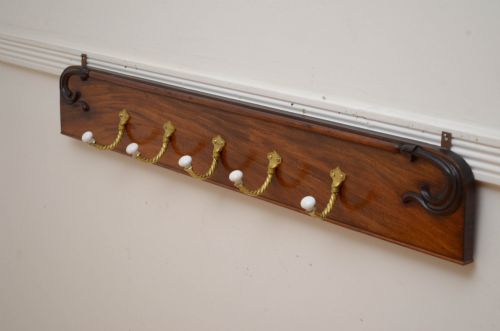
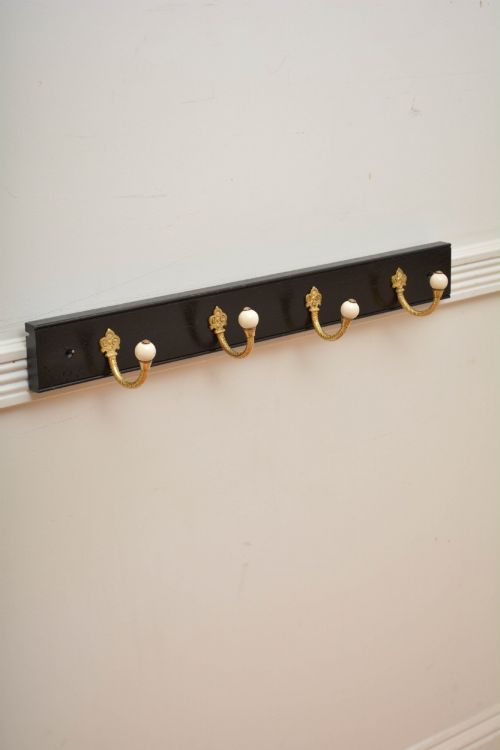
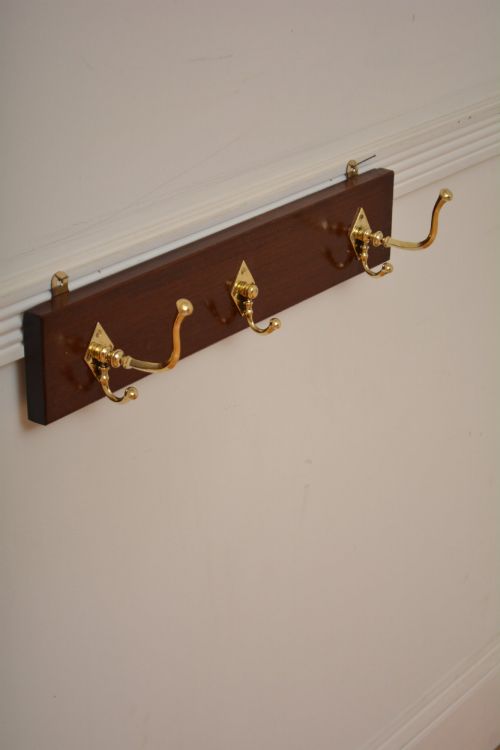
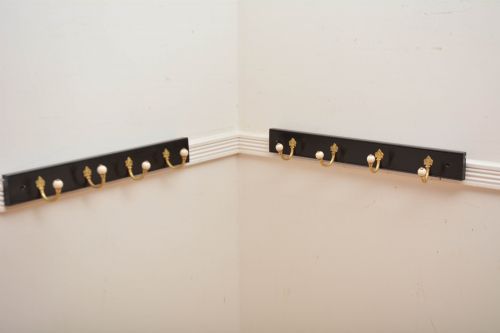
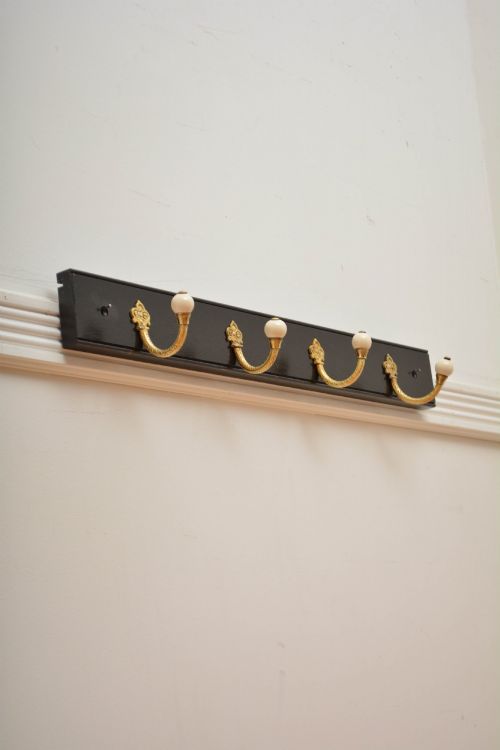
The most common formats on this page combine cast brass hooks with wooden backings such as mahogany, oak, walnut, or ebonised wood. Many examples integrate ceramic or porcelain knobs on the hooks themselves, adding a distinct decorative contrast to the warm metal.
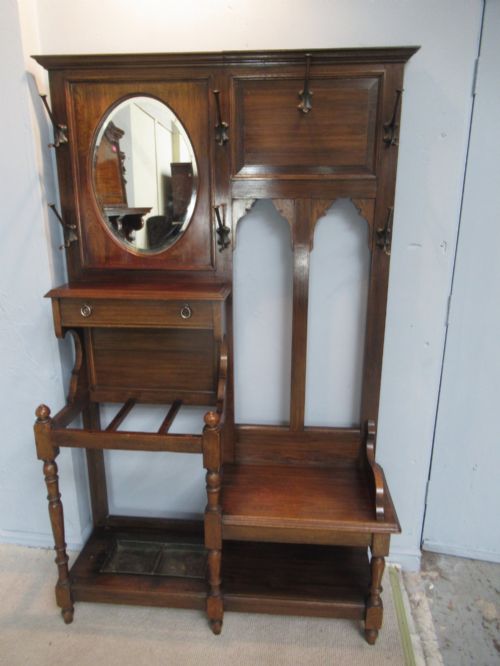
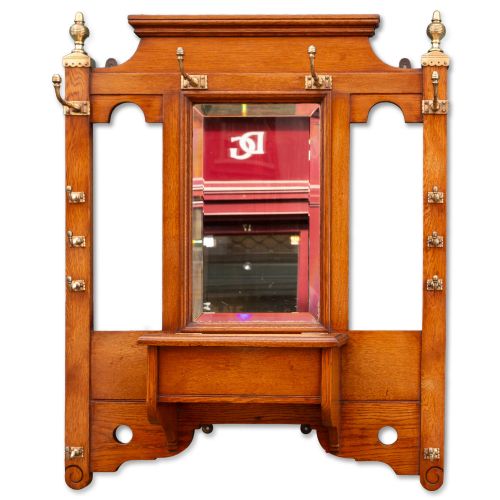
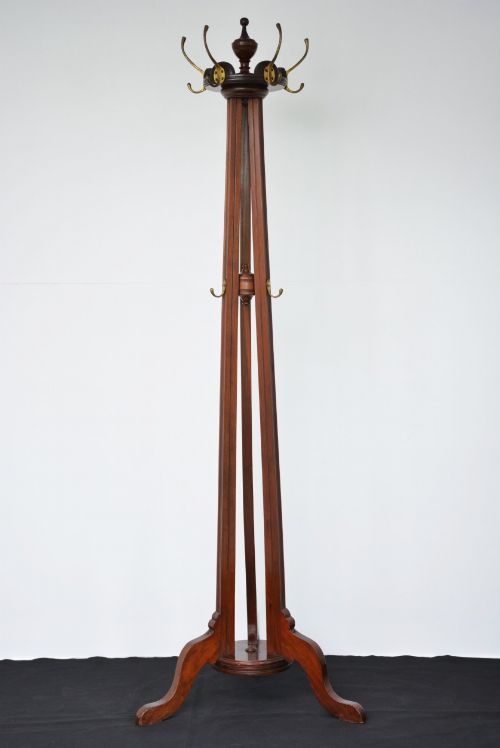
Beyond simple wall racks, the selection embraces French portmanteaus, equestrian crop hooks, and larger hall furniture featuring integrated mirrors and umbrella stands. Each piece reflects the Victorian and Edwardian emphasis on organised, well-appointed domestic spaces.
How they were made
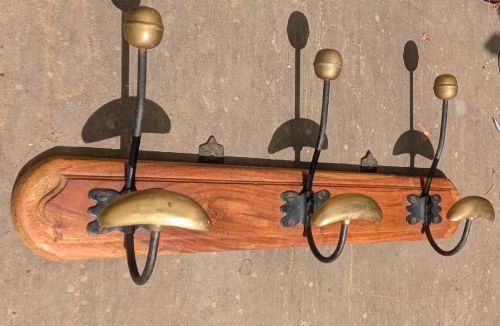
Maker's methods relied heavily on sand casting for the brass components, resulting in solid, substantial mounts with chased detailing or carefully finished surfaces. These metal elements were then secured to timber backboards using traditional screws, often fixed to woods chosen for their grain and durability like oak, mahogany, and pine.
Many designs incorporated ceramic or porcelain elements into the hook terminals, fused or screwed firmly into the metal body to protect garments from snags. Ebonised finishes were frequently applied to pine or oak backboards to mimic more expensive exotic hardwoods, providing a stark, dark contrast to the polished brasswork.
Victorian Brass Coat Hooks Retail Price Guide 2026
Typical asking prices for victorian brass coat hooks among the pieces listed under this phrase on Sellingantiques today, from the lower quarter to the upper quarter. They describe what is for sale here now, not the wider market.
Listings feature timbers including mahogany, oak, walnut, pine, and ebonised wood alongside cast brass and ceramic elements.
What varies in quality
The distinction between ordinary utility items and superior examples lies in the weight of the metal and the crispness of the casting. Heavier, deeply cast brass plates with intricate chasing or well-defined figural details demonstrate a higher grade of manufacture than thin, pressed sheet metal alternatives.
Quality is also evident in the selection and preparation of the supporting timbers, where solid hardwoods like mahogany and walnut provide greater structural integrity than plain softwoods. Furthermore, the survival of original porcelain knobs and matching fixing screws preserves the integrity and visual harmony of the piece.
Jas. Shoolbred
The Victorian Brass Coat Hooks Glossary
- Backboard
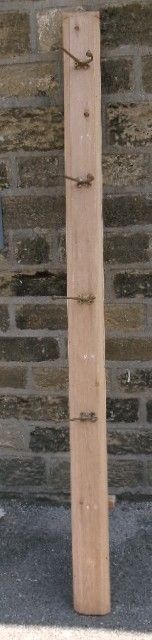
- The timber plank or mounting strip upon which individual hooks are screwed. It distributes the weight of hanging garments evenly across the wall fixings.
- Portmanteau
- A wall-mounted or freestanding rack, frequently of French origin, combining hat hooks, coat hooks, and often a central mirror or shelf. These larger fixtures served as compact hall furniture for smaller vestibules.
- Ebonised
- Wood treated with a dark stain or finish to simulate expensive ebony. This technique was popular in the nineteenth century for creating dramatic contrasts against polished brass.
- Chased
- Metalwork decorated with hand-tooled incisions or surface patterns rather than cast relief. This artisan touch enhances the texture and visual depth of the brass hooks.
Victorian Brass Coat Hooks: Frequently Asked Questions
How do I hang a heavy coat rack securely?
Heavy racks require direct attachment to wall studs or the use of appropriate cavity fixings suited to your wall type. Because solid brass and dense hardwoods carry considerable weight, secure anchoring ensures the fixings bear the load safely.
Distribute the weight evenly across the mounting points provided on the backboard. This prevents undue stress on individual screws and keeps the rack firmly aligned against the wall surface.
Are these hooks strong enough for daily use?
These items were built for heavy domestic service in nineteenth-century hallways, meaning they are exceptionally durable. Solid cast brass and robust timber construction easily withstand the demands of modern winter coats and heavy jackets.
Ensure the mounting screws are driven firmly into a stable surface before loading the rack. With proper installation, they offer reliable everyday utility alongside their historical aesthetic.
How should I clean aged brass?
Preserving the historical patina usually requires nothing more than gentle dusting with a soft, dry cloth. Avoid harsh chemical polishes that strip away the natural ageing and character accumulated over the decades.
If cleaning is necessary, use mild soapy water on a damp cloth and dry the metal thoroughly immediately afterwards. This maintains the surface without imparting an overly bright, modern shine.
What is the difference between a rack and a hall stand?
A coat rack is a streamlined wall-mounted fixture designed specifically for hanging hats and garments in confined spaces. They focus purely on horizontal rows of hooks attached to a single timber backboard.
A hall stand is a larger, often freestanding piece of furniture that frequently combines coat hooks with an umbrella well, a mirror, and sometimes a small bench or glove box. These served as comprehensive greeting points in Victorian hallways.