
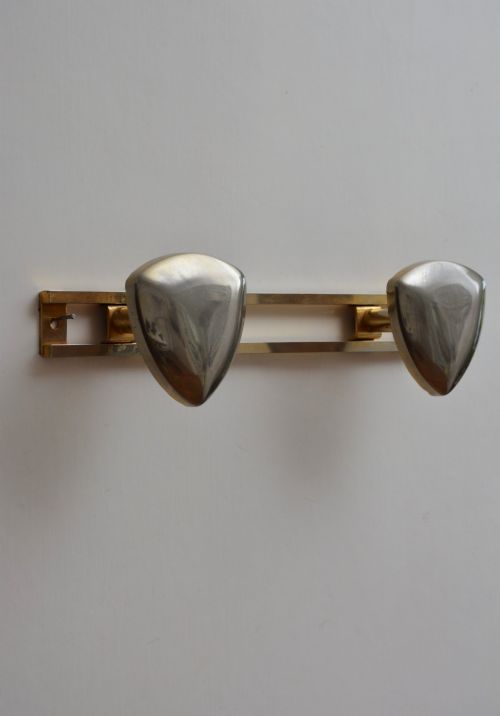


Brass Wall Coat Rack
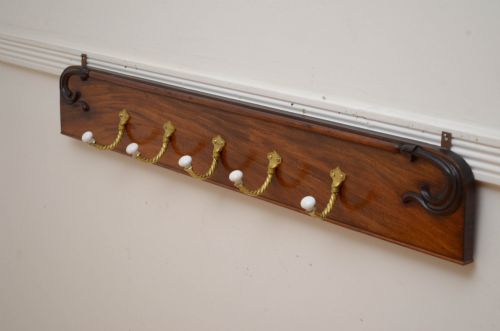
A brass wall coat rack combines sturdy metal hardware with functional timber mounting boards, offering practical hanging space with period character.
Brass Wall Coat Rack
When you search for a brass wall coat rack, you encounter wall-mounted hallway furnishings that combine metal hanging hardware with timber backboards. These pieces originate across the nineteenth and twentieth centuries, spanning Victorian, Edwardian, and Art Deco periods.
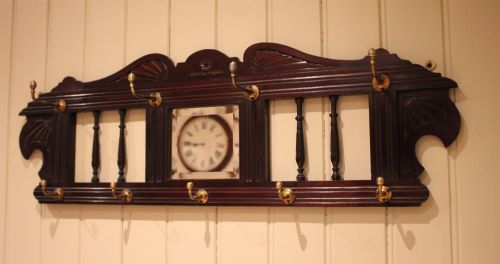
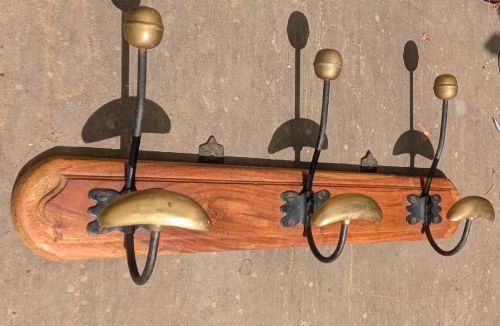
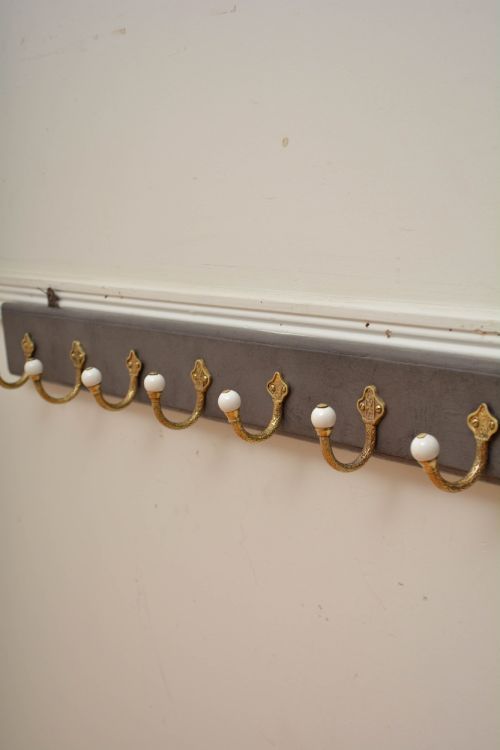
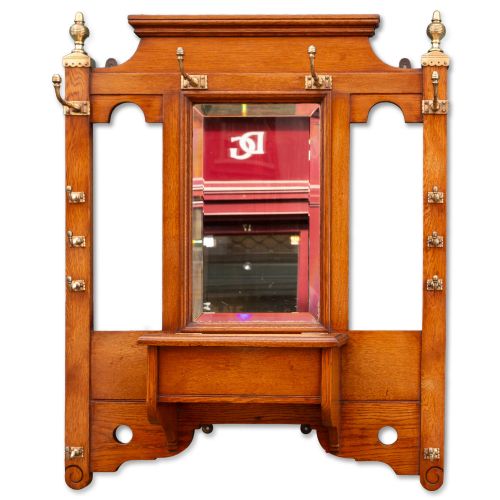
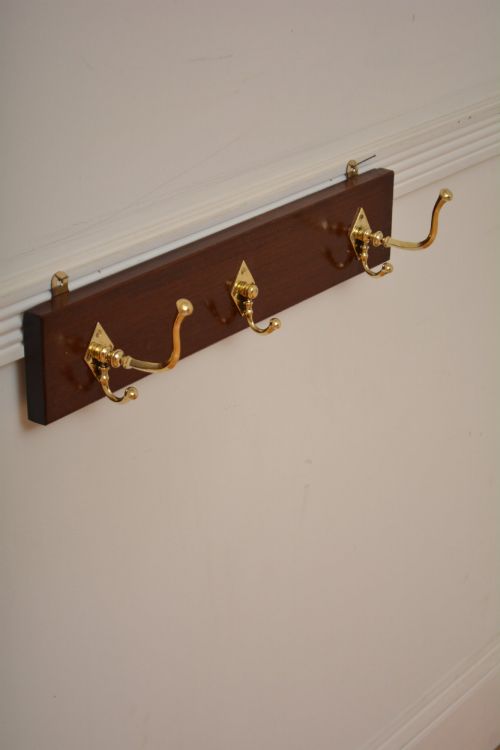
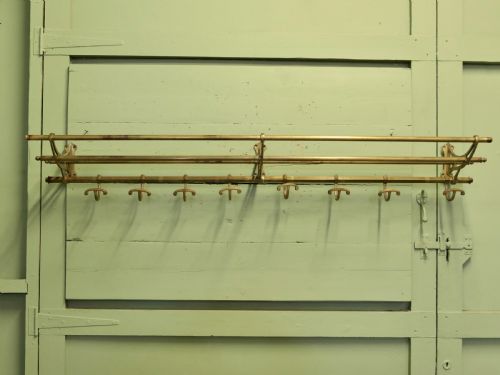
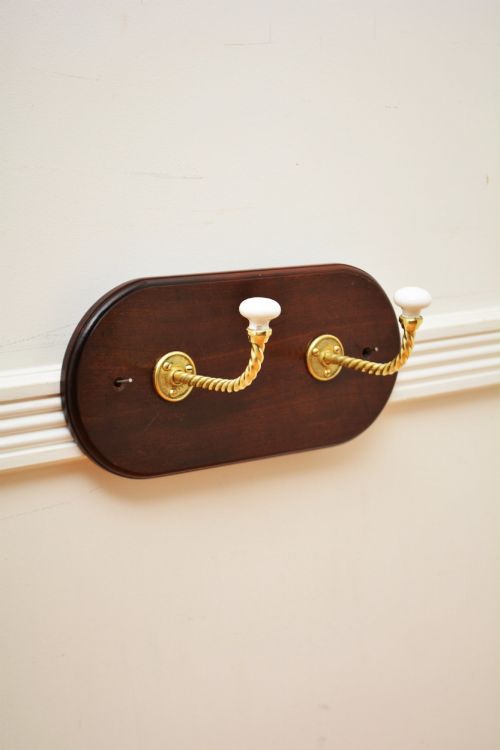
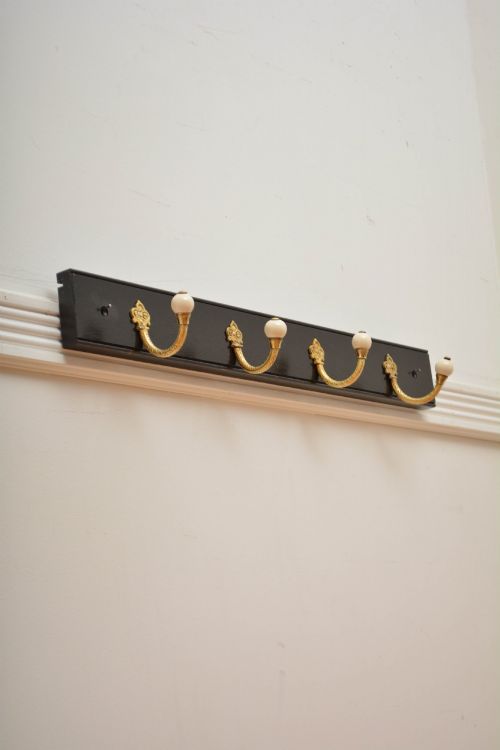
The most common formats on this page are mounted timber boards fitted with multiple cast brass hooks. You also find French portmanteaus, combination hat racks, and items incorporating mirrors, horseshoe shapes, or ceramic elements.
Origin points range from English workshops to French provincial and bistro settings. They serve the practical purpose of organising garments while introducing distinct period materials into an entrance hall or utility space.
How they were made
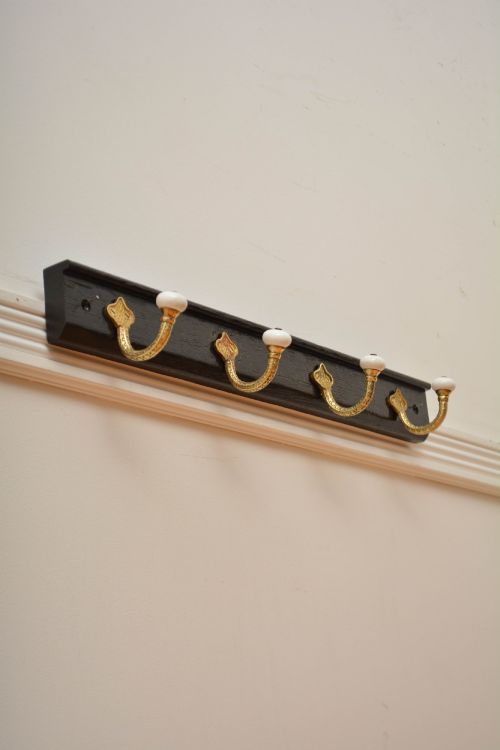
Makers constructed these racks using solid woods such as mahogany, oak, pine, and ebonised timber for the backplates. These boards were often shaped, chamfered, or polished to provide a stable foundation for the metalwork.
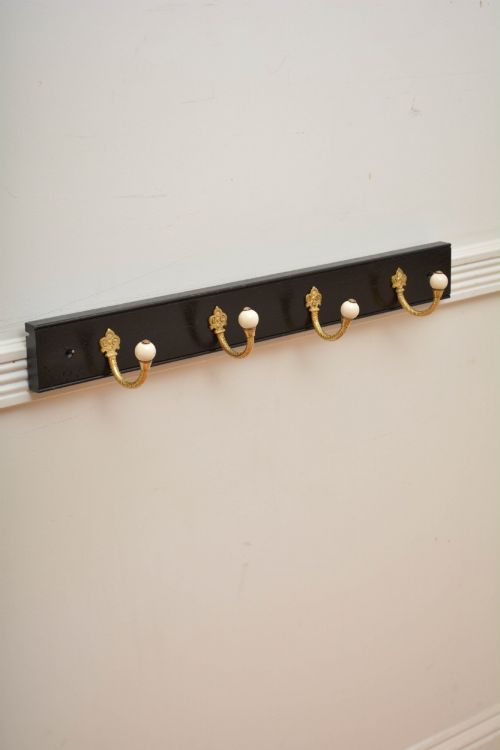
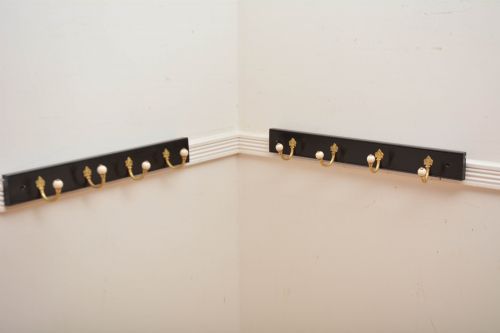
The metal components rely on cast brass, bronze, and sometimes gold and silver metal. Hooks were frequently cast with decorative details, incorporating ceramic, porcelain, or glass knobs at the terminals to protect garments.
Assembly involved securing the brass hooks directly to the timber backboards via screws or mounting plates. Many examples integrated bevelled mirror plates, barometer dials, or luggage rack sections through dedicated joinery and metal brackets.
Listings feature Victorian, Edwardian, and Art Deco eras alongside French provincial and William IV styles.
What varies in quality
The distinction between standard examples and finer pieces lies in the weight and casting precision of the brass work. Superior items feature heavily cast hooks with crisp chasing, detailed mounts, and substantial timber boards.
Design complexity also defines the range, moving from simple boards with plain hooks to elaborate French portmanteaus, Pullman racks, or pieces incorporating bevelled mirrors and horse head equestrian motifs.
Material selection impacts the overall standard, with dense woods like solid mahogany or ebonised oak paired with high-grade ceramics and original glass plates representing superior craftsmanship.
The Brass Wall Coat Rack Glossary
- Portmanteau
- A combined wall rack featuring shelves for hats alongside hanging hooks for coats. These large French fixtures often incorporate central mirrors.
- Ebonised
- Timber treated to resemble ebony, creating a dark, glossy black surface finish. This technique appeared frequently on Victorian and Edwardian backboards.
- Bevelled plate
- A mirror glass with angled or sloped edges cut around the perimeter. This treatment adds depth and light reflection to hall mirrors.
- Pullman luggage rack
- An overhead storage fixture modelled on railway carriage luggage compartments. These units utilise open metal brackets and rails for holding bags and hats.
- Equestrian hook
- Hanging hardware shaped around horse-related themes, such as horseshoes or crop handles. These designs reflect nineteenth-century sporting interests.
Brass Wall Coat Rack: Frequently Asked Questions
How do I mount a heavy brass wall coat rack?
Secure the timber backboard directly into wall studs using appropriate screws and fixings to support the combined weight of the wood and hanging garments.
Heavier French portmanteaus and mirrored racks require robust wall anchors due to their substantial brass framework and glass plates.
What is the difference between an English and a French coat rack?
English pieces typically feature straightforward timber boards, such as mahogany or oak, fitted with solid brass and ceramic hooks for practical hallway use.
French portmanteaus often integrate mirrors, elaborate cast brass brackets, and folding hat shelves designed for decorative impact in reception spaces.
How should I clean antique brass hooks?
Dust the brass and timber surfaces regularly with a soft, dry cloth to prevent grime accumulation. Avoid abrasive cleaners that strip historical patination.
If polishing is necessary, use a mild brass cleaner while protecting the surrounding wood and ceramic components from chemical contact.
Can these racks be used in modern bathrooms?
Many solid brass and timber racks suit bathroom environments for hanging towels and robes, provided the wood is treated against moisture.
Check that the timber backboard and iron or brass screws will not suffer from high humidity over extended periods.