
Hallway Wall Coat Rack
A hallway wall coat rack brings practical order to an entrance hall while carrying the weight of nineteenth and early twentieth century craftsmanship.
Hallway Wall Coat Rack
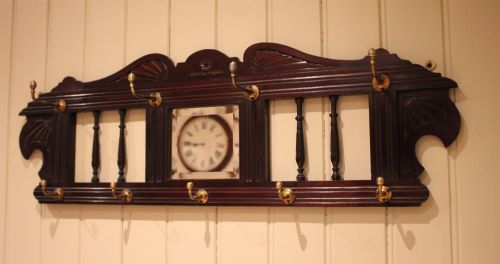
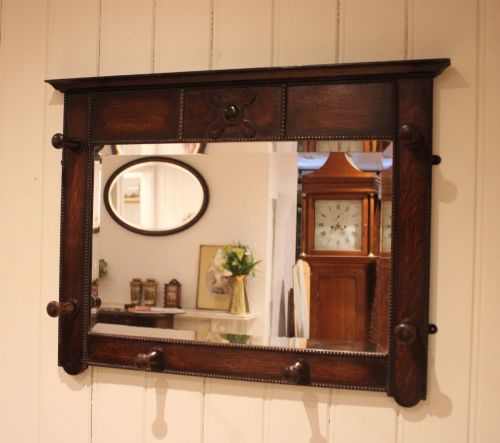
A hallway wall coat rack serves to organise daily garments and hats in an entrance hall, reception room, or cloakroom. These pieces range from simple mounted timber backboards with metal hooks to elaborate mirror-backed hall stands and combination units.
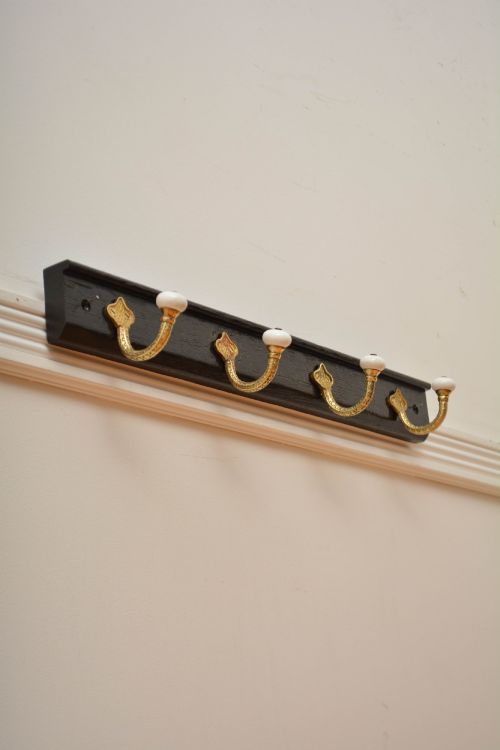
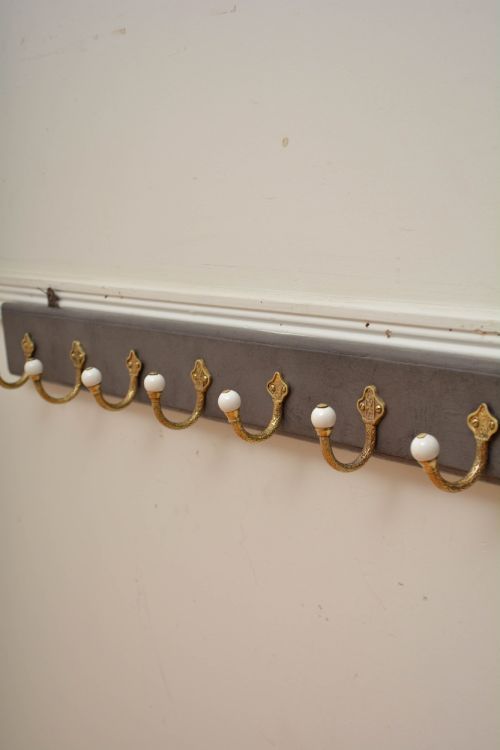
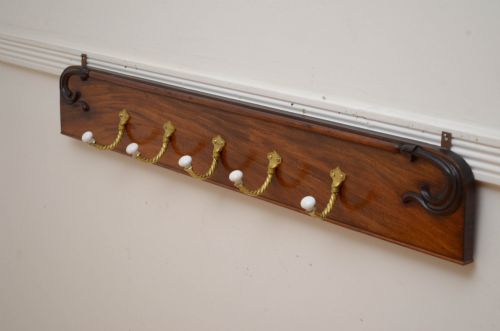
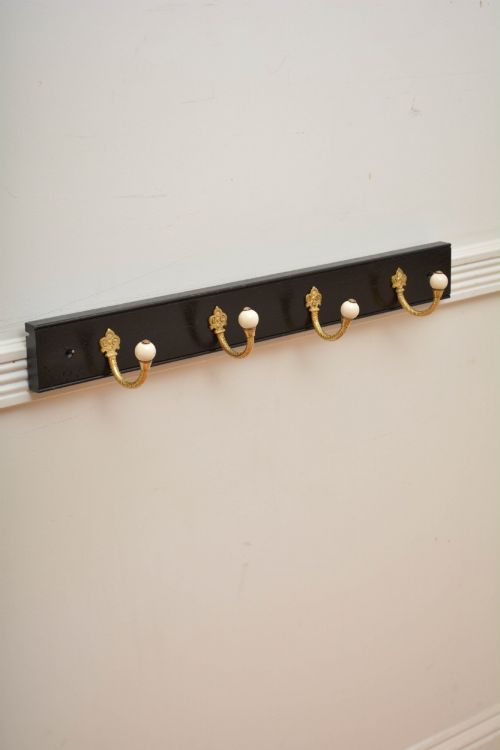
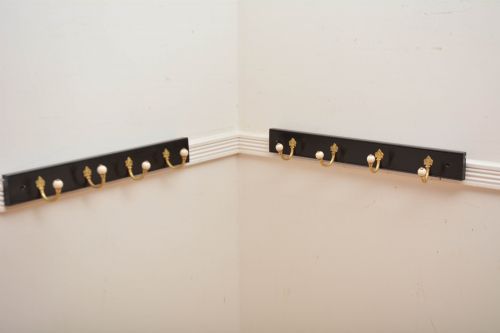
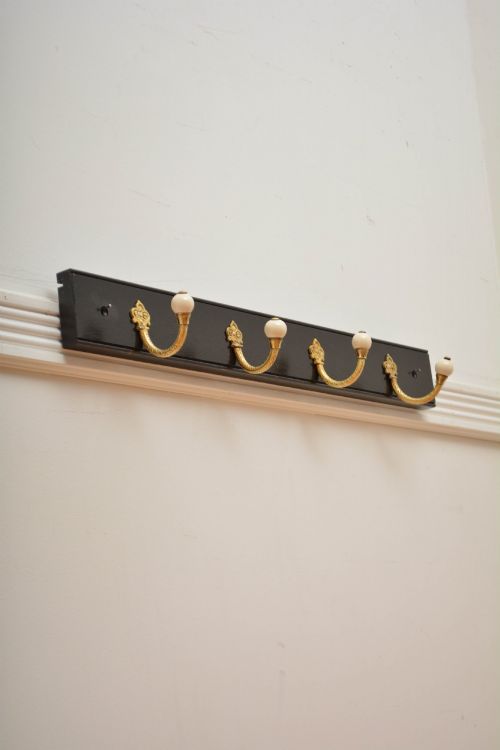
The pieces appearing most frequently on this page date from the Victorian and Edwardian periods, alongside turn of the century examples. Buyers will regularly encounter mounted wooden planks fitted with cast brass, ceramic, or porcelain hooks, often paired with matching shelf or mirror elements.
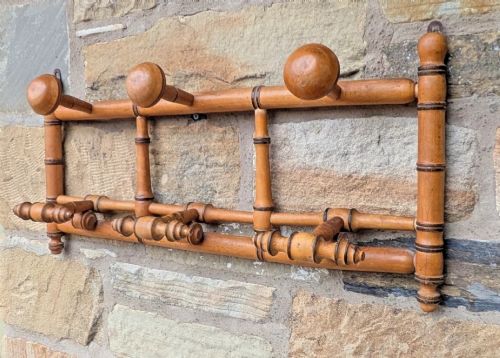
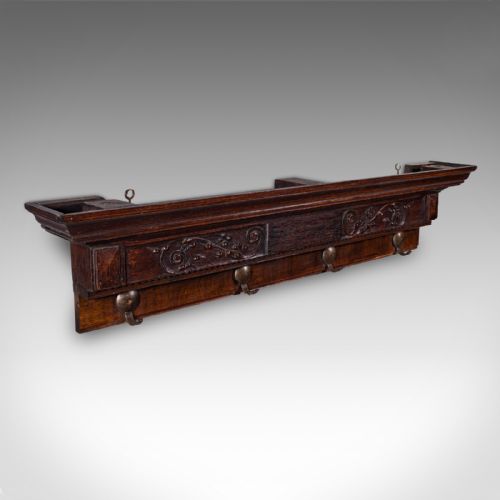
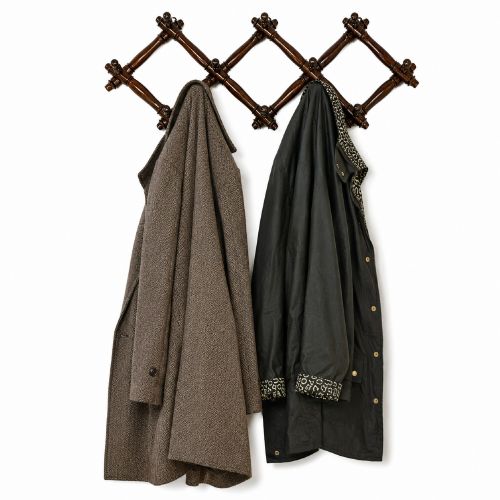
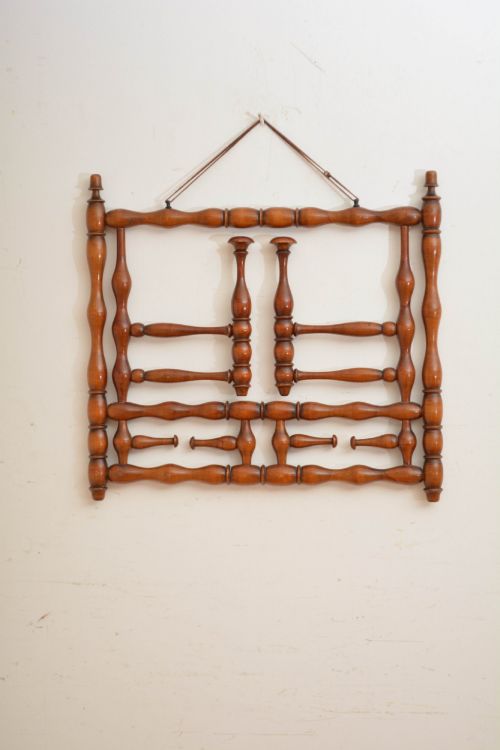
Origins span English, French, Dutch, and Scottish workshops, showing diverse regional preferences for timber species and hardware decoration. Formats vary from compact single rows of hooks to long portmanteaus and folding expanding mechanisms designed for restricted spaces.
Materials and construction methods
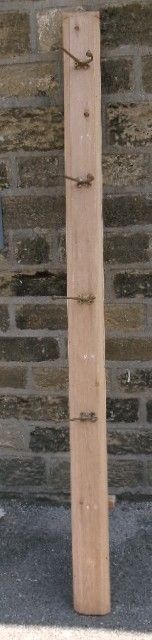
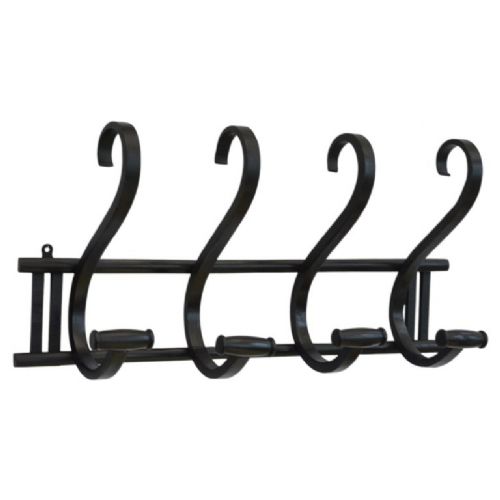
Makers utilised solid timbers such as mahogany, oak, pine, beech, and ebonised wood to form sturdy backboards capable of supporting heavy coats and hats. Bentwood techniques also appear, shaping pliable timbers into curved coat racks and wall hooks.
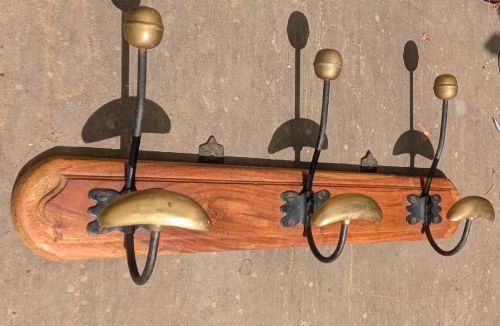
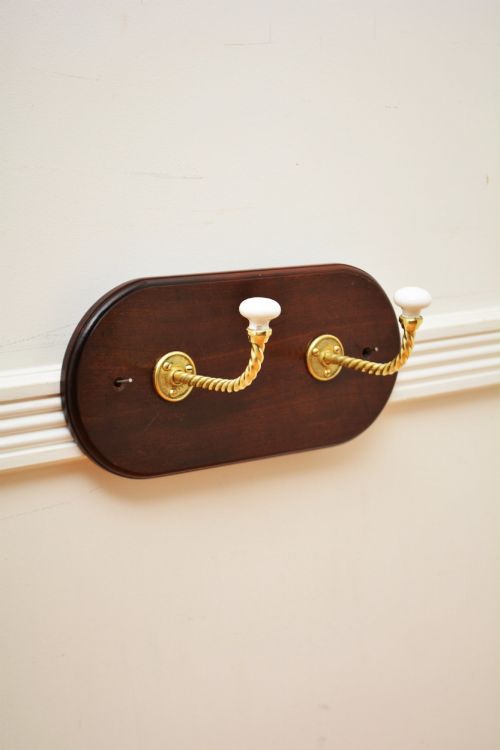
Metalwork forms an essential component, featuring cast brass, bronze, and wrought iron for mounting plates, brackets, and hooks. Many hooks incorporate ceramic or porcelain knobs and centres, combining utilitarian metal strength with decorative tactile details.
Listings feature periods spanning from the eighteenth century through to the Edwardian era and 1920s, constructed in oak, mahogany, pine, and beech.
Assessing quality and character
Quality rests in the heaviness and detail of the metal casting on the hooks and mounting plates, where crisp chasing and substantial brass distinguish better pieces from lighter alternatives. The selection of timber grain, particularly in polished mahogany and figured oak backboards, elevates the overall presence of the piece.
Proportion and integrity dictate value, seen in the secure fixing of hooks to solid timber backplates and the presence of original bevelled mirror plates or integrated shelves. Pieces that retain their original patination and matched sets of ceramic or brass fixtures demonstrate superior original manufacture.
The Hallway Wall Coat Rack Glossary
- Backboard
- The timber plank or mounting panel that supports the hooks and fixes directly to the wall. It distributes the weight of garments across multiple screw points.
- Portmanteau
- A large wall-mounted hat and coat rack featuring multiple brackets, often incorporating shelf space or elaborate ironwork. These substantial units served grand entrance halls.
- Bentwood
- Wood softened by steam and bent into curved structural forms without joints. This technique produced resilient coat racks and hooks during the nineteenth and twentieth centuries.
- Bevelled plate
- A mirror glass featuring an angled edge ground down around the perimeter. This traditional glazing method catches light and adds depth to hall mirrors and combination racks.
- Ebonised
- Timber treated with a dark stain or finish to imitate ebony. This treatment was common on Victorian and Edwardian wooden frames and backboards to create sharp contrast with brass hardware.
Hallway Wall Coat Rack: Frequently Asked Questions
How do I install a wall coat rack securely?
Heavy timber backboards require solid wall fixings, preferably screwing directly into wall studs or using heavy duty masonry plugs. Distributing weight evenly across the mounting holes prevents the rack from pulling away under the load of winter coats.
Ensuring the fixing screws match the countersunk holes in the original brass plates maintains the period appearance while providing necessary structural support.
How do I date an antique coat rack?
Dating relies on observing the timber types, screw heads, and hook manufacturing techniques. Victorian and Edwardian examples often feature hand-cut slot screws, solid mahogany or oak construction, and maker marks stamped into cast brass hooks.
Later turn of the century pieces may incorporate bentwood elements or French styling like simulated bamboo, whereas eighteenth century examples display simpler pegged joints and hand-forged iron work.
Can these coat racks handle heavy winter coats?
Period coat racks were constructed from dense hardwoods like oak and mahogany, fitted with robust cast brass or iron hooks designed for heavy woollen garments and cloaks. When properly anchored to a wall, they easily support daily winter wear.
Checking that the hooks are firmly screwed into solid timber rather than veneer ensures the rack remains stable over years of use.
How do I care for the brass and wood?
Wood surfaces benefit from occasional application of quality beeswax to nourish the grain and preserve the antique finish without creating artificial shine. Harsh modern cleaners should be avoided.
Brass hooks can be cleaned gently with a soft cloth to remove dust while preserving the darker patination that develops over decades of handling.