


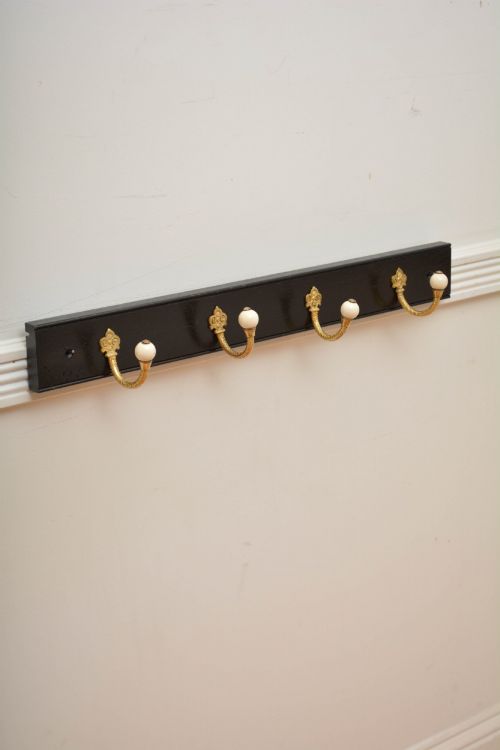
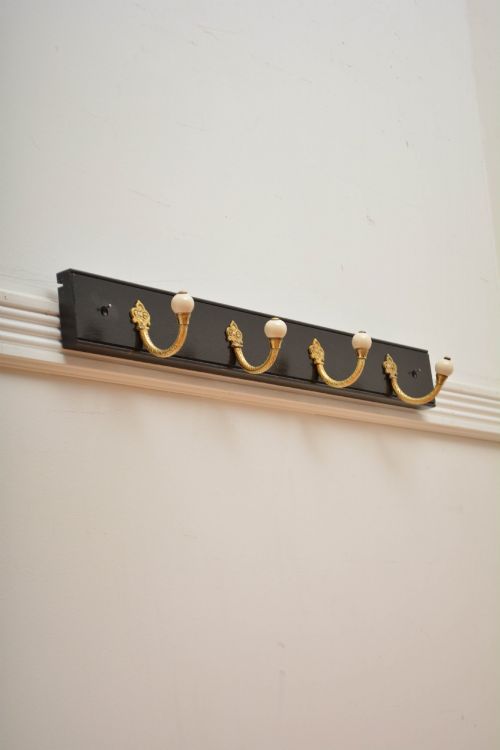
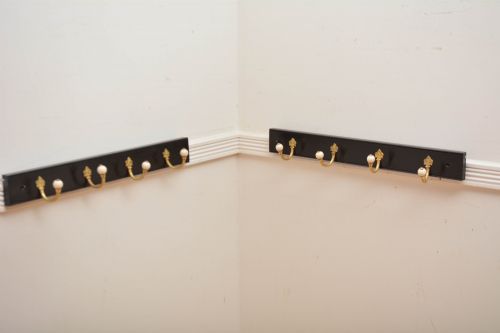


Antique Brass Peg Rail
These antique brass peg rail pieces are functional wall fittings valued for their period hooks and timbers, ready to organise hats and coats.
Antique Brass Peg Rail
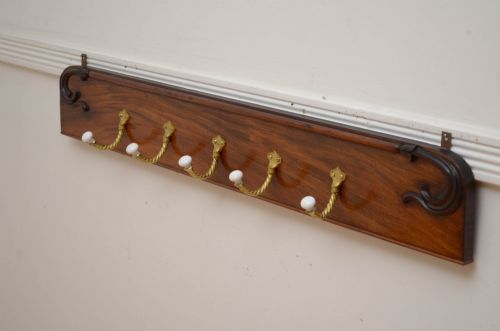
When you search for antique brass peg rail pieces, you encounter Victorian coat racks and coat hooks mounted on wooden backboards. These fixtures date from the nineteenth century, specifically spanning periods around eighteen eighty, eighteen ninety, and nineteen hundred.
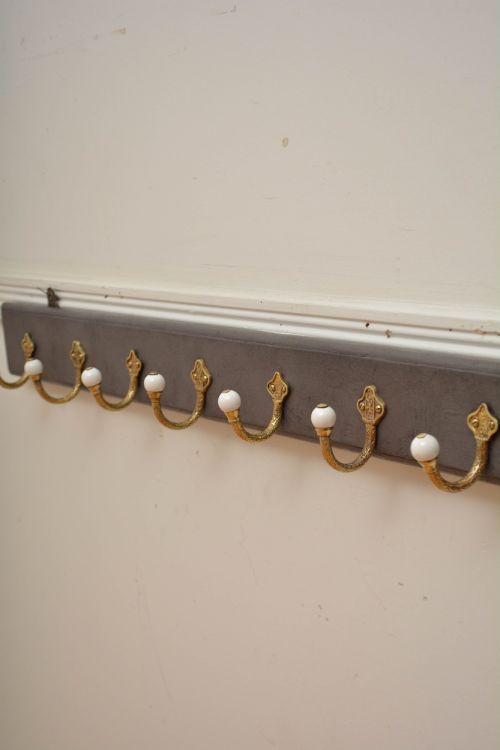
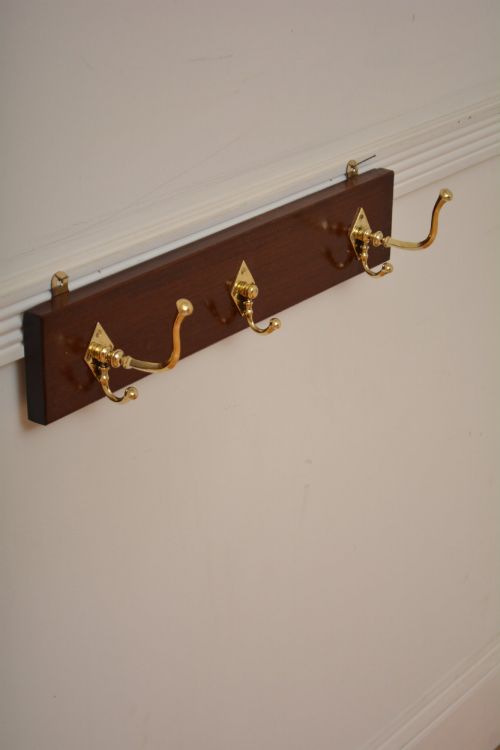
The objects take the form of wall-mounted rails designed for hanging garments in domestic hallways or utility spaces. Most examples combine robust metal hardware with timber backboards, ranging from compact double hooks to longer multi-hook strips.
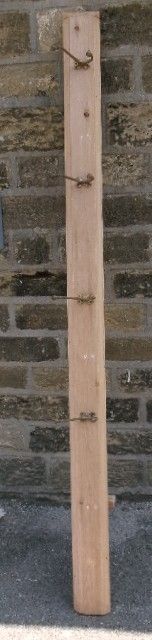
You meet variations spanning simple pine foundations to rich mahogany and ebonised wood boards. Styles encompass Victorian utility alongside decorative Aesthetic Movement and William IV designs featuring twisted rope details.
How they were made
Maker construction relies on mounting cast brass hooks directly onto wooden backboards using screws or integrated backplates. The metal components often feature detailed casting work on the mounting plates, paired occasionally with ceramic inserts or glass elements.
Backboards utilise various timbers including mahogany, pine, and ebonised wood, shaped with plain edges or decorative mouldings. Workshops selected these sturdy woods to support the weight of heavy garments hanging from the brass projections.
Antique Brass Peg Rail Retail Price Guide 2026
Typical asking prices for brass peg rail among the pieces listed under this phrase on Sellingantiques today, from the lower quarter to the upper quarter. They describe what is for sale here now, not the wider market.
Listings feature items from the Victorian era, William IV period, and Aesthetic Movement, utilising brass, mahogany, pine, and ebonised wood.
What varies in quality
Quality separates through the refinement of the brass casting and the choice of backboard timber. Finer examples display intricately cast mounting plates and solid mahogany or ebonised wood foundations rather than plain pine.
The integration of decorative details such as ceramic hooks or twisted rope motifs elevates the workmanship. Greater care in the original assembly ensures the hooks remain firmly anchored to their supporting boards.
The Antique Brass Peg Rail Glossary
- Brass
- A copper and zinc alloy used to cast the hook components. It provides durability and develops a natural patina over time.
- Mahogany
- A dense tropical hardwood selected for dark grain and strength. It frequently forms the backboard of nineteenth-century racks.
- Ebonised Wood
- Timber treated with a dark finish to imitate ebony. This technique was popular in Victorian decorative furnishings.
- Aesthetic Movement
- A late nineteenth-century design style emphasising visual art and craftsmanship. Pieces from this movement often combine contrasting materials.
Antique Brass Peg Rail: Frequently Asked Questions
How do I hang a peg rail?
These racks mount securely to walls using the pre-drilled screw holes typically found in the wooden backboards.
Ensure you fix the board directly into wall studs or use appropriate wall anchors to support the weight of heavy coats.
What rooms suit these racks?
Victorian coat racks suit hallways, boot rooms, and kitchens for organising everyday garments and accessories.
Their compact wall-mounted design provides practical storage without taking up floor space in narrow corridors.
How do I clean brass hooks?
Maintenance involves dusting the timber and wiping the metal components gently with a dry or slightly damp cloth.
Avoid harsh chemical polishes that strip away the aged character accumulated over the nineteenth century.
How are periods identified?
Dating relies on observing the timber choice, screw types, and stylistic indicators such as Aesthetic Movement motifs.
Victorian pieces often combine cast brass with dark woods like mahogany or ebonised pine.