


Vintage Cityscape Painting
A vintage cityscape painting brings the atmosphere of historic urban streets, bridges and canals directly into a room.
Vintage Cityscape Painting
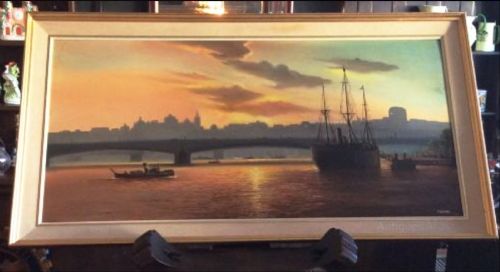
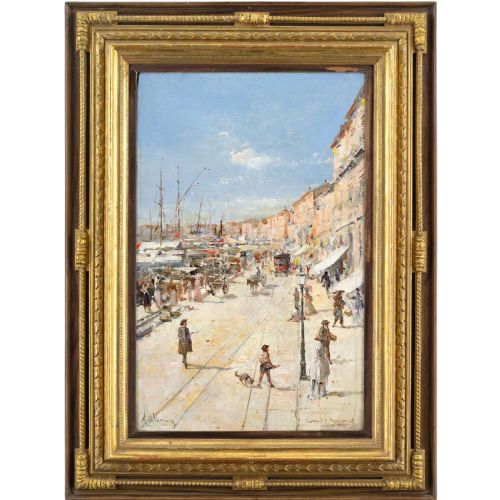
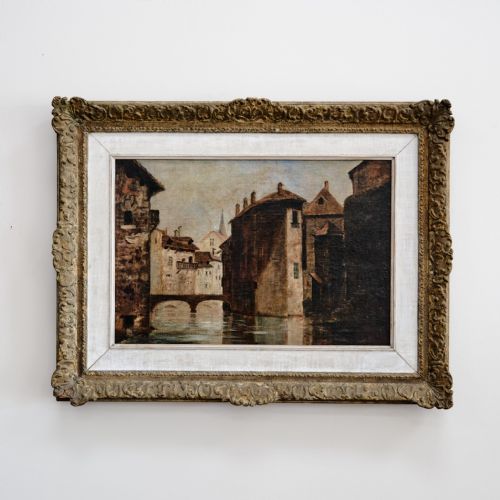
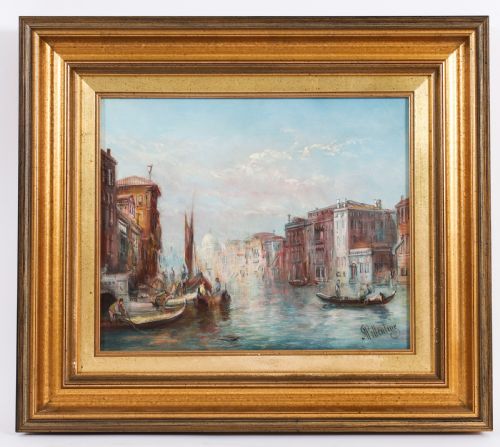
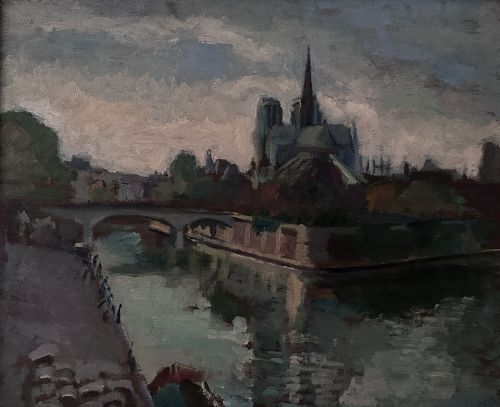
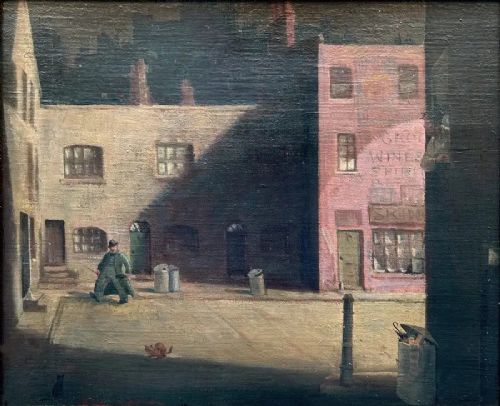
A vintage cityscape painting captures the built environment, recording streets, squares, and waterways from major urban centres like Paris, London, and Venice. These works range from tightly observed topographical watercolours to loose, expressive interpretations of architectural forms.
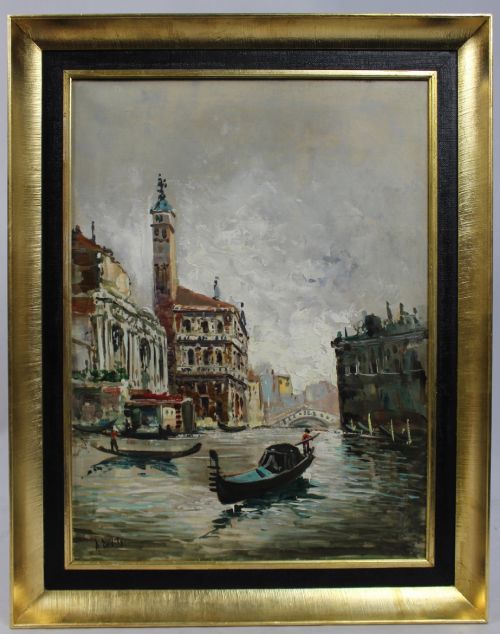
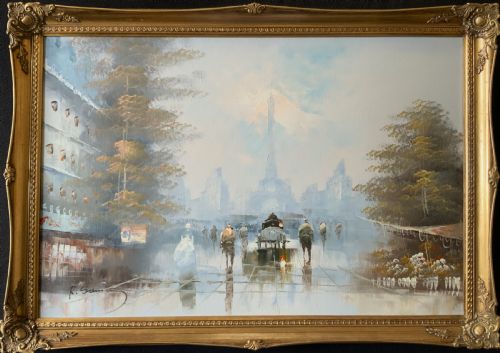
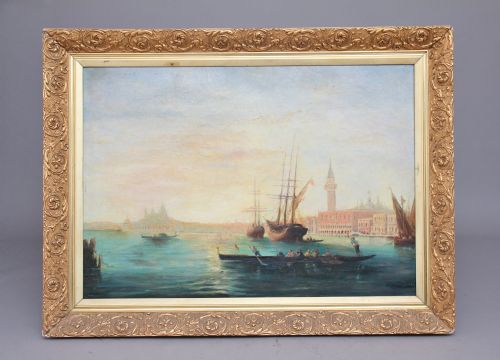
The version most commonly met on this page is the mid-century canvas, often dating from the 1950s or 1960s, depicting Parisian boulevards or Venetian canals through an impressionist lens. Such pieces frequently arrive in textured frames of giltwood that complement the painted surface.
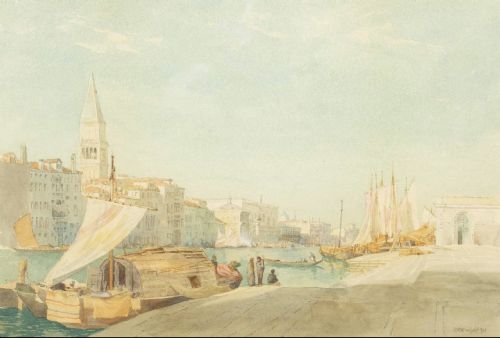
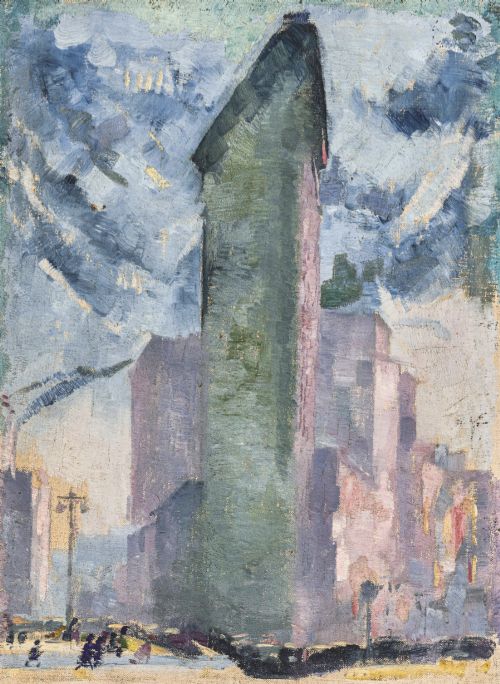
Earlier examples stretch back through the nineteenth century, taking the form of detailed oil paintings or delicate watercolours created during periods of grand travel. These older works lean towards academic realism or early impressionism before giving way to post-impressionist and expressionist experimentation in the twentieth century.
How they were made
Artists painted primarily with oil on canvas or board, utilising the slow-drying nature of the medium to build up rich layers of pigment and texture. Impasto techniques appear frequently in mid-century works, where thick applications of oil paint create a physical relief that catches the light on building facades and water surfaces.
Watercolour on paper served as the preferred medium for lighter, more immediate sketches, often executed on location during travels across Britain and continental Europe. These watercolours were frequently finished with pencil underdrawing and mounted behind glass within traditional frames.
Substantial frames of wood and giltwood provide the structural housing for many of these paintings, acting as an integral part of the finished artwork. Gilded frames enhance the visual weight of large oil paintings, while simpler wooden surrounds suit smaller watercolours and sketches.
Listings feature canvases spanning from the nineteenth century through the 1960s, employing oil, watercolour, and gouache on paper and wood.
What varies in quality
The handling of light and perspective distinguishes a masterful composition from a formulaic street scene. Strong works demonstrate a confident understanding of urban geometry and atmosphere, whereas lesser examples rely on repetitive brushwork and stagnant colour palettes.
The physical integrity of the canvas and paint layers plays a significant role in overall standard. Stable oil paint with minimal craquelure and original, undamaged framing separates well-preserved pieces from those requiring extensive conservation.
Augusto Alberici·Alfred Pollentine·Antonio DeVity·Richard Henry Wright·Francisco Sancha·Alfred Wolmark·Lilian Colbourn·Caroline Burnett·Paul Jean Anderbouhr·Victor Gabriel Gilbert·Gabriel Dauchot·Fred Lawson·Charles James Lauder·Ron Folland·Merio Ameglio·Claude Jousset·William Raymond Dommersen·George Whyatt·Emerson H Groom
The Vintage Cityscape Painting Glossary
- Impasto
- Paint applied thickly to a canvas, standing out in relief from the surface. This technique allows artists to build tangible texture into architectural elements like stone walls or choppy river water.
- Giltwood
- Wood that has been covered with a thin layer of gold leaf or gilt finish. Frames constructed from this material are common on mid-century and nineteenth-century oil paintings.
- Watercolour
- A paint consisting of pigment suspended in a water-based solution, typically applied to paper. It yields transparent washes that capture fleeting atmospheric effects.
- Post-Impressionism
- An artistic movement extending impressionism while rejecting its limitations, favouring more symbolic content and heavier weight. Works in this style emphasise vivid colours and distinct brushstrokes.
- Grand Tour
- A traditional excursion through Europe undertaken by upper-class Europeans in the eighteenth and nineteenth centuries. Paintings from this context often record Italian ruins and Venetian canals.
Vintage Cityscape Painting: Frequently Asked Questions
Where should I hang a large cityscape?
These large canvases suit principal living spaces or dining rooms where a broad view can anchor the room. Placing them on a plain wall allows the urban detail and frame to command attention.
Ensure the painting avoids direct, harsh sunlight to protect oil pigments and paper works over time. Soft, ambient lighting will bring out the texture of impasto surfaces without creating distracting glare on the varnish.
How do I identify a mid-century piece?
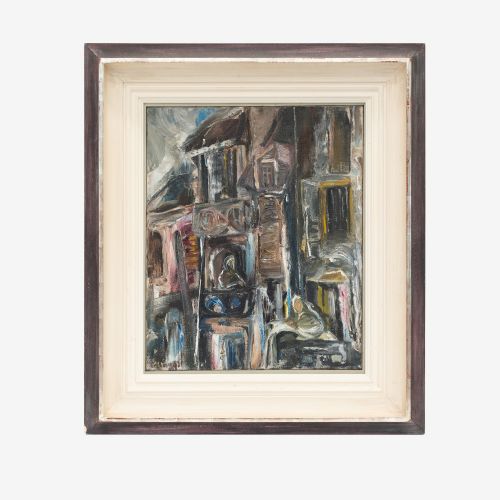
Mid-century works often feature looser brushwork, abstracted architectural forms, and vibrant colour palettes applied to canvas or board. Dates around the 1950s and 1960s frequently appear in listing records for these styles.
The subject matter also points to the era, focusing on bustling Parisian streets, iconic monuments, or simplified industrial forms. Framing materials from this period typically lean towards simpler wooden profiles or distressed gilt finishes.
What is the difference between oil and watercolour?
Oil paintings utilise thick pigments suspended in drying oils, applied to canvas or wood panels to create rich, textured surfaces. They offer deep colour saturation and a durable finish that stands up well to indoor environments.
Watercolours use water-soluble pigments on paper, producing delicate and luminous images that require glass protection. These works convey a lighter, more translucent atmosphere, ideal for rapid architectural studies.
How do I care for an antique frame?
Dust giltwood and wooden frames gently with a soft, dry brush to prevent particle buildup in the decorative mouldings. Avoid liquid cleaners or polishes, which can strip the delicate gold leaf or damage the underlying wood.
Keep the framed artwork away from damp walls and sudden temperature shifts to prevent the wood from warping. Stable indoor humidity preserves both the structural integrity of the frame and the canvas within.