

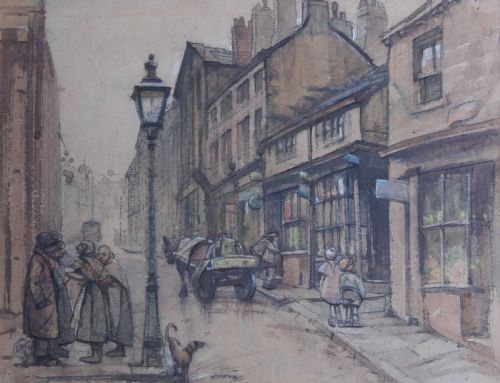
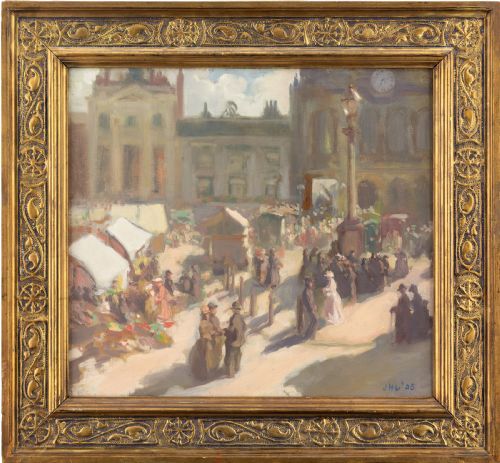


Framed Townscape Picture
These framed townscape picture examples bring urban streets and historic market places straight to your wall, captured across periods from the Georgian era through to the mid-twentieth century.
Framed Townscape Picture
A framed townscape picture records the character of urban streets, market squares and civic buildings through painted and drawn records. When you search for a framed townscape picture, you encounter works ranging from bustling northern English market towns to continental European street scenes and coastal harbours.
The pieces on this page span the Georgian, Victorian, Edwardian and mid-century periods, showing how artists across generations recorded changing architecture and street life. You will find both intimate watercolours on paper and larger oil paintings on canvas or board.
Many examples capture specific named locations, from Yorkshire market towns to Venetian palazzos and French coastal ports. They offer a direct window into historical urban environments framed securely in wood or giltwood.
Materials and techniques
The works rely upon traditional painterly mediums, principally oil on canvas or board, alongside pencil and watercolour on paper. Artists utilised these materials to build depth in stone facades, skies and street level activity.
Framing forms an integral part of the physical object, utilising wood, gilt wood and giltwood mouldings protected beneath glass where watercolours are concerned. These frames often reflect the decorative taste of the period in which the artwork was created.
Framed Townscape Picture Retail Price Guide 2026
Typical asking prices for framed townscape picture among the pieces listed under this phrase on Sellingantiques today, from the lower quarter to the upper quarter. They describe what is for sale here now, not the wider market.
The listings span from the Georgian era through Victorian and Edwardian decades up to the mid-century modern period.
What separates the grades
Quality rests upon the sureness of the draughtsmanship and the artist's ability to render the specific atmosphere of a street or market place without stiffness. Stronger works demonstrate confident brushwork or precise watercolour handling that brings the architecture and human activity to life.
The harmony between the artwork and its period frame also influences the overall standard. Examples that retain well-preserved original giltwood or wooden framing present a more cohesive historical object than those in later or unsympathetic replacements.
John Hodgson Lobley RBA·Joseph W Milliken·Alfred Pollentine·Edward Henry Holder·Angus Rands·Fred Lawson·Annie L Lee
The Framed Townscape Picture Glossary
- Watercolour painting
- A picture executed with pigments bound in a water-soluble adhesive, typically worked on paper and requiring glass protection in its frame.
- Oil on canvas
- A painting technique where pigmented linseed oil is applied to a woven fabric support stretched across a wooden frame.
- Giltwood
- Wood carved and coated with a thin layer of gold leaf or metallic gilt, frequently seen on traditional picture frames.
- Townscape
- A genre of visual art depicting urban streets, buildings, squares and city views rather than open rural countryside.
Framed Townscape Picture: Frequently Asked Questions
How do I date a framed townscape picture?
Dating relies upon stylistic clues within the clothing, vehicles and architecture depicted in the scene, alongside the framing materials and stretcher construction.
Signatures, artist biographies and handwritten inscriptions on the reverse of the canvas or paper also help narrow the decade of creation.
Are watercolour townscapes always framed under glass?
Watercolour pigments and paper supports are vulnerable to moisture, dust and direct handling, requiring a physical barrier to ensure their survival.
Glass protects the delicate paper surface from atmospheric pollutants while keeping the work stable within its wooden or giltwood frame.
What is the difference between an oil and a watercolour townscape?
Oil paintings use thick pigments suspended in oil on canvas or board, offering rich textures and deep colour saturation that often do not require glass.
Watercolours employ transparent washes on paper, creating a lighter and more luminous effect that necessitates framing behind glass for protection.
How should I hang a townscape picture at home?
These works suit dining rooms, studies or hallways where wall space allows viewers to examine the architectural detail and street atmosphere up close.
Position the picture away from direct sunlight and damp walls to protect both the painted surface and the original wooden frame.