

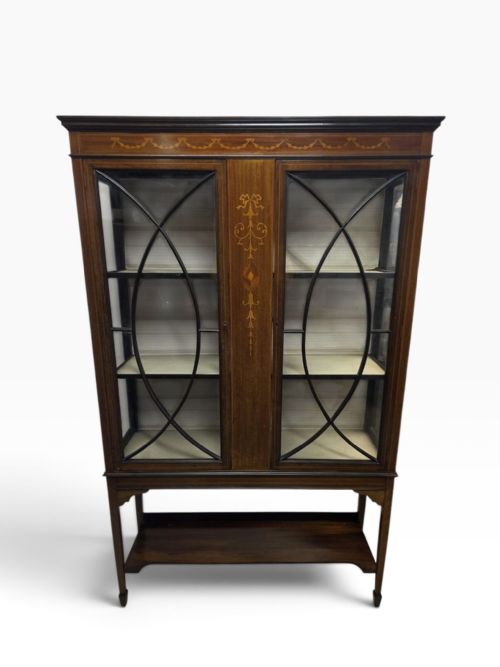
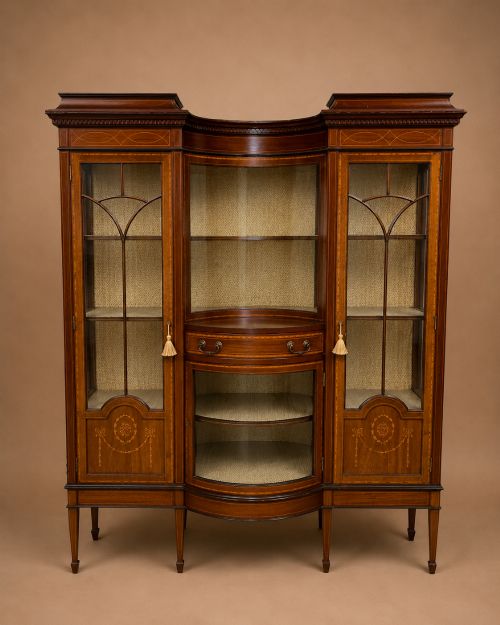
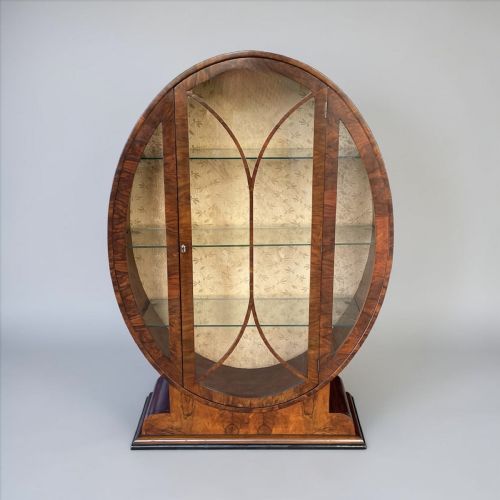
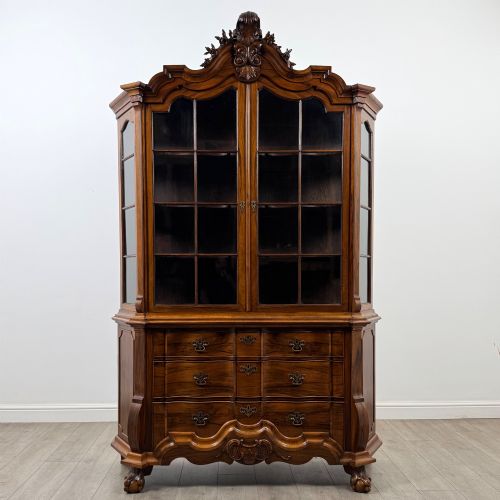
Vintage China Vitrine
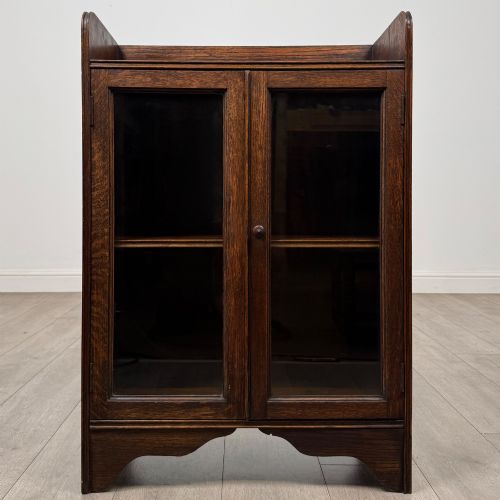
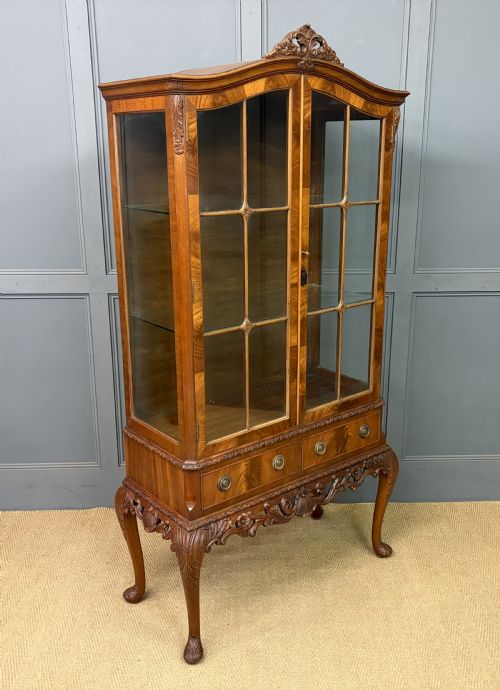
A vintage china vitrine brings glass-fronted elegance to your room, designed to showcase cherished tableware and ornaments.
Vintage China Vitrine
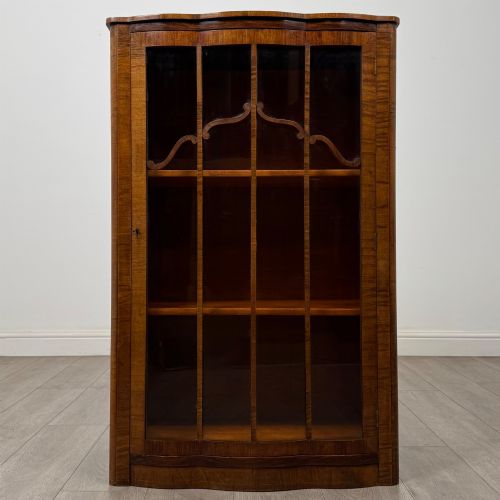
When you search for a vintage china vitrine, you encounter glazed display cabinets, bookcases, and corner cabinets intended to protect and exhibit porcelain. These pieces appear most frequently from the Edwardian period and the 1930s, reflecting cabinet-making traditions of the early twentieth century.
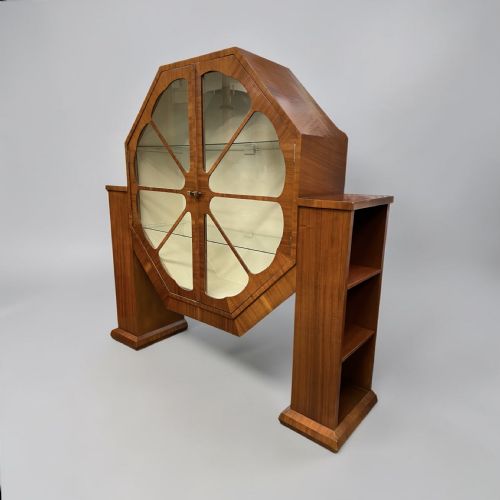
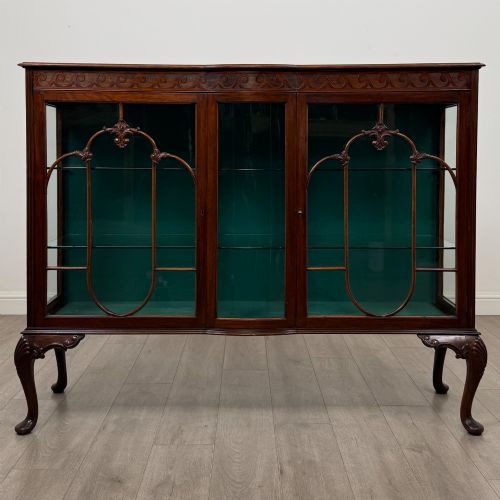
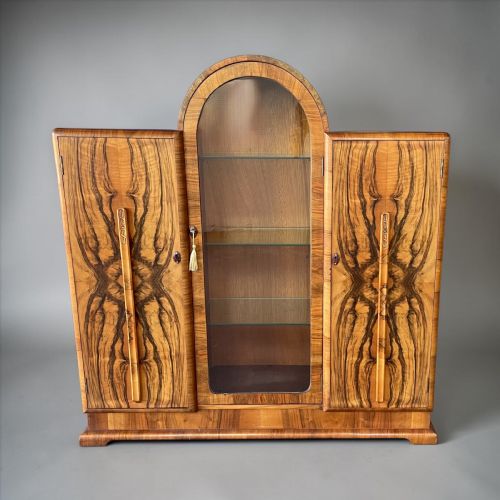
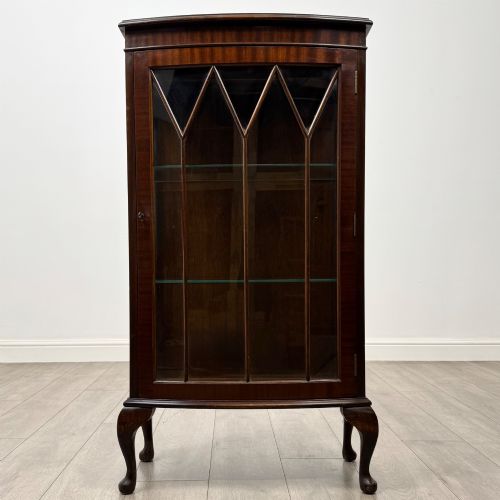
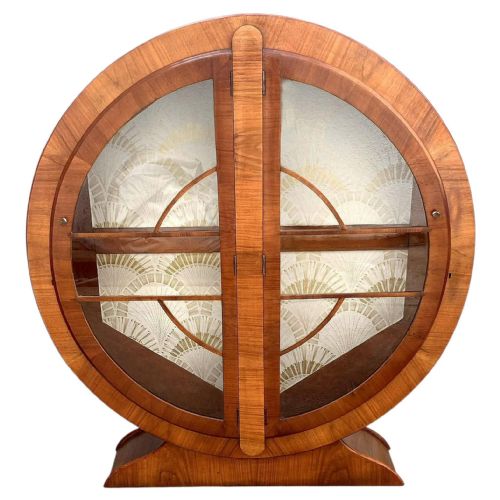
The form adapts to various spaces through rectangular, oval, circular, and bow-front silhouettes. Edwardian iterations often feature mahogany or satinwood with inlaid details, whilst 1930s examples embrace Art Deco curves and figured walnut veneers.
Makers such as Maple & Co. contributed to this tradition, producing refined display pieces in revival styles. Buyers most commonly meet mahogany or oak upright cabinets equipped with glazed doors for visible storage.
How they were made
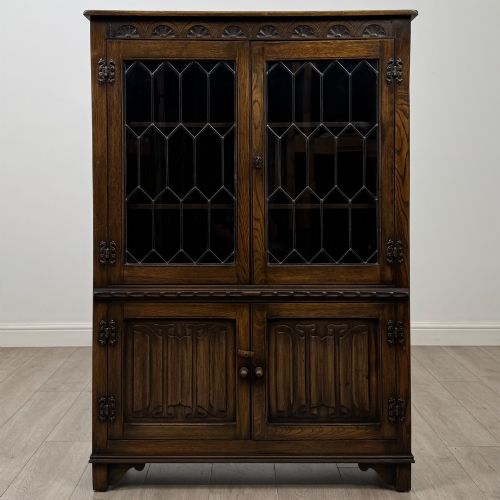
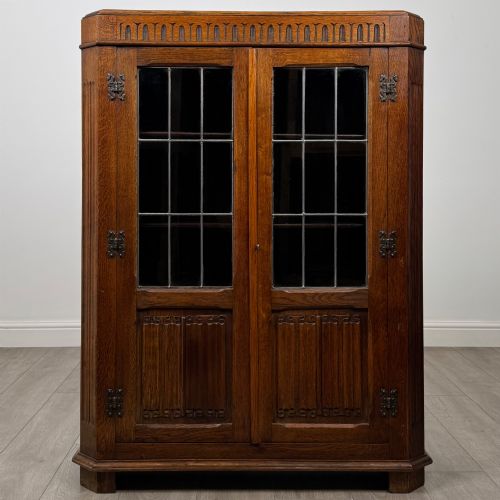
Cabinet makers utilised solid woods like oak and mahogany alongside decorative veneers including burr walnut and satinwood. These primary structures received glass panels held by lead or wooden glazing bars to construct the viewing areas.
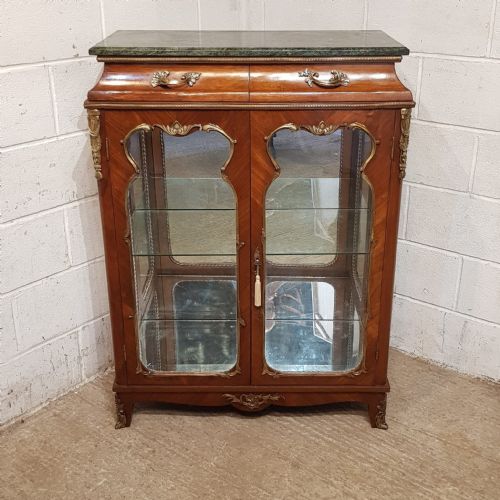
Surface enrichment relied upon brass hardware, floral marquetry, and gilt metal mounts, particularly on pieces influenced by French styles. Internal mirrored backs frequently augmented the display effect by reflecting light through the stored china.
Construction techniques balanced structural support with aesthetic lightness, employing slender tapering legs or enclosed plinths depending on the prevailing style, from Sheraton Revival to Art Deco.
Among the rounded forms stands a rocket cabinet, bringing a streamlined aerodynamic silhouette to the display of traditional china.
What varies in quality
The selection of timber veneer dictates much of the visual distinction, with highly figured burr walnut or carefully matched satinwood marking out superior examples. The intricacy of inlaid marquetry and the precision of brass or gilt metal mounts similarly separate standard production from finer cabinet work.
Structural refinement shows in the execution of curved glazing and the stability of door frames housing large glass panes. Pieces bearing maker attribution, such as work by Maple & Co., demonstrate higher standards in joinery and proportional balance.
Maple & Co.
The Vintage China Vitrine Glossary
- Vitrine
- A glass-fronted cabinet designed specifically for displaying fine objects and porcelain. The form prioritises visibility through extensive glazing on the front and often the sides.
- Marquetry
- Decorative patterns formed by fitting together thin slices of wood veneer onto a structural surface. Craftsmen utilise contrasting timbers to create floral or geometric motifs.
- Sheraton Revival
- A late nineteenth and early twentieth century style inspired by the lightweight furniture designs of George Sheraton. These pieces often incorporate satinwood, delicate inlay, and tapering supports.
- Linenfold
- A carved wooden panel motif that mimics folded vertical lengths of fabric. This decorative relief frequently appears on oak cabinetry rooted in Tudor or Jacobean revival styles.
- Bow-front
- A convex curved furniture front that projects outward in an arc. This shaping softens the corners of display cabinets and enhances the reflection of light on glass panels.
Vintage China Vitrine: Frequently Asked Questions
What is a vintage china vitrine?
A vintage china vitrine is a glazed display cabinet intended for showcasing porcelain and decorative objects behind glass doors.
These pieces span various revival styles and Art Deco designs from the late nineteenth and early twentieth centuries.
How do I style a vitrine?
Place your vitrine in a dining room or drawing room where natural light can pass through the glazed panels.
Arrange china and glassware with adequate spacing to maintain visibility through the wooden or leaded framing.
How do I date an Edwardian vitrine?
Examine the timber choices, such as mahogany with satinwood inlay, and look for architectural revival motifs typical of the period.
Construction methods and secondary woods inside the cabinet help confirm an early twentieth-century origin.
What woods were used in these cabinets?
Cabinet makers predominantly used mahogany, oak, and walnut, frequently enhanced by decorative veneers like satinwood and burr walnut.
Secondary timbers such as pine or oak appear internally on drawer linings and backboards.