



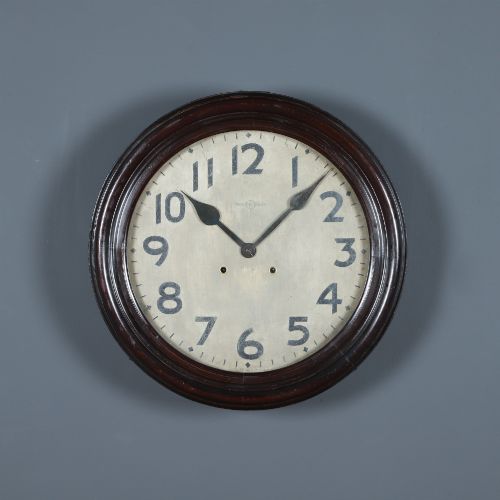


Vintage Chime Wall Clock
A vintage chime wall clock brings rhythm to a room through traditional strikes and dependable mechanical movements.
Vintage Chime Wall Clock
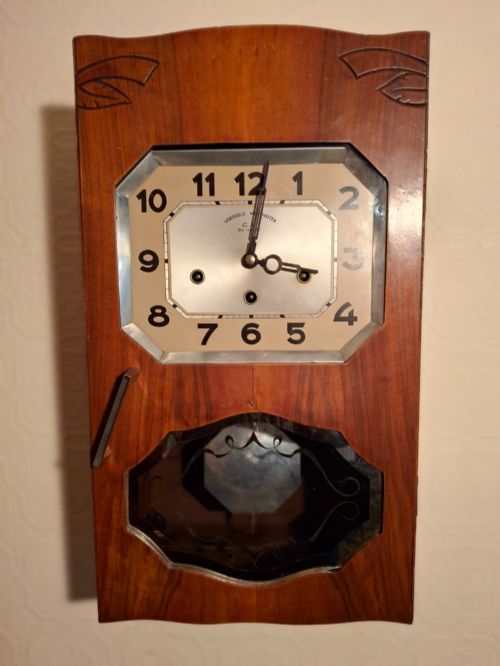
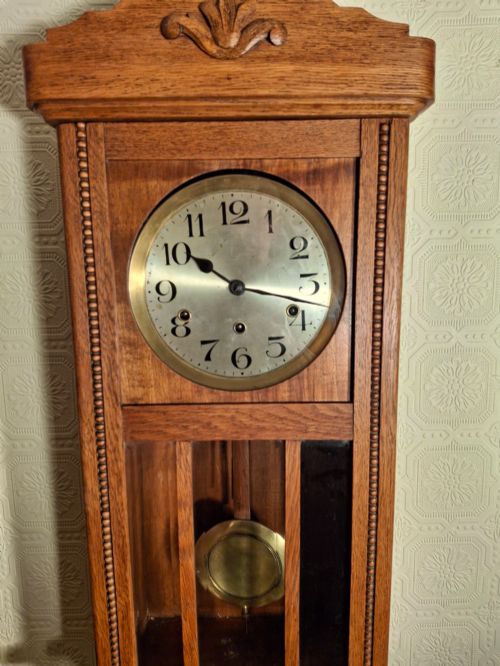
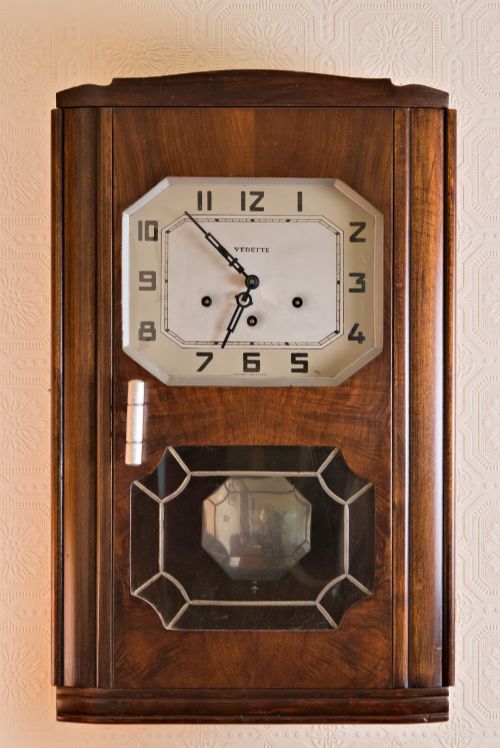
A vintage chime wall clock is a hanging timekeeper designed to mark the hours and quarters with tuned gongs or bells. The pieces gathered here span several decades, featuring prominent round dials and architectural wooden cases.
Most examples you will encounter date from the early twentieth century, leaning heavily into Art Deco symmetry and Edwardian solidity. These wall-mounted horological pieces combine domestic utility with decorative cabinet work.
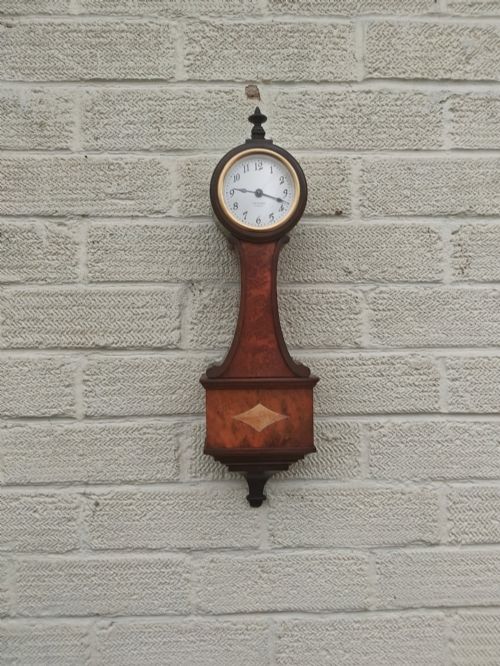
The selection ranges from compact banjo shapes to large railway station dials and double weight Vienna regulators. Walnut and mahogany dominate the timber choices, often paired with brass bezels and glass viewing doors.
Materials and construction
Makers built these wall clocks using solid hardwoods like oak, mahogany, and walnut, frequently applying walnut veneer to flat surfaces for decorative grain patterns. Brass components form the mechanical movements, pendulum bobs, and dial surrounds.
Enamel and painted metal dials provide a clear surface for numerals, protected behind hinged glass doors in turned wooden frames. Cases feature carved details, glazed side panels, and brass or steel winding arbors.
Vintage Chime Wall Clock Retail Price Guide 2026
Typical asking prices for vintage chime wall clock among the pieces listed under this phrase on Sellingantiques today, from the lower quarter to the upper quarter. They describe what is for sale here now, not the wider market.
Recorded styles span Arts and Crafts, Art Deco, and Edwardian periods, alongside regional items including Japanese railway clocks and French wall timepieces.
Assessing craftsmanship
Quality rests in the precision of the movement and the integrity of the cabinet construction. Finer examples exhibit crisp carving, well-figured timber veneers, and robust brass gear trains that maintain accurate time and resonant chimes.
Simpler production pieces show plainer casework and standard mass-produced movements without acoustic tuning for the gongs. The weight of the timber and the clarity of the dial markings signal the standard of the original workshop.
Vedette·Enfield·Seth Thomas·Odo
The Vintage Chime Wall Clock Glossary
- Westminster Chime
- A four-note melody played on quarter-hours by mechanical clock movements. This familiar sequence is found on many twentieth-century striking clocks.
- Vienna Regulator
- A high-grade weight-driven wall clock originating in nineteenth-century Austria. These pieces feature long glass-fronted cases designed to showcase the swinging pendulum.
- Banjo Clock
- A wall clock with a round dial, a slender neck, and a rectangular box base at the bottom. This distinct American silhouette gained popularity during the nineteenth and twentieth centuries.
- Arbor
- The rotating axle or spindle that supports the hands, gears, or springs within a clock movement. Winding arbors are where the key fits to tension the mainsprings.
Vintage Chime Wall Clock: Frequently Asked Questions
Where should I hang a heavy wooden clock?
Mount your clock directly onto a solid wall stud or use heavy-duty wall anchors rated for the combined weight of the timber case and movement. Secure fixing prevents vibrations from the wall from interfering with the pendulum's steady beat.
Keep the clock away from damp areas, direct sunlight, and sources of heat that could dry out the wooden case or warp the timber veneer over time.
Why does the clock chime at the wrong time?
Chiming clocks can occasionally fall out of synchronization with the hands due to moving or stopping the mechanism incorrectly. Advancing the minute hand slowly allows the strike train to complete its sequence and realign with the time shown.
If the sequence remains incorrect, most movements feature a small synchronising lever or cord near the dial that advances the strike train independently until it matches the hour.
How do I keep the pendulum swinging evenly?
Hang the clock plumb against the wall so the case is completely vertical, which ensures the anchor escapement releases the gear teeth at equal intervals. A ticking sound that has an uneven 'tick-tock' rhythm indicates the clock is out of beat and requires minor adjustments to the crutch wire or case position.
Most wall clocks include a small crutch adjustment behind the dial or pendulum to fine-tune the beat until the rhythm sounds steady and balanced.