
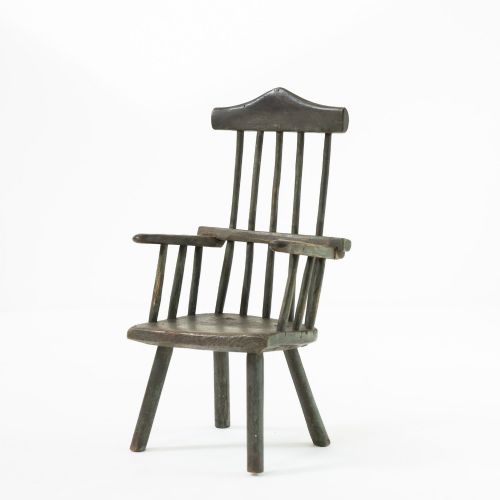
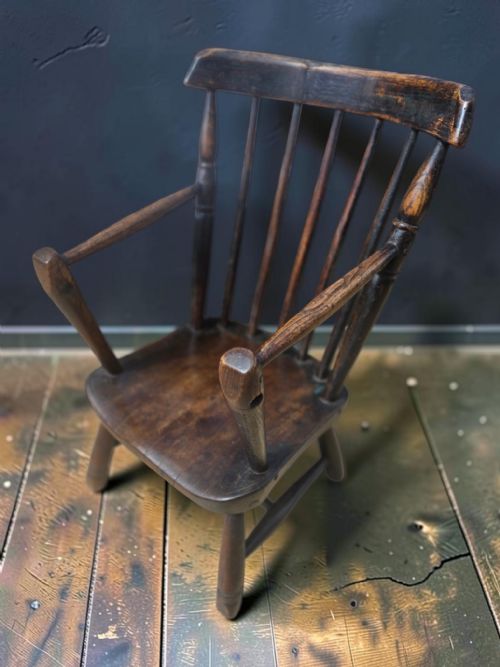
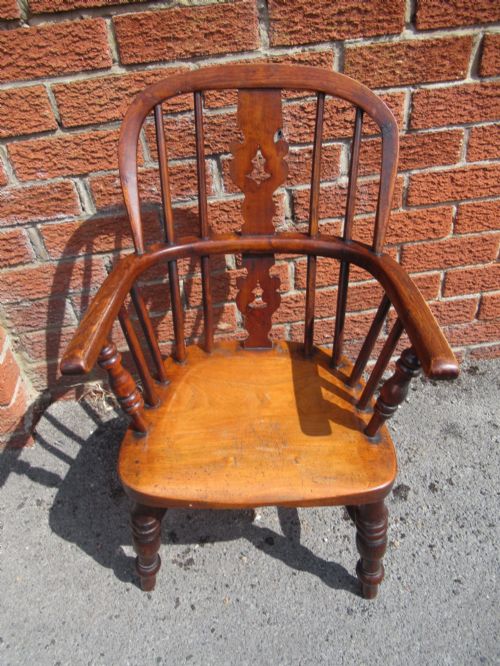


Vintage Childs Windsor Chair
A vintage childs windsor chair brings genuine vernacular character to a room, built down in scale for younger sitters.
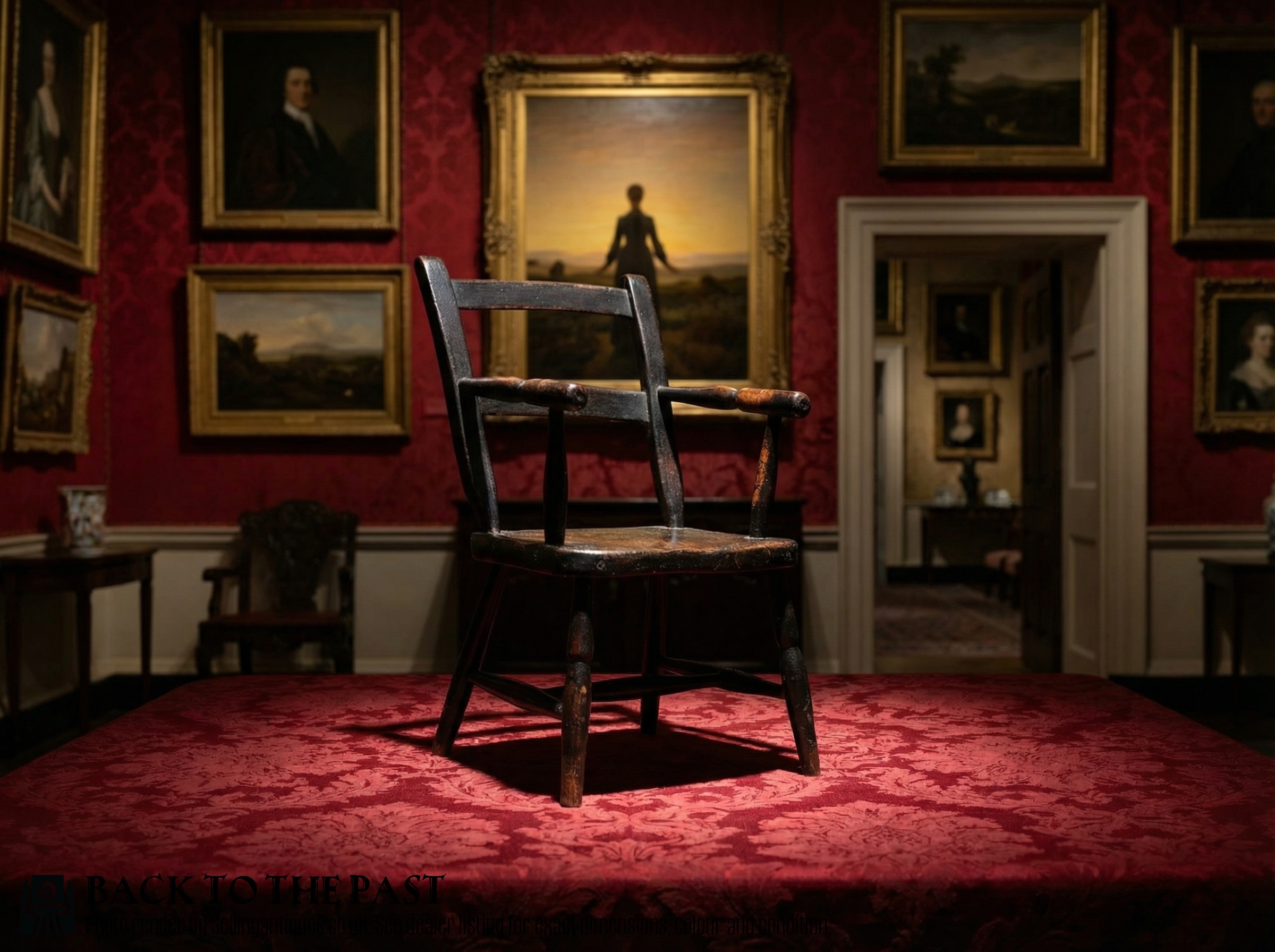
Vintage Childs Windsor Chair
When you search for a vintage childs windsor chair, you find scaled-down country seating created for domestic use across several centuries. The pieces on this page span the Georgian, Regency, and Victorian periods, alongside specific dates like 1750, 1800, 1850, and around 1830 or 1840.
You meet armchairs, rocking chairs, high chairs, and stick-back or hoop-back variants. Origins stretch across English regional vernacular styles, Welsh vernacular, and West Country traditions, showing the robust utility of domestic country seating.
How they were made
Maker-joiners built these small chairs using traditional timber combinations, frequently pairing elm seats with ash, beech, or oak for the spindles, legs, and bentwood backs. Some examples employ yew wood or yew and elm together, while others retain historic paint surfaces.
Construction relies on bodging techniques where turned legs and back spindles wedge directly into solid, thick timber seats. Hoop backs and stick backs use steam-bent components to form sturdy, enveloping frames designed to withstand generations of nursery use.
Listings feature elm, ash, oak, yew, beech, and painted surfaces across 19th-century, Georgian, Regency, and Victorian periods.
What varies in quality
Quality rests in the balance of the proportions and the visual depth of the native timbers selected by the maker. A well-balanced hoop or stick back possesses an organic harmony that makes the reduction in scale feel completely natural rather than awkward.
The choice and figuring of the wood elevate certain examples above standard utility pieces, particularly where yew wood or striking elm grain is utilised. Surface patination, honest wear, and the retention of original painted finishes also distinguish finer regional pieces.
The Vintage Childs Windsor Chair Glossary
- Windsor chair
- A chair built with a solid wooden seat into which all other components - legs, back, and spindles - are tenoned directly. This method creates a sturdy, resilient form typical of English country furniture.
- Hoop-back
- A style of chair back formed by a single continuous piece of steam-bent wood curving around to create the armrests or top rail. It provides a strong, graceful enclosure for the sitter.
- Stick back
- A vernacular seating style where turned or cleft wooden spindles form the back support rather than a solid central splat. These spindles connect the seat to the top rail.
- Vernacular
- Objects designed and built by local craftspeople using regional traditions and readily available native materials, prioritising function over academic stylistic rules.
- Bodge
- To shape green wood using a pole lathe and drawknife in woodland settings. Country chairmakers produced turned parts efficiently through this method.
Vintage Childs Windsor Chair: Frequently Asked Questions
How were childs windsor chairs used?
These small chairs served everyday domestic roles in nurseries, parlours, and farmhouses, offering children a sturdy seat at table or hearth. Rocking variants and high chair configurations provided practical comfort for infants and toddlers.
Over generations, they moved from working household objects to decorative items appreciated for their miniature scale and rustic integrity.
How do I date a windsor chair?
Dating relies on observing structural clues, timber choices, tool marks, and stylistic shifts across periods like the Georgian, Regency, and Victorian eras. Earlier pieces often show more primitive joins, pegged legs, and heavier timber sections.
Regional variations also help narrow the origin, as Welsh and West Country makers employed distinct methods and local woods that changed gradually over time.
Are these chairs safe for children?
While historic child seating was built robustly for daily use, antique chairs are primarily collected today as decorative or historic artefacts. Their structural integrity depends on centuries of age, shrinkage, and previous repairs.
Collectors generally display them as historic examples of vernacular woodworking rather than putting them to active modern domestic service.
What woods were used?
Country makers utilised native timbers that were locally abundant, frequently combining different woods within a single chair for structural strength. Elm provided a tough, split-resistant seat, while ash, beech, and oak formed the turned legs and spindles.
Yew wood appeared in finer regional pieces, valued for its rich colour and distinctive grain patterns.