


19th Century Primitive Chair
These 19th century primitive chair examples are honest country seating shaped by local makers using whatever timber came to hand.
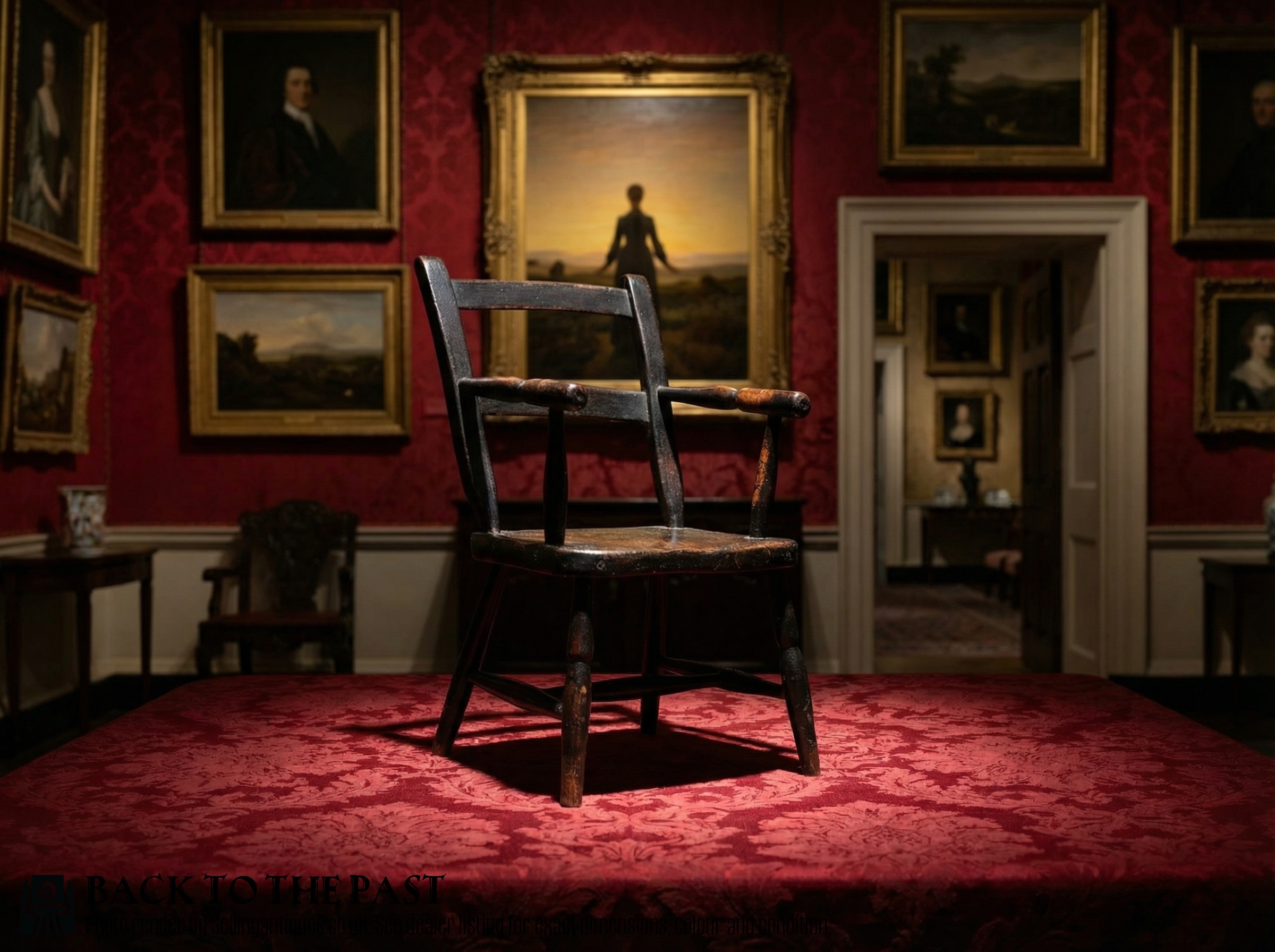
19th Century Primitive Chair
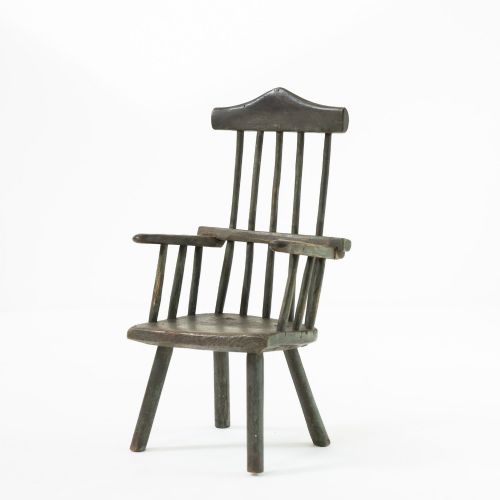
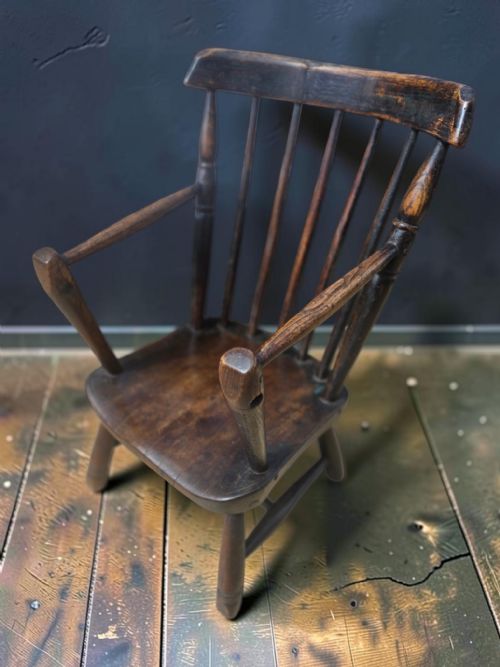
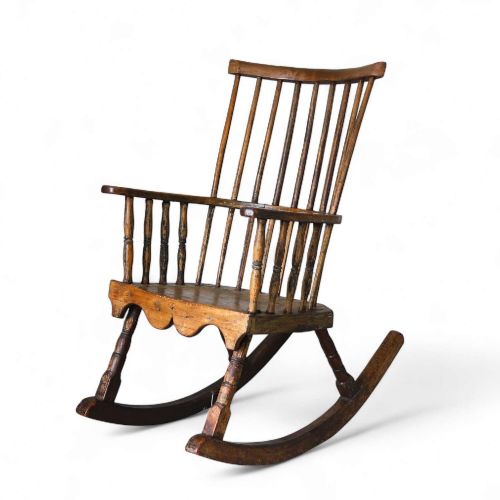
The objects listed on this page commonly appear as comb-backs, stick-backs, hoop-backs, and solid dug-out seats. Regional variations such as Welsh Windsor-style chairs, Irish sugan chairs, and Swedish dug-outs dominate the selection.
Makers built these chairs for everyday domestic utility rather than formal display. They often served in farmhouses, cottages, and firesides, retaining an unpretentious utility that defines vernacular furniture.
How they were made
Constructed predominantly from native timbers such as ash, elm, oak, pine, sycamore, birch, fruitwood, and olive wood, these chairs relied on the materials available in the maker's immediate locality. Woodworkers often combined contrasting woods within a single piece, using ash for resilient spindles and elm for sturdy, carved seats.
Techniques relied heavily on traditional carpentry methods like bodging and green woodwork, where components were shaped using drawknives and spokeshaves before assembly. Seats were frequently hollowed out from a single solid block or constructed using pegged mortise and tenon joints to secure the legs and back-bows.
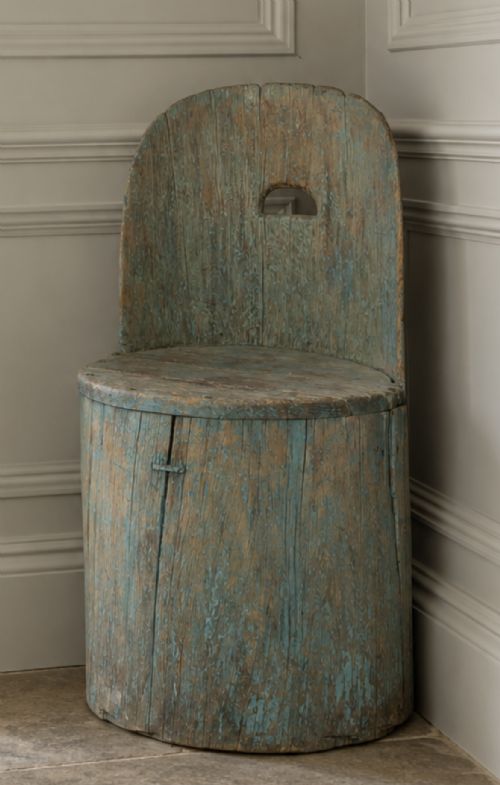
Makers occasionally recycled sturdy logs into heavy dug-out chairs, turning a simple chunk of timber into a fireside seat.
What varies in quality
Quality in a 19th century primitive chair depends heavily on the integrity of its original construction and the balance of its proportions. Superior examples maintain a harmonious relationship between the thickness of the spindles and the substantial nature of the seat, avoiding awkward or overly clumsy repairs.
The surface condition and presence of untouched historic finishes, whether weathered natural timber or early painted surfaces, greatly influence the desirability of the piece. Chairs that retain their original physical character and honest wear show the true hand of the country craftsman.
The 19th Century Primitive Chair Glossary
- Comb-back
- A Windsor chair variation where the top rail resembles the teeth of a comb, with vertical spindles rising through a horizontal arm-rail. This design provides sturdy back support while maintaining a light visual profile.
- Dug-out chair
- A primitive seating form carved entirely from a single solid log or trunk. The maker hollowed out the centre to form the seat while leaving the remaining timber to serve as the back and sides.
- Stick-back
- A chair construction method where turned or cleft wooden spindles are inserted directly into holes bored into the seat. It represents one of the most common vernacular building techniques.
- Sugan chair
- A traditional Irish chair featuring a seat woven from twisted straw, rush, or cord. These seats offer a resilient and practical surface for everyday cottage use.
- Vernacular furniture
- Domestic objects made by local tradesmen or craftsmen using regional traditions and readily available materials. These pieces prioritize functional utility over academic architectural styles.
19th Century Primitive Chair: Frequently Asked Questions
What is a primitive chair?
A primitive chair is a piece of vernacular seating made by local country craftsmen for everyday use rather than high-style formal display. These chairs reflect regional traditions and practical domestic needs.
They are built using straightforward carpentry methods and whatever native timber was accessible in the surrounding landscape.
How do I identify regional styles?
Regional styles appear through distinct construction traits, such as the solid carved logs of Swedish dug-outs or the woven rush seats of Irish sugan chairs. Examining the choice of native woods also helps point toward a specific geographic origin.
Local makers adapted their designs to suit the materials and seating preferences of their specific part of the country.
Were these chairs painted originally?
Many country chairs received coats of paint to protect softer woods or simply to update their appearance according to domestic tastes. Surviving early paint layers add significant character to a piece.
Over time, this paint wears down through handling, creating the aged surfaces appreciated by collectors today.
How should I care for primitive wood?
Keep wooden primitive chairs away from direct heat sources and sudden humidity changes to prevent the timber from splitting or warping. Maintaining a stable environment preserves the structural integrity of dry joints.
Applying a light, appropriate wax occasionally helps nourish historic unvarnished surfaces without building up unwanted residues.