
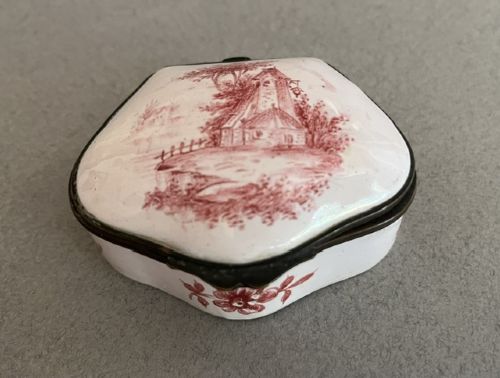
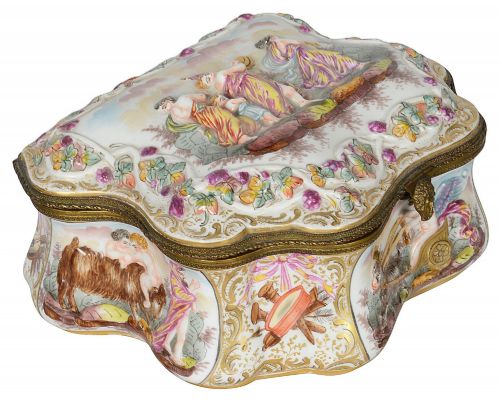
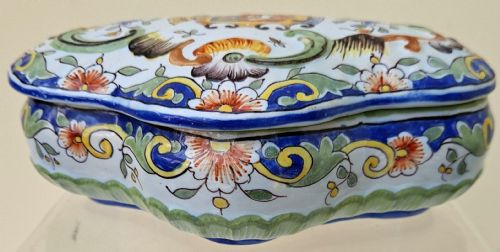


Vintage Ceramic Trinket Box
A vintage ceramic trinket box holds small personal treasures while bringing period charm to a dressing table or desk.
Vintage Ceramic Trinket Box
A vintage ceramic trinket box encompasses lidded pots, jewellery caskets, and powder jars designed for small keepsakes. These pieces range from compact patch boxes to larger dressing table bowls.
The selections available lean heavily toward Art Deco ceramic powder boxes from the 1930s featuring half doll figures or flapper girls. Alongside these, earlier 19th-century French and Dutch examples appear in porcelain and tin glaze.
Forms span rectangular patch boxes, circular powder bowls, and novelty figural containers. Origins stretch across England, France, Germany, Austria, and the Netherlands.
How they were made
Potters shaped these vessels using ceramic, earthenware, and porcelain, often applying tin glaze or enamel surfaces. Many pieces incorporate gilt metal mounts, brass hinges, or tin components to secure the lids.
Decoration relied on hand painting, transfer printing, and sculptural moulding, particularly in the creation of half doll figures and figural lids. Firing techniques varied from traditional earthenware kilns to refined porcelain production.
A cheerful puppy dog keeps watch alongside a young girl on a 1930s trinket box lid.
What varies in quality
The standard of modelling and hand-painted detail defines the upper tier of these boxes. Sculptural elements like figural lids display finer facial expressions and more careful glaze application in superior examples.
The integration of materials also marks the hierarchy, where crisp gilt mounts and well-fitted brass hardware elevate a piece. Simpler moulded vessels represent more utilitarian production.
Meissen·Wedgwood·Limoges
The Vintage Ceramic Trinket Box Glossary
- Half doll
- A ceramic torso without legs, commonly used as the lid for powder boxes and brush sets during the early twentieth century.
- Tin glaze
- An opaque white glaze containing tin oxide, providing a smooth surface for painted decoration on earthenware and faience.
- Patch box
- A small lidded container historically used to hold cosmetic beauty patches worn on the face.
- Fairing
- A small, often humorous ceramic novelty ornament produced in the nineteenth century for sale at fairs and holiday resorts.
- Faience
- European tin-glazed earthenware, particularly associated with French and Dutch traditions.
Vintage Ceramic Trinket Box: Frequently Asked Questions
What were vintage ceramic trinket boxes used for?
These vessels served a variety of practical dressing table functions, holding small cosmetics, hair pins, and personal jewellery. Powder bowls and jars specifically accommodated loose face powder before modern compacts became common.
Smaller patch and snuff boxes held pocket items for daily personal grooming. Over time, their utility shifted from daily cosmetic use to decorative display containers.
How do I date an Art Deco powder box?
Art Deco pieces typically date from around 1930 and often feature characteristic styling such as geometric motifs or stylised flapper figures. The presence of half doll lids mounted on ceramic bowls is a strong indicator of this period.
Examination of the ceramic body, glaze type, and any maker marks on the base helps confirm the manufacturing era. German and French factories produced significant quantities of these vanity items during the interwar years.
Are older Dutch and French boxes different from 1930s pieces?
Older 17th and 19th-century pieces, such as Dutch Delft or French faience, rely on tin glaze and hand-painted motifs rather than the moulded figural lid designs of the 1930s. These earlier examples often take the form of small patch boxes or rectangular caskets.
Nineteenth-century porcelain items show different decorative vocabularies, including Rococo Revival styling or classical motifs, reflecting the tastes of their respective decades.
How should I care for a ceramic trinket box?
Gentle dusting with a dry, soft cloth maintains the glazed surface without risking abrasion to hand-painted details or gilt highlights. Avoiding harsh chemical cleaners preserves delicate enamel work and metal mounts.
When handling lidded pieces, lift the lid directly rather than grasping by delicate sculptural elements or protruding figural parts.