




Brass Mounted Jewellery Casket
A brass mounted jewellery casket holds small treasures safely while adding period character to a dressing table.
Brass Mounted Jewellery Casket
A brass mounted jewellery casket is a portable container designed to house precious personal items, trinkets and valuable ornaments safely. When searching for this phrase, a buyer encounters a diverse selection of storage pieces intended for dressing tables, boudoirs and writing desks. These items range from compact domestic boxes to large decorative receptacles.
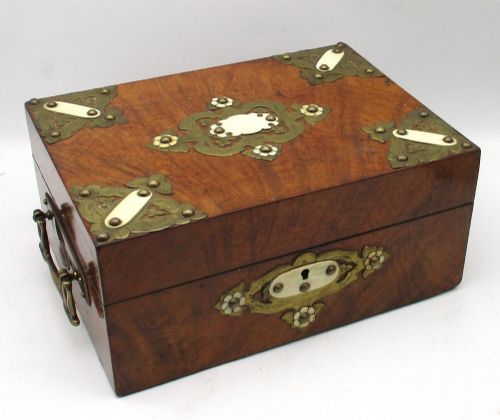
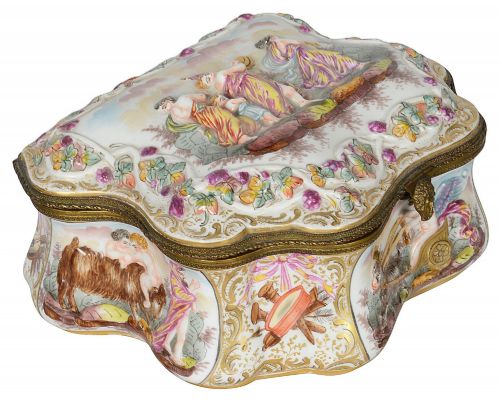
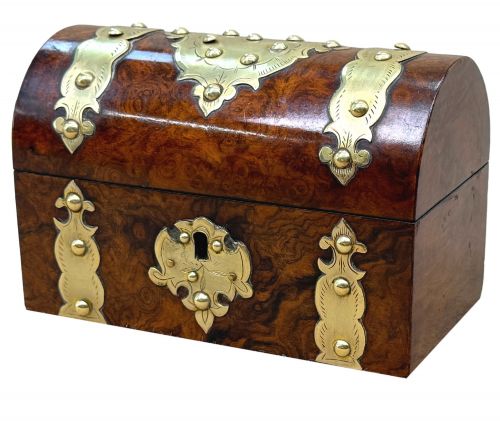
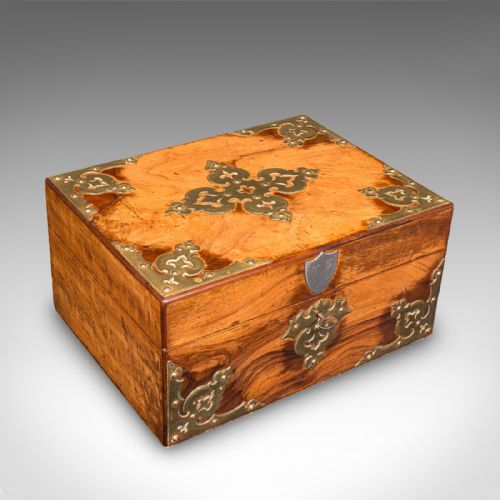
The version most likely to meet a buyer on this page is the Victorian walnut or burr walnut box, often featuring substantial brass mounts, strapwork or corner brackets. Such pieces frequently incorporate fitted interiors with velvet or silk linings designed for rings, necklaces and pins. Alongside these, buyers find Regency leather-bound examples and French glass or porcelain caskets.
Originating across Britain, France and Italy, these caskets reflect the domestic luxury and craft traditions of the nineteenth century. Makers utilised exotic timbers alongside glass, porcelain and leather, securing them with robust brass fittings. Every piece offers a tangible link to historical interior styling and personal ornamentation.
How they were made
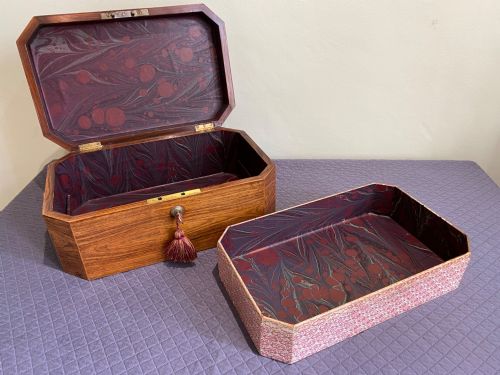
Carpenters and cabinet makers constructed the wooden bodies of these caskets using solid timbers and decorative veneers such as burr walnut, rosewood and satinwood. They often shaped these woods into domed or rectangular forms, sometimes applying leather or incorporating specialised internal compartments for stationery and sewing implements.
Metalworkers produced cast or stamped brass mounts, hinges, escutcheons and claw feet to reinforce corners and embellish exterior surfaces. These brass elements were secured to the wood or leather using small pins, providing both structural durability and striking visual contrast against the dark timber.
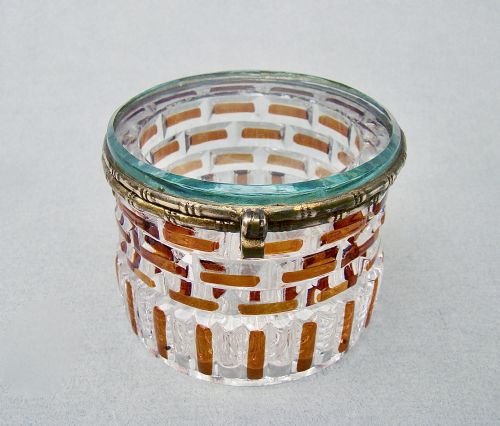
Glass and ceramic artisans also contributed to the form, creating amber, clear and enamelled glass trinket boxes alongside porcelain caskets with metal frames. French and Italian workshops frequently combined cast ormolu mounts with delicate glass or painted panels to produce highly ornamental tabletop pieces.
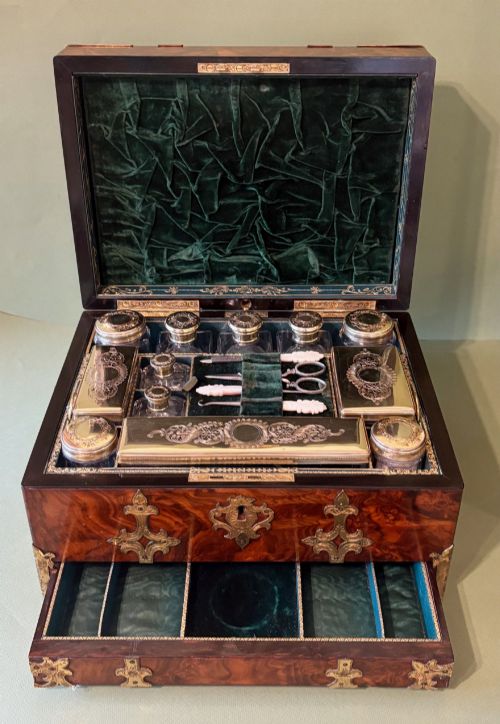
One remarkably specialised box combines a scent bottle holder, a tantalus and a jewellery casket for the discerning traveller.
What varies in quality
The choice of timber and veneer underpins the primary distinction between standard domestic boxes and exceptional showpieces. Highly figured burr walnut, rich rosewood and carefully selected satinwood indicate superior craftsmanship and higher initial cost during the nineteenth century.
The weight, crispness of cast detail and complexity of the brass mounts determine the refinement of the exterior. Solid brass strapwork, intricate engraving and substantial corner brackets elevate a functional box into a decorative luxury object.
Internal sophistication also separates ordinary containers from superior examples. Fitted velvet trays, secret drawers, bevelled glass doors and intact working locks with original keys demonstrate a higher grade of manufacture and preservation.
Trussell Brighton
The Brass Mounted Jewellery Casket Glossary
- Burr walnut
- A highly decorative wood veneer showing twisted growth patterns and knot clusters. Cabinet makers utilised this timber on the exterior surfaces of high-status Victorian boxes to create rich visual movement.
- Ormolu
- Gilt bronze mounts applied to furniture and decorative boxes. French makers frequently employed this technique to accent glass and porcelain caskets with metallic ornamentation.
- Escutcheon
- A protective plate surrounding a keyhole. On these caskets, brass escutcheons often match the corner brackets and hinges.
- Writing slope
- A specialised box with a hinged sloping lid designed for correspondence. Many examples incorporate compartments for inkwells, pens and jewellery.
- Capodimonte
- An Italian porcelain style known for moulded relief decoration. Table caskets featuring this ceramic originate from notable European porcelain traditions.
Brass Mounted Jewellery Casket: Frequently Asked Questions
What were brass mounted jewellery caskets used for?
These caskets served as secure receptacles for valuable rings, necklaces, brooches and personal trinkets in nineteenth-century bedrooms and boudoirs. Many included compartments for sewing tools, letters or writing equipment.
Their robust construction and lockable lids ensured that personal wealth and sentimental keepsakes remained protected from dust and casual theft.
How do I identify a Victorian casket?
Victorian examples frequently utilise figured walnut or burr walnut timbers, often complemented by heavy brass mounts, strapwork and escutcheons. The interiors commonly feature velvet or silk linings tailored for jewellery.
Earlier Regency pieces tend to favour mahogany, rosewood or red Russia-leather, displaying sleeker lines and distinct neoclassical influences compared to later ornate Victorian styles.
Are the locks on antique caskets functional?
Many caskets retain their original working locks, though some require specialised antique keys or professional adjustment. It remains common for keys to be lost over the course of a century or more.
Even without a functioning key, the brass locks and mechanism plates contribute significantly to the authentic visual appeal of the box exterior.
How should I care for a wooden jewellery box?
Keep wooden caskets away from direct sunlight and sudden temperature shifts to prevent the timber and delicate veneers from splitting or warping. Dust gently with a dry cloth and avoid harsh modern polishes.
Internal velvet and silk linings benefit from occasional gentle airing rather than chemical cleaning to preserve their historic textile fibres.