


Vintage Ceramic Jug Set
These vintage ceramic jug sets are practical and decorative table and washstand wares designed to hold water or serve tea.
Vintage Ceramic Jug Set
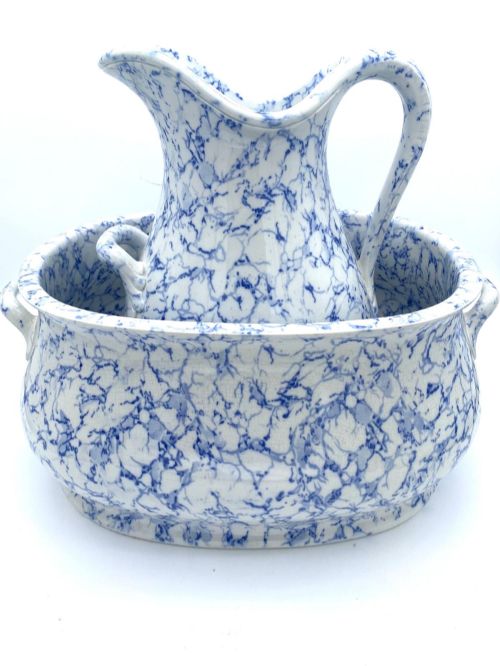
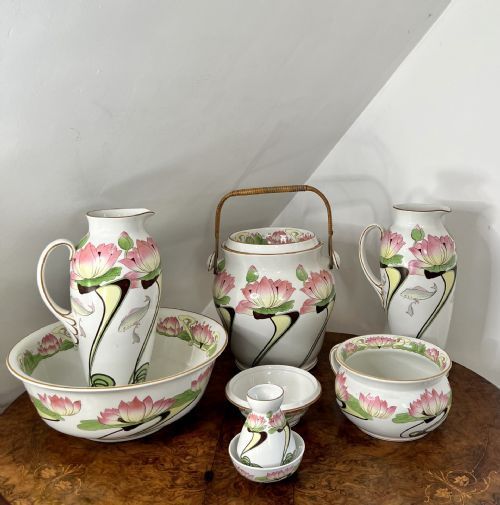
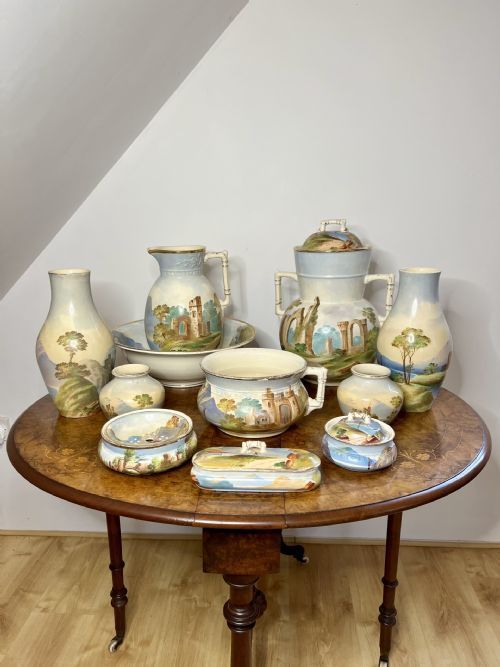
A vintage ceramic jug set encompasses matched groupings of vessels designed for washing and tea service. Buyers searching for a vintage ceramic jug set encounter large washstand ensembles featuring basins and footbaths alongside smaller tea and coffee services.
The selections span the nineteenth century through the early twentieth century, incorporating Victorian, Edwardian, and Art Deco design movements. Wash sets and tea sets dominate the forms, originating from English potteries in earthenware, ironstone, and porcelain.
Most examples date from the Victorian and Edwardian eras, combining utilitarian chamber wares with decorative table pieces. These sets served domestic needs in bedrooms and parlours before transitioning into decorative display items.
How they were made
Potters utilised earthenware, ironstone, and porcelain, shaping bodies by hand or mould before applying fluid glazes. Ironstone provided a dense, durable body suited to daily washing vessels, while porcelain allowed for finer teawares.
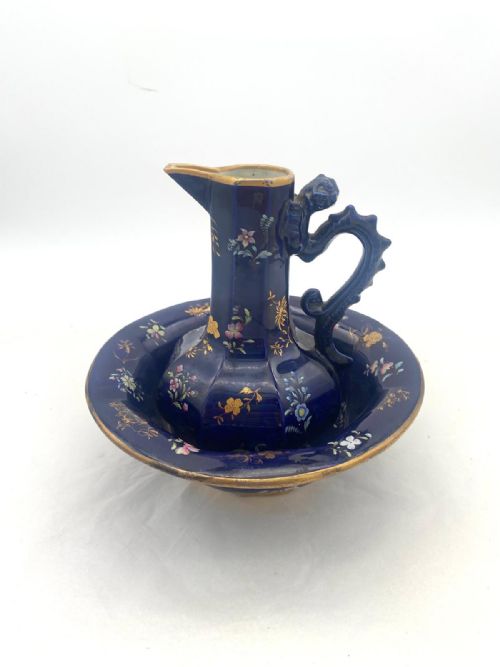
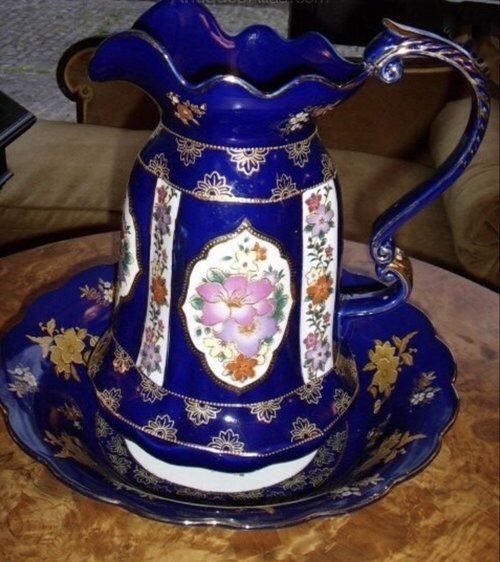
Decoration involved cobalt blue underglaze printing, hand-painting, and applied gold leaf or gilt highlights. Flow blue transfer printing created soft, blurred outlines on earthenware surfaces during the nineteenth century.
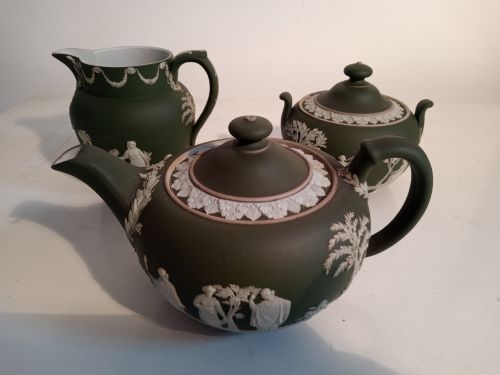
Early morning tea was poured from bachelor teasets, thoughtfully scaled for one solitary drinker.
What varies in quality
Quality rests in the crispness of the transfer print, the uniformity of the glaze, and the precision of hand-painted enamel and gilt details. Well-preserved gilding and intact handles indicate careful handling over generations.
Maker attribution and matched completeness elevate individual sets above standard utility wares. Pieces bearing factory marks from established potteries demonstrate superior ceramic body preparation and firing control.
Minton·Mason's Ironstone·Wedgwood·Royal Davenport·Doulton Burslem·Mark Jones & Sons·Shelley·Copeland Spode
The Vintage Ceramic Jug Set Glossary
- Ironstone
- A heavy, durable type of earthenware patented in the nineteenth century to provide an inexpensive alternative to porcelain. It resists chipping and forms the base for many large wash jugs.
- Flow blue
- A nineteenth-century transfer printing technique where lime or chloride vapour was introduced into the kiln to blur the cobalt design into the surrounding white glaze. This creates a soft, hazy appearance on the ceramic surface.
- Wash set
- A matching group of vessels, typically including a large jug and basin, designed for bedroom hygiene before indoor plumbing. Sets sometimes incorporated slop buckets, soap dishes, and chamber pots.
- Gilt
- A thin layer of gold applied to the ceramic surface as a decorative accent around rims, handles, and painted motifs. It requires gentle cleaning to prevent loss over time.
- Earthenware
- A porous ceramic body fired at lower temperatures than porcelain or ironstone and finished with an opaque or transparent glaze. It forms the foundation for many traditional decorative and functional jugs.
Vintage Ceramic Jug Set: Frequently Asked Questions
What is a vintage ceramic jug set used for?
These sets served practical domestic functions such as personal washing at bedroom washstands or pouring tea and coffee during social gatherings.
Over time, many of these groupings transitioned into decorative display items used to accent interior spaces with period character.
How do I identify Victorian pieces?
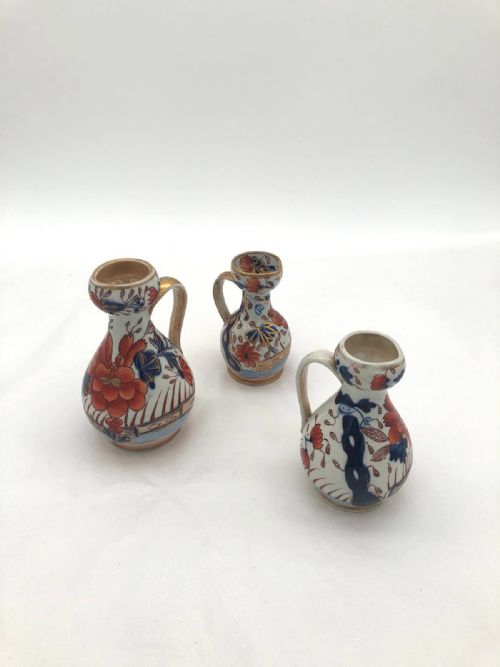
Victorian examples often feature heavy ironstone or earthenware bodies with ornate floral motifs, flow blue printing, or Imari patterns.
Stylistic markers include nineteenth-century shapes like octagonal jugs and robust wash basins produced before the Edwardian era.
Are these sets dishwasher safe?
These antique ceramics feature delicate glazes, hand-painted enamels, and applied gold leaf that modern detergents and high heat will damage.
Hand washing in warm water with mild soap is essential to preserve the surface decoration and ceramic body.
What is the difference between ironstone and porcelain?
Ironstone is a thick, opaque, and highly durable earthenware developed to withstand heavy daily use in washing and serving.
Porcelain is finer, thinner, and slightly translucent, typically reserved for tea and coffee services rather than large bedroom basins.
How should I display a wash set?
Wash sets work best placed on sturdy sideboards, tables, or low stands where the large jug can sit safely inside the basin.
Keeping the pieces away from high-traffic edges prevents accidental knocks to handles and rims.