




Vintage Caucasian Design Rug
When you search for a vintage caucasian design rug, you are looking at tribal and village floor coverings rooted in the mountainous Caucasus region.
Vintage Caucasian Design Rug
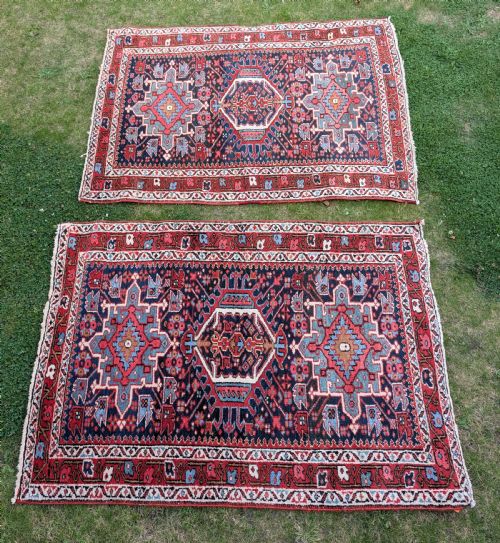
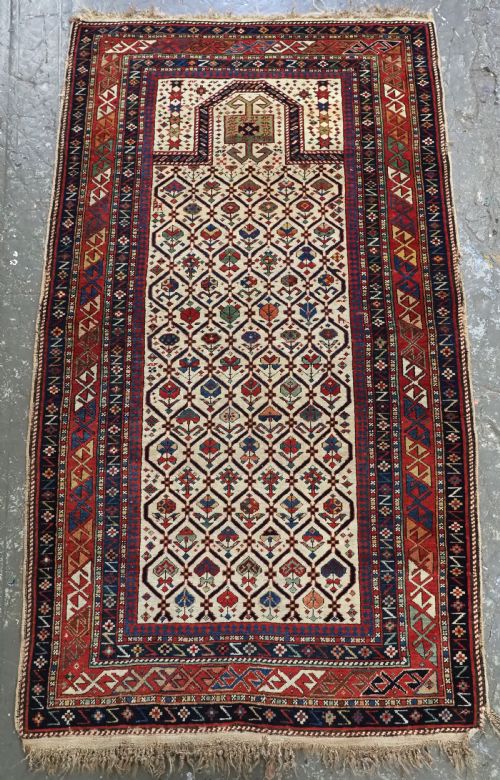
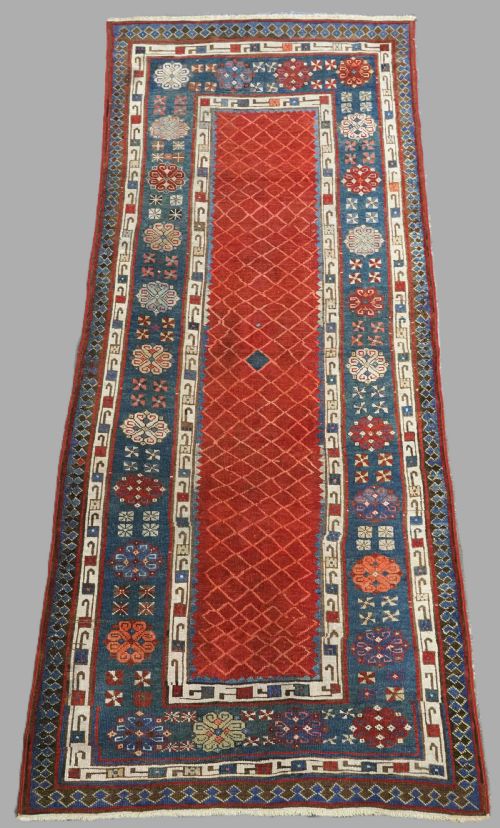
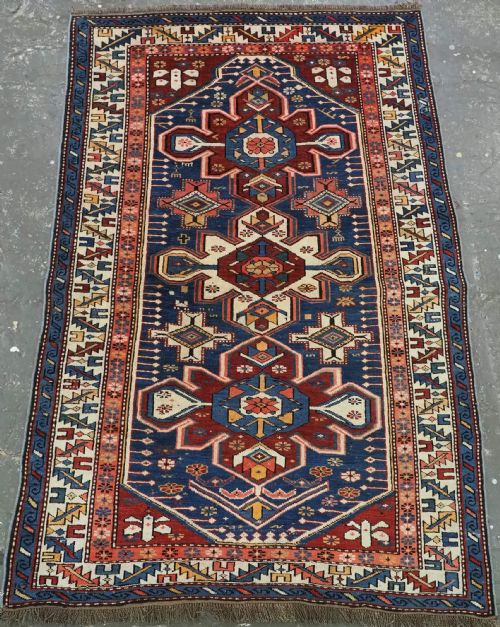
A vintage caucasian design rug encompasses tribal and village weaving traditions originating from mountainous weaving centres such as Kazak, Shirvan, Dagestan, and Gendje. These textiles often feature bold geometric medallions, latch-hooks, and structured lattice patterns that distinguish them from city-made Persian carpets. Buyers browsing this page will encounter various formats, including smaller scatter rugs, long narrow runners, prayer rugs, and flatwoven kilims.
The periods represented stretch across the nineteenth and early twentieth centuries, capturing a time when local weavers utilised traditional tribal motifs passed down through generations. Pieces range from regional village works associated with Kurdish and Shahsavan groups to specific Caucasian town types like Talish and Kuba. These floor coverings bring distinct historical character and structured geometry into contemporary interiors.
How they were made
These textiles were constructed primarily using hand-knotted wool pile secured on cotton or wool foundations, alongside flatwoven techniques seen in kilims and soumak bag faces. Artisans relied on hand-spun wool and natural vegetable or plant dyes to achieve deep saturated colour palettes that mellow gracefully over decades. The weave density varies according to the specific regional tradition, with fine village pieces showing tight knotting while flatweaves employ intricate wrap-pattern methods.
Structural integrity depended on local sheep breeds yielding resilient, lanolin-rich wool capable of withstanding heavy daily use. Dyes were derived from local flora and fauna, producing the characteristic soft yellows, ivories, and deep reds found across these regional textiles. The resulting fabric combines durability with supple flexibility characteristic of nomadic and village floor coverings.
Certain antique Karabagh carpets surprise collectors by featuring cheerful depictions of bees buzzing amidst their large geometric medallions.
What varies in quality
Quality in these textiles rests upon the precision of the tribal geometry, the saturation and depth of the natural dyes, and the overall balance of the composition. Superior examples display crisp drawing within medallions and lattice work, showing intentional design execution rather than careless compression of motifs. The handle of the wool - its weight, density, and tactile suppleness - also separates standard village output from master-woven regional specimens.
Another measure of distinction is the preservation of the original borders and outer selvedges, which frame the central field design harmoniously. Subtle variations in hue achieved through natural dyeing processes impart visual depth, whereas flat or chemically harsh tones diminish the collectible standing of a textile. The integrity of the foundation structure underpins longevity, ensuring the pile remains secure across centuries of existence.
The Vintage Caucasian Design Rug Glossary
- Kazak
- A regional designation for rugs woven in the southern and western Caucasus, known for bold geometric medallions and primary colour usage. These pieces are celebrated for their chunky wool and striking graphic impact.
- Soumak
- A flatweaving technique involving coloured supplementary weft threads wrapped around the warp to create a textured, durable surface without a cut pile. This method allows for intricate bird and dragon motifs.
- Boteh
- A swirling almond or paisley-shaped motif of ancient origin representing a floral sprout or cypress tree. It appears frequently in repeating rows across Caucasian runner and long rug fields.
- Kilim
- A flatwoven textile produced without pile by tightly interweaving warp and weft strands. These lightweight pieces often display sharp geometric bands and shield designs.
- Prayer rug
- A specialised format featuring a distinct architectural mihrab arch at one end, designed to direct the placement of the head during daily devotion. These rugs often incorporate floral lattices and sacred geometry.
Vintage Caucasian Design Rug: Frequently Asked Questions
How do I style a tribal runner at home?
These narrow formats work exceptionally well in hallways, kitchens, or alongside galley spaces where linear geometry can elongate the visual perspective. Their durable wool pile handles high foot traffic while introducing historical warmth to modern flooring.
Pairing them with neutral surroundings allows the saturated natural dyes and bold geometric medallions to serve as focal points. Ensure a quality underlay is utilised to keep the runner secure on smooth surfaces.
What is a Soumak weave?
Soumak is a distinctive flatweaving technique where decorative weft threads are wrapped across the vertical warps in a continuous motion. This creates a textured face that resembles a basket weave while leaving long floats of thread protected on the reverse side.
Because they lack a cut pile, Soumak carpets and bag faces offer a flatter profile combined with remarkable structural sturdiness. They often incorporate complex animal and talismanic symbols rendered in sharp detail.
How can I tell a Kazak from a Shirvan?
Kazak rugs generally display larger, bolder geometric medallions, wide borders, and a heavier, thicker wool pile with a robust handle. The design vocabulary relies heavily on primary colours and stark, uncrowded tribal motifs.
Shirvan pieces tend to be more finely woven with narrower formats, frequently utilising intricate floral lattices, stars, and Kufic-inspired borders. Their overall aesthetic feels slightly more refined and restrained compared to the robust graphics of Kazak counterparts.
Are these textiles suitable for daily floor use?
The hand-spun wool and sturdy foundations utilised in these regional rugs make them remarkably resilient for everyday living spaces. Lanolin naturally present in the wool helps repel dirt and preserves the suppleness of the pile under regular foot traffic.
Placing a breathable pad underneath prevents sliding and reduces friction against hard flooring. Routine gentle vacuuming without rotating brushes helps maintain the surface fibres over time.