

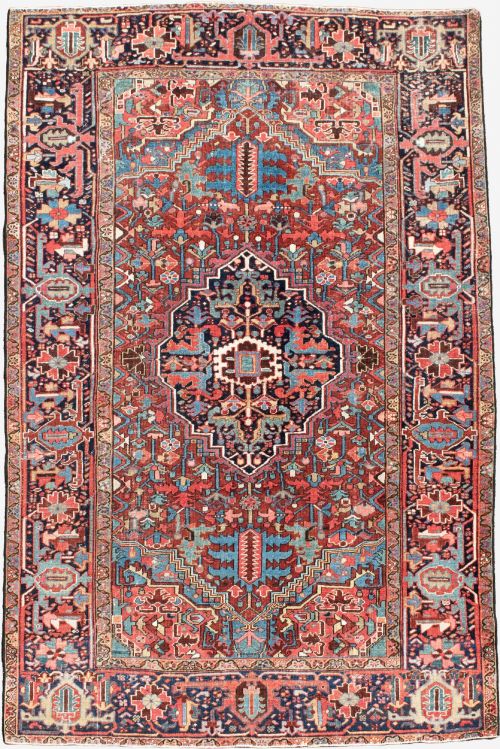
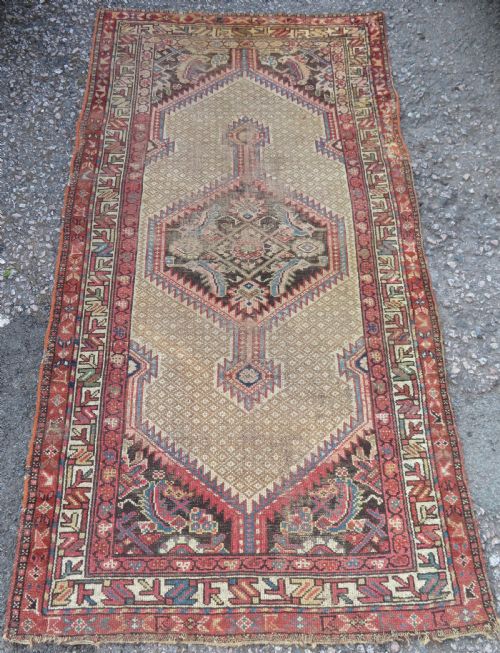
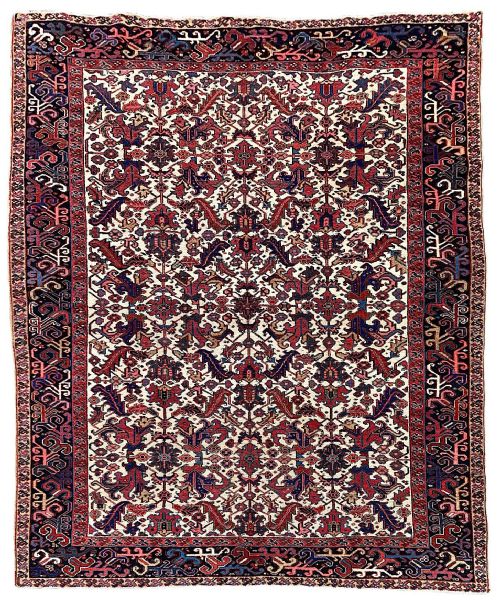
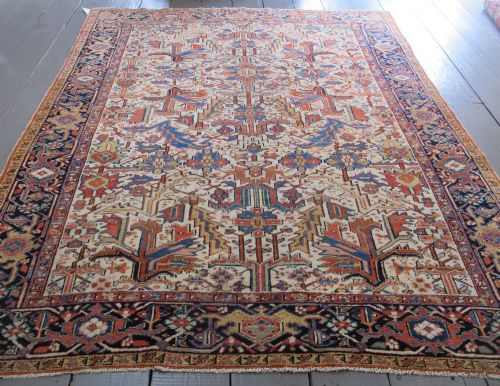
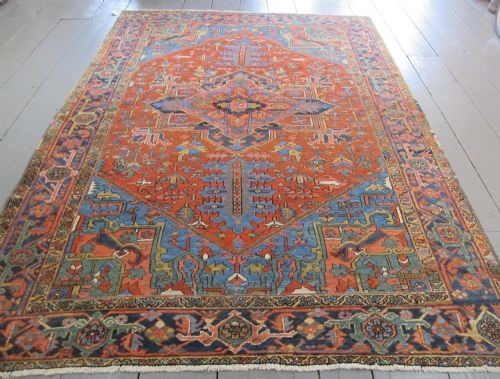
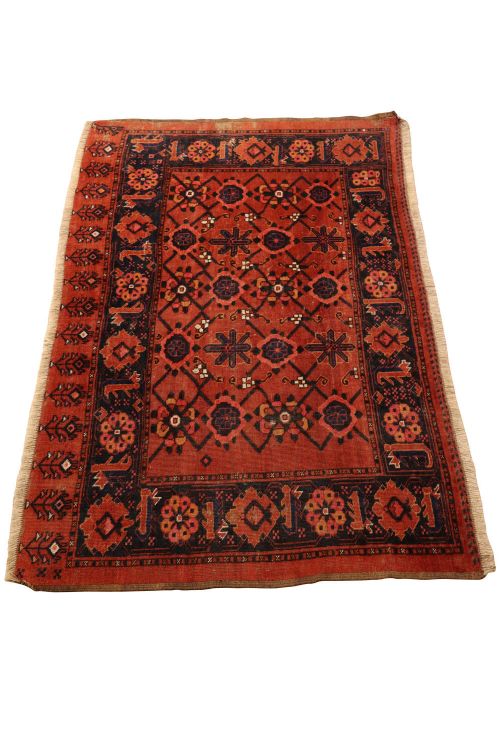

Northwest Persian Area Rug
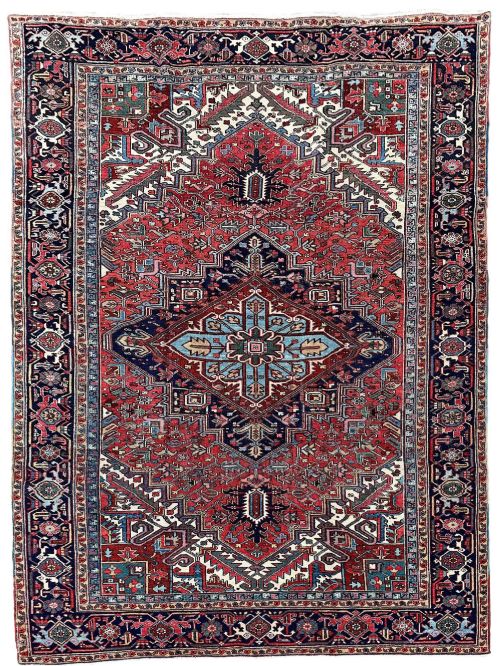
When you search for a northwest persian area rug, you enter a world of hand-knotted tribal and village carpets defined by geometric medallions and rich colours.
Northwest Persian Area Rug
A northwest persian area rug encompasses heavy village and town floor coverings originating from specific weaving districts in that region. These pieces take the form of carpets and smaller rugs created for utility and domestic use.
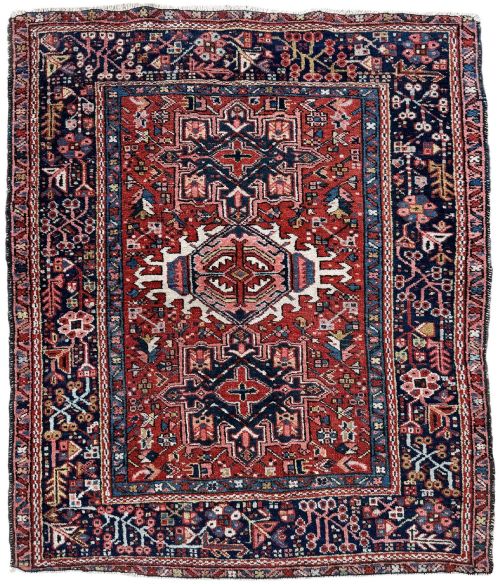
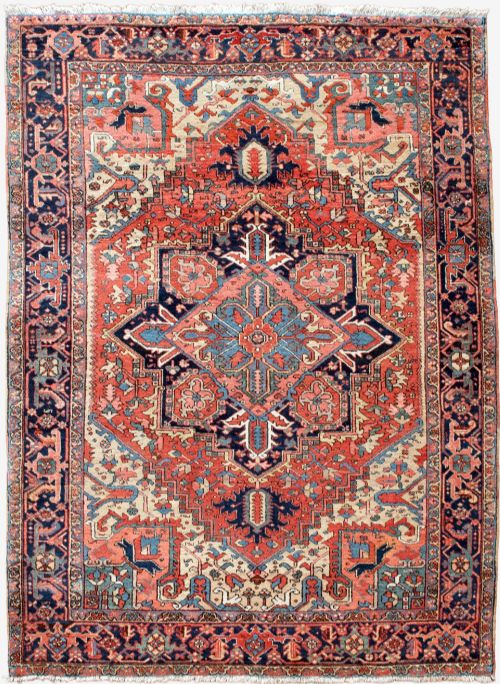
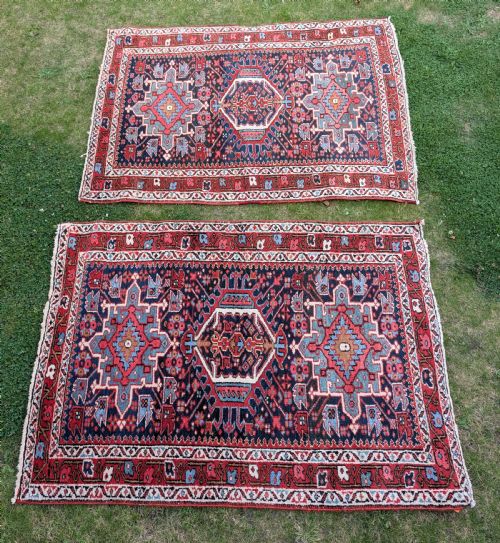
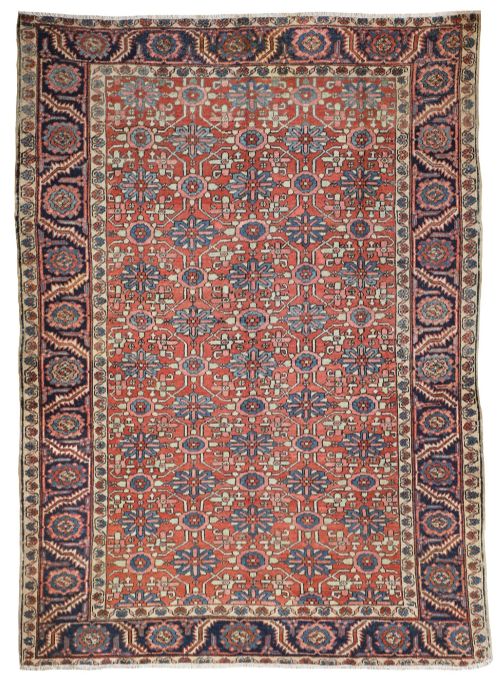
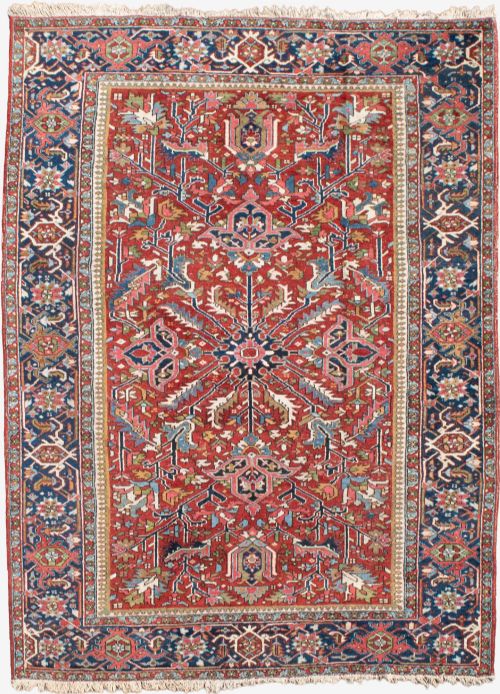
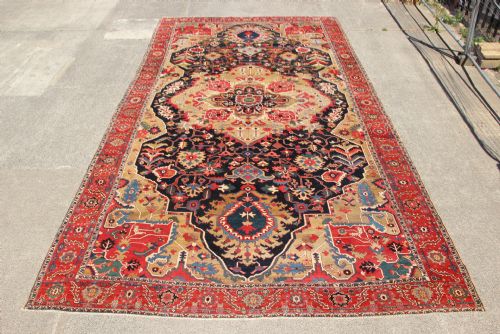
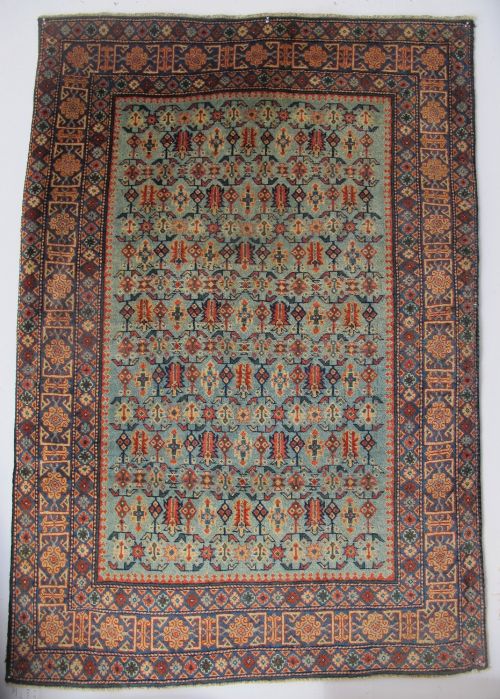
The selections on this page are dominated by Heriz carpets, alongside related village pieces from Karaja, Serapi, Bakshaish, Tabriz, Kelardasht, Sarab, and Kurdish or Hamadan workshops.
Dating ranges primarily from the late nineteenth century through to the early decades of the twentieth century. Buyers encounter large room-sized carpets as well as compact scatter formats.
How They Were Made
These rugs rely upon hand-knotted wool pile secured to sturdy foundation structures. Weavers utilised hand-spun wool and cotton for the warps and wefts.
Certain village pieces incorporate camel hair within the pile or borders for natural colour variation and texture. The knotting technique binds the dense wool firmly to the cotton or wool foundation.
Listings feature rugs and carpets spanning from eighteen fifty to nineteen thirty, predominantly woven in wool and cotton.
What Varies in Quality
Quality rests upon the crispness of the geometric drawing within the central medallion and field. Finer execution shows in balanced proportions and harmonious dye saturation.
The integrity of the wool pile and the stability of the foundation dictate durability. Subtlety of palette and secondary colours distinguish superior village examples from standard output.
Benlian
The Northwest Persian Area Rug Glossary
- Heriz
- A rug-producing town in northwest Persia known for bold geometric medallions and durable village construction. These carpets typically employ a characteristic large central motif.
- Serapi
- A sub-style associated with older Heriz carpets featuring more open designs and muted, harmonious palettes. Collectors prize these for their distinct artistic character.
- Bakshaish
- An older village weaving tradition distinguished by rustic, large-scale geometric patterns and soft colour schemes. Examples often date to the mid-nineteenth century.
- Karaja
- A town and surrounding district producing smaller rugs with distinct geometric village formats and multiple medallion designs. These pieces frequently use rich red and blue tones.
- Warp
- The vertical threads stretched tightly on the loom that form the skeleton of the rug. Cotton warp threads are typical in many northwest Persian town carpets.
Northwest Persian Area Rug: Frequently Asked Questions
How do I date a northwest persian area rug?
Dating relies on examining the wool quality, dye palette, and structural characteristics such as warp depression and selvage finish. Older nineteenth-century pieces often display softer, vegetable-dyed palettes and more relaxed geometric drawing.
Later pieces from the early twentieth century tend to show firmer structures and slightly different chemical dye interactions. Comparing specific village traits helps narrow the production period.
Where were these rugs made?
These textiles originate from the mountainous northwest region of Persia, encompassing towns and villages such as Heriz, Serapi, Karaja, Bakshaish, and Tabriz. Each district developed distinct local variations in tribal and village motifs.
Weavers in these communities utilised local materials like highland wool and natural dyes suited to domestic carpet production.
How do I live with a wool carpet?
Wool carpets thrive under regular, gentle care using a suction-only vacuum without rotating brush bars. Placing a quality underlay beneath the rug prevents slipping and reduces fibre wear from friction against hard floors.
Rotating the carpet periodically ensures even exposure to foot traffic and sunlight, maintaining balanced pile wear over the decades.
What is the difference between Heriz and Serapi?
Serapi rugs represent an earlier, finer weaving style from the Heriz district, usually characterised by more open field designs and delicately balanced pastel or muted tones. They often date to the nineteenth century.
Standard Heriz carpets tend to feature denser geometric fills, heavier outlines around the medallions, and dates extending further into the twentieth century.