
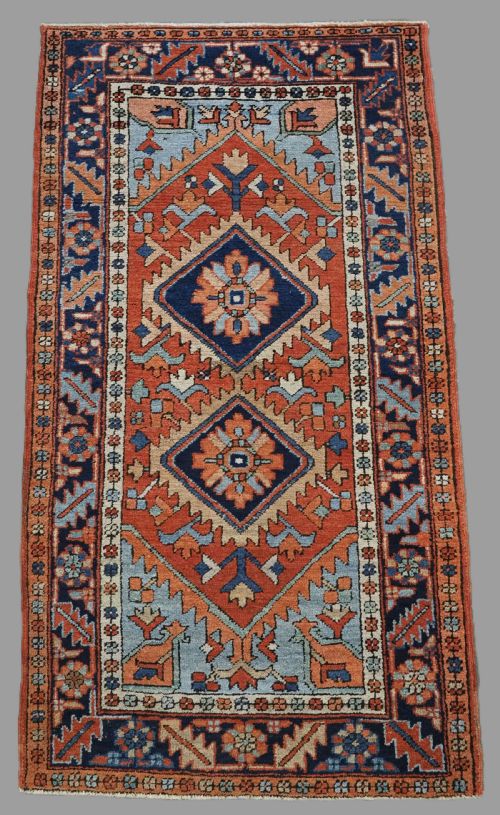


Wool Karaja Rug
A wool karaja rug brings the distinct geometric artistry of North-West Persia directly to your floor, offering durable craftsmanship and rich historic character.
Wool Karaja Rug
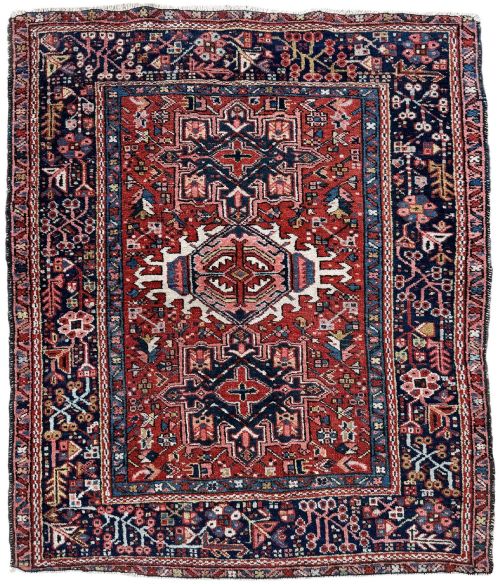
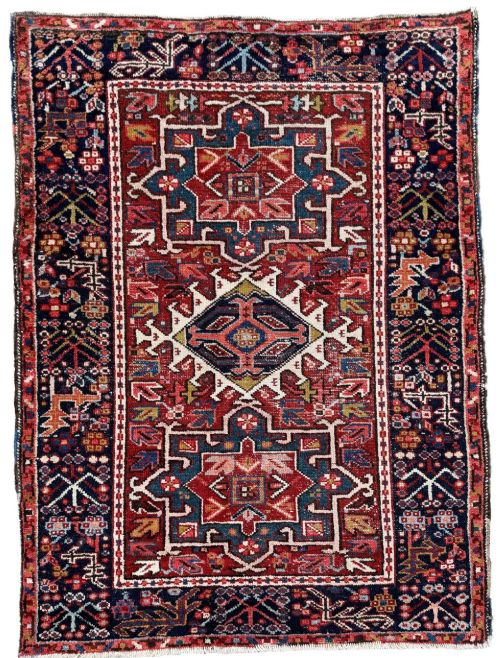
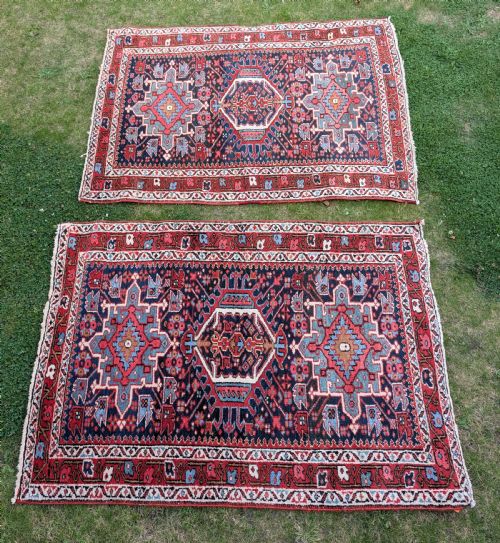
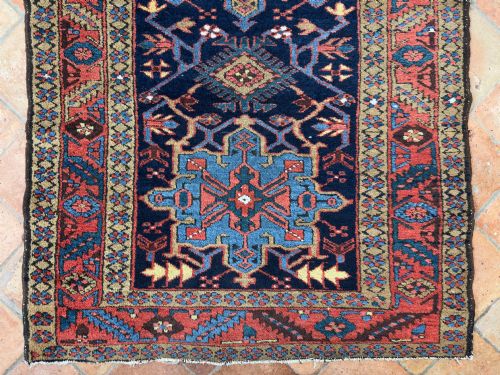
A wool karaja rug sits firmly within the tradition of Persian tribal and village weaving from the nineteenth and early twentieth centuries. These floor coverings emerge principally from North-West Persia, encompassing both compact area rugs and elongated runner formats designed for hallways.
Buyers browsing this selection encounter pieces dating from the late nineteenth century through to the 1930s. The inventory ranges from small geometric formats to substantial room-size carpets and narrow runners.
Most examples display traditional Persian village patterns, often sharing design traits with neighbouring Heriz regions. The typical meeting on this page involves an antique piece created by village weavers using sturdy hand-knotted techniques.
What separates the grades
Quality in a wool karaja rug reveals itself through the precision of the tribal geometry and the depth of the dye work. Tighter knotting and finer wool selection distinguish superior room-size carpets and long runners from standard village work.
The visual impact depends heavily on the intensity and saturation of the palette. Examples retaining vibrant, well-preserved natural colours command greater appreciation than those with muted or heavily faded tones.
Some narrow runners measure a mere seventy-seven centimetres wide, proving that nineteenth-century village weavers understood the exact geometry of a tight corridor.
The Wool Karaja Rug Glossary
- Karaja
- A village rug originating from the North-West Persian region near Heriz, known for geometric medallion designs. These pieces date predominantly from the late nineteenth and early twentieth centuries.
- Runner
- An elongated narrow rug format specifically proportioned for corridors and hallways. They frequently measure over three metres in length while maintaining a narrow width.
- Hand-knotted
- A traditional construction technique where individual lengths of wool are tied by hand onto a cotton warp and weft foundation. This method creates the durable pile characteristic of antique oriental carpets.
- Heriz
- A neighbouring Persian carpet-weaving district that shares strong stylistic and structural similarities with Karaja production. Pieces from this area often exhibit robust geometric formats.
- Pile
- The visible, tactile upper surface of the rug formed by the cut ends of the hand-tied wool yarns. The density and height of this wool layer determine the physical weight and durability of the piece.
Wool Karaja Rug: Frequently Asked Questions
What is a wool karaja rug?
A wool karaja rug is a hand-knotted tribal floor covering originating from North-West Persia. These pieces date from the nineteenth and early twentieth centuries.
They are celebrated for their sturdy construction, utilising wool pile on cotton foundations, and distinct geometric village designs.
Where were these rugs made?
These rugs were produced by village weavers in North-West Persia, specifically in and around the Karaja and Heriz districts.
This region has a long-standing heritage of traditional rug-making, yielding resilient runners and carpets for domestic use.
How do I use a runner rug?
Runner rugs are specifically proportioned in long, narrow formats designed for placement in hallways, corridors, and narrow passageways.
They protect high-traffic flooring while introducing traditional Persian colour and geometric pattern to transitional spaces in the home.
How do I date an antique rug?
Dating an antique rug involves examining the materials, dye types, structural wear, and stylistic design conventions characteristic of specific eras.
Pieces on this page span from the late nineteenth century through to the 1930s, reflected in their distinct hand-knotted construction.
Are these rugs suitable for heavy traffic?
The sturdy hand-knotted wool pile and robust cotton foundations make these traditional village carpets well-suited for everyday domestic environments.
Their historical durability stems from practical village weaving techniques intended to withstand generations of household use.