



Traditional Red Persian Carpet
A traditional red persian carpet grounds a room with deep madder tones and centuries of village weaving heritage.
Traditional Red Persian Carpet
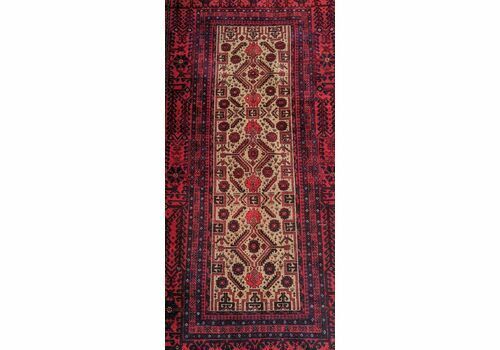
When someone searches for a traditional red persian carpet, they find hand-knotted floor coverings originating from various regions across Persia and neighbouring areas. The selections span the nineteenth and twentieth centuries, encompassing large carpets, area rugs, and long hallway runners.
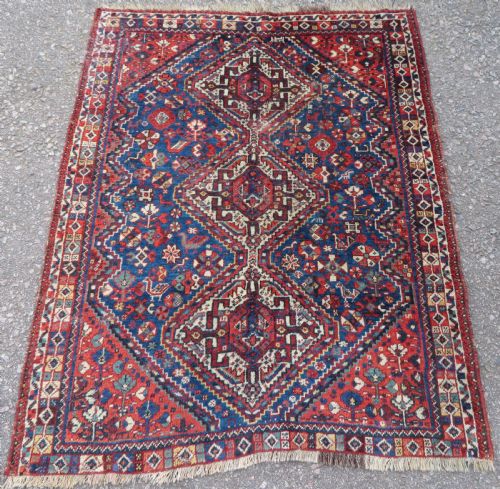
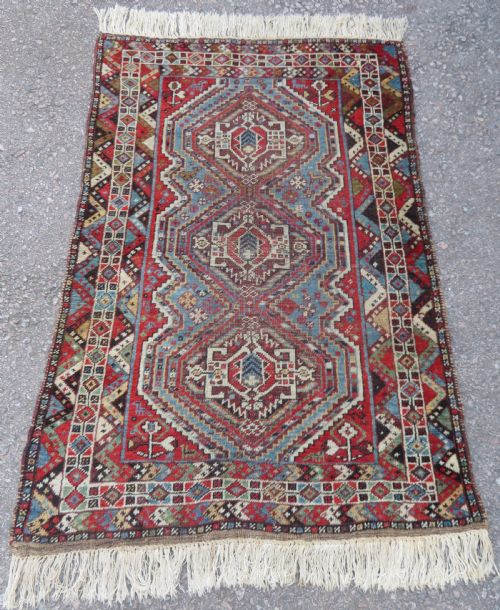
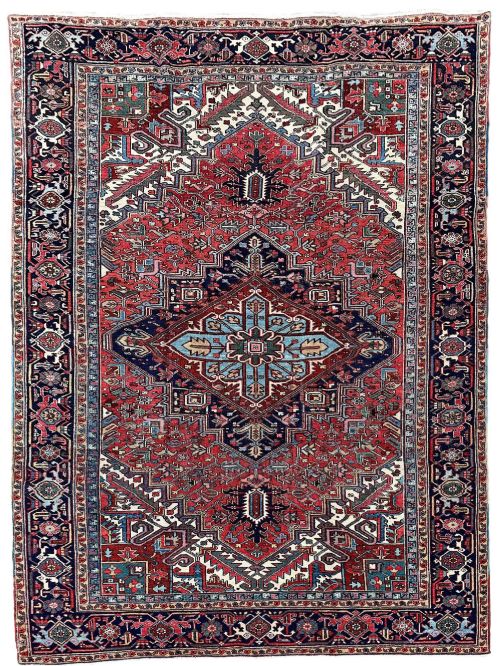
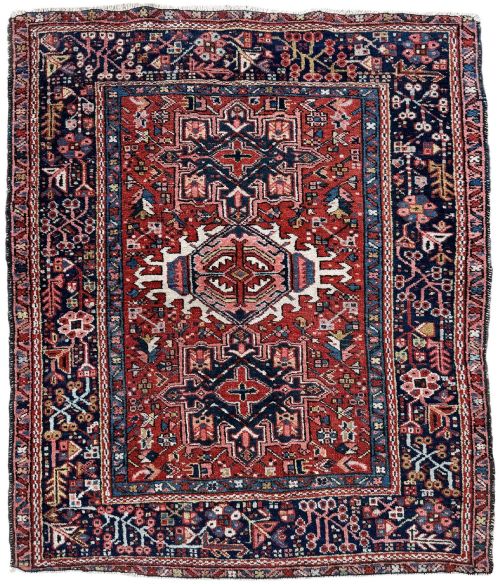
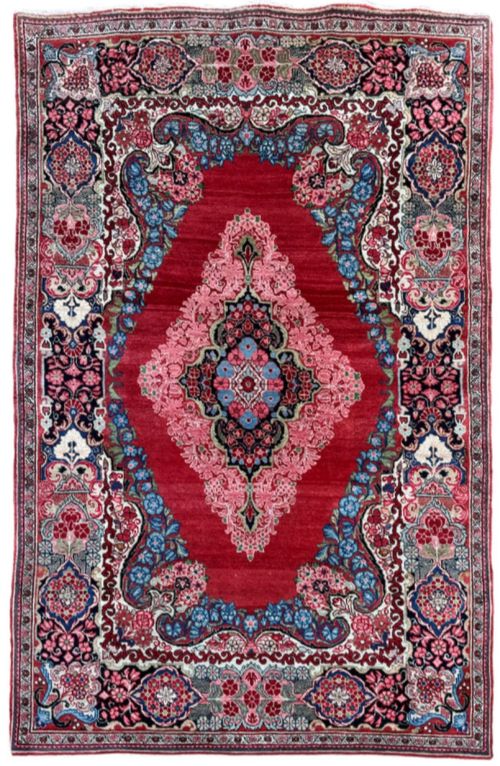
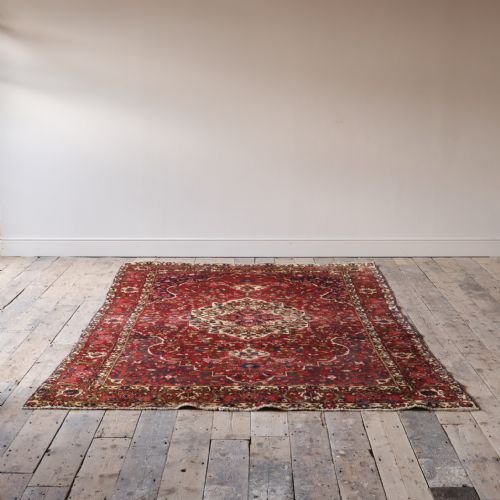
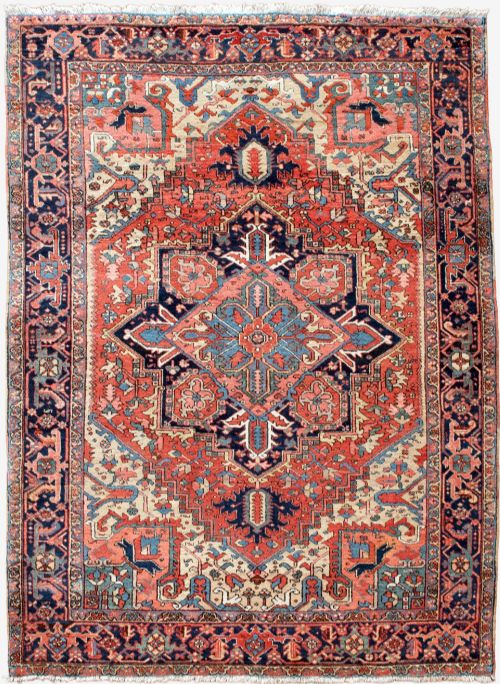
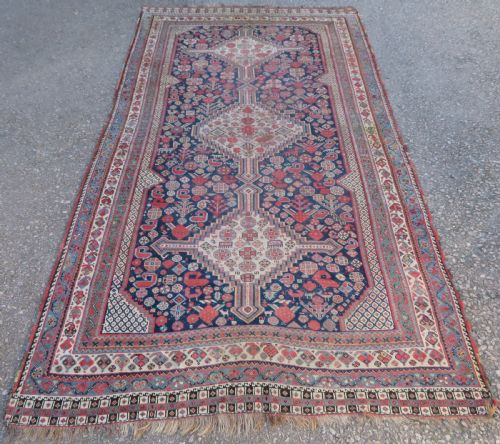
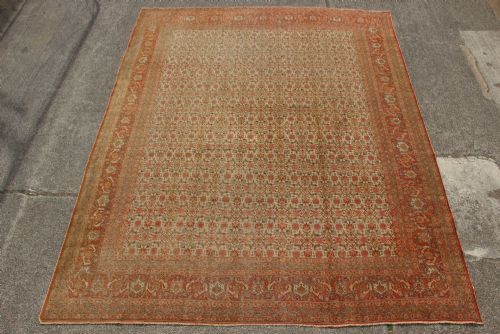
The inventory on this page largely consists of village and town pieces from specific districts such as Heriz, Sarouk, Hamadan, and Afshar. Buyers encounter formats ranging from compact area rugs to substantial room-sized carpets.
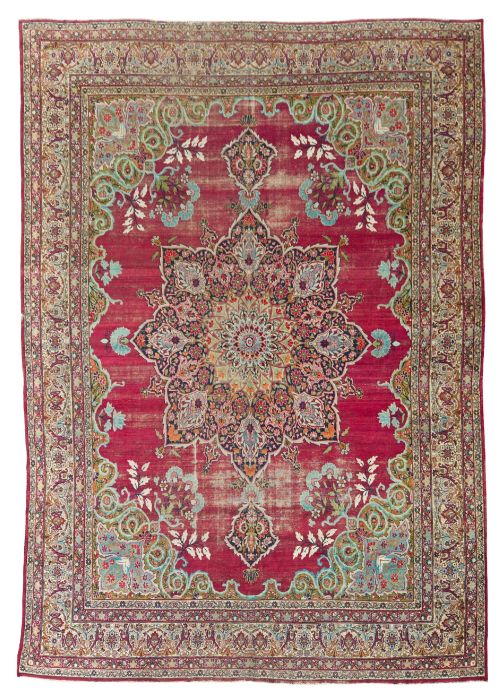
Tribal and regional variations dictate the distinct visual vocabulary of these floor coverings, showing geometric medallions, boteh motifs, and intricate all-over floral fields. Each piece reflects the specific weaving traditions of the tribe or workshop that produced it.
How They Were Made
Weavers constructed these carpets predominantly using wool for the pile and foundation yarns, occasionally incorporating cotton foundations for structural stability and silk highlights for specific decorative elements.
The manual knotting technique secures the pile to warp and weft threads, creating a dense and durable textile designed to withstand decades of foot traffic while maintaining its structural integrity.
Nomadic weavers sometimes tucked tiny accidental wool colour changes into field borders like secret signatures.
What Varies in Quality
Knot density and the precision of the wool spinning dictate the tactile refinement and durability of the finished textile. Tighter knotting allows for sharper delineation of intricate geometric and floral patterns across the field.
The depth and nuance of the red dye lots, often derived from natural madder root, create subtle tonal variations that elevate the visual richness of the wool surface.
The Traditional Red Persian Carpet Glossary
- Pile
- The vertical or diagonal loops of yarn that form the surface texture of the carpet. This layer absorbs foot traffic and displays the woven design.
- Warp
- The stationary longitudinal threads stretched on the loom upon which the knots are tied. It forms the skeletal foundation of the textile.
- Weft
- The horizontal threads passed across the warp threads between rows of knots to bind the structure together. Proper tension ensures the carpet lies flat.
- Medallion
- A central ornamental motif placed in the middle of the carpet field. It serves as the primary focal point of the composition.
Traditional Red Persian Carpet: Frequently Asked Questions
How do I clean a wool carpet?
Professional gentle washing removes embedded dirt without damaging the natural lanolin in the wool fibres. Regular light vacuuming without a beating bar keeps loose debris from settling into the pile.
Avoid harsh chemical detergents or soaking the foundation, as excessive moisture weakens old cotton and wool structures. Prompt blotting handles accidental spills safely.
Where were these carpets woven?
Weavers produced these textiles in tribal camps, rural villages, and established town workshops across Persia and Anatolia. Different regions developed distinct colour palettes and pattern repertoires.
Heriz and Sarouk rugs emerged from specific northern and central districts known for robust wool and durable structures. Tribal groups like the Afshar and Baluch contributed nomadic designs.
How do I choose the right size?
Measure the room dimensions and decide whether the carpet should sit entirely beneath furniture or frame an open central space. Hallway runners require adequate clearance along skirting boards.
Consider door swing clearances and high-traffic pathways before selecting larger room-sized formats. A suitable underlay prevents slipping and cushions the wool pile.
What materials make up the pile?
Natural sheep wool provides the primary pile material across almost all examples due to its resilience and ability to absorb rich dye colours. Selected pieces incorporate silk highlights to accentuate specific floral motifs.
Cotton appears frequently in the foundational warp and weft threads of twentieth-century town carpets. Older village and tribal pieces often utilise wool foundations throughout.