
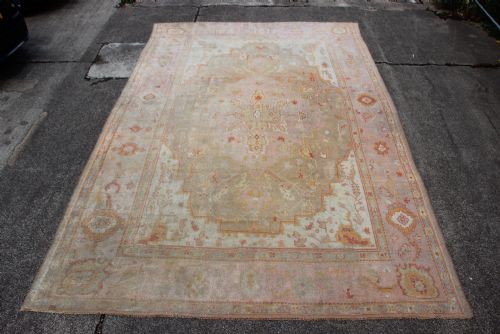
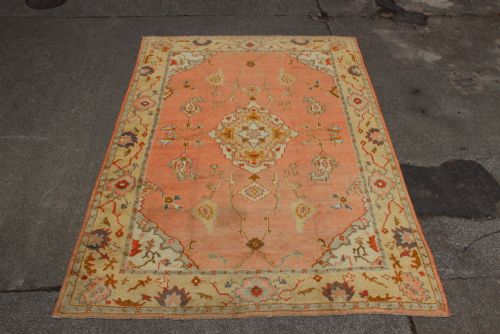
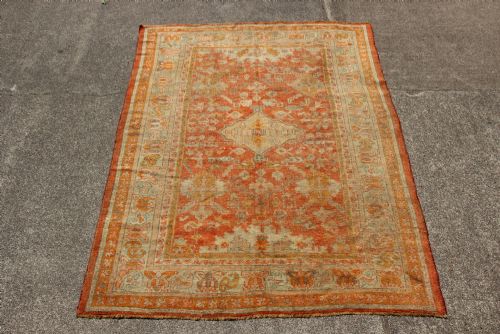


Large Turkish Floor Rug
A large turkish floor rug brings warmth and historic pattern to broad spaces through generous woven dimensions.
Large Turkish Floor Rug
A large turkish floor rug covers expansive rooms with traditional woven textiles originating from Anatolia. Buyers searching this phrase meet substantial floor coverings spanning the late nineteenth and early twentieth centuries.
The selections here concentrate on substantial formats including expansive carpets and area rugs designed for principal chambers. Most examples stem from historic weaving centres such as Oushak, Ghiordes, Melas and Bergama.
Makers utilised distinct regional patterns ranging from central medallions to willow tree motifs and Caucasian influences. These large floor pieces anchor substantial interior spaces with genuine historic presence.
How they were made
Weavers constructed these large carpets primarily using wool and cotton foundations alongside select angora wool. Natural fibre yarns provided the durable pile and structural warp and weft threads necessary for heavy domestic use.
Traditional looms supported hand-knotting techniques executed across regional workshops in Western Turkey. Artisans dyed yarns with rich pigments that produced the characteristic faded grounds and ivory fields seen on this page.
What varies in quality
Quality differences emerge through the fineness of the knotting and the complexity of the regional design. Superior carpets display precise execution of intricate motifs like the Holbein design or distinct central medallions.
The choice of materials also divides the range, with select pieces incorporating fine angora wool to create a softer pile. Furthermore, uncommon ground colours such as pink or green elevate the distinction of specific weaves.
Maples
The Large Turkish Floor Rug Glossary
- Oushak carpet
- A large woven floor covering originating from the historic town of Ushak in Western Turkey. These pieces are known for fine wool and softer colour palettes.
- Kilim
- A flat-woven carpet or rug produced without a pile by tightly interweaving warp and weft strands. These textiles often feature geometric patterns.
- Medallion
- A large central ornamental design motif placed in the middle of the carpet field. It serves as the primary focal point of the composition.
- Warp
- The vertical threads stretched tightly on the loom that form the structural foundation of the rug. Weft threads are then passed across them.
- Ground
- The main background area of the carpet field behind the primary design motifs. Collectors often note unusual ground colours like ivory, pink or green.
Large Turkish Floor Rug: Frequently Asked Questions
How do I clean a large turkish floor rug?
Professional specialist cleaning is essential to preserve the antique wool pile and natural dyes. Regular gentle vacuuming without a rotating brush helps remove surface dust.
Avoid household detergents or excessive water which can damage the cotton and wool foundations. Specialist care ensures the historic fibres remain stable over time.
Where were these rugs made?
These large floor coverings originated in various towns and villages across Anatolia or Western Turkey. Notable production centres include Oushak, Ghiordes, Melas, Bergama and Kayseri.
Each region developed distinct weaving traditions, colour palettes and design motifs. This geographic diversity gives collectors a wide array of stylistic expressions.
How do I date an antique rug?
Dating relies on examining the specific wool quality, dye composition, structural wear and stylistic characteristics. Pieces on this page span from the late nineteenth century into the early twentieth century.
Comparing knot structure and design motifs against documented regional examples helps narrow the period. Natural colour softening also provides clues to age.
Can I place furniture on these carpets?
Placing furniture on large floor coverings is standard practice for anchoring a room's layout. Ensure that furniture legs are smooth or use protective cups to prevent pile crushing.
Rotating the rug periodically distributes foot traffic evenly across the surface. This practice prevents uneven wear patterns from forming over the years.