
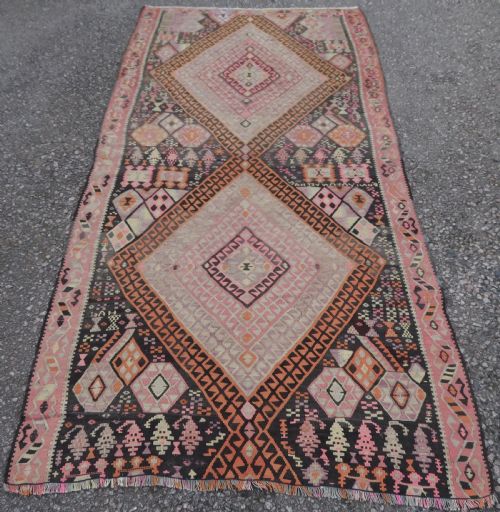
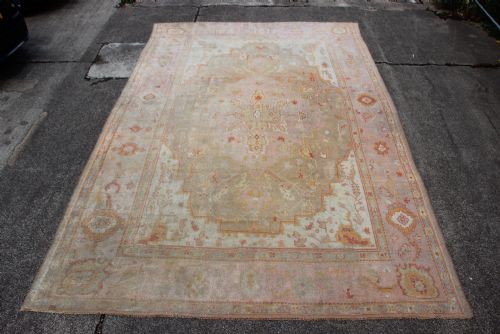
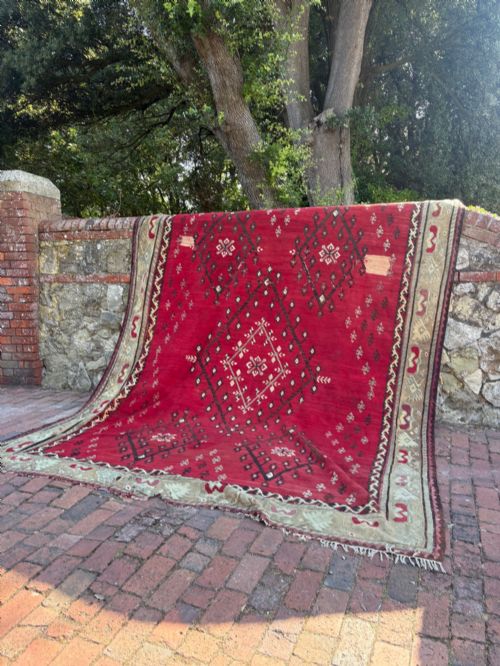
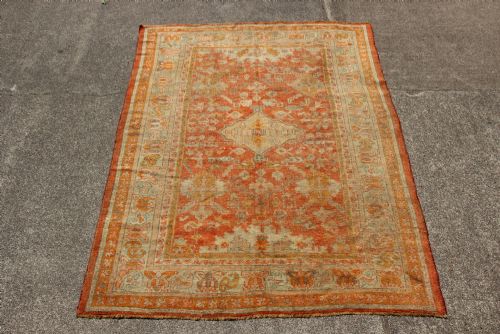


Large Anatolian Wool Carpet
A large anatolian wool carpet brings genuine historical texture and grand scale to a room.
Large Anatolian Wool Carpet
A large anatolian wool carpet delivers substantial room-anchoring presence through traditional regional weaving. You encounter Oushak, Ghiordes, Bergama, and Melas formats across this selection.
The periods span the late nineteenth century into the early twentieth century, incorporating Ottoman and tribal influences. These pieces reflect centuries of village and town weaving traditions from across Anatolia.
Makers utilised generous dimensions suitable for principal reception rooms and wide halls. The formats range from grand palatial carpets to village kelims and flatweaves.
How they were made
Weavers constructed these carpets predominantly from natural wool and cotton foundations, occasionally incorporating angora wool for softer pile textures. Natural dyes yielded the characteristic faded pinks, soft pastels, blues, and earthy green fields seen in the weaving.
The physical construction combines knotted pile techniques with flatweave kilim methods, depending on the specific regional origin. Workshops and village weavers employed traditional hand-tied knots on vertical looms to build durable structures.
What varies in quality
Quality rests in the subtlety of the colour palette, the handling of traditional motifs, and the integrity of the wool. Faded tones and balanced secondary colours separate sophisticated urban workshop pieces from simpler village outputs.
Structural preservation and the retention of original borders dictate the desirability of each carpet. Uneven wear or historic repairs alter the visual weight of the central field.
The Large Anatolian Wool Carpet Glossary
- Oushak
- A major carpet-producing town in western Turkey known for large-scale floral designs and soft pastel palettes. These pieces often display muted pink, blue, and cream fields.
- Kilim
- A flatweave carpet produced without a pile by tightly interweaving warp and weft threads. These textiles often feature geometric patterns and serve as lighter floor coverings.
- Bergama
- A historic weaving centre in northwestern Anatolia producing robust village carpets. They frequently incorporate bold geometric layouts and traditional motifs.
- Ghiordes
- A town renowned for prayer rugs and classical carpets featuring fine knotting. The style often includes distinct architectural mihrab designs.
- Angora wool
- A soft fibre derived from regional goats, utilised in select weavings for an exceptionally tactile pile. It provides a distinct sheen compared to standard sheep wool.
Large Anatolian Wool Carpet: Frequently Asked Questions
How do I clean a large anatolian wool carpet?
Vacuum gently without a rotating brush to protect the historical fibres from undue stress. Professional specialist cleaning remains essential for handling natural dyes and antique wool.
Avoid chemical spot treatments that might alter the delicate pastel shades. Proper airflow beneath the carpet prevents moisture retention in older cotton foundations.
Where should I place these carpets at home?
These large formats suit principal sitting rooms, dining spaces, or open entrance halls where the scale can anchor the furniture. Keep them out of direct, harsh sunlight to preserve the soft natural dyes.
Using an appropriate underlay helps prevent slipping and reduces friction against hard floorboards. This simple precaution extends the working life of the vintage wool pile.
How do I identify an Oushak carpet?
Oushaks typically present larger, looser floral motifs and medallion patterns rendered in restrained pastel tones. The wool often feels softer and the weave appears slightly more open than other regional carpets.
Subtle colour variations, known as abrams, occur naturally across the field due to traditional dye batches. These characteristics distinguish western Turkish workshop production from tighter village rugs.
What is the difference between a carpet and a kilim?
Carpets possess a dense wool pile created by individual hand-tied knots fixed to a foundation. This construction yields a thick, cushioned texture underfoot.
Kilims are flatwoven without pile, resulting in a lighter, thinner textile with crisp geometric patterning. Both types utilise similar wool and cotton materials from the same Anatolian regions.