

Vintage Carved Wooden Lighting
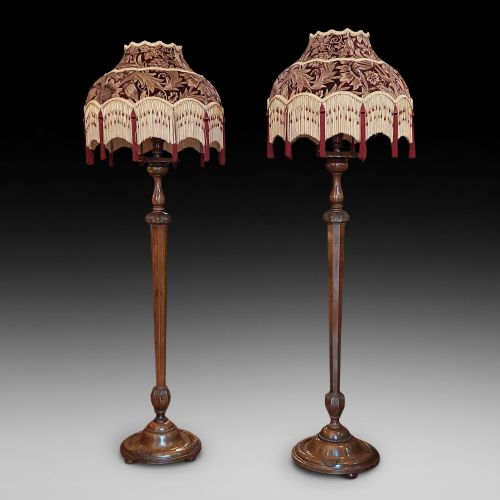
Vintage carved wooden lighting brings character into a room, offering table lamps, standard floor lights and chandeliers shaped from solid timber.
Vintage Carved Wooden Lighting
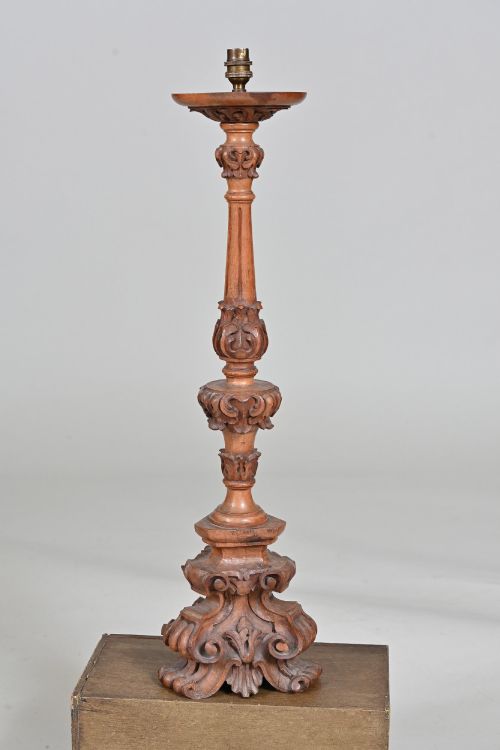
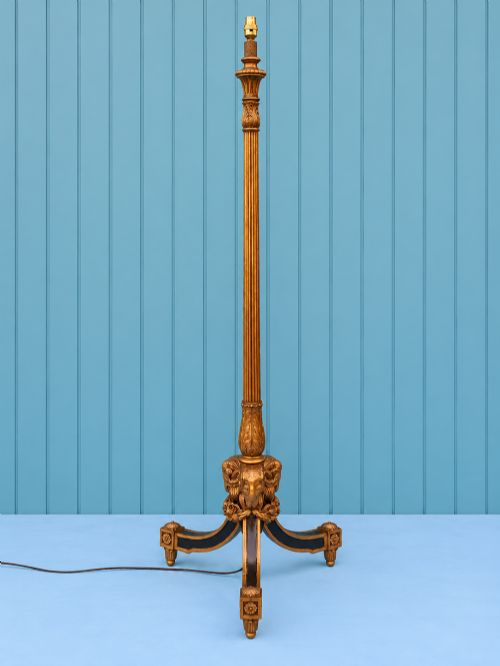
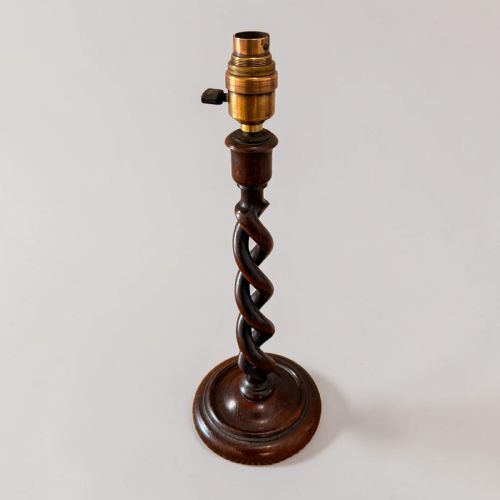
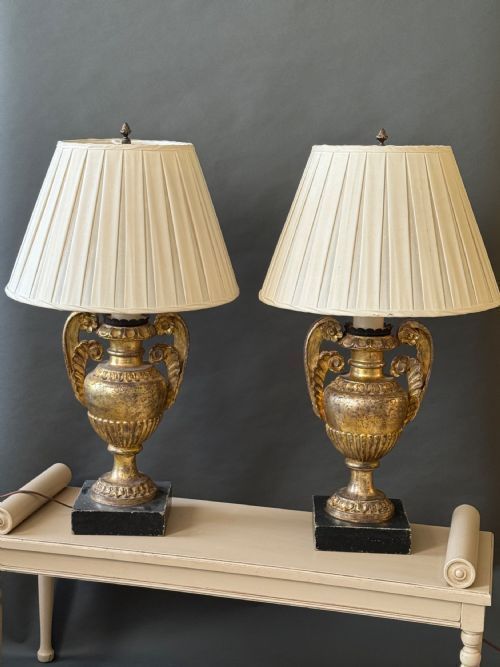
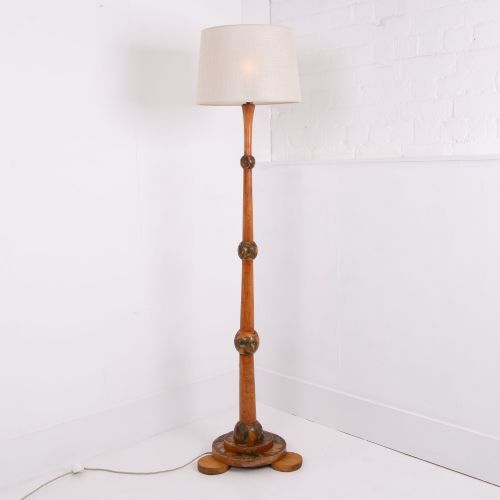
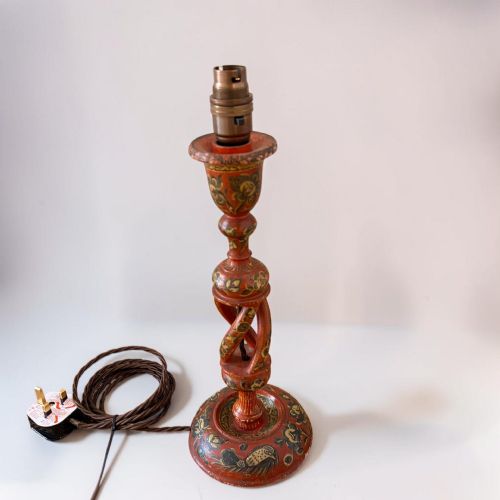
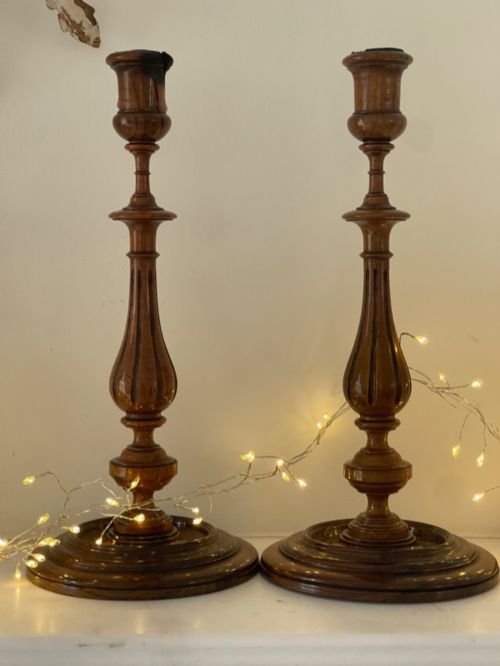
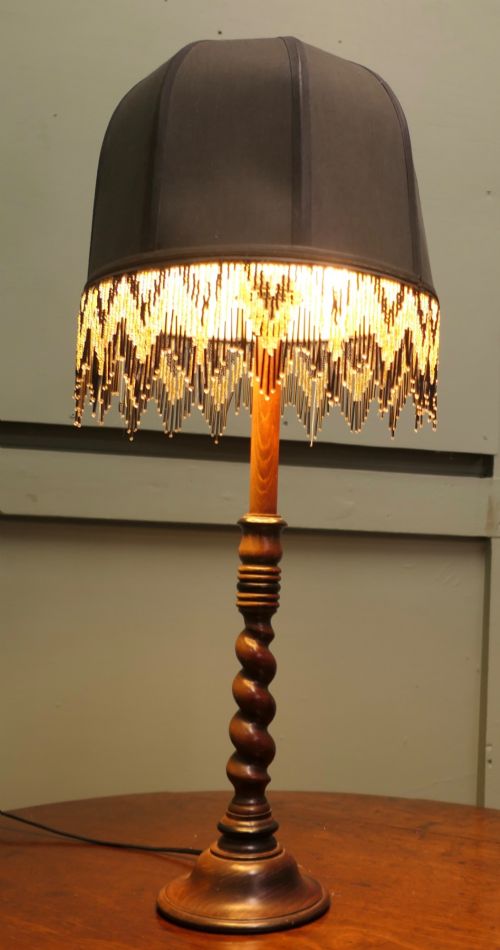
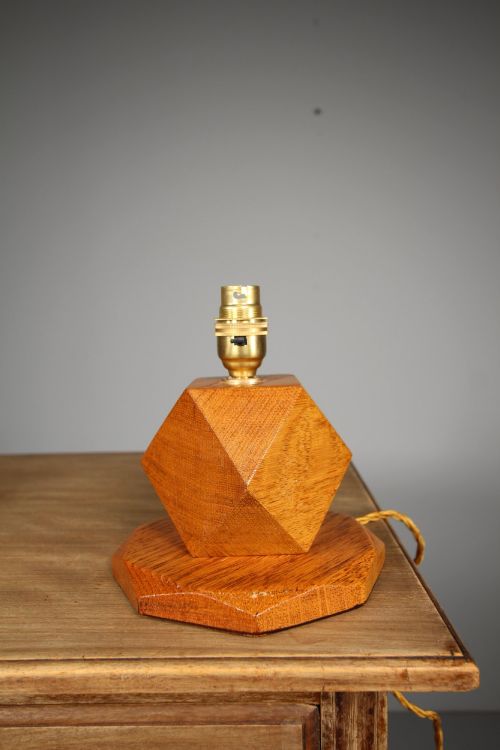
Vintage carved wooden lighting encompasses table lamps, standard floor lamps, chandeliers, candlesticks and wall lights shaped from timber across the nineteenth and twentieth centuries. When searching for vintage carved wooden lighting, buyers encounter diverse forms ranging from modest barley twist table lamps to large multi-arm Florentine giltwood chandeliers. These pieces emerge from periods spanning the Victorian and Edwardian eras through to the 1930s, reflecting regional craft traditions including Anglo-Indian, Black Forest and Kashmiri work.
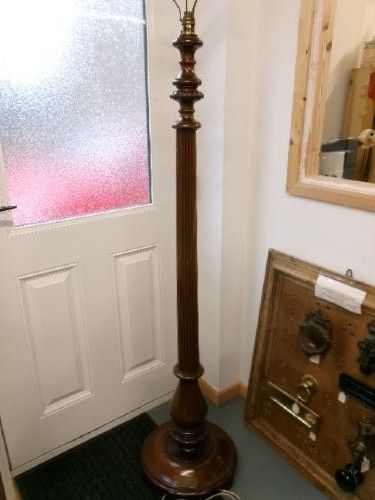
Table lamps and standard lamps dominate the selection, often turned or carved from oak, mahogany, walnut and ash. Heavier floor-standing pieces and table bases frequently arrive paired with fabric shades or brass fittings. Alongside dedicated lamps, conversion pieces such as eighteenth-century sphinxes and pricket candle sconces appear adapted for modern electrical wiring.
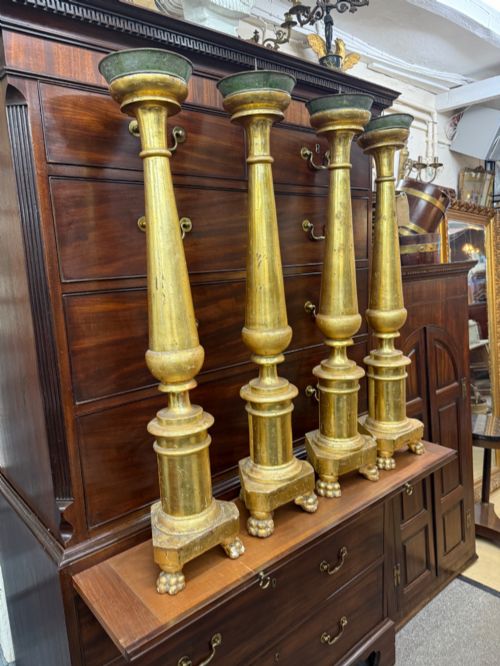
Geographic and stylistic variations shape the category significantly. Italian Florentine workshops contribute heavily gilt and polychrome carved chandeliers, while craftsmen in Kashmir supply hand-painted wooden bodies. Oak and mahogany standard lamps display regional British turning techniques like open twists and barley twists.
How these pieces were made
Makers utilised solid native and exotic hardwoods such as oak, mahogany, walnut and ash, shaping structural bodies through manual turning on lathes and detailed hand-chiselling. Carved details range from classical Corinthian capitals to organic foliage, animal figures like Black Forest bears, and intricate open twists. Timber surfaces were frequently finished with wax, polish or gesso before being gilded or polychrome painted.
Many fittings integrate auxiliary materials like cast brass, metal brackets and glass elements to support wiring and bulb sockets. Hand-painted ornamentation defines specific regional outputs, while giltwood pieces rely on traditional water gilding applied over carved wooden bases. Shade components combine carved wooden structures with gathered fabric coverings.
Vintage Carved Wooden Lighting Retail Price Guide 2026
Typical asking prices for vintage carved wooden lighting among the pieces listed under this phrase on Sellingantiques today, from the lower quarter to the upper quarter. They describe what is for sale here now, not the wider market.
Listings feature wooden lighting materials including solid oak, mahogany, walnut, ash, brass and giltwood across the Victorian, Edwardian and 1930s periods.
What varies in quality
Quality rests upon the crispness of the hand-carving and the stability of the timber selection. Superior standard lamps and chandeliers exhibit deep, precisely undercut detail in the wood rather than shallow machine moulding. The choice of dense hardwoods like mature oak or walnut provides better structural integrity than softer substitute woods.
Proportion and balance dictate the architectural success of tall floor lamps and heavy multi-arm chandeliers. Finishes reveal craftsmanship standards, with hand-applied gilding, polychrome work and wax polishes showing greater depth than flat modern paints. Original retaining components, such as turned wooden bases and period brass hardware, elevate the authenticity of the piece.
Heals
The Vintage Carved Wooden Lighting Glossary
- Barley twist
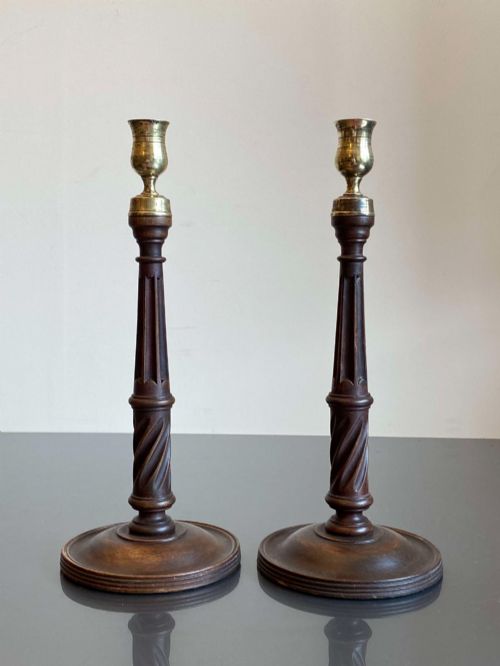
- A cylindrical wooden shaft carved in a helical screw pattern resembling a twisted rope. This turning style appears frequently on nineteenth and early twentieth-century table and standard lamps.
- Giltwood
- Timber coated with a thin layer of gold leaf or metallic paint over a prepared gesso ground. Florentine chandeliers and standard lamps utilise this technique to catch and reflect light.
- Pricket candle sconce
- A wall-mounted or freestanding lighting bracket featuring a sharp metal spike designed to hold a candle upright. Antique examples are often converted to electrical wall lights.
- Polychrome
- Painted in several distinct colours, a decorative treatment seen on Italian Florentine chandeliers and Kashmiri lamp bodies. This technique adds vibrant surface pattern to carved wooden forms.
- Open twist
- A complex wood-turning method where material is removed from the centre of a helix, leaving an open channel through the middle of the shaft.
Vintage Carved Wooden Lighting: Frequently Asked Questions
How do I wire an antique wooden lamp?
Rewiring vintage wooden lighting requires running modern flexible cable through the internal channel previously used for older circuits. Qualified electricians usually handle this task to ensure safety while preserving original wooden components.
Many pieces arrive already converted or rewired for contemporary domestic standards. Care must be taken not to damage internal timber channels during the rewiring process.
How do I clean carved wooden lighting?
Dust intricate hand-carved surfaces regularly using a soft, dry brush to prevent dirt accumulation in recessed areas. Avoid liquid polishes that can degrade older wax finishes and painted details.
Giltwood and polychrome painted lamps require particularly gentle maintenance with a dry cloth. Moisture can lift delicate gold leaf or damage historic painted finishes on Kashmiri and Florentine pieces.
What is a standard lamp?
A standard lamp is a tall freestanding floor light designed to illuminate a room from a vertical wooden shaft. These fixtures typically stand between four and six feet high on a weighted or tripod base.
In British usage, standard lamps serve as major decorative furniture items as well as functional light sources. They often feature matching wooden turning styles shared with smaller table lamps and side furniture.