


Vintage Carved Statuette
These vintage carved statuette examples range from nineteen-century marble busts to folk art animals, offering distinct character for the home.
Vintage Carved Statuette
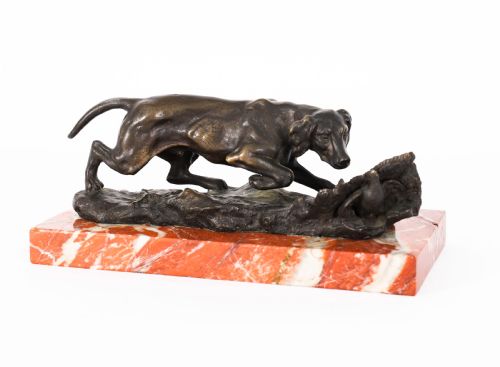
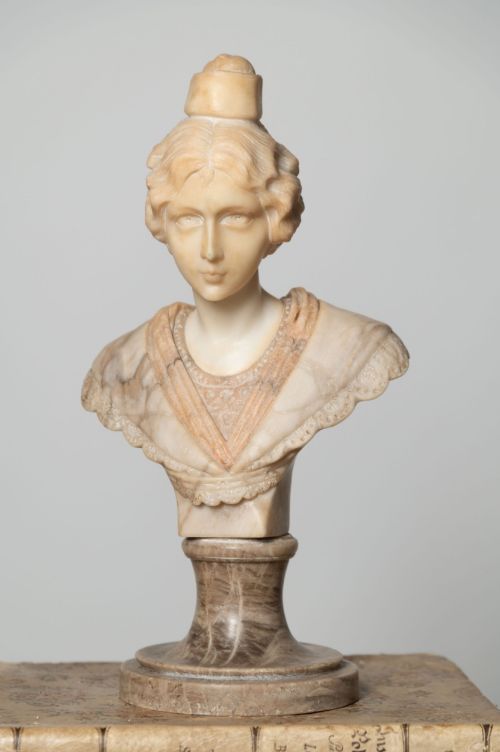
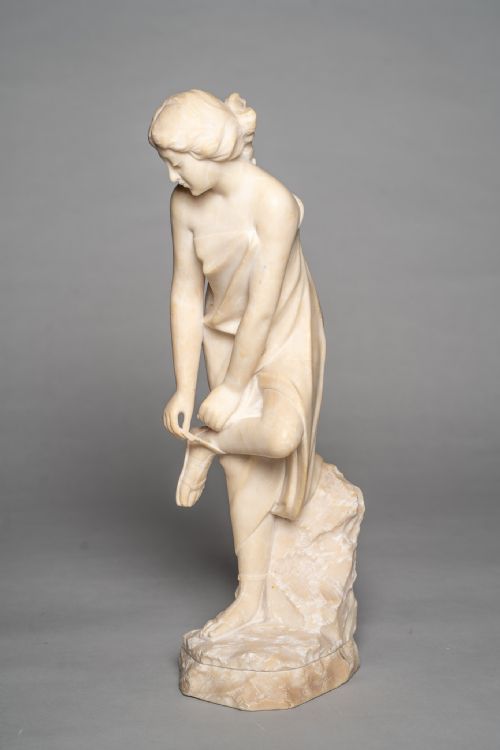
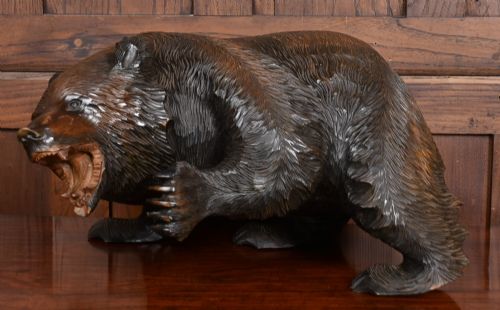
A vintage carved statuette encompasses sculptural works created from carved wood, hardwood, marble, alabaster, and bronze across the nineteenth and twentieth centuries. Buyers encounter diverse regional styles, including Japanese folk art, Anglo-Indian carvings, Black Forest animals, and European classical busts.
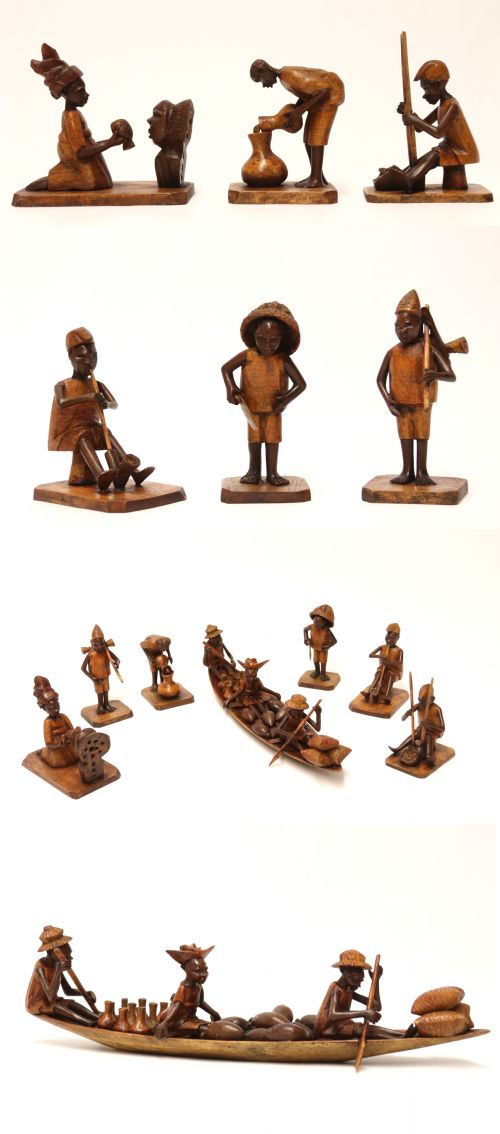
The material choices shape the character of each piece, moving from the smooth weight of Carrara marble to the rich grain of ebony and hardwood studies. Animalier subjects, historical figures, and allegorical studies dominate the forms available in this selection.
Origins span from European ateliers to Japanese workshops and African tribal regions, demonstrating varied sculptural traditions. The nineteenth century and early twentieth century provide the majority of these sculptural objects.
Materials and methods
Makers shaped hard stones like marble and alabaster using chisels and abrasive polishing agents to achieve smooth drapery and lifelike flesh. Woodcarvers utilised boxwood, ebony, and various hardwoods, employing gouges and fine knives to define fur, feathers, and facial expressions.
Bronze components in mixed-media pieces relied on the lost-wax casting method before undergoing cold-chiselling and patination. Surface finishes range from high-gloss marble polishing to natural waxed wood and darkened patinated metal.
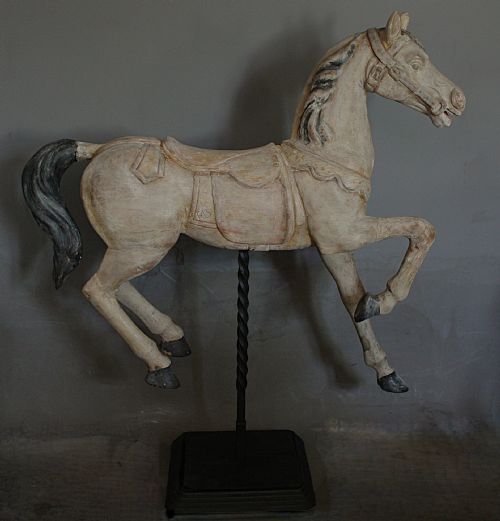
Oliver Cromwell rubs shoulders with a carousel horse and a carved cow.
Evaluating sculptural quality
Quality rests on anatomical precision, depth of undercut, and the crispness of detail in the carving or casting. Master carvers captured tension in muscle and delicacy in expression, whereas lesser pieces rely on generalised forms and shallow tool marks.
The integration of the material dictates visual success, such as how marble grain follows the contours of a subject or how wood grain enhances a study. Signed works by documented sculptors carry distinct attribution weight compared to anonymous workshop pieces.
Carl Kauba·A.Gamay
The Vintage Carved Statuette Glossary
- Animalier
- A nineteenth-century artistic movement focused on the realistic depiction of animals, particularly in bronze and carved media. These works often capture creatures in motion or natural repose.
- Carrara marble
- A type of white or blue-grey marble from the city of Carrara in Italy, prized by sculptors for its fine grain and luminosity. It forms the basis of many classical nineteenth-century busts.
- Okimono
- A Japanese statuette designed for display on a shelf or in a traditional alcove, often carved from wood or ivory with minute detail. They depict animals, figures, and scenes from daily life.
- Raj period
- The era of British rule in the Indian subcontinent, spanning the mid-nineteenth to mid-twentieth centuries. Carvings from this time frequently utilise dense local hardwoods like ebony.
- Alabaster
- A soft stone that is easily carved and polished, varying from opaque white to translucent banded patterns. Sculptors use it for figures where light penetration adds warmth to the surface.
Vintage Carved Statuette: Frequently Asked Questions
How do I clean a marble statuette?
Dust the surface regularly with a soft, dry cloth to prevent dirt accumulation in the crevices. Avoid harsh chemical cleaners and water, which can damage unsealed stone or alter the historic patina.
For stubborn marks, consult a specialist conservator rather than attempting aggressive DIY cleaning methods. Preserving the original surface texture maintains the integrity of the piece.
Are wooden carvings prone to cracking?
Wood naturally responds to fluctuations in humidity and temperature within a room. Sudden environmental changes can cause historic timber to dry out and develop minor splits.
Keep wooden sculptures away from direct heat sources, radiators, and prolonged direct sunlight. Maintaining stable indoor conditions protects the structural stability of the carved material.
How do I identify the period of a sculpture?
Examine the tooling marks, material preparation, and stylistic cues associated with specific movements like Art Nouveau or the Neoclassical era. Signatures and foundry marks provide direct clues to the date of creation.
Compare the subject matter and execution against documented examples from the same region and decade. Wear patterns and patination further indicate the true age of the object.
Where should I display a heavy stone bust?
Place heavy marble and alabaster sculptures on sturdy furniture capable of supporting considerable weight. Ensure the display surface is level to prevent any risk of the piece tipping over.
Position the sculpture where ambient light highlights the modelling and contours of the face or figure. Avoid high-traffic areas where the piece might be accidentally knocked.