
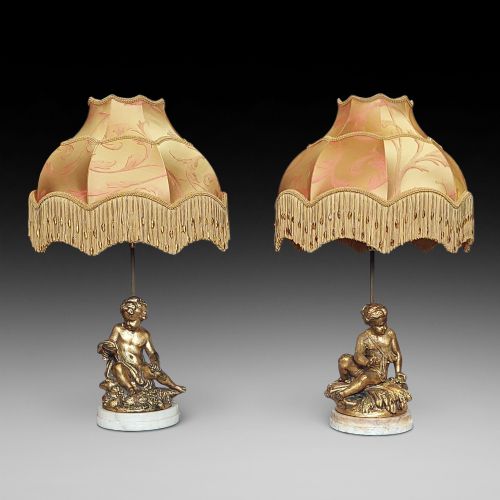


French Alabaster Figure
These french alabaster figure carvings bring classical grace and refined French taste into your interior.
French Alabaster Figure
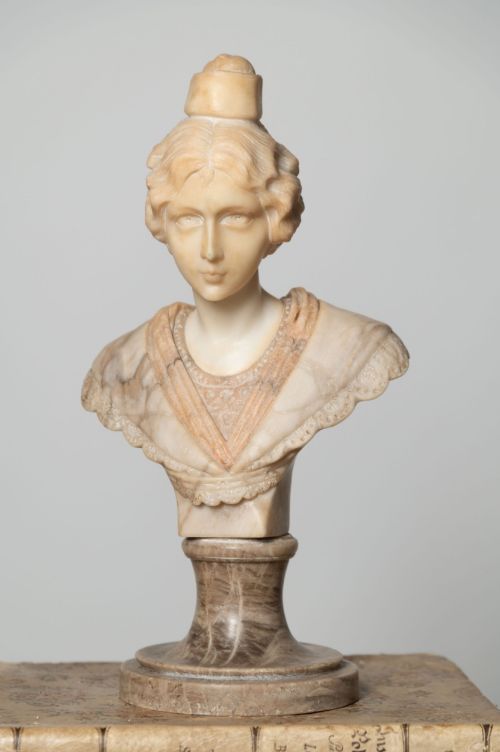
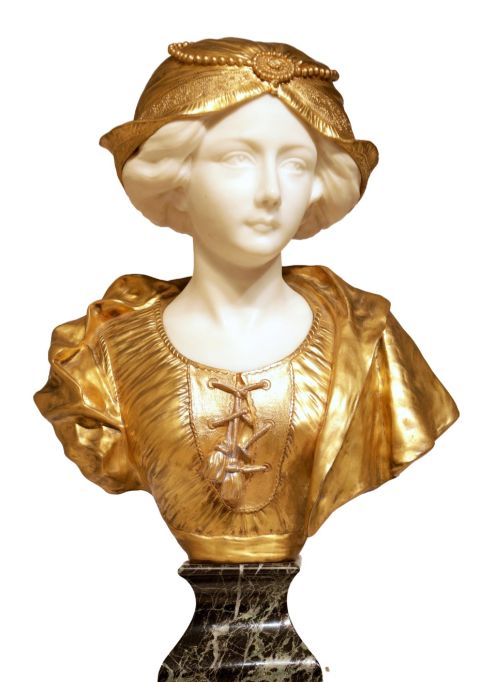
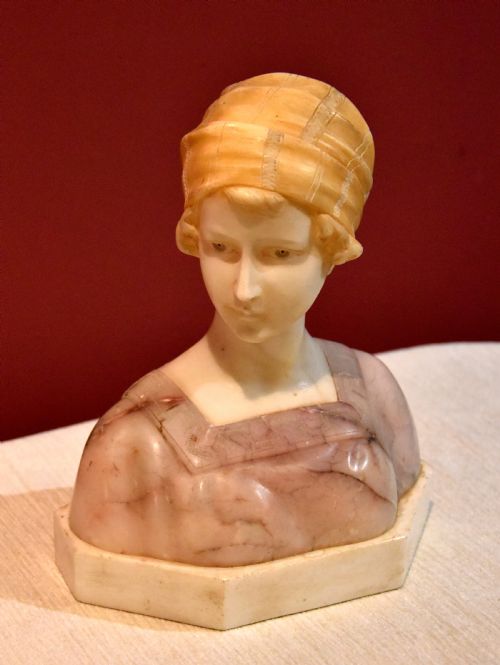
A french alabaster figure represents carved sculptural work originating from France, often depicting female forms, mythological subjects like Hestia, or allegorical representations such as figures holding wheatsheaves and playing lyres. These pieces span from the late nineteenth century through to the early decades of the twentieth century, reflecting periods of distinct artistic revival.
You will encounter various interpretations on this page, ranging from single statues and female busts to complex table lamps and mantel clock mountings. The forms frequently adopt styles such as Art Nouveau, Neoclassical, and French Classical Revival, capturing the shifting aesthetic preferences of European makers.
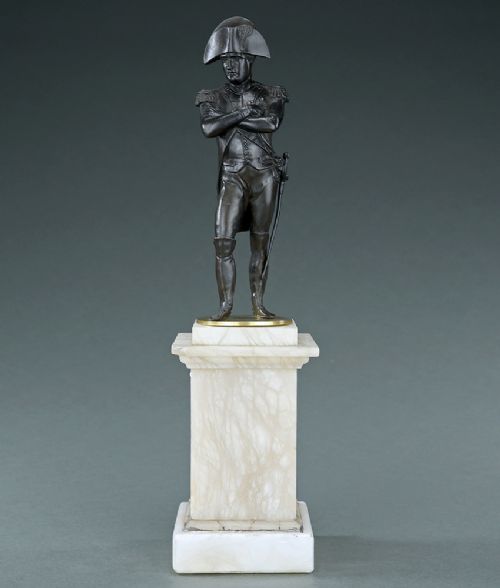
The material palette often extends beyond pure stone, incorporating mixed media elements like bronze, gilt metal, marble, and spelter to accentuate the carved alabaster bodies. Whether looking at a reclining nude or a goddess of the hearth, each piece offers a distinct glimpse into historical French decorative arts.
How they were made
Carving soft gypsum-based stone requires careful hand chisel and rasp work to achieve the smooth, translucent flesh tones characteristic of these sculptures. Artisans shape the raw alabaster with precision to capture delicate drapery and facial expressions.
Many sculptures incorporate mixed materials, mounting the carved stone elements onto bases of marble or pairing them with cast bronze, gilt metal, and spelter components. Some complex objects integrate functional mechanisms like clock movements or electrical lamp fittings beneath glass domes.
Hestia keeps watch over the hearth while stone goddesses strum lyres and hold wheatsheaves across these French interiors.
What varies in quality
The integration of secondary materials such as bronze mounts, marble bases, and patination influences the overall presence of the object. Cohesive design and careful assembly of mixed media components elevate the standing of the piece within the sculptural tradition.
Affortunato Gory·Emile Guillemin·Auguste Henri Carli·R. Lusili
The French Alabaster Figure Glossary
- Alabaster
- A soft, fine-grained stone prized for its translucency and pale colour, frequently utilised for nineteenth-century European sculpture. It allows light to penetrate the surface slightly, mimicking human skin.
- Spelter
- A zinc alloy cast to imitate bronze, often patinated or painted to resemble heavier metals in decorative figures and lamp bases. This material gained popularity for commercial ornamental castings during the nineteenth century.
- Neoclassical
- An artistic style drawing inspiration from the classical art and culture of ancient Greece and Rome. Figures from this movement often display restrained emotion and classical drapery.
- Art Nouveau
- An international style of art and architecture characterised by intricate linear designs and flowing organic shapes inspired by natural forms. This aesthetic heavily influenced French decorative objects around the turn of the twentieth century.
French Alabaster Figure: Frequently Asked Questions
How do I clean a carved stone sculpture?
Dust the surface gently with a soft, dry brush to prevent any accumulation of dirt within the intricate carved recesses.
Avoid using water, chemical solvents, or abrasive cleaners on soft stone, as moisture can permanently stain or dissolve the gypsum material.
What periods do these sculptures originate from?
The available pieces predominantly date from the late nineteenth century through to the early decades of the twentieth century. This timeframe encompasses the height of European classical revivals and the emergence of Art Nouveau.
Earlier nineteenth-century examples and turn-of-the-century works sit alongside pieces from the nineteen-twenties and thirties.
Are these figures purely decorative?
Many examples function solely as standalone statues, busts, or bookends designed for display on mantelpieces and tables. Other pieces serve dual purposes as structural mounts for mantel clocks or functional table lamps.
Even functional items retain a strong sculptural focus, placing artistic form at the centre of their design.
What materials accompany the carved stone?
Sculptors frequently combined the primary soft stone with contrasting elements like marble bases, cast bronze, and gilt metal. Spelter and glass also appear in mixed media compositions, particularly in turn-of-the-century lighting and clock assemblies.
These varied combinations highlight the decorative ambitions of the workshops that produced them.