


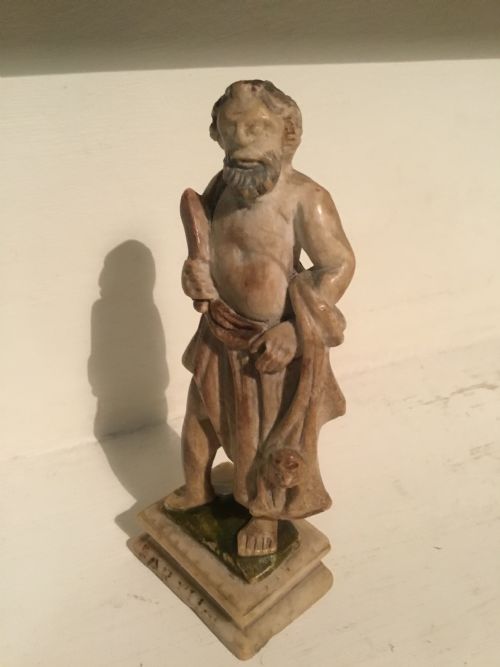


Carved Stone Statuette
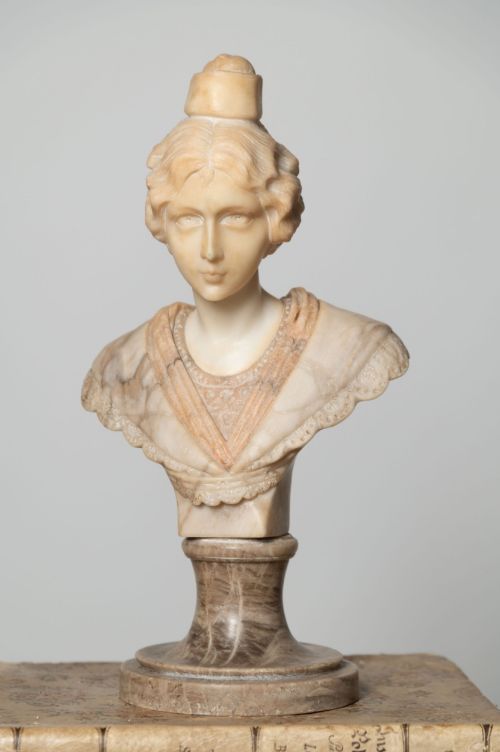
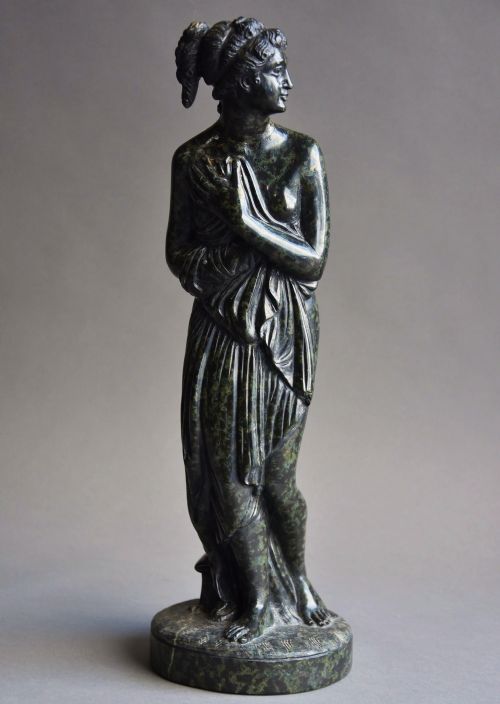
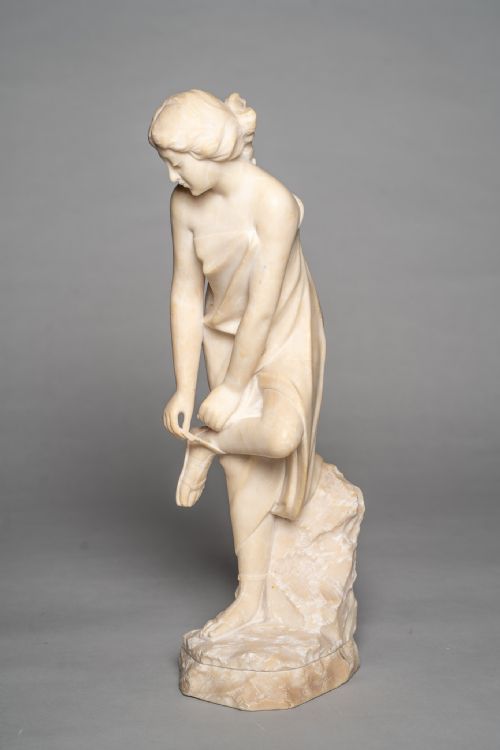
These carved stone statuette pieces are tactile nineteenth-century and earlier sculptural works in marble and alabaster that bring classical form into domestic rooms.
Carved Stone Statuette
When you search for a carved stone statuette, you encounter works ranging from diminutive Grand Tour souvenirs to substantial portrait busts and mythological figures. The selection centres heavily on nineteenth-century pieces, spanning Neoclassical and Victorian tastes alongside French and Italian interpretations of classical subjects.
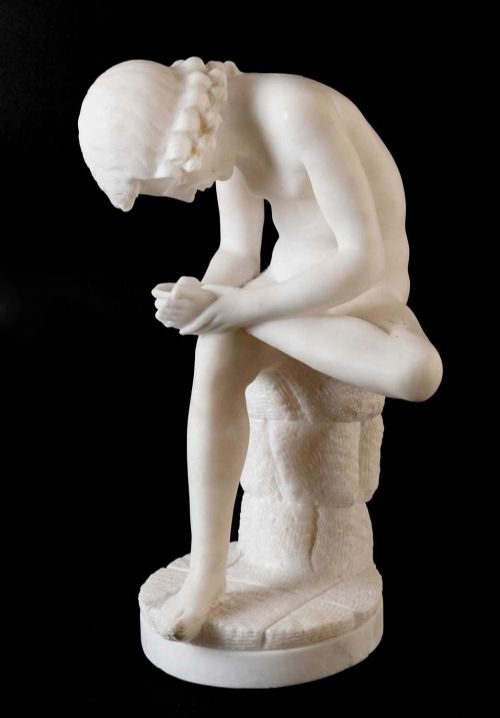
Subjects include female nudes, historical figures such as Roman philosophers, and classical animals like the Dogs of Alcibiades. You frequently meet depictions of Venus Italica and Spinario, mirroring celebrated antiquities encountered by travellers on the continent.
Materials span white Carrara marble, green serpentine, translucent alabaster, and banded onyx. Most examples originate from Italian and French workshops, reflecting nineteenth-century enthusiasm for classical sculpture adapted for mantelpieces and display tables.
How they were made
Many nineteenth-century pieces rely on mechanical pointing machines to translate plaster models accurately into marble or alabaster. Finished surfaces receive varying degrees of polishing, ranging from a matte stone texture to a glossy sheen on exposed flesh.
A pair of stone dogs keeps watch over your mantelpiece without ever needing a walk or begging for scraps.
What varies in quality
Quality rests primarily on the sensitivity of the carving, particularly in the handling of facial expression, hair texture, and the fall of drapery. Finer pieces demonstrate an understanding of human anatomy and volume, whereas lesser examples appear stiff and mechanical in execution.
The choice of raw material also distinguishes the tier of a piece, from flawless uniform Carrara marble to stone with natural inclusions. Signature marks by known sculptors elevate the standing of a statuette above anonymous workshop productions.
Antonio Canova·A.Gamay·Fritz Kochendorfer
The Carved Stone Statuette Glossary
- Grand Tour
- A cultural journey undertaken by wealthy young Europeans in the eighteenth and nineteenth centuries, acquiring souvenirs such as small marble sculptures. These items aimed to demonstrate classical learning and refined taste upon the traveller's return home.
- Carrara marble
- A type of white or blue-grey marble quarried in the city of Carrara in Tuscany, Italy. Sculptors prize it for its fine grain and luminous quality when polished.
- Alabaster
- A soft, workable stone often translucent in thin sections, used extensively for carved figures and decorative vessels. It scratches easily compared to harder marbles.
- Serpentine
- A group of green silicate minerals that polish well and resemble jade, frequently utilised for architectural bases and animal models. Its mottled appearance adds rich colour contrast to pale marble figures.
- Neoclassical
- A Western cultural movement drawing inspiration from the art and culture of classical antiquity. It prioritises restraint, proportion, and clear outlines over Baroque elaboration.
Carved Stone Statuette: Frequently Asked Questions
What is a Grand Tour sculpture?
A Grand Tour sculpture is a miniature or reduced-scale replica of a famous classical antiquity, purchased by travellers visiting Italy during the nineteenth century. These pieces served as scholarly keepsakes and decorative ornaments for home libraries.
They bring tangible history into modern rooms, often capturing the exact proportions of ancient masterpieces seen in Roman and Florentine galleries.
How do I care for alabaster?
Alabaster is a soft and water-soluble stone that requires dry dusting with a soft brush rather than damp cleaning. Keep it away from moisture and direct sunlight to preserve the surface.
Placing these figures away from high-traffic edges prevents accidental chips to delicate fingers or protruding drapery.
Are these pieces signed?
Some sculptures carry signatures or workshop stamps carved into the base or rear of the stone. Others remain entirely anonymous, representing the standard output of Italian and French carving studios.
Signatures help attribute a work to a specific hand, though unsigned nineteenth-century pieces often display exceptional technical skill.
How can I tell marble from alabaster?
Marble is a hard metamorphic rock that resists scratching from a steel blade, whereas alabaster is significantly softer and can be marked with a fingernail. Alabaster also possesses a translucent quality that allows light to penetrate just beneath the surface.
Examining the underside or an unpolished area usually reveals the density and crystalline structure of the stone.