


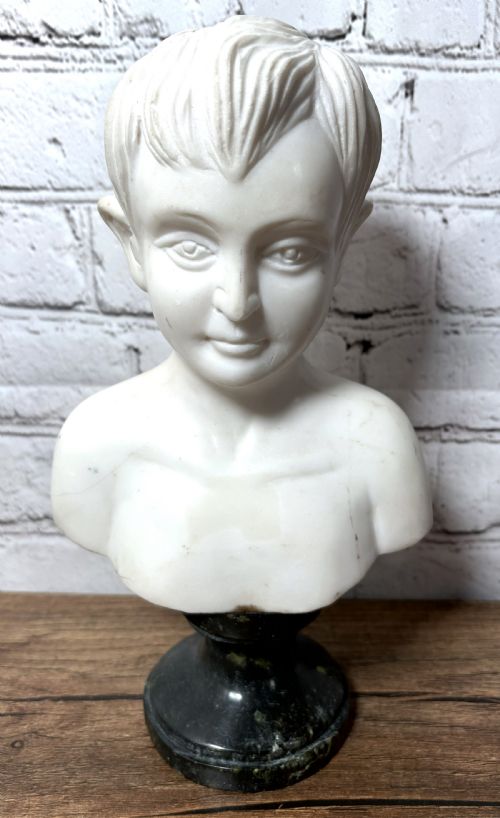


Alabaster Portrait Bust
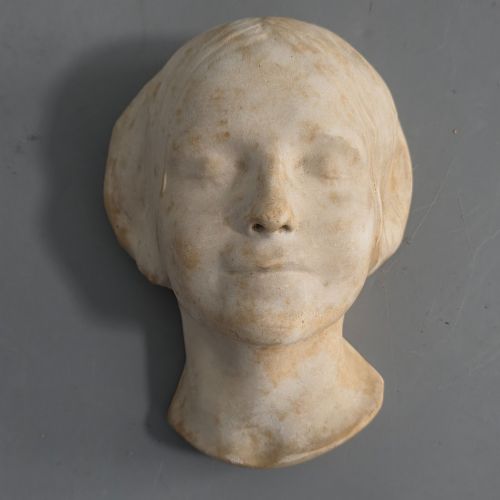
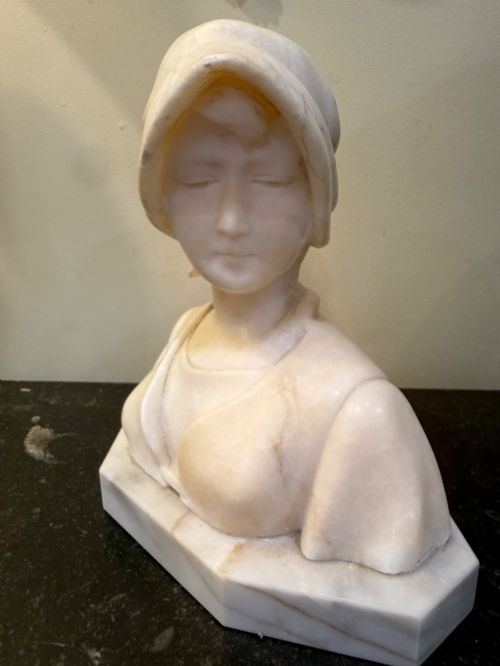
An alabaster portrait bust captures a likeness in translucent stone, offering tactile warmth and classical elegance for a mantelpiece or desk.
Alabaster Portrait Bust
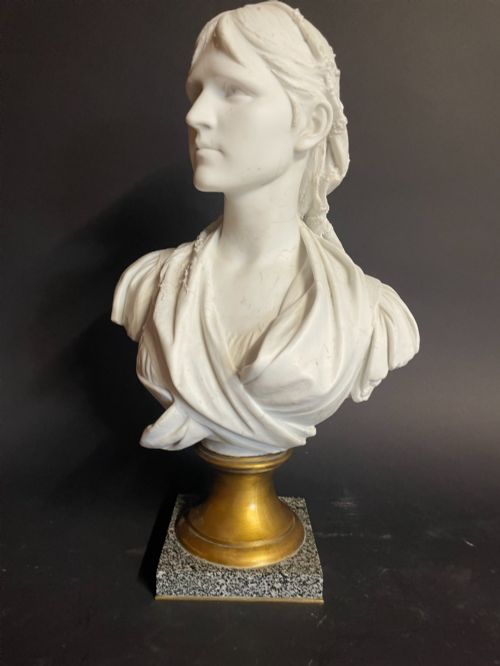
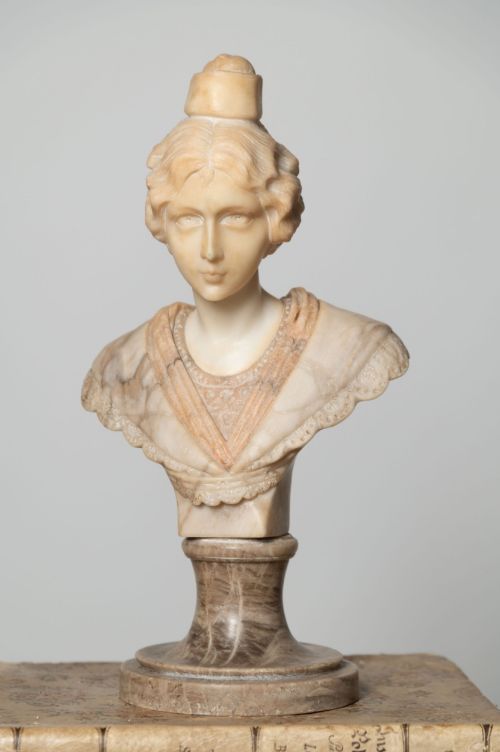
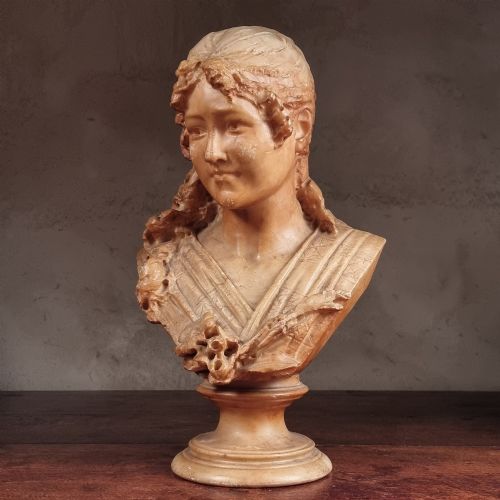
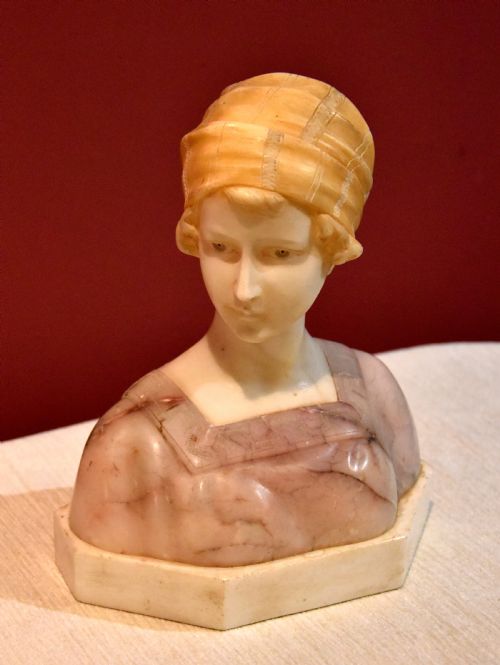
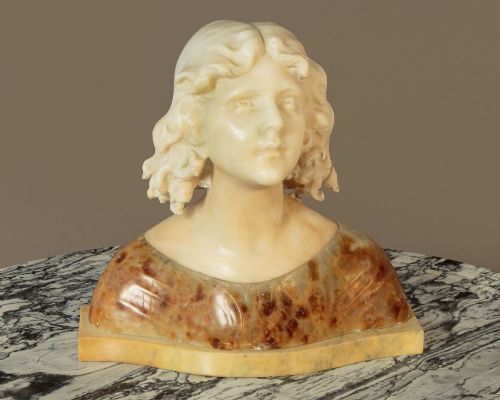
An alabaster portrait bust is a sculptural depiction of a human head and shoulders, shaped primarily from fine-grained gypsum or calcite. These pieces capture individuals with striking realism, ranging from classical figures to contemporary young women and gentlemen of the nineteenth and early twentieth centuries.
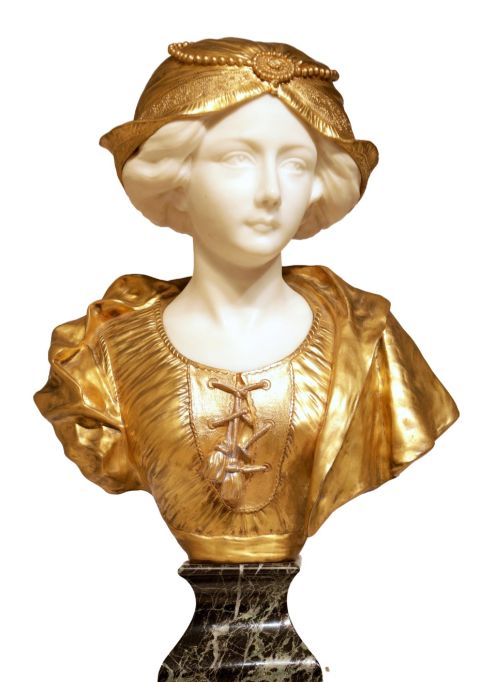
The versions most commonly met on this page date from the nineteenth century through the Edwardian period, encompassing Victorian, Art Nouveau and Neoclassical styles. They appear in pure white stone, sometimes paired with bronze, brass or marble bases.
Makers and sculptors utilised various forms, including wall plaques and library busts, alongside freestanding sculptures of young girls, boys and historical figures. French and Italian ateliers produced many of these works, reflecting continental tastes of the era.
How they were made
Makers carved these pieces from solid blocks of alabaster or marble using chisels, files and abrasive powders to achieve smooth surfaces. Alabaster offers a softer consistency than marble, allowing artisans to carve delicate drapery and hair with fine detail.
Composite works combine carved stone with cast elements in bronze, brass, gilt bronze or ormolu. Bases and mounts provide structural support and contrast against the pale tones of the primary stone.
Several young girls and boys gaze out from these nineteenth-century desks wearing mischievous expressions carved directly into the stone.
What varies in quality
The selection of the raw stone influences the final appearance, with uniform, translucent alabaster commanding greater regard than stone marred by heavy veining or cloudiness. The integration of mixed media, such as gilt bronze mounts, adds complexity to the composition.
Affortunato Gory·Auguste Henri Carli·George Van Der Straeten·G.V. Vaerenbergh·Mieczyslaw Leon Zawiejski·Giuseppe Bessi·GREUZE
The Alabaster Portrait Bust Glossary
- Alabaster
- A soft, fine-grained stone used for sculpture, prized for its translucency and ease of carving. It allows light to penetrate slightly beneath the surface, creating a warm glow.
- Ormolu
- Gilt bronze mounted on decorative objects or furniture. The technique involves applying a gold amalgam to a bronze base.
- Neoclassical
- A style inspired by classical antiquity that emphasises proportion, restraint and solemn dignity. It emerged strongly in European art during the eighteenth and nineteenth centuries.
- Art Nouveau
- An international style of art and architecture characterised by intricate linear designs and flowing organic motifs inspired by natural forms. It flourished around the turn of the twentieth century.
- Library bust
- A smaller scale sculptural portrait designed to sit among bookshelves or upon a desk. These pieces often depict literary figures, philosophers or anonymous youths.
Alabaster Portrait Bust: Frequently Asked Questions
Where should I place a portrait bust?
Position the piece on a sturdy mantelpiece, pedestal or bookcase away from direct sunlight and sudden temperature changes. Stable indoor environments prevent the stone from drying out or sustaining damage.
How can I tell alabaster from marble?
Alabaster is softer and can be scratched with a metal coin, whereas marble resists scratching. Alabaster also exhibits a translucent quality when held near a light source.
What periods do these busts represent?
The listed pieces span the nineteenth century and the Edwardian era, with specific dates clustering around 1860, 1890, 1900 and 1910. Styles range from Victorian classical to Art Nouveau.