
Vintage Carriage Clock
A vintage carriage clock is a portable timepiece housed in a glazed brass case, offering mechanical precision and traditional aesthetic charm.

Vintage Carriage Clock
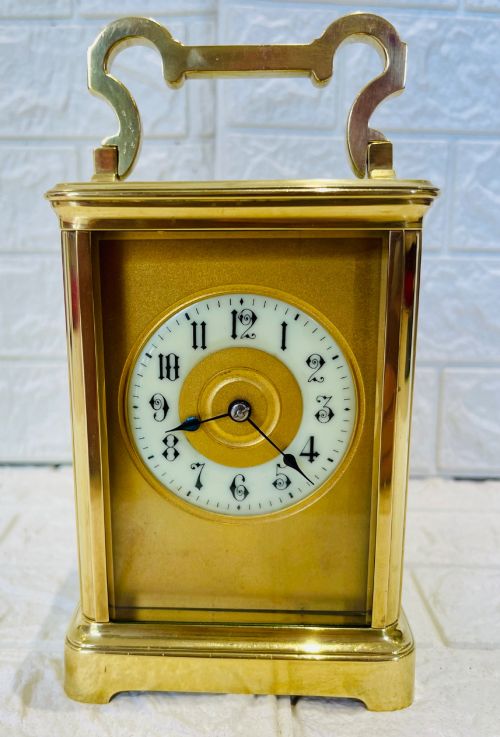
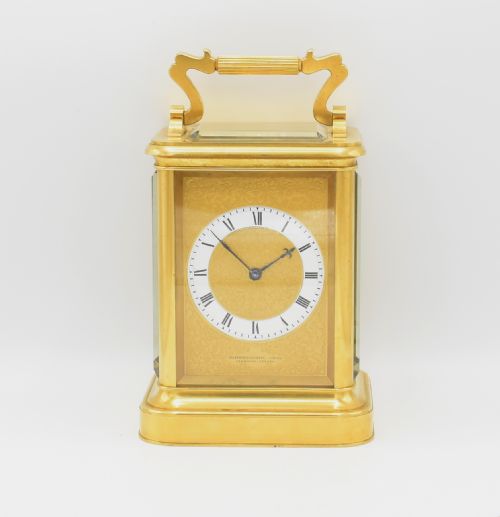
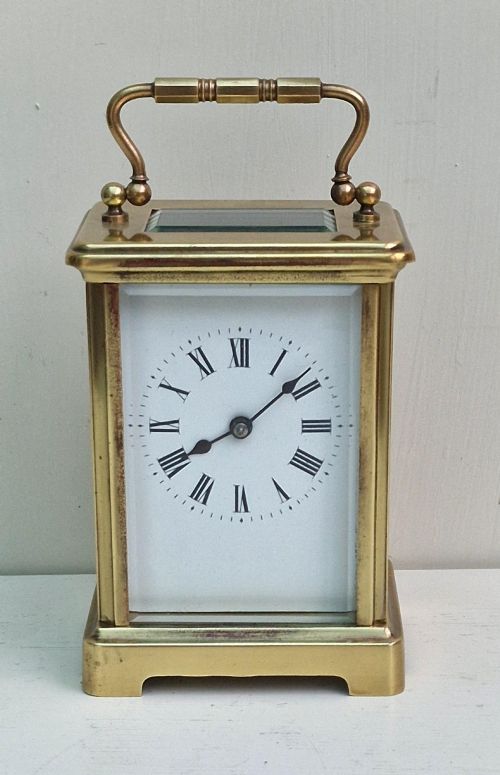
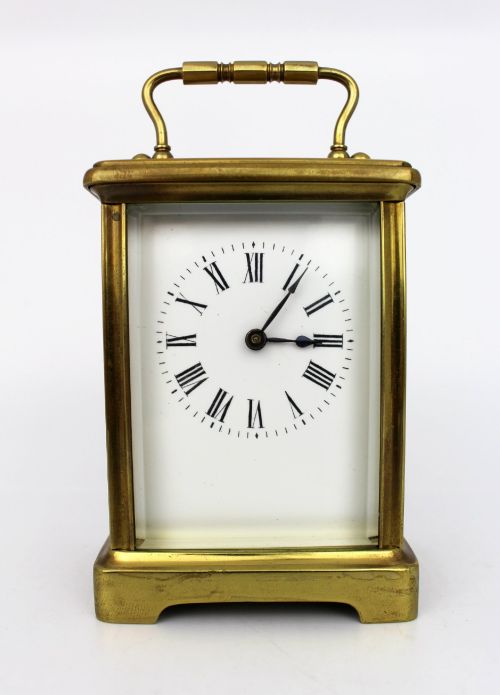
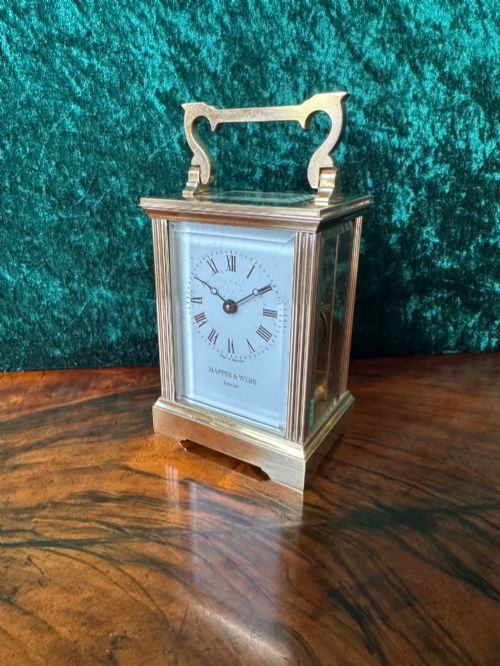
A vintage carriage clock is a portable timekeeper traditionally designed for travel by officers and gentlemen during the nineteenth and early twentieth centuries. These pieces combine mechanical movements with protective metal and glass enclosures, allowing them to function reliably while displaced from a stationary wall or mantel.
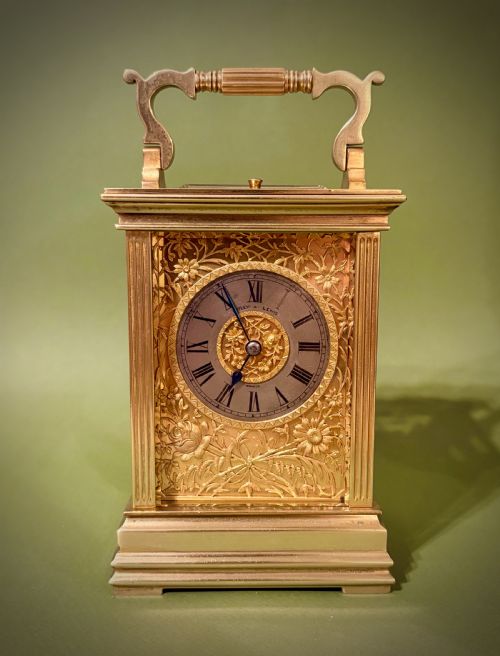
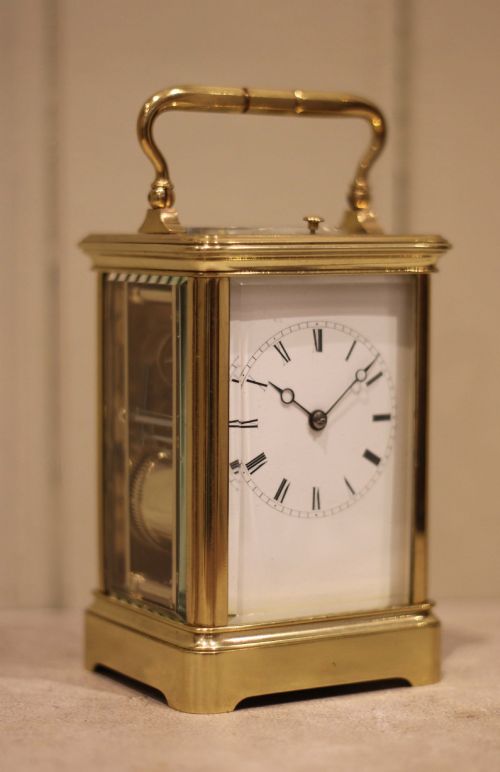
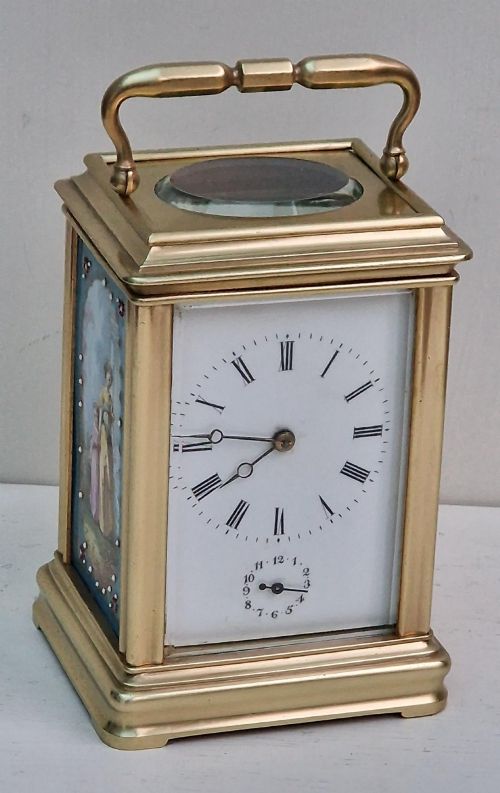
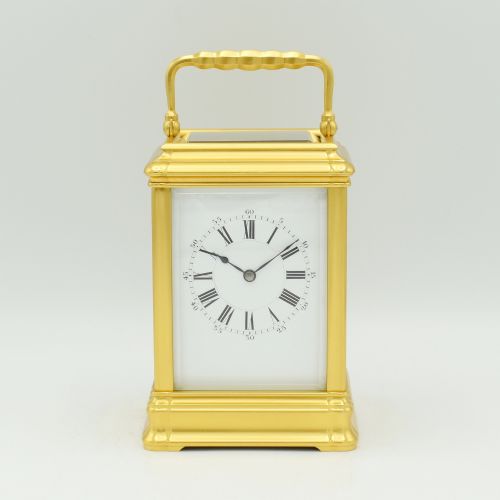
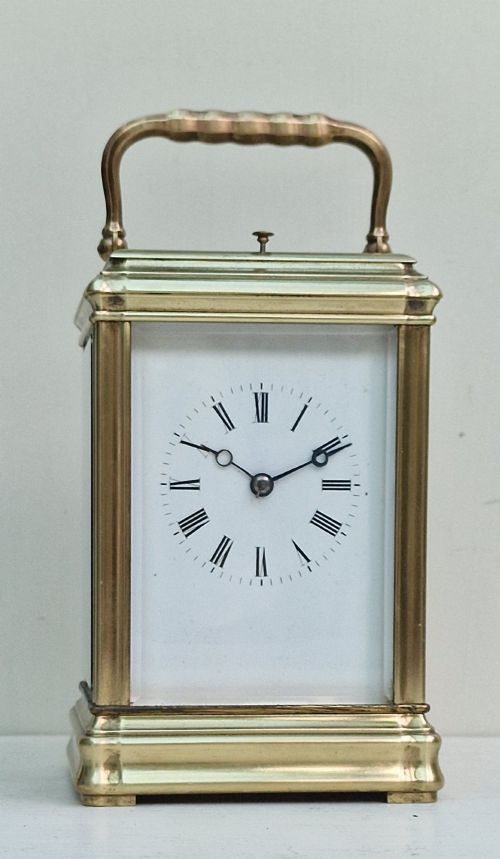
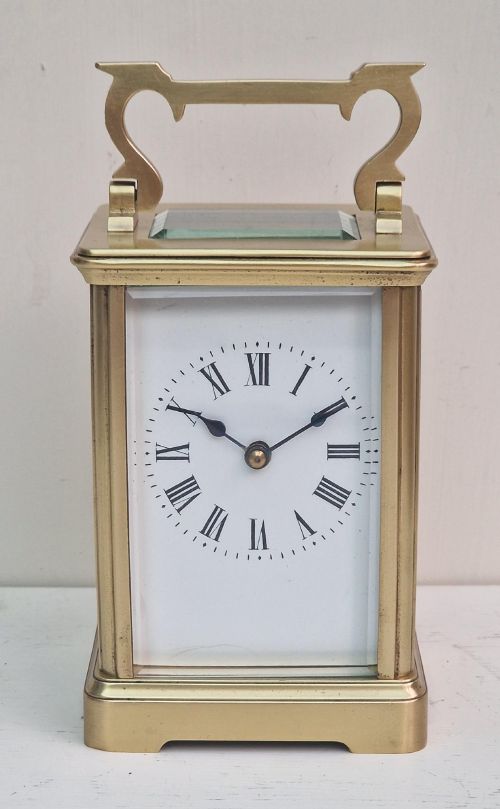
The version most commonly encountered on this page originates from nineteenth century French workshops, alongside Edwardian British examples. These clocks typically take the form of upright rectangular brass housings fitted with bevelled glass panels that reveal the escapement within.
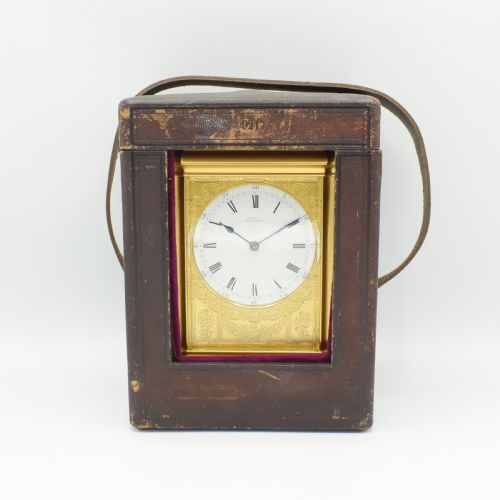
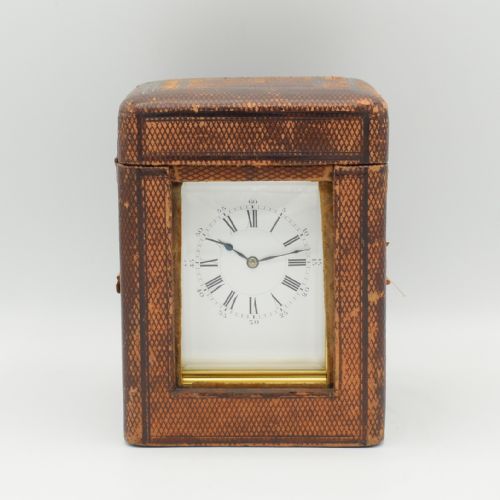
Makers often housed these timepieces in fitted leather travel cases to protect the gilt brass and enamel dials from the rigours of transit. Surviving examples range from plain brass designs to ornate models featuring porcelain panels and quarter striking mechanisms.
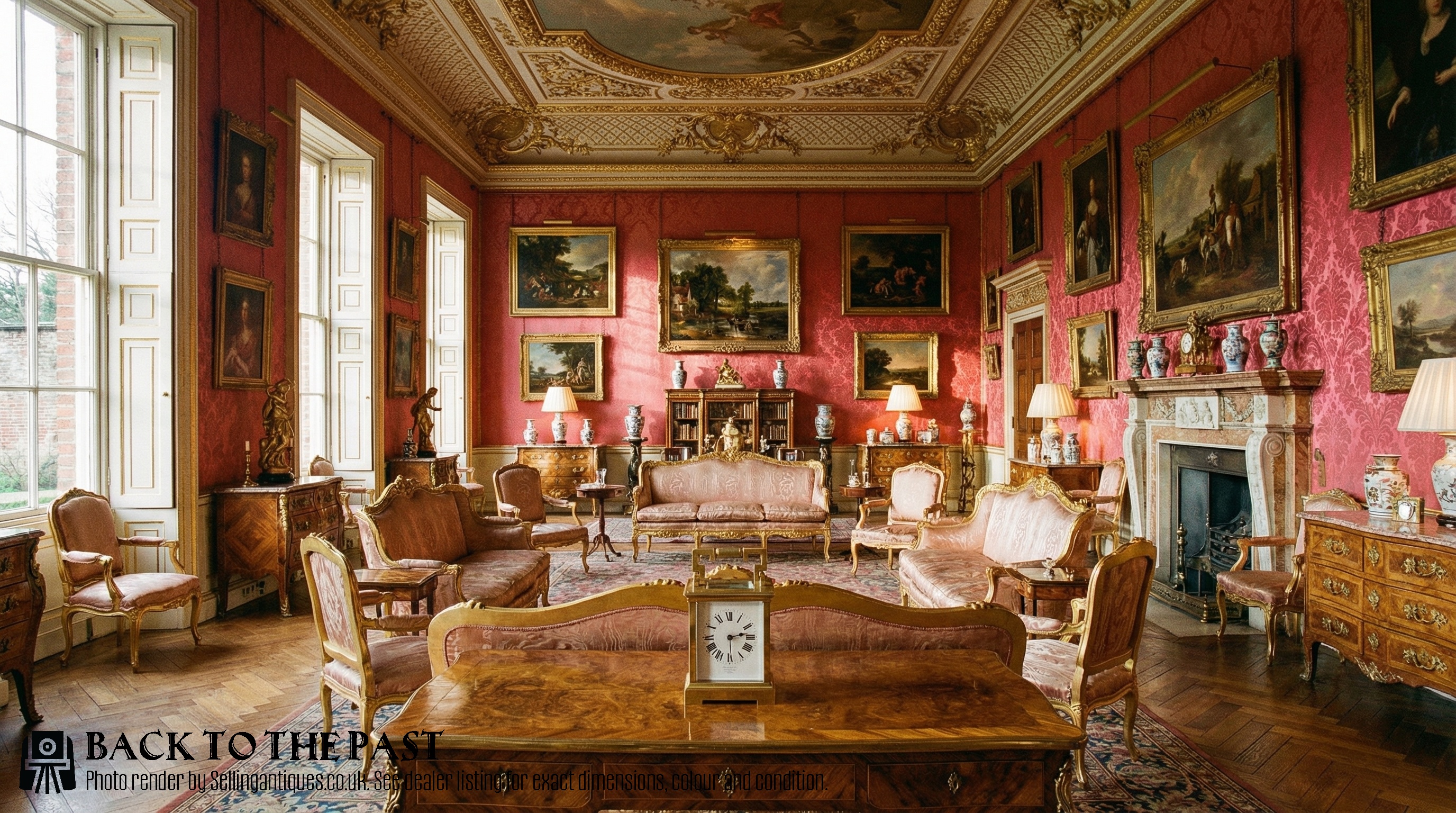
How they were made
Makers constructed the primary frames of these clocks from heavy cast brass, frequently applying a gilt finish to enhance the metallic lustre. Bevelled glass panels fitted into the top and sides allowed light to reach the internal escapement and enamel dial.
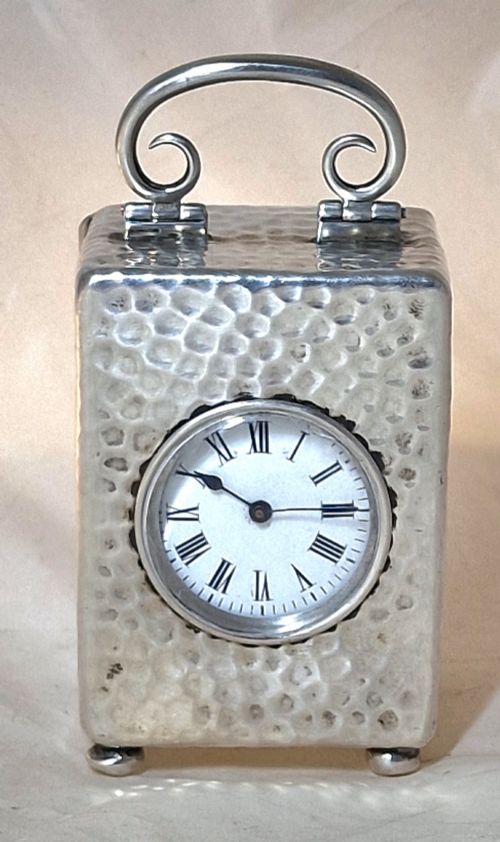
Makers incorporated leather for exterior protective travel cases, lining the interiors with velvet or silk to cushion the delicate metalwork. Sterling silver featured in British Edwardian adaptations, providing an alternative to the standard gilt brass housing.
Vintage Carriage Clock Retail Price Guide 2026
Typical asking prices for vintage carriage clock among the pieces listed under this phrase on Sellingantiques today, from the lower quarter to the upper quarter. They describe what is for sale here now, not the wider market.
Listings on this site span the Victorian, Edwardian, and late nineteenth-century periods, utilising brass, gilt brass, silver, and porcelain materials.
What varies in quality
The refinement of the mechanical movement largely determines the standing of a piece, particularly the inclusion of striking and repeating complications. Simpler timepieces only indicate the hours, whereas superior mechanisms sound the quarters and hours on gongs or bells upon demand.
The density and crispness of the exterior brass casting distinguish ordinary production from the finest work. Heavily engraved gilt cases and undamaged porcelain dial panels indicate a higher standard of original craftsmanship.
The presence of an original numbered travel case adds significantly to the completeness of a piece. Subtle details such as fully engraved escapement platforms separate standard factory output from master maker productions.
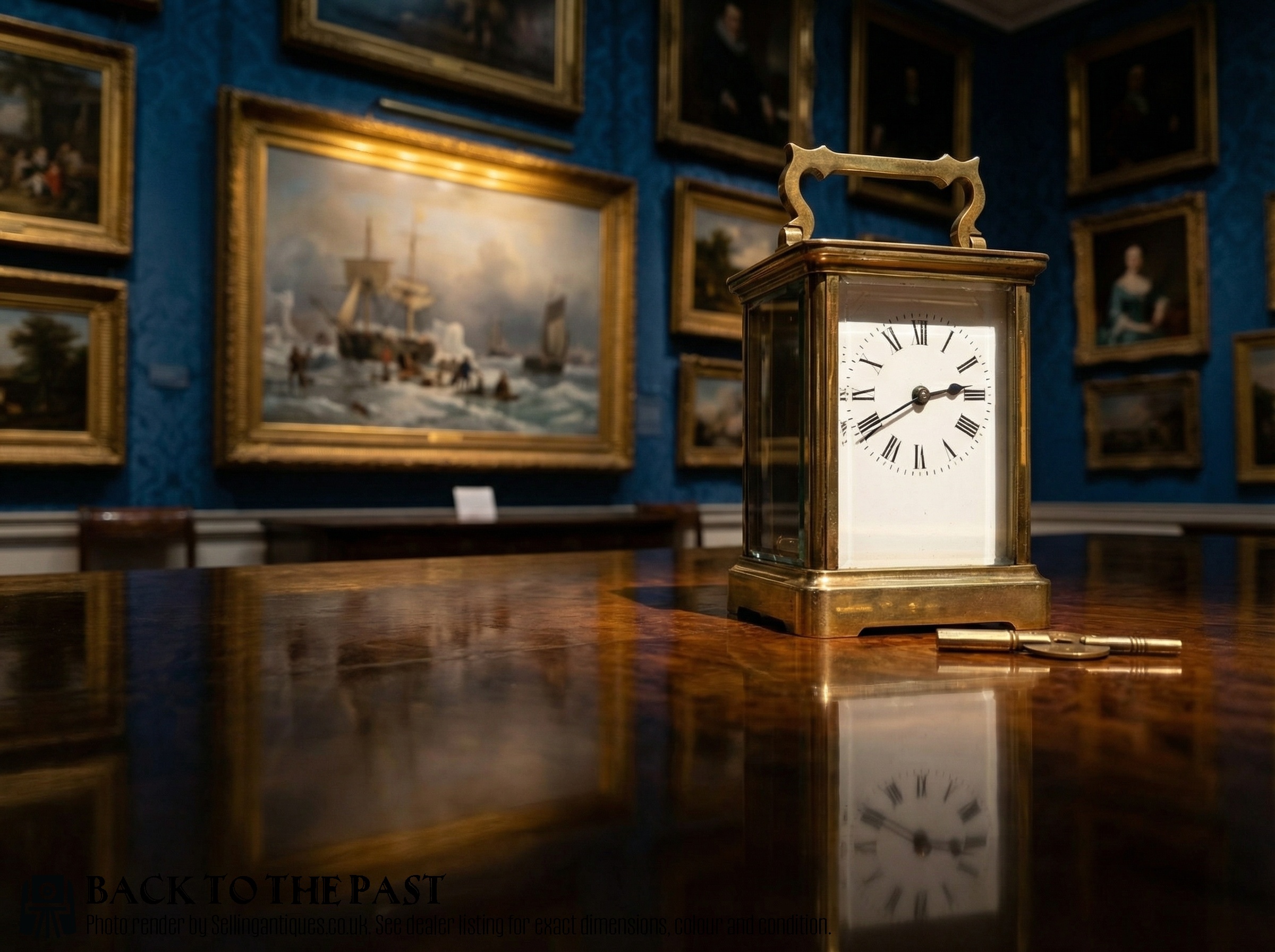
Henri Jacot·Mappin and Webb·Goldsmiths Alliance Ltd·Pickford of London·T. Martin and Co
The Vintage Carriage Clock Glossary
- Carriage clock
- A portable spring-driven timepiece designed for travel, featuring a glazed brass case and a swinging handle on top. These clocks originated in France and gained popularity throughout the nineteenth century.
- Gorge case
- A distinct rectangular brass case style characterised by stepped mouldings around the top and bottom plates. This form frequently appears on French repeating models from the Victorian era.
- Repeating movement
- A mechanism that sounds the last hour or quarter-hour when a button or lever on the case is pressed. This complication allowed time-checking in the dark before electric lighting.
- Escapement
- The internal mechanism that controls the unwinding of the spring by delivering regular impulses to the balance wheel. Platform escapements are visible through the top glass panel of many vintage examples.
- Pendule d'Officier
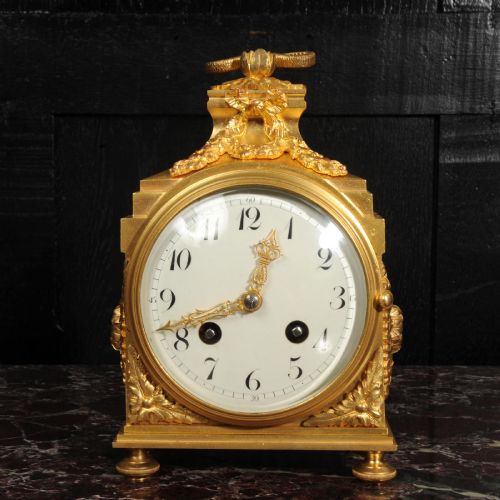
- An early French term for a portable military clock that preceded the standard nineteenth century carriage clock design. These pieces often feature distinct architectural brass cases.
- Doucine case
- A case design featuring a curved ogee moulding along the top section. This profile adds architectural depth to the standard rectangular silhouette.
Vintage Carriage Clock: Frequently Asked Questions
How do I wind a carriage clock?
Most vintage carriage clocks operate on an eight-day movement requiring a dedicated winding key inserted into the arbours on the backplate. Turn the key gently clockwise until resistance indicates the mainspring is fully tensioned.
Avoid overwinding the mechanism, as this can strain the delicate steel springs. Ensure the clock is standing level on a firm surface before setting the time through the back aperture.
How do I tell French and British clocks apart?
French carriage clocks from the nineteenth century typically feature gilt brass gorge or corniche cases enclosing numbered mechanical movements. They often incorporate platform escapements visible through a glass panel on the top plate.
British examples, such as those from the Edwardian period, frequently utilise sterling silver hallmarked cases alongside distinct domestic retailer signatures on the enamel dials.
Where should I place a carriage clock?
Position your carriage clock on a stable mantelpiece, desk, or shelf away from direct sunlight and fluctuating temperatures. A level surface ensures the balance wheel beats evenly and keeps accurate time.
Because these timepieces were built for portability, their compact glass and brass housings suit smaller display spaces where a traditional wall or tall clock would dominate.