


Vintage Canine Painting
When you search for a vintage canine painting, you enter a centuries-long tradition of animal portraiture captured in oil, watercolour, and pastel.
Vintage Canine Painting
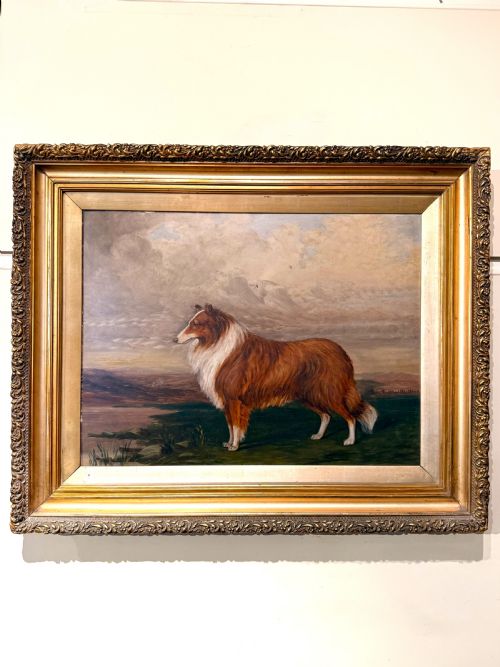
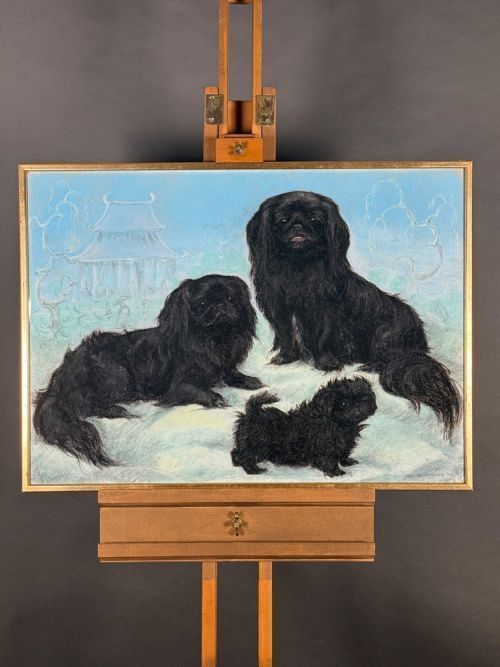
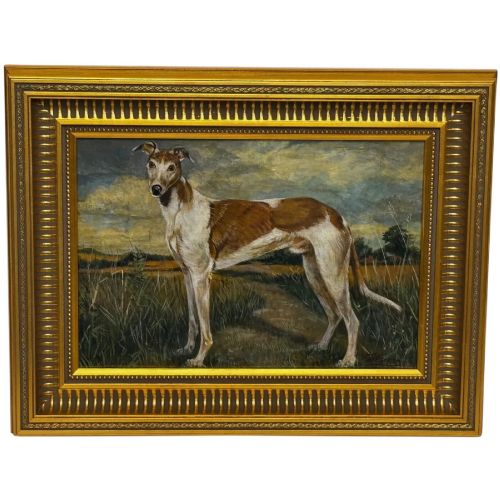
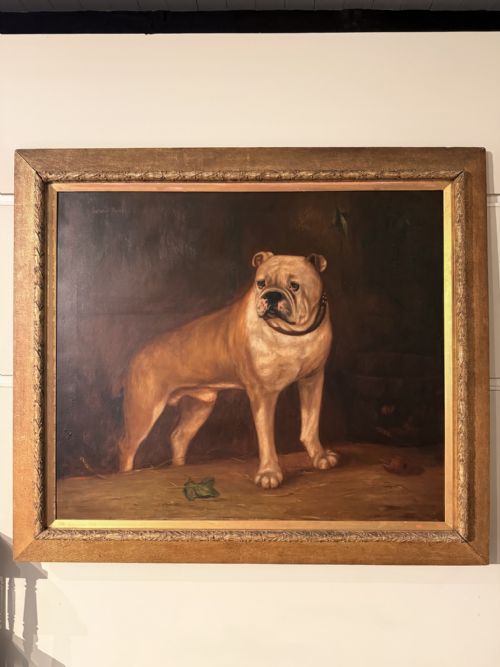
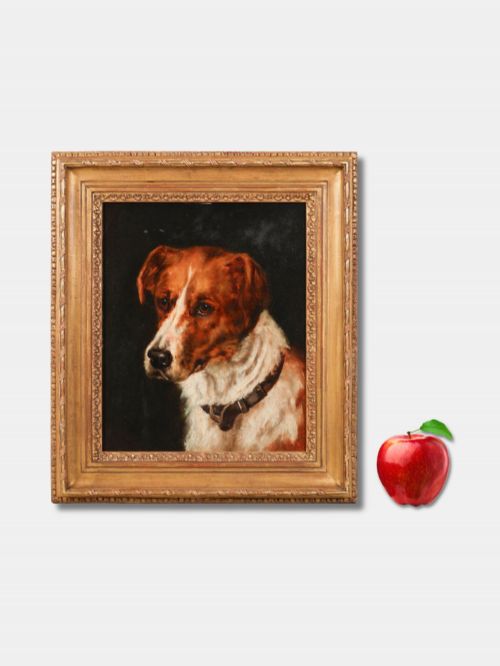
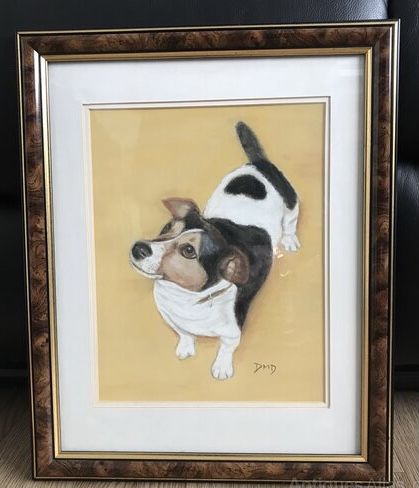
A vintage canine painting encompasses oil portraits, pastels, and watercolours depicting dogs across the nineteenth and twentieth centuries. These artworks record specific breeds, working animals, and family pets in landscapes, interiors, or direct studies.
The pieces on this page span from Victorian sporting art to mid-century realisms, originating primarily from British and European schools. Subjects range from individual terriers and spaniels to working packs of hounds.
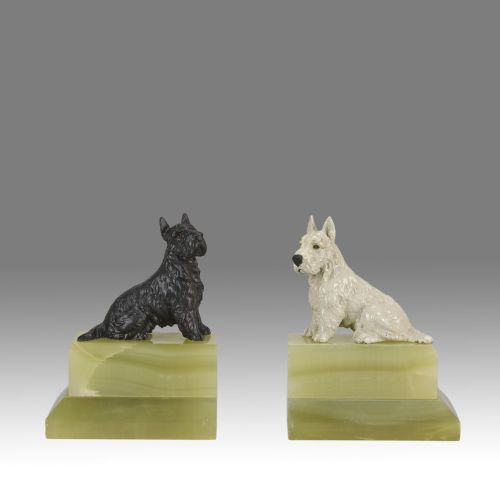
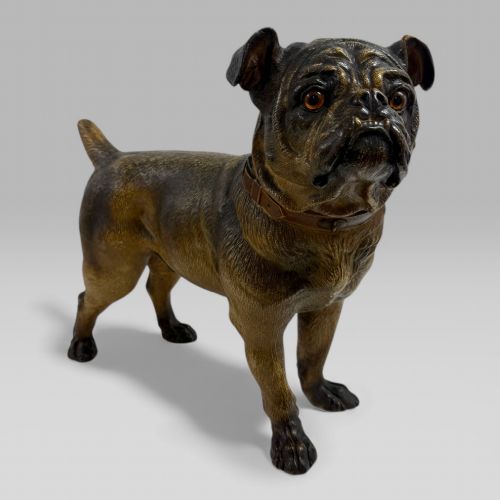
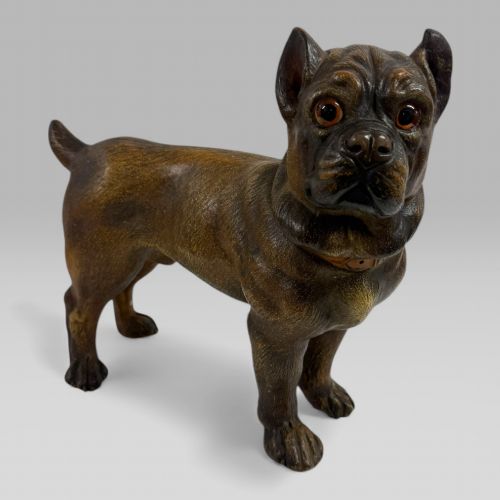
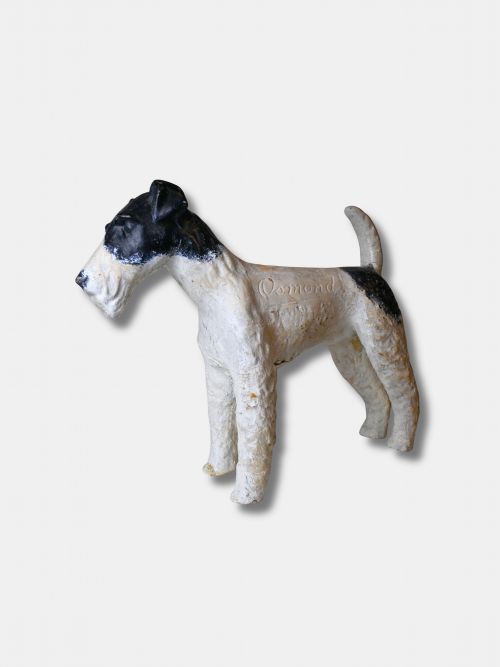
Formats vary from intimate board studies to large framed canvases, alongside related sculptures and bookends executed in bronze, terracotta, and composition.
Materials and technique
Artists deployed oil paint upon canvas and wooden board to build depth and texture in fur, eyes, and surrounding landscapes. Watercolours and pastels on paper offer a lighter touch, often preserved beneath protective glass.
Support materials include prepared canvas stretched over wooden frames, sturdy wooden panels, and heavy paper sheets. Frames frequently utilise wood and gilt finishes to complement the central artwork.
Several dogs stare out with expressions of such intense dignity they appear ready to judge your interior decorating choices.
Distinguishing quality
Quality rests upon the artist's command of anatomical proportion, the expressive rendering of the animal's gaze, and the handling of light across the coat. Accomplished works capture distinct canine character rather than a generic silhouette.
The integration of the subject within its setting, whether a detailed landscape or a stark interior, separates standard decorative pieces from accomplished fine art portraits.
John Emms·John Frederick Herring Senior·Arthur Wardle·William Barraud·Sir Edwin Landseer·Florence Mabel Hollams·George Earl
The Vintage Canine Painting Glossary
- Oil on canvas
- A painting technique utilising pigment suspended in drying oils applied to a woven fabric support stretched across a wooden frame. This medium allows for rich blending and textured brushwork.
- Sporting art
- Depictions of hunting, hounds, horses, and dogs associated with field sports and rural life. This genre holds a distinct place in British artistic history.
- Pastel
- A medium consisting of powdered pigment combined with a binder to form a chalk-like stick. It creates velvety colour fields on paper.
- Board
- A rigid wooden or manufactured flat panel used as a support for painting instead of flexible canvas. It provides a stable surface for smaller works.
- Watercolour
- A painting method where fine pigment is suspended in a water-soluble binder. Applied to paper, it creates translucent washes of colour.
Vintage Canine Painting: Frequently Asked Questions
How do I identify the period of a dog painting?
Examine the materials, stretcher construction, and framing techniques alongside the style of the clothing or landscape in the background. Nineteenth-century works often utilise heavy gilt frames and lined canvases.
Compare the artistic conventions with known periods like Victorian realism or mid-century modernist approaches to narrow down the decade of creation.
What is the difference between oil and watercolour canine art?
Oil paintings utilise slow-drying pigment on canvas or board, offering rich textures and deep colour layering. Watercolours employ pigment in water-soluble binders on paper, resulting in lighter, transparent effects.
Oils were typically chosen for major formal portraits, while watercolours often served as rapid field studies or intimate domestic pieces.
How were these paintings displayed originally?
Owners hung these portraits in country houses, libraries, and parlours to celebrate favored hunting dogs, prize show animals, or beloved family pets. They functioned as both social status symbols and affectionate family memorials.
Frames were selected to match the heavy furnishings of Victorian and Edwardian drawing rooms, often featuring elaborate gilt mouldings.
Are these works always signed by the artist?
Many fine art pieces carry a signature or monogram, while numerous competent works from the Victorian and Edwardian eras remain unattributed. Unsigned paintings were often produced by school followers or amateur artists.
Attributions are frequently made by comparing brushwork, subject matter, and palette with documented pieces by known animal painters of the period.