


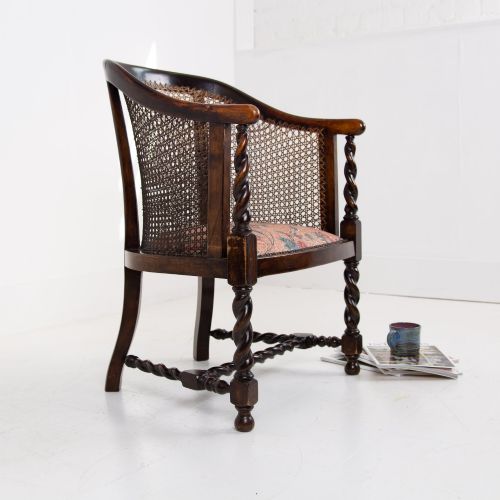
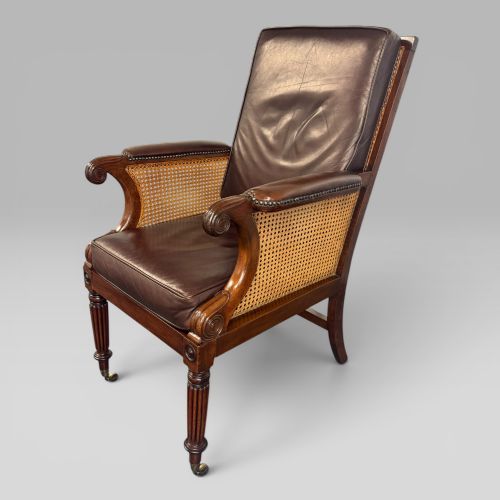
Vintage Caned Armchair
A vintage caned armchair brings woven texture and solid timber frames together, offering a supportive seat with lightness of form.
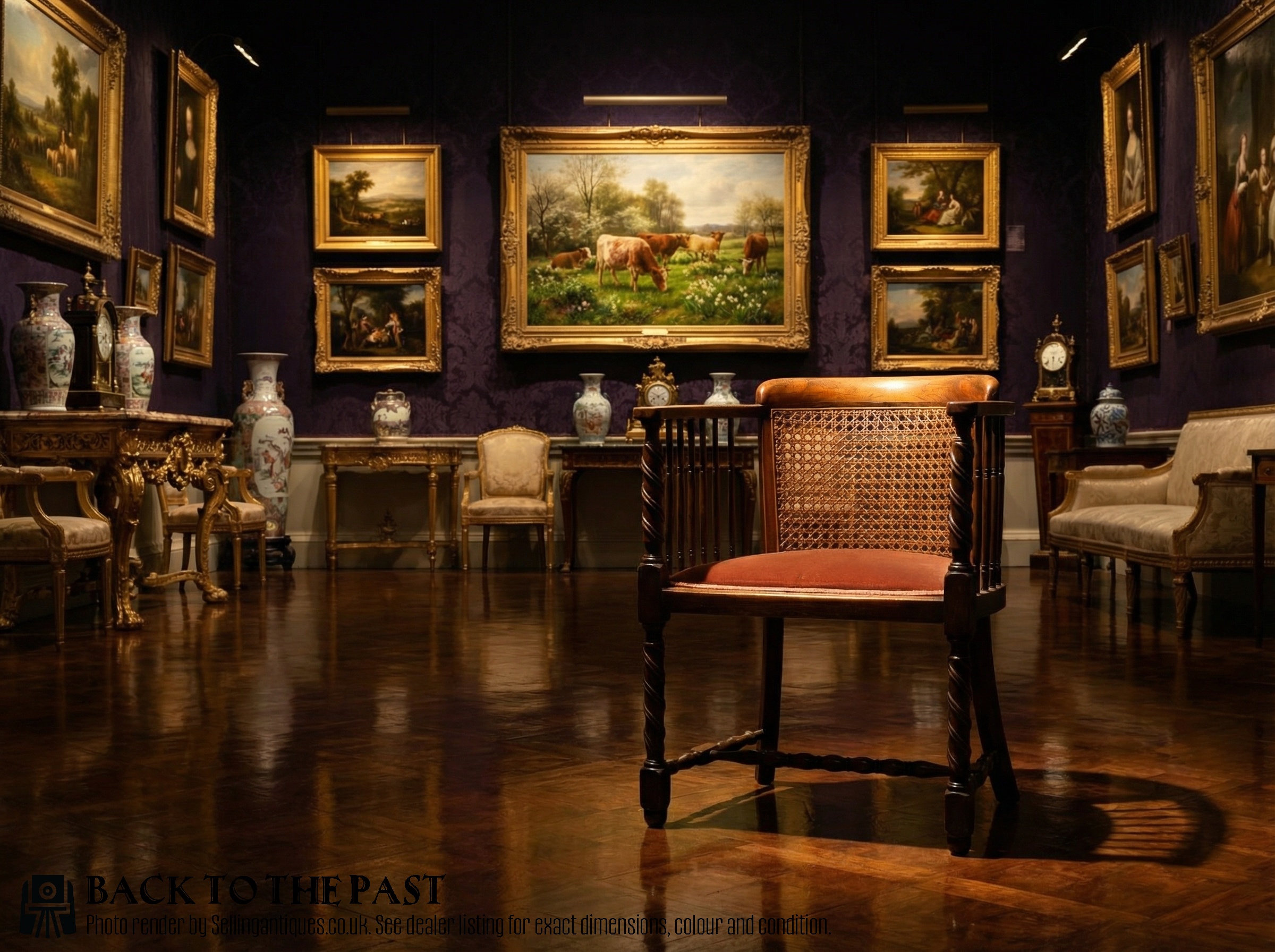
Vintage Caned Armchair
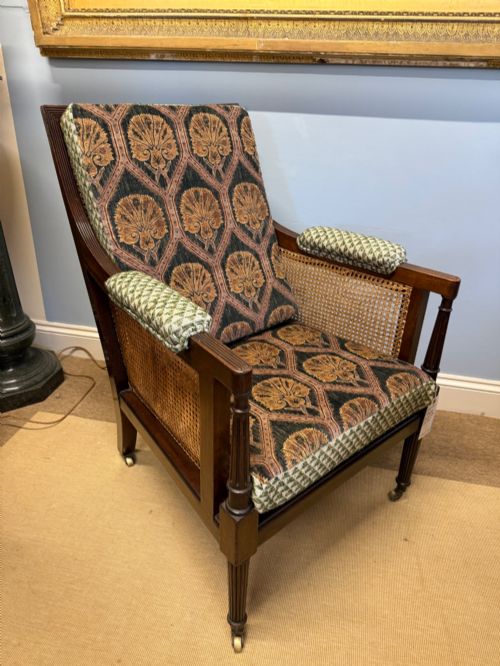
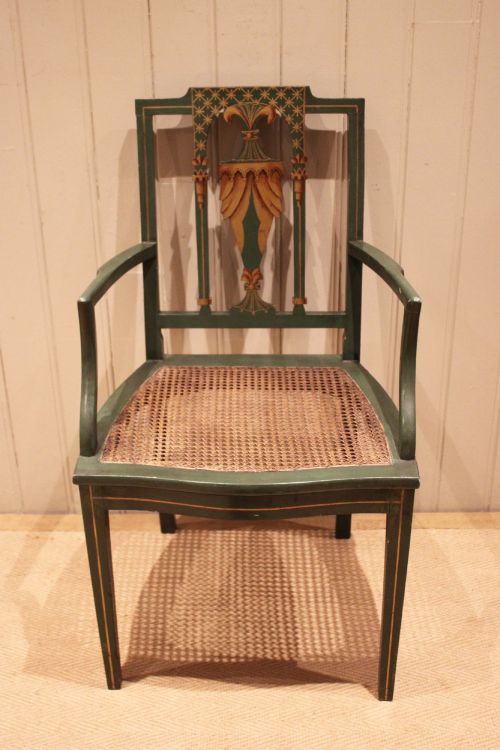
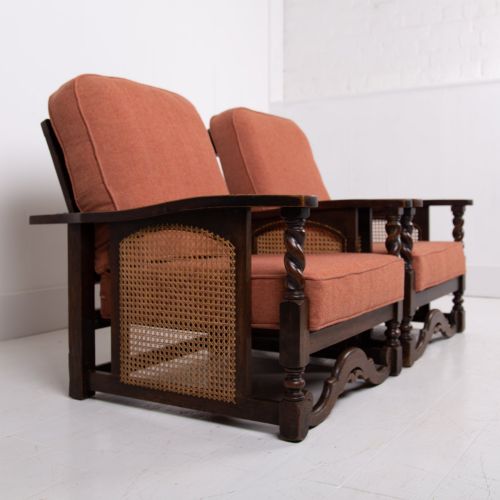
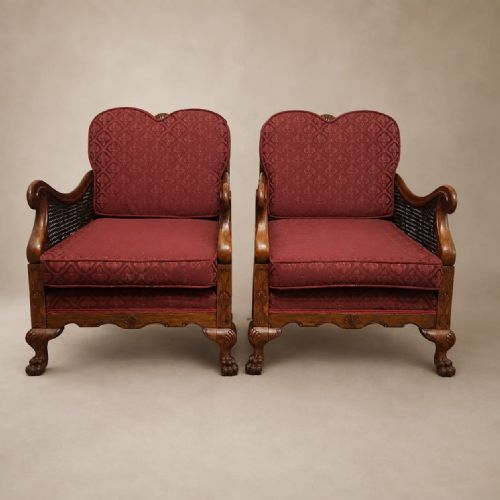
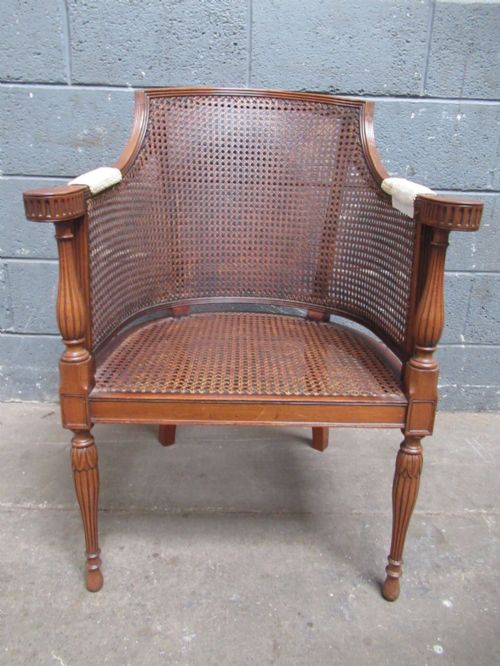
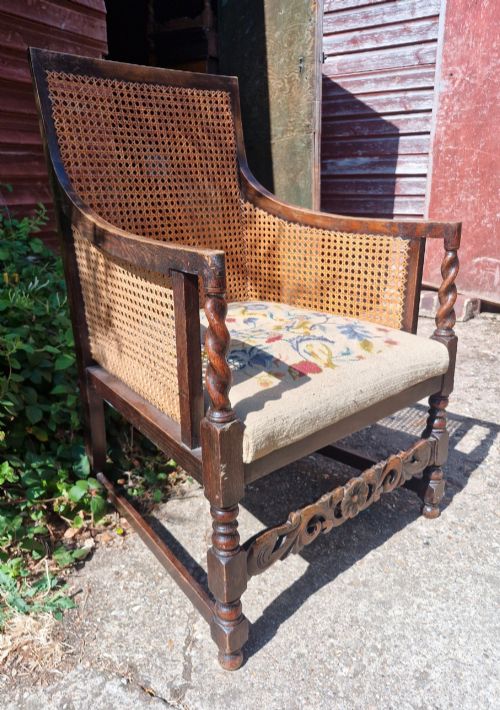
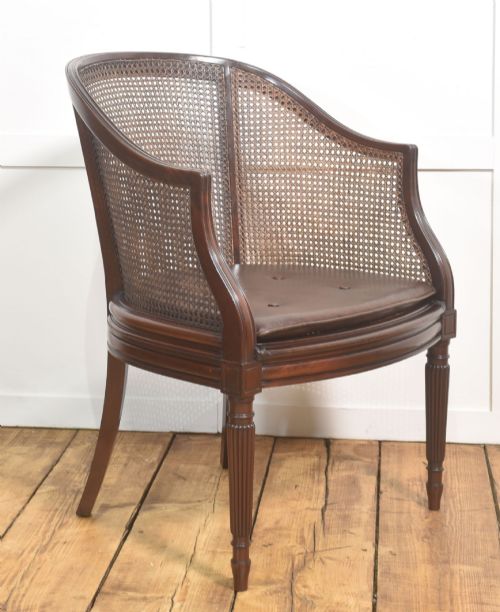
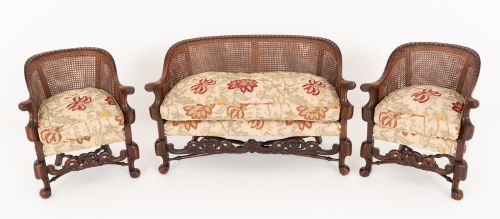
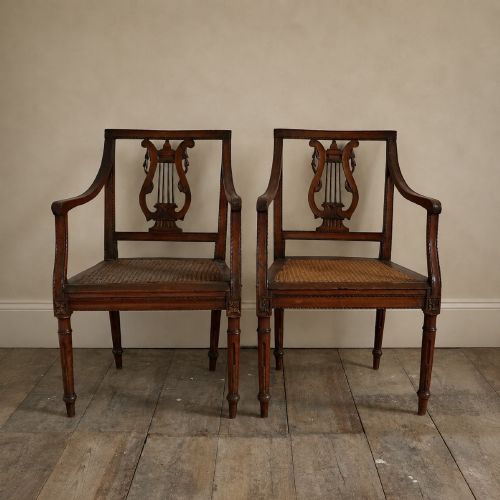
A vintage caned armchair combines a rigid wooden frame with woven cane panels on the back, sides, or seat. Buyers find examples spanning the nineteenth century through the nineteen-thirties, taking forms from library bergères to lighter tub chairs and rocking chairs.
The materials balance sturdy structural timbers with flexible plant weaves. Mahogany, oak, and walnut form the structural skeletons, while cane, rattan, and wicker provide the characteristic openwork panels.
Stylistic influences vary widely across the selection. Pieces appear in Regency, Edwardian, Victorian, and Arts and Crafts guises, alongside revival styles including Carolean, Jacobean, and Louis XV interpretations.
How they were made
Makers shaped structural frames from hardwoods such as mahogany, oak, walnut, and sometimes ebony or exotic timber. Joinery relied on traditional mortise and tenon joints to withstand the outward pull of tensioned woven seating.
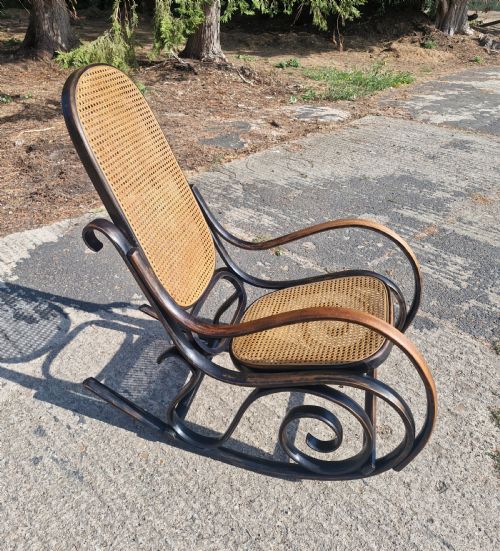
Cane panels were handwoven from split rattan or cane strips, threaded through pre-drilled holes along the frame margins or fitted into continuous channels. Workshops also utilised bentwood techniques, steaming timber to bend components into curved structural shapes.
Current selections span from nineteenth-century Regency library armchairs to nineteen-thirties wicker garden seating by Dryad of Leicester.
What varies in quality
The standard of timber carving and frame construction sets finer examples apart from simpler production pieces. Crisp relief carving on walnut or mahogany frames indicates skilled cabinet work, whereas softer mouldings suggest volume production.
The integrity and tension of the woven cane distinguish better survivals. Uniform strand spacing and tight, even handweaving demonstrate superior craftsmanship compared to loose or uneven replacement mesh.
Angraves of Leicester·Dryad of Leicester·Dryad and Co
The Vintage Caned Armchair Glossary
- Bergère
- An enclosed upholstered armchair with a wooden frame and cane back and sides, often fitted with a loose seat cushion. These originated in France and gained popularity during various nineteenth and twentieth-century revival periods.
- Cane
- Material made from the peeled bark of rattan palms, split and woven into patterned panels for seats and backs. It provides breathable strength and visual lightness.
- Bentwood
- Wood softened by steam and bent into curved structural forms, commonly utilised in nineteenth and twentieth-century seating. This method produced durable, lightweight frames without complex joinery.
- Rattan
- A climbing palm species with strong, flexible stems utilised for wickerwork and woven furniture construction. It handles bending well and underpins much nineteenth and twentieth-century garden and conservatory seating.
- Tub chair
- An armchair featuring a rounded, enclosing backrest that flows continuously into low arms. This compact form appears frequently in mahogany and cane configurations.
Vintage Caned Armchair: Frequently Asked Questions
What is a bergere armchair?
A bergere is a fully framed armchair featuring woven cane panels on the back and sides. It typically includes a loose seat cushion and originated in eighteenth-century France before being revived in later periods.
These chairs combine solid timber structures with the lightness of woven cane, making them substantial yet visually open seating options for studies and drawing rooms.
How do I care for cane seating?
Cane panels require occasional gentle cleaning with a damp cloth to remove dust from the woven interstices. Keeping the material lightly hydrated prevents the rattan from becoming brittle over time.
Avoid placing these chairs in direct sunlight or directly beside active heat sources, as extreme temperature fluctuations cause natural plant fibres to dry out and snap.
Are these chairs comfortable to sit in?
Comfort depends on the specific form and whether the chair includes upholstered cushions. Bergère styles and library armchairs usually feature supportive seat cushions paired with angled backs designed for reading.
Many vintage examples have been re-cushioned or refitted while retaining their original frames, balancing period character with modern seating support.
How can I date my armchair?
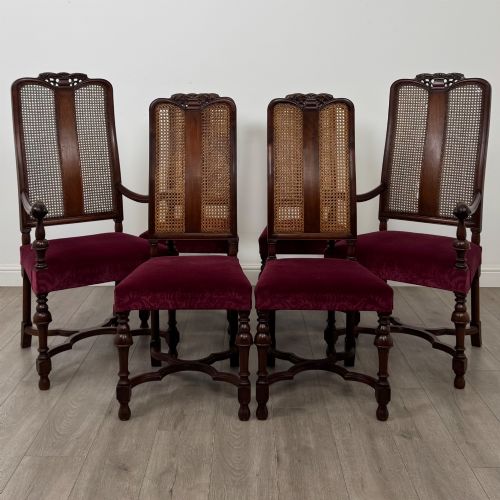
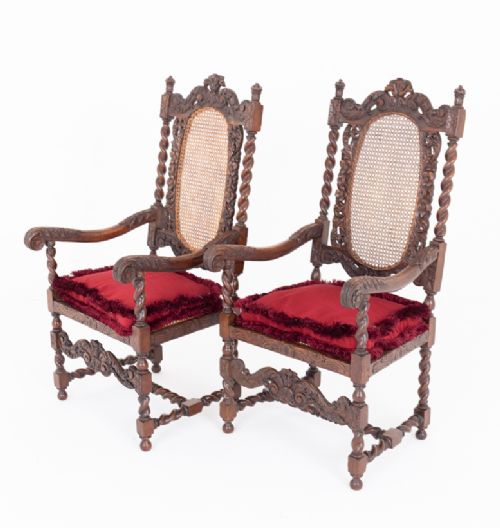
Dating relies on identifying stylistic markers, timber types, and construction methods. For instance, heavy carved walnut and cane high-back chairs often point towards William and Mary or Carolean revivals around nineteen hundred, while bentwood and simpler rattan pieces lean into the nineteen-twenties and thirties.
Comparing the joinery, hardware, and foot designs against documented period pieces helps narrow down the decade of manufacture.