



Vintage Candle Wall Mirrors
These vintage candle wall mirrors combine reflective glass with functional branches to throw warm light across a room.
Vintage Candle Wall Mirrors
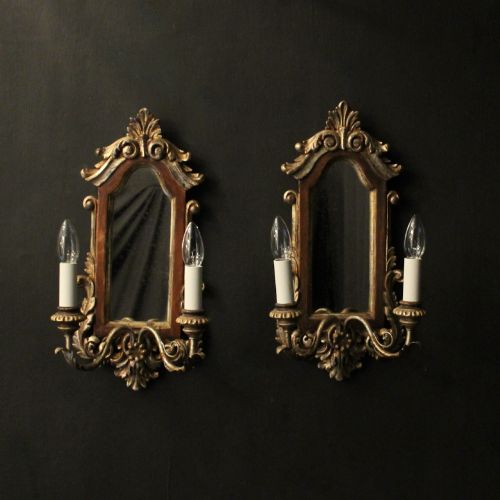
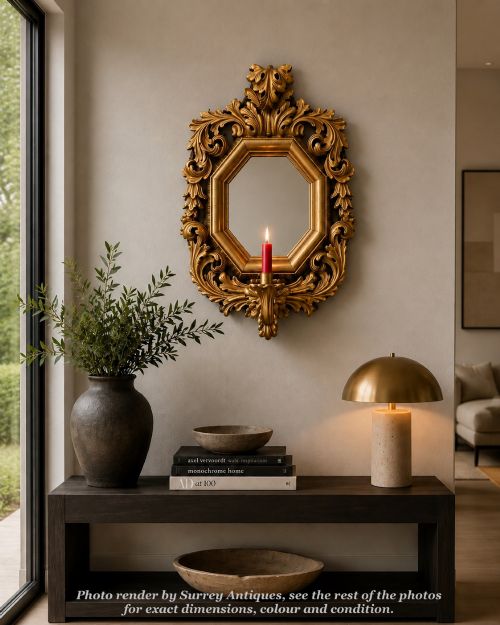
Vintage candle wall mirrors combine glass and metal or wood frames with integrated candle branches, designed to multiply the flickering light of a flame in dimly lit spaces. When searching for vintage candle wall mirrors, buyers encounter a rich variety of forms including French girandoles, Italian wall sconces, and carved giltwood frames.
The pieces available span from Victorian and Edwardian examples to items from the 1920s and 1930s, reflecting diverse regional styles such as Florentine Baroque, French Rococo Revival, and Arts & Crafts. Pairs dominate the selection, offering symmetrical elegance for placement beside fireplaces, mantels, or hallways.
Makers and workshops across Britain, France, Italy, and beyond utilised traditional methods to carve wood, cast bronze, and shape brass into ornate surrounds. Whether selecting a small brass-framed wall mirror or a large Napoleon III bronze girandole, the fundamental purpose remains the decoration of walls while enhancing ambient illumination.
Materials and construction
Craftsmen shaped these pieces using carved giltwood and gesso, alongside cast metals such as bronze, brass, and gilt metal. Wooden frames frequently received layers of gesso before gilding, while metal sconces involved intricate casting and mounting techniques.
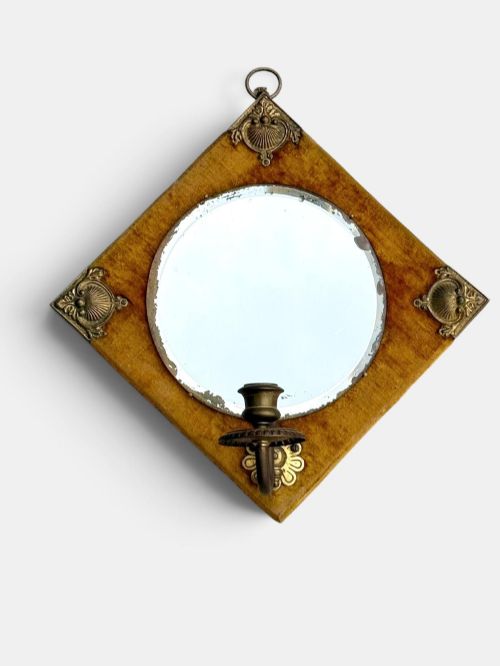
Reflective surfaces consist of period mirror glass, often held within heavy frames alongside matching twin or single candle arms. Additional elements like velvet mounts and polychrome finishes appear in specific Edwardian and Italian designs.
Vintage Candle Wall Mirrors Retail Price Guide 2026
Typical asking prices for vintage candle wall mirrors among the pieces listed under this phrase on Sellingantiques today, from the lower quarter to the upper quarter. They describe what is for sale here now, not the wider market.
Many of these mirrors arrived in pairs so they could stare politely at each other across a dinner table.
Assessing quality and craftsmanship
Quality reveals itself in the depth of the wood carving, the crispness of bronze and brass castings, and the integrity of the original gilding. Finer pieces display hand-carved details and substantial metalwork rather than mass-produced uniformity.
The integration of the candle arms to the main mirror frame demonstrates structural skill, ensuring the weight of the branches and candles is securely supported against the wall.
E.G Paris
The Vintage Candle Wall Mirrors Glossary
- Girandole
- A decorative wall mirror featuring attached candle branches designed to reflect light. These fixtures gained popularity in formal reception rooms during the eighteenth and nineteenth centuries.
- Giltwood
- Timber that has been coated with a thin layer of gold leaf or gold paint. This technique provides a bright, reflective surface that catches candle flames effectively.
- Gesso
- A plaster-like mixture applied to wood frames to create a smooth surface for gilding and carving. It allows artisans to achieve sharp relief details.
- Wall Sconce
- A light fixture fixed to a wall, utilising candles or electricity. In antique pieces, these often incorporate mirrors to amplify the illumination.
- Regency
- A British architectural and decorative style spanning the early nineteenth century. Pieces from this period often incorporate classical motifs and gilded finishes.
Vintage Candle Wall Mirrors: Frequently Asked Questions
How do I hang a heavy girandole?
Heavy girandoles and mirrored sconces require secure wall fixings suited to the specific wall material, such as brick or lath and plaster. Utilising professional mirror plates or heavy-duty brackets ensures the weight of the bronze or giltwood frame is safely distributed.
Because these pieces often feature protruding candle arms, positioning them away from high-traffic walkways prevents accidental knocks while maintaining their decorative impact in the room.
Were these mirrors originally electrified?
Most pieces from the Victorian, Edwardian, and earlier periods were manufactured specifically for wax candles. The branches and drip pans are proportioned for flame illumination rather than modern wiring.
While some owners choose to adapt them, keeping them as candle-burning fixtures preserves their original mechanical and aesthetic integrity.
How do I clean antique mirror glass?
Antique mirror glass requires gentle maintenance to protect the silvering and surrounding gilt or wooden frames. Use a soft, dry microfibre cloth to remove dust without applying harsh commercial cleaners.
Avoid letting moisture seep behind the glass plate or onto vulnerable gesso and giltwood surfaces, as dampness accelerates degradation of the antique backing.
How do I date a wall mirror?
Dating relies on examining the construction materials, frame styles, and the characteristics of the glass itself. Victorian and Edwardian pieces often display distinct mounting techniques and regional stylistic traits.
Comparing the decorative vocabulary, such as Florentine Baroque motifs or Arts & Crafts velvet elements, helps place the object within its historical period of production.