

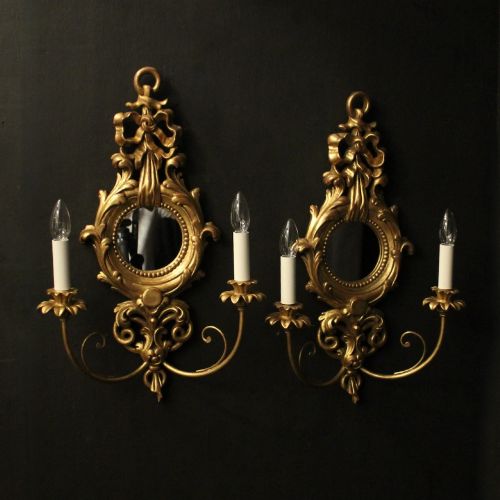
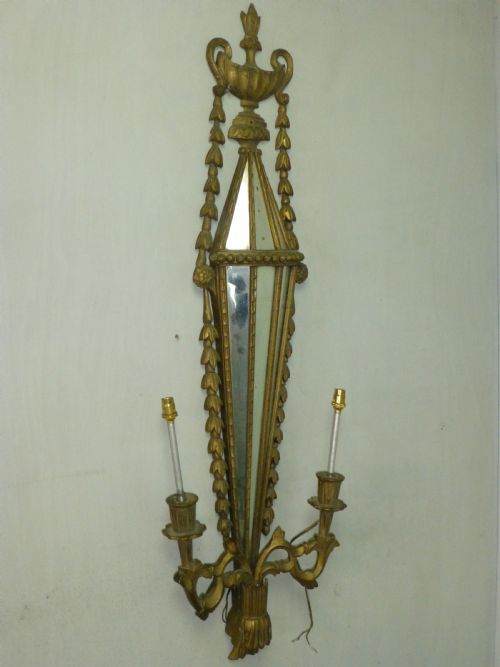
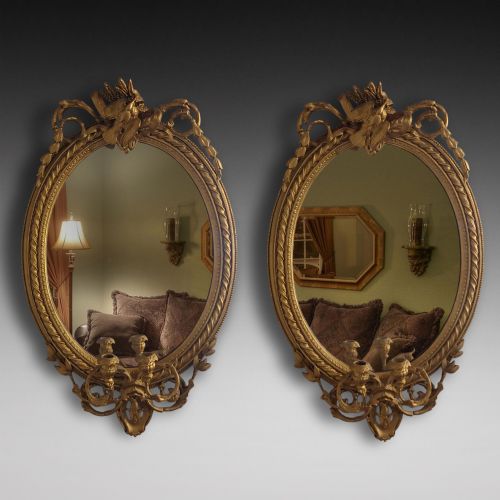
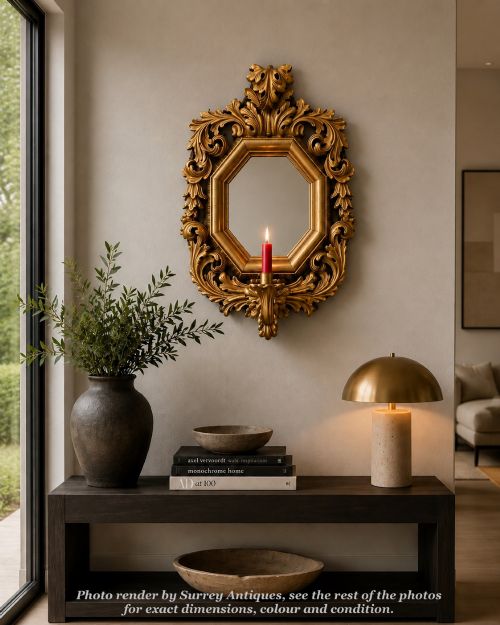




French Sconce Wall Mirrors
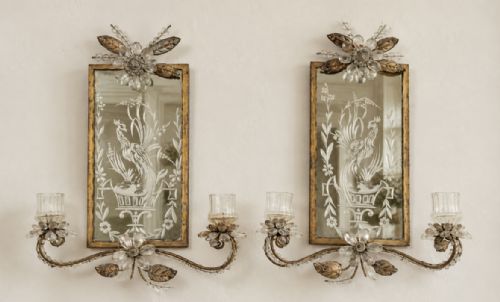
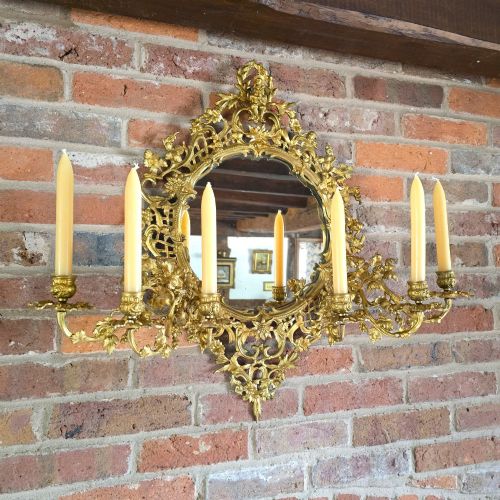
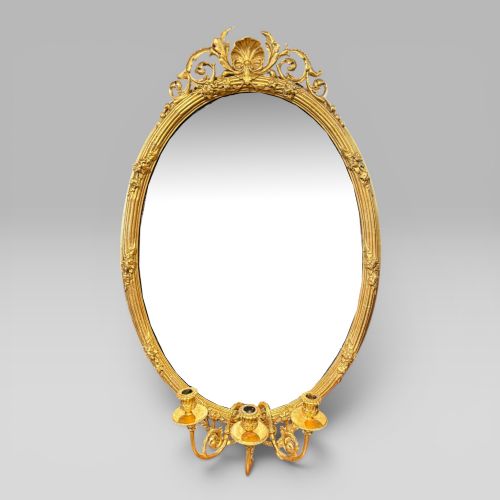
French sconce wall mirrors combine reflective glass with integral candle arms, bringing soft illumination and ornate character to a room.
How they were made
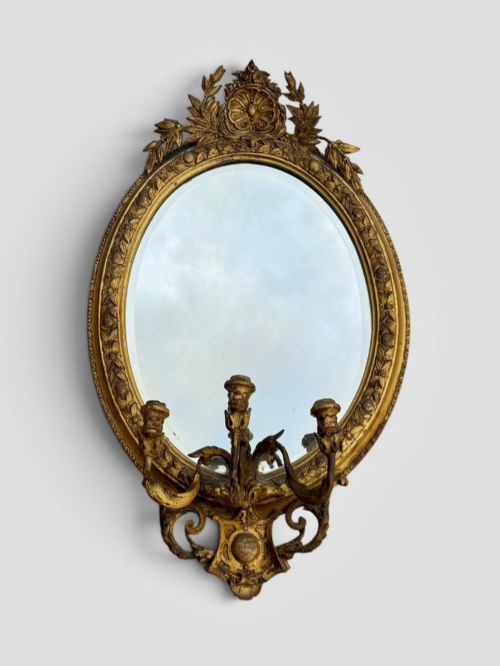
Makers shaped these wall fixtures using timber frameworks built for carving, applying layers of gesso to smooth surfaces before covering them in gold leaf. Giltwood and gilt metal provide the reflective metallic sheen characteristic of the period styles.
Foundries cast bronze and ormolu for branch candelabra and decorative mounts, securing them to the wooden or mirrored structures. Mirror glass plates were set into the frames, sometimes accompanied by crystal droplets and ornamental wall brackets.
What varies in quality
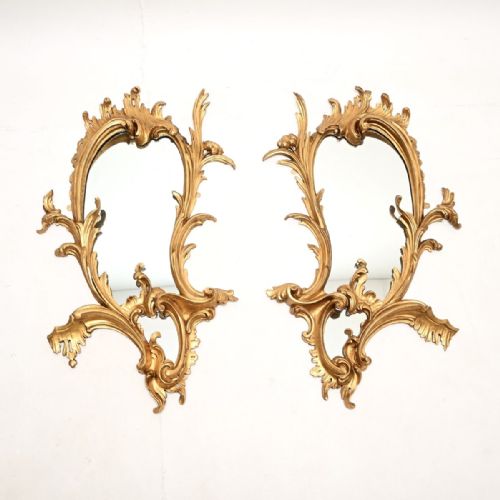
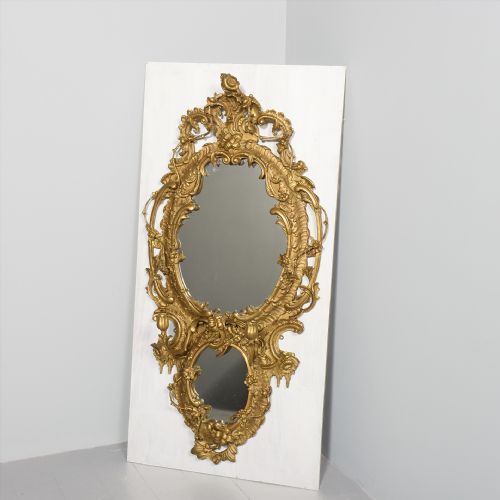
The refinement of the hand-carved detail across wooden and gesso frames separates standard items from exceptional examples. Crispness in foliate scrolls, cherubs, and Rococo motifs indicates skilled craftsmanship.
The weight and casting quality of bronze or ormolu branches and candle arms dictate the structural integrity of the sconce. Original mirror glass with authentic silvering and proportioned frames also distinguishes finer pieces.
French Sconce Wall Mirrors Retail Price Guide 2026
Typical asking prices for french sconce wall mirrors among the pieces listed under this phrase on Sellingantiques today, from the lower quarter to the upper quarter. They describe what is for sale here now, not the wider market.
Materials span giltwood, gesso, brass, ormolu, and crystal, reflecting nineteenth-century and early twentieth-century manufacturing techniques.
E.G Paris
The French Sconce Wall Mirrors Glossary
- Girandole
- A branched wall light or candelabra incorporating a mirror backplate. This design multiplies the reflected illumination within a space.
- Giltwood
- Timber coated with a thin layer of gold leaf over a prepared base. It provides a durable metallic finish that resists tarnishing.
- Gesso
- A plaster mix applied to carved wooden frames to create a smooth surface for gilding. It allows intricate relief ornamentation.
- Ormolu
- Finely chased and gilt bronze used for decorative mounts and candle arms. The technique produces a rich golden appearance on metalwork.
- Pier mirror
- A tall, narrow mirror designed to hang on the wall space between windows. These pieces often incorporate a console table or shelf underneath.
French Sconce Wall Mirrors: Frequently Asked Questions
How were french sconce wall mirrors used?
These pieces served practical and decorative functions in historic interiors by holding candles to illuminate dark hallways and parlours. The reflective glass amplified the dim light cast by flames.
Positioned between windows or above mantelpieces, they also created an illusion of greater space and added architectural interest to rooms.
How do I hang a heavy antique wall mirror?
Secure hanging requires locating wall studs or using heavy-duty wall anchors rated for the combined weight of the wood, metal, and glass. Professional installation is often recommended for large giltwood or bronze pieces.
The hanging wire or brackets on the back must match the structural strength of the wall fixture to prevent accidental falls.
How can I tell the period of a mirror?
Dating relies on examining the construction methods of the frame, the type of wood, and the characteristics of the mirror glass. Nineteenth-century pieces often display hand-carved gesso details and heavier bronze components.
Stylistic cues such as Rococo Revival curves or Neoclassical symmetry also help narrow down the decade of manufacture.
Are the candle arms wired for electricity?
Many surviving examples retain their original configuration for candles, while others have been adapted over time to accept electrical wiring. The listings indicate whether pieces feature branches, candelabra, or spike wall lights.
Buyers should inspect the specific description to determine if the wiring is modern or if the fixture requires professional conversion.
How do I clean a giltwood frame?
Dusting requires a very soft, dry brush to remove particles without disturbing delicate gesso or gold leaf surfaces. Moisture and chemical cleaning agents can damage the historic finish.
Preserving the original gilding means avoiding abrasive cloths and commercial polishes entirely.