

Vintage Candle Holder Table
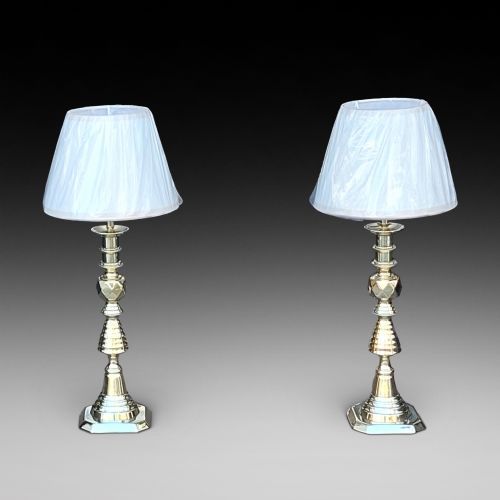
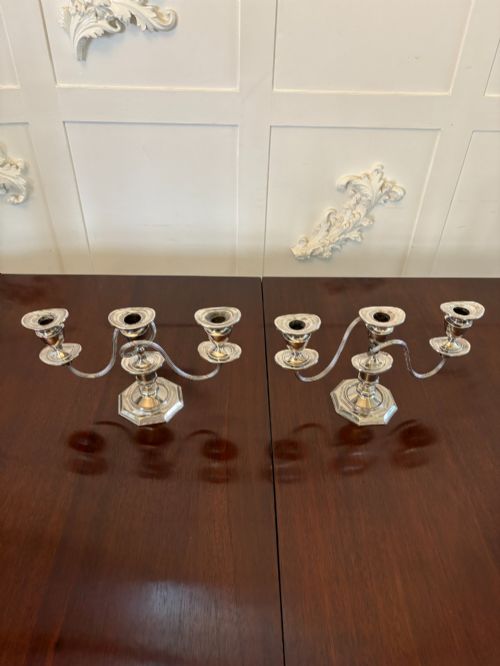
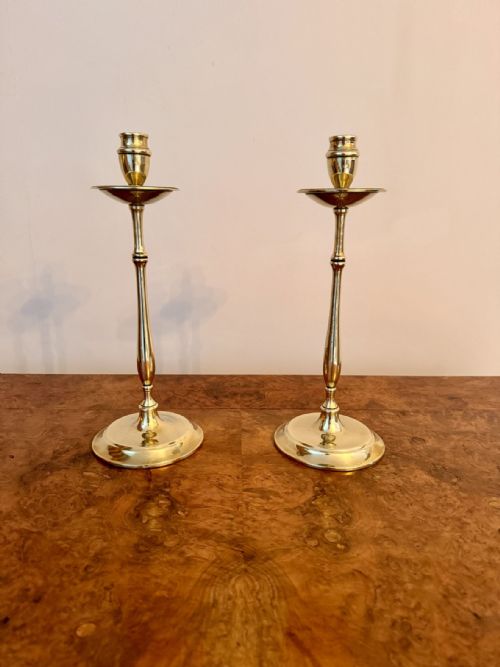
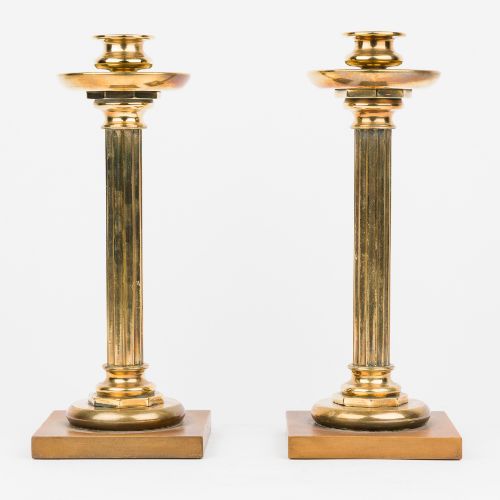
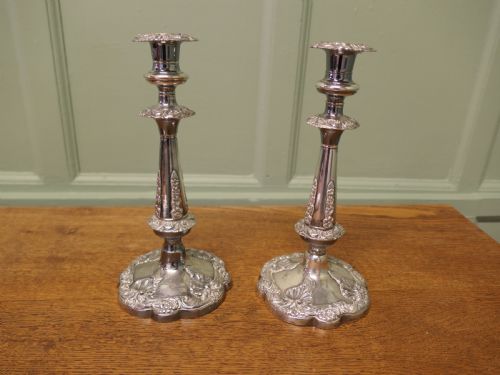
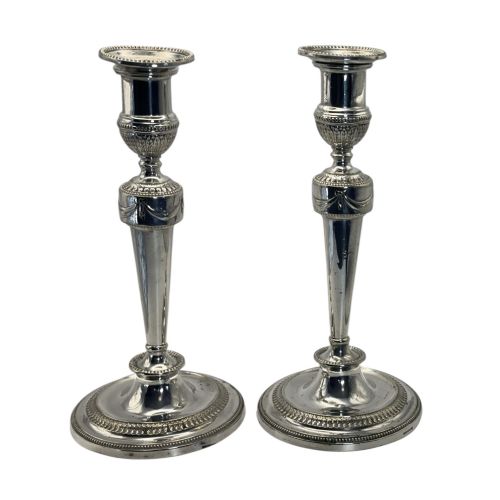
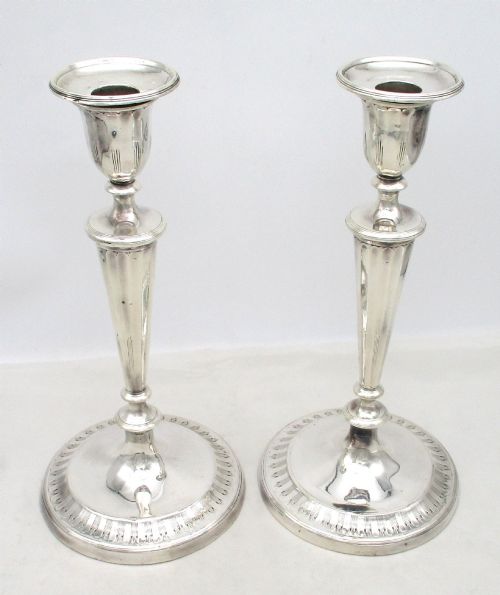
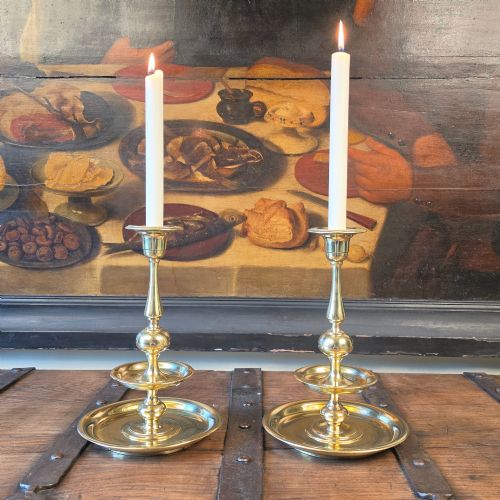
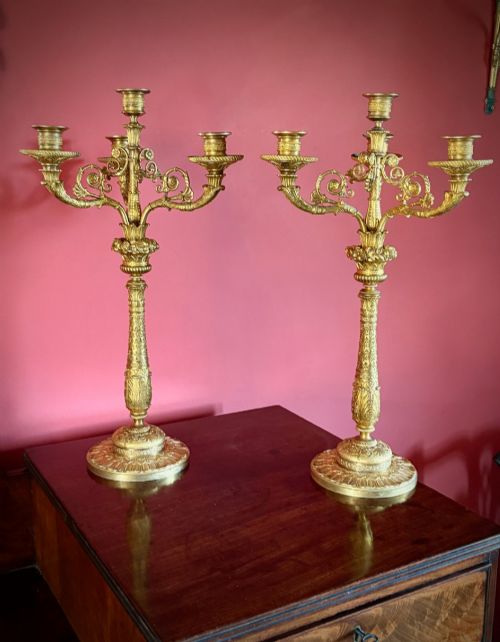
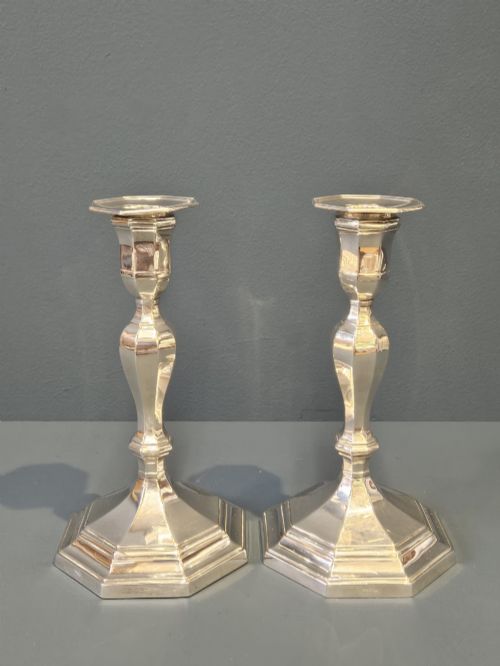
These vintage candle holder table pieces encompass brass candlesticks, silver plated candelabra and glass hurricane lamps designed to hold household lights.
Vintage Candle Holder Table
A vintage candle holder table search brings up domestic lighting accessories designed for dining tables, sideboards and mantels. The selection relies heavily on pairs of candlesticks and multi-branch candelabra spanning from the eighteenth century through to the mid-twentieth century.
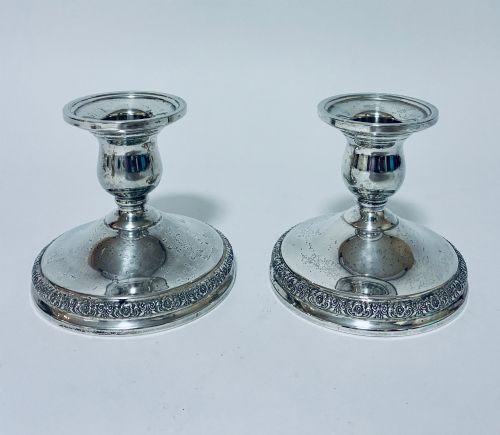
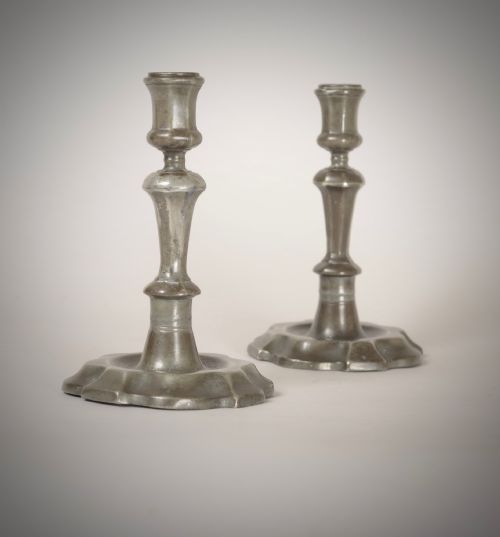
Brass and silver plated items dominate the current listings, alongside sterling silver, bronze, ironstone and glass table lustres. Buyers will encounter Victorian and Georgian styling frequently, alongside Edwardian, Regency and Art Deco examples.
Materials and construction methods
Metal items utilise casting, spinning and seaming techniques to form columns, drip pans and bases. Brass examples from earlier periods often incorporate ejector mechanisms or heavy seamed construction.
Silver plating on copper or nickel silver bases required skilled application, while glass components relied on mould-blowing, cutting and hand assembly for hurricane lamps and table lustres.
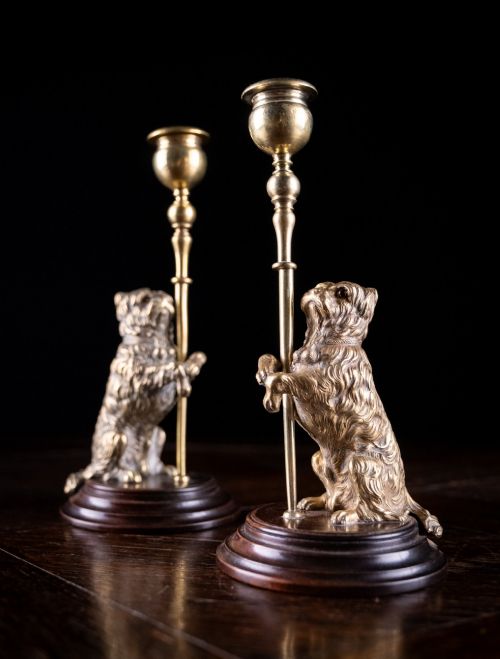
Among the brass candlesticks wait a pair modelled as standing terrier dogs, ready to hold vigil over the dining table.
Assessing quality in lighting pieces
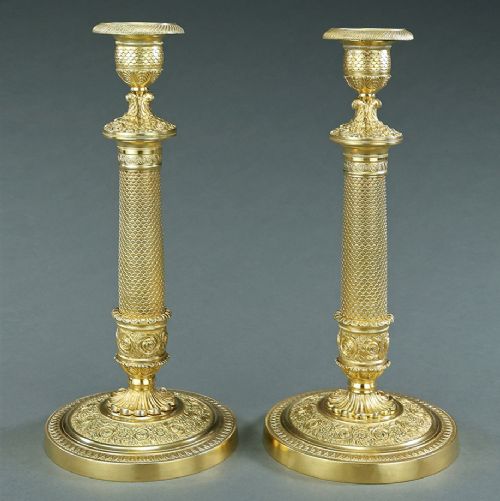
Quality rests upon the crispness of the casting detail in chased or moulded ornament, particularly on gilt bronze, ormolu and neoclassical columns. Heavy gauge metalwork and stable, well-balanced bases indicate superior production.
The integrity of silver plate surfaces and the presence of clear hallmarks or maker marks distinguish higher tier workshop output from standard commercial domestic wares.
Mappin & Webb·J.T. & Co·Birks·Masons
The Vintage Candle Holder Table Glossary
- Candelabra
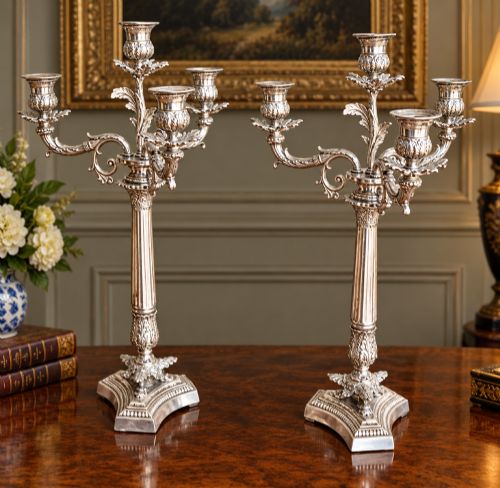
- A multi-branched lighting device designed to hold several candles at once. These branch out from a central stem to distribute light across a dining table.
- Table Lustre
- An ornamental glass or porcelain tabletop piece hung with glass prisms. They reflect candlelight from a central nozzle to create a glittering visual effect.
- Ejector Candlestick
- A brass candlestick fitted with an internal sliding stem and side button. This mechanism pushes the used candle stub up and out of the socket for removal.
- Hurricane Lamp
- A candlestick fitted with a tall glass shade or chimney. The glass protects the flame from drafts while seated on a table.
- Ormolu
- Gilded bronze ornamentation applied to decorative metalwork. The technique gives a rich gold appearance to nineteenth-century decorative pieces.
Vintage Candle Holder Table: Frequently Asked Questions
What periods do these table lights cover?
The pieces span from the eighteenth century through the Victorian and Edwardian eras up to the mid-twentieth century. Georgian and nineteenth-century items appear most frequently in the current selection.
Later examples include Edwardian and Art Deco designs alongside mid-century convertible hurricane lamps.
How were these candle holders used originally?
They provided domestic illumination on dining tables, sideboards and drawing room surfaces before electric lighting became common. Multi-branched candelabra and table lustres offered brighter light for evening gatherings.
Smaller single candlesticks were moved from room to room or utilised for intimate desk and bedside lighting.
Are silver plated and sterling silver pieces marked?
Sterling silver examples typically display standard town marks, date letters and maker stamps. Silver plated items often carry manufacturer marks or trade designations indicating the plating house.
Some older brass and pewter pieces remain unmarked or bear simple workshop initials.
How do I care for brass and silver table pieces?
Metal surfaces benefit from gentle dusting and occasional cleaning with appropriate non-abrasive polishes suited to brass or silver plate. Avoid harsh chemical dips that strip away desirable patination.
Glass chimneys and lustres require careful hand washing in warm soapy water to remove wax residue.