
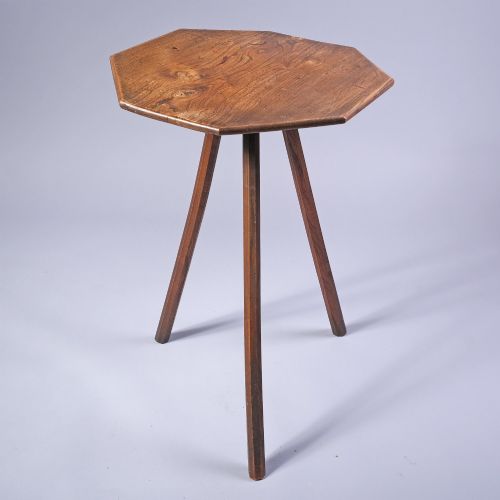
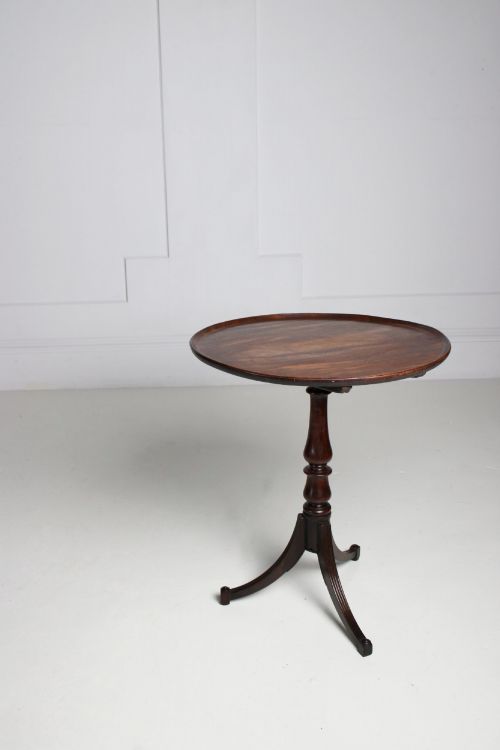
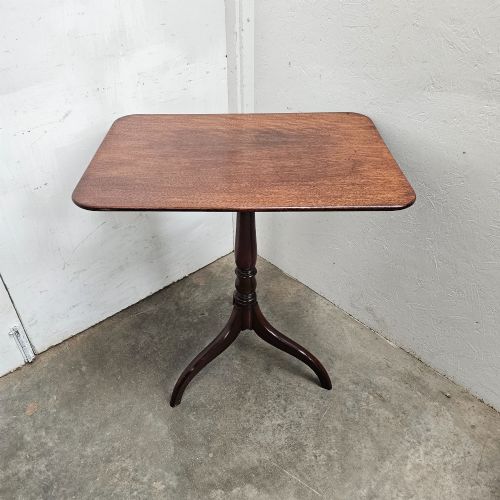


Three Legged Candle Stand
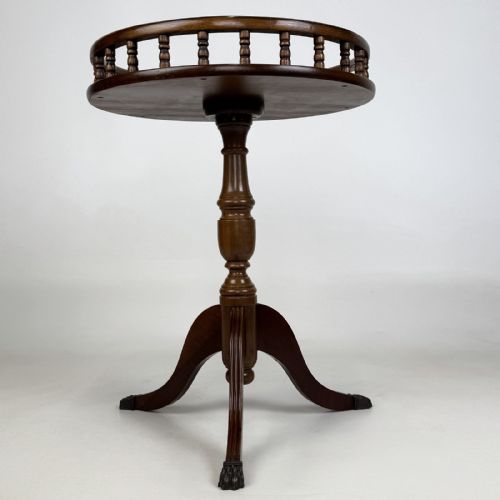
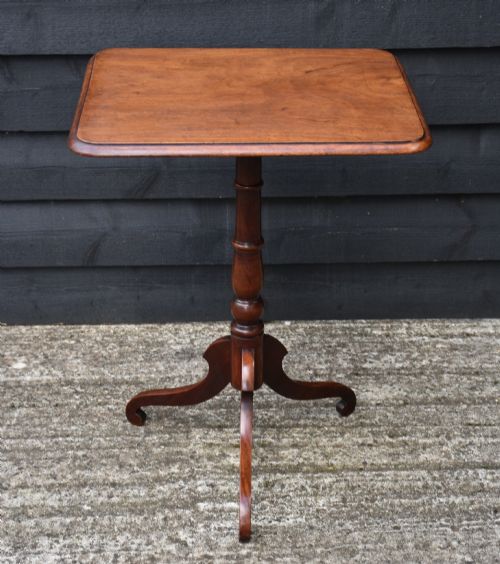
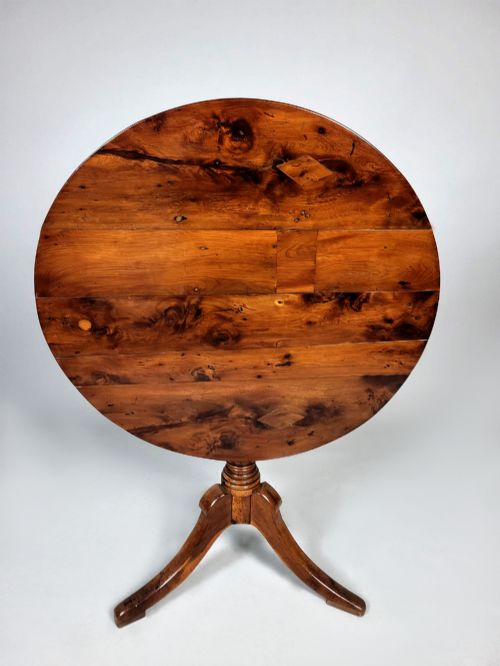
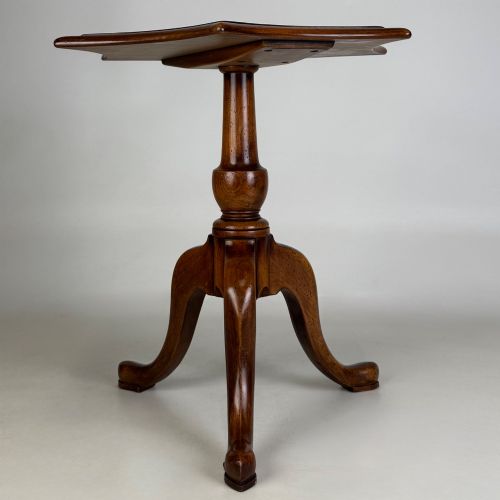
A three legged candle stand offers a compact pedestal surface designed to hold a light source or serve as a portable table.
Three Legged Candle Stand
A three legged candle stand is a compact pedestal table designed to hold a light source or small items, appearing primarily in Georgian and 19th Century forms.
The pieces on this page span the 18th Century, Georgian period, 1800, 19th Century, 1860, and Edwardian eras, taking the shape of side tables, occasional tables, wine tables, and coffee tables.
Makers utilised styles such as Georgian, Victorian, Queen Anne Style, Georgian Vernacular, Regency, and 19th Century English to shape these portable surfaces.
Construction and Timber Selection
Cabinet makers constructed these tripod supports using solid timbers including mahogany, oak, yew wood, walnut, and ash.
Surface decoration involved marquetry inlay and painted finishes applied to round timber tops supported by a central pillar and three legs.
Object forms include wine tables, occasional tables, side tables, and coffee tables with tripod bases.
Evaluating Construction and Material Quality
Quality rests in the selection of timber figures, such as burr walnut or figured mahogany, and the precision of the turning on the central pedestal.
Proportion and stability define better examples, where the three legs join the stem securely and balance the top without excessive weight.
The Three Legged Candle Stand Glossary
- Tripod table
- A small freestanding table supported by a central pillar resting on three legs. This construction prevents wobbling on uneven floors.
- Wine table
- A small occasional table intended to hold glassware and bottles near a seating area. They often feature a circular dish top to secure items.
- Dish top
- A table top with a raised rim carved or moulded from the solid timber. This feature prevents items from sliding off the edge.
- Pedestal table
- A table supported by a single central column rather than four corner legs. This design maximises legroom for nearby sitters.
- Marquetry
- Decorative patterns formed by fitting contrasting veneers into a prepared surface. This technique creates geometric or floral ornamentation.
Three Legged Candle Stand: Frequently Asked Questions
What is a three legged candle stand used for?
These pieces were originally built to elevate a candle or oil lamp near a chair or bed for reading and working.
Today they function as compact side tables for drinks, small lamps, or decorative objects in smaller spaces.
How do I date a three legged candle stand?
Dating relies on observing timber choices, construction joints, and stylistic details like peg construction in earlier pieces versus machine finishing later.
Earlier examples from the eighteenth century often display simpler turned stems and native timbers like oak or ash, while later nineteenth century versions utilise mahogany and walnut.
What timber types are most common?
Mahogany and oak appear most frequently across these listings, alongside regional woods like yew and ash.
Walnut and inlaid marquetry surfaces also occur, representing slightly more decorative choices from the nineteenth century.