

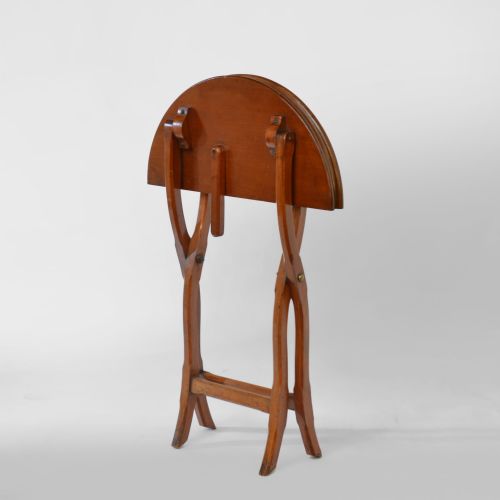
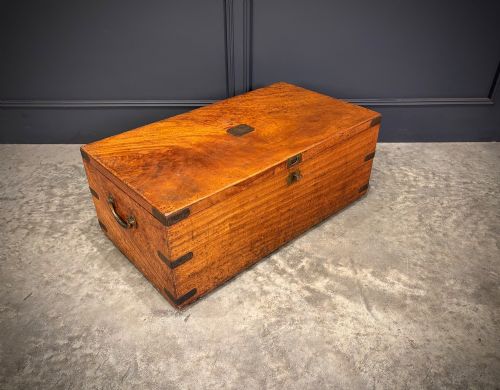

Vintage Campaign Table
A vintage campaign table brings modular, fold-away portability and rich timber grains into contemporary rooms.
Vintage Campaign Table
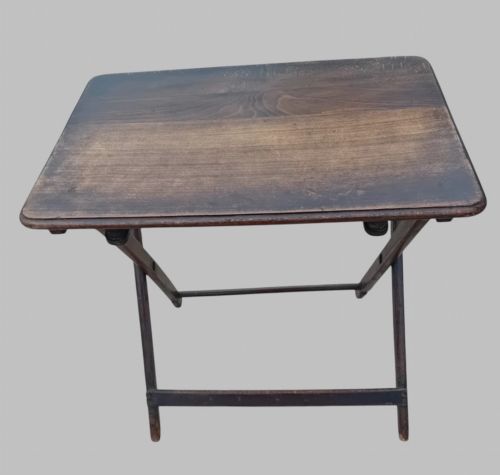
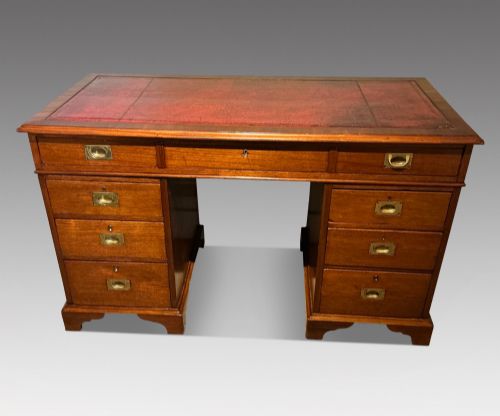
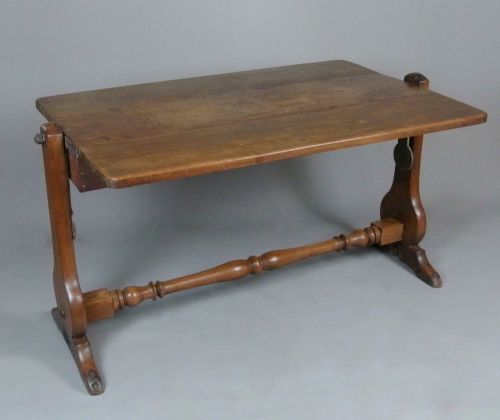
A vintage campaign table comprises folding stands, tray tables, and modular desks designed originally for officers on the move. When you search for a vintage campaign table, you encounter pieces spanning the eighteenth century through to the interwar decades of the twentieth century.
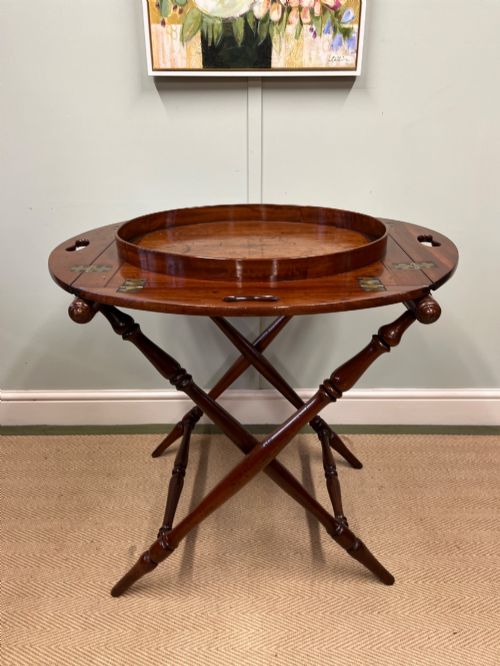
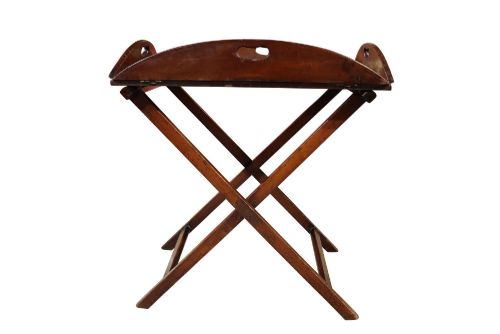
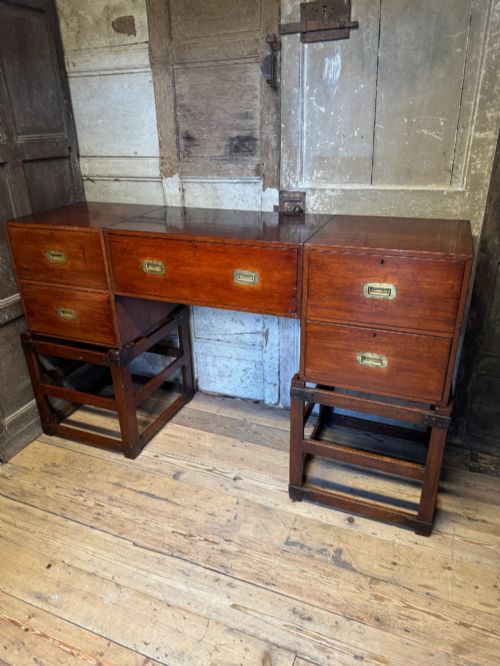
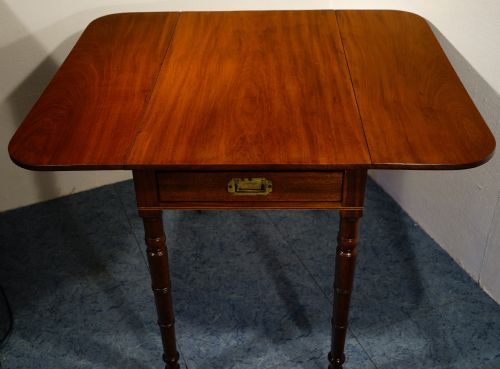
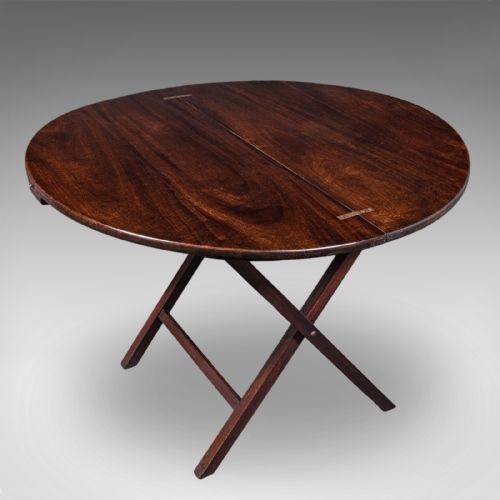
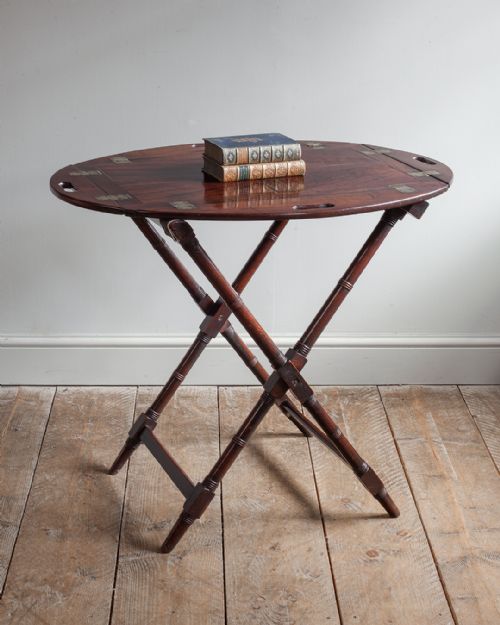
Mahogany, camphor wood, and walnut feature prominently across these portable furnishings, often paired with folding or detachable legs. The most common forms on this page include butler's trays on folding stands, occasional folding tables, and compact writing desks.
Styles range from strict Victorian military utility to Edwardian kitchen garden tables and Anglo-Indian interpretations. Buyers select these items for their clever space-saving engineering and historic character.
How they were made
Cabinet makers utilised dense timbers such as mahogany, camphor wood, teak, and walnut to withstand travel and field conditions. These woods were chosen for their durability and stability in changing climates.
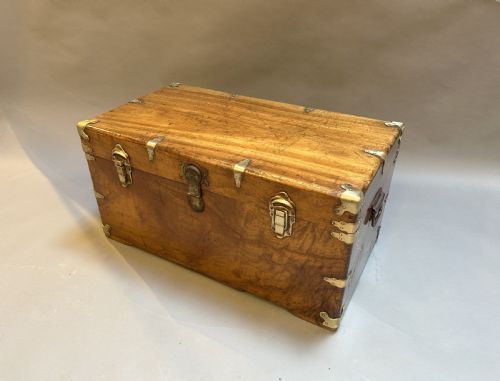
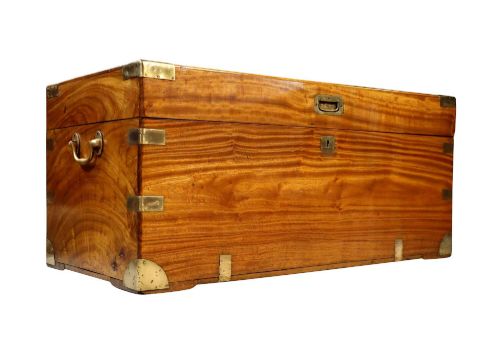
Brass corners, flush-fitting handles, and strap mounts were integrated to protect vulnerable edges and reinforce joints during transit. Folding mechanisms relied on precision hinges, X-frame stands, and drop-in tray tops that separate entirely from their bases.
Camphor wood tables double as natural moth repellers, quietly filling the room with the distinct aroma of old sea voyages.
What varies in quality
The degree of original brass hardware retention and the tightness of the folding joints distinguish finer examples from standard utility items. Superior pieces display crisp dovetail joinery, hand-finished timber surfaces, and matching grain patterns across detachable tray tops and stands.
Subtleties in turning, such as finely reeded legs on folding stands or well-fitted interior compartments in desks and trunks, elevate a piece above basic utilitarian furniture.
The Vintage Campaign Table Glossary
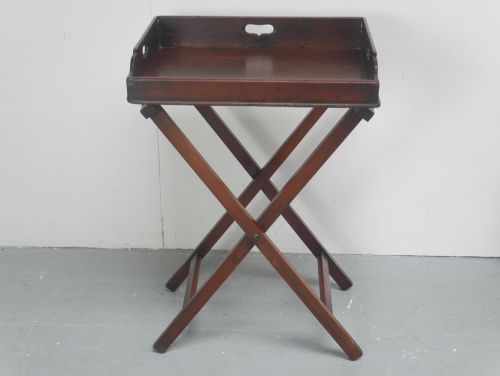
- Butler's tray
- A removable wooden tray with hinged or handled sides, designed to sit upon a separate folding X-frame stand. This form allowed for easy serving and compact storage in domestic and field settings.
- Camphor wood
- An aromatic hardwood native to Asia, prized for its insect-resistant properties and distinct scent. It was frequently utilised for trunks and tables destined for tropical colonial service.
- X-frame
- A folding support structure formed by two intersecting wooden members pivoting on a central axis. This scissor action allows the base to collapse flat.
- Brass bound
- The reinforcement of corners, edges, and seams with fitted brass plates and straps. This technique protected travel furniture from heavy knocks during transport.
- Metamorphic furniture
- Pieces engineered to transform from one function to another, such as a folding table that converts into a writing desk. These items utilise clever hidden hinges and lift actions.
Vintage Campaign Table: Frequently Asked Questions
How were campaign tables originally used?
Officers and travellers utilised these portable furnishings during military campaigns, sea voyages, and colonial postings. The folding and detachable designs allowed officers to pack up living quarters swiftly.
Over time, these practical items transitioned into domestic spaces, serving as occasional coffee tables or serving trays in permanent homes.
Are all campaign tables made of mahogany?
While mahogany is common, makers utilised a variety of durable timbers depending on origin and date. Camphor wood, teak, walnut, beech, and pitch pine all appear across the inventory.
Exotic hardwoods were favoured for colonial service pieces due to their resistance to humidity and pests.
How do I care for a brass bound table?
Maintain the timber surfaces with appropriate beeswax or natural polishes to preserve the grain and moisture content. Avoid placing these pieces in direct sunlight or near extreme heat sources to prevent wood splitting.
Brass mounts can be left with a natural aged patina or gently cleaned with a non-abrasive metal cleaner if desired.
How do I identify a true period piece?
Examine the construction methods, such as hand-cut dovetails, timber shrinkage patterns, and the age of the brass fittings. Period items exhibit wear consistent with active use and traditional hand-tool joinery.
Styles span Georgian ship's tables, Victorian military pieces, and later Edwardian or 1920s revivals.