

Vintage Cabriole Leg Stool
A vintage cabriole leg stool brings curved, graceful lines to a room, offering both a practical seat and a decorative accent.
Vintage Cabriole Leg Stool
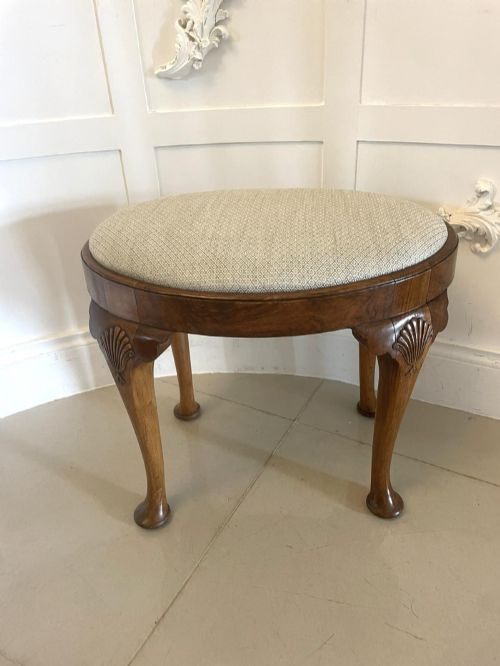
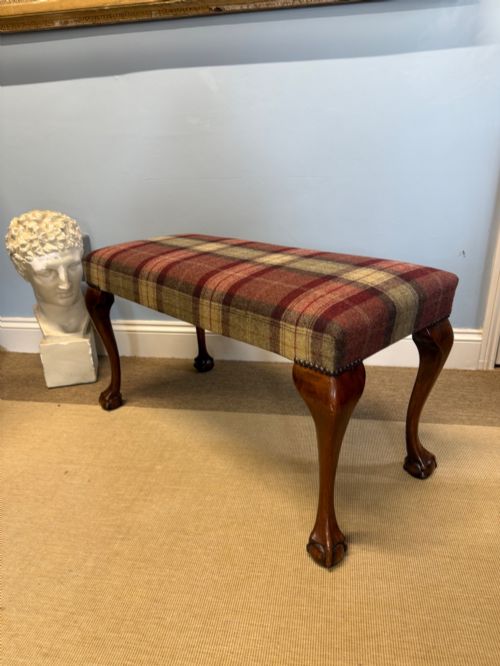
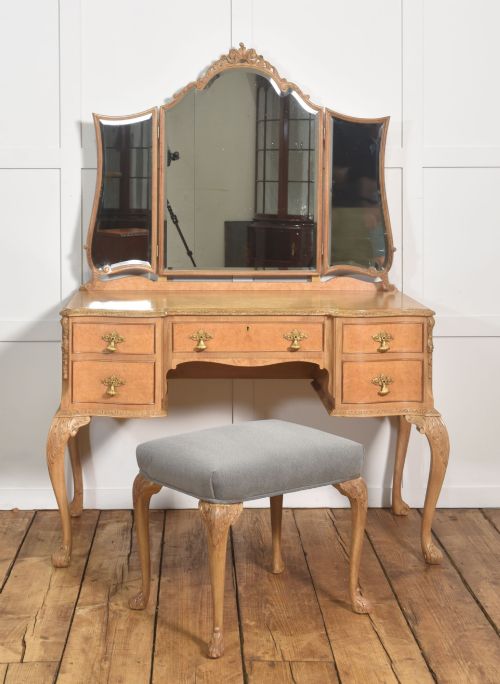
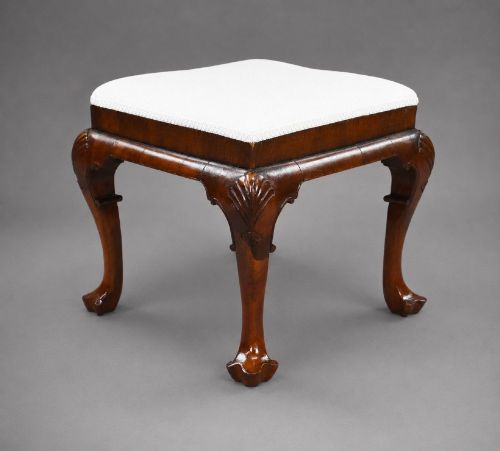
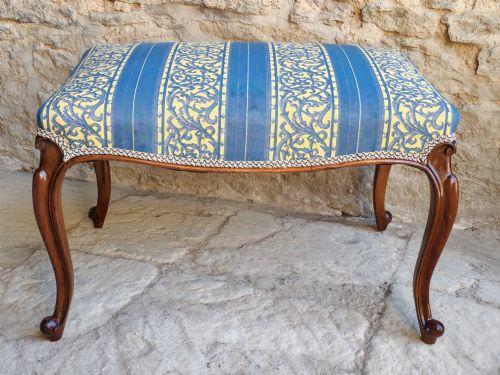
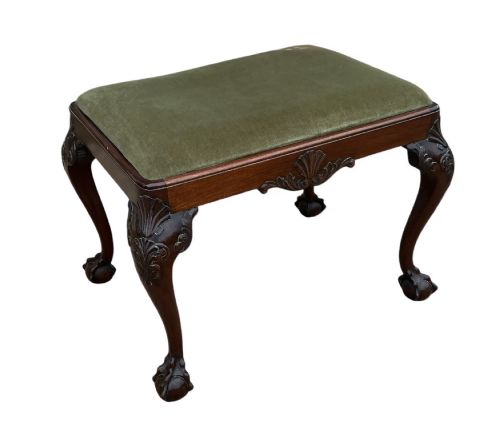
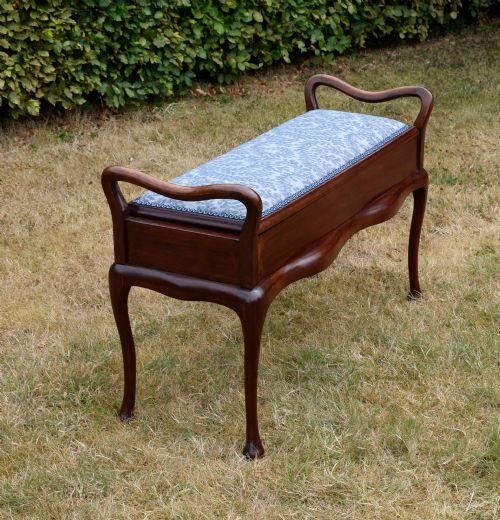
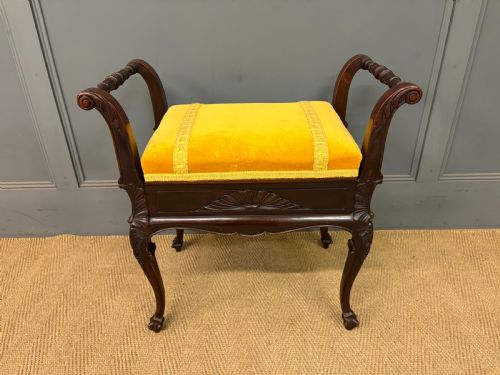
A vintage cabriole leg stool draws its form from historical revival styles, most frequently appearing in walnut or mahogany across the Victorian, Edwardian and early twentieth-century periods. These seating pieces take many forms, including dressing table stools, piano benches and fireside footstools.
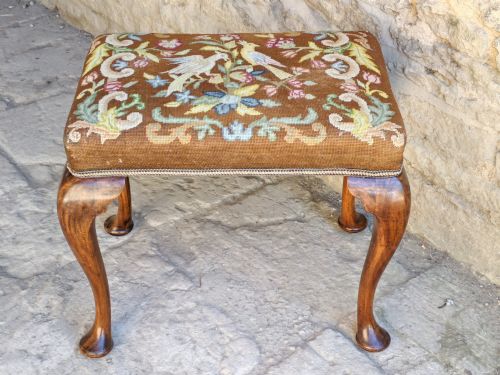
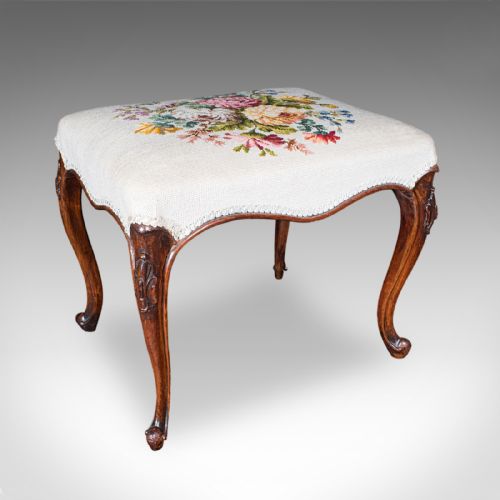
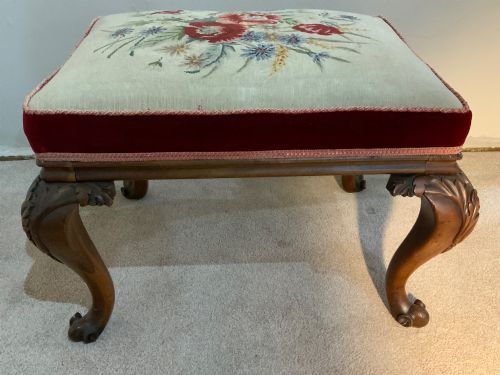
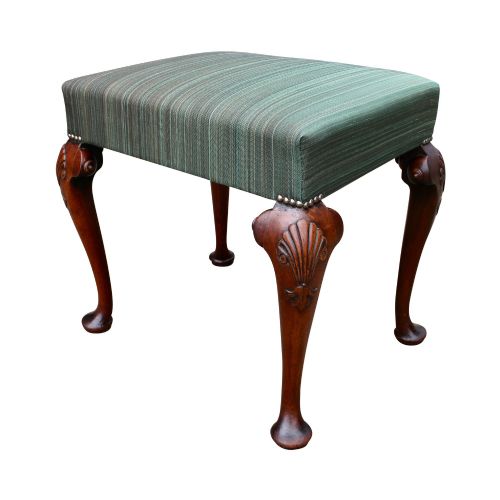
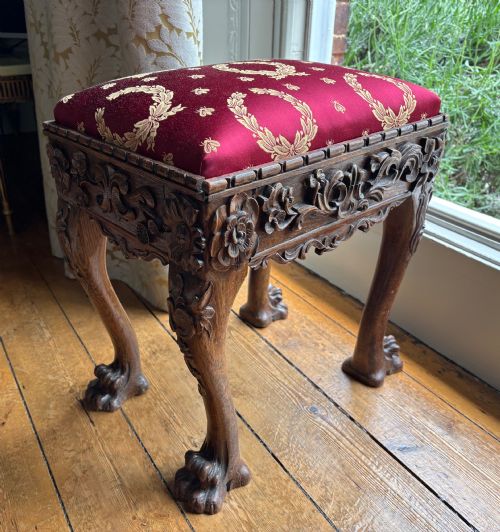
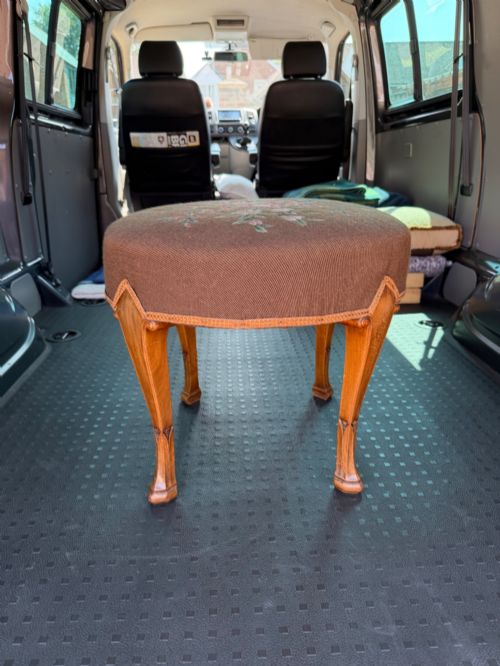
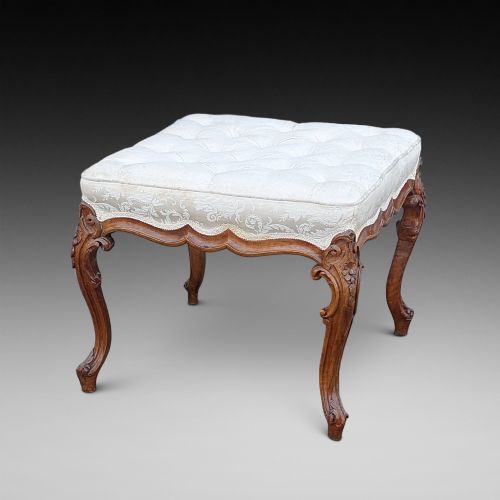
Makers shaped the timber of these pieces with the characteristic double-curved leg ending in pad, claw or scroll feet, echoing eighteenth-century designs. Examples range from simple upholstered pads to carved frames paired with needlepoint or velvet textiles.
How they were made
Cabinetmakers worked predominantly in dense hardwoods such as walnut and mahogany, shaping structural frames with hand tools and carving details into the knees and feet of the cabriole supports. Joinery relied on mortise and tenon construction to withstand the weight placed upon low seating.
Upholstery techniques involved webbing and stuffing mounted directly onto the wooden frame or dropped-in seats, finished with fabrics like wool, velvet, tapestry or needlework secured with brass tacks.
Periods represented span from Victorian and Edwardian eras back to eighteenth-century revival styles executed in solid woods.
What varies in quality
Quality rests in the crispness of the wood carving on the knees of the legs and the choice of primary timber, with solid walnut and figured mahogany sitting above simpler constructions. The weight and grain of the timber indicate the care taken by the maker during selection.
The integrity of the frame construction and the quality of the textile upholstery, whether historic needlepoint or fresh fabric, dictate how well the piece survives and functions in a modern interior.
The Vintage Cabriole Leg Stool Glossary
- Cabriole leg
- A furniture leg that curves out at the knee and tapers inward to the foot, mimicking animal limbs. This form became central to Queen Anne and Rococo revival designs.
- Needlepoint
- A type of canvas work embroidery used extensively for historical stool tops and fireside footstools. It provides a textured, durable surface of wool or silk threads.
- Dressing stool
- A low seat designed specifically to sit comfortably in front of a dressing table or mirror. These pieces often feature upholstered pads matching the period's decorative textiles.
- Piano stool
- A seat built for musicians, sometimes featuring adjustable height mechanisms or duet proportions. They are found in both mahogany and walnut woods.
- Queen Anne style
- A design movement characterised by curved lines, pad feet and graceful cabriole legs. Revival versions appeared frequently in the nineteenth and early twentieth centuries.
Vintage Cabriole Leg Stool: Frequently Asked Questions
Where do I put a cabriole leg stool?
These stools fit easily in bedrooms as dressing table seats, beside firesides as low footstools, or tucked under windows as small benches.
Their compact scale allows them to function as movable seating or decorative accent pieces in hallways and living rooms.
How do I care for the wood and upholstery?
Dust timber frames regularly with a dry cloth and feed walnut or mahogany surfaces occasionally with appropriate wax to maintain the finish.
Protect fabric or needlepoint tops from direct sunlight and brush gently to remove surface debris without damaging the fibres.
Are these stools sturdy enough for daily sitting?
Most examples use solid hardwoods like mahogany and walnut joined with traditional methods, making them entirely suitable for regular use.
Checking that the frame remains tight at the joints ensures the piece safely handles everyday weight.
What is the difference between Victorian and Edwardian stools?
Victorian pieces tend to feature heavier carving, darker walnut or rosewood timbers, and elaborate needlework or velvet upholstery.
Edwardian examples often display lighter mahogany frames and simpler lines influenced by earlier revival tastes.