




French Revival Vanity Stool
A french revival vanity stool brings period elegance to a dressing room, offering low-slung seating crafted during the nineteenth century.
French Revival Vanity Stool
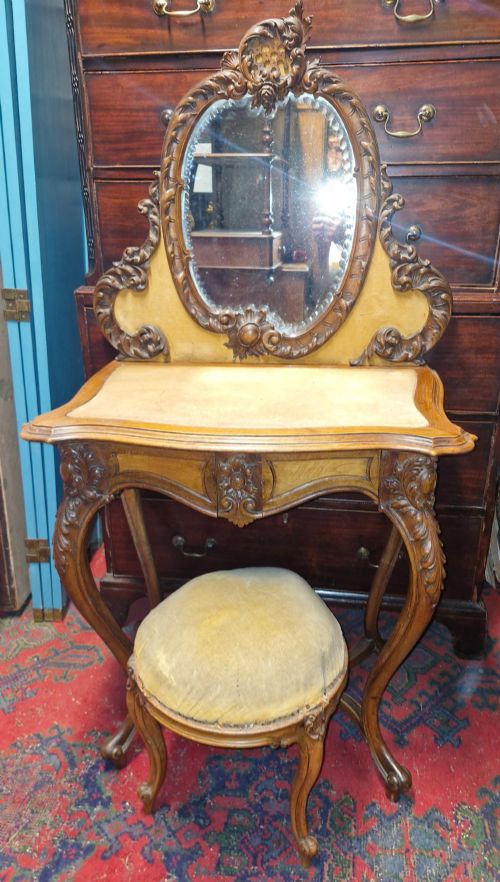
A french revival vanity stool is typically encountered as a nineteenth century seating piece designed to sit alongside a dressing table or vanity. These examples often appear in forms such as carved walnut dressing table sets or freestanding footstools.
The aesthetic draws heavily on Victorian rococo revival and louis xv revival influences, bringing ornamental curves to domestic interiors. Buyers frequently find walnut and mahogany frames paired with period textiles.
Originating largely from the nineteenth century, including specific dates around 1870, 1880, and 1900, these pieces reflect the revival tastes of the Victorian era. They serve both functional seating roles and decorative accents within a bedroom or dressing space.
How they were made
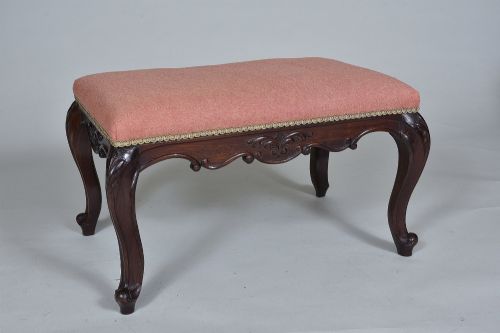
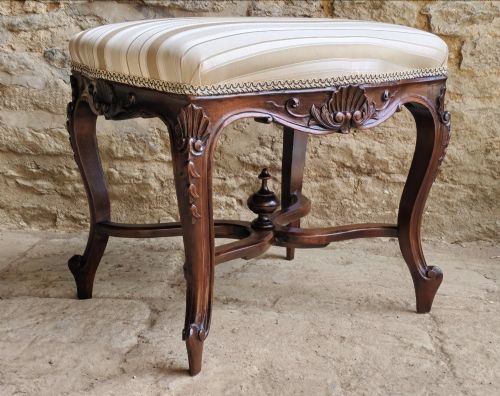
Cabinet makers utilised dense hardwoods such as walnut, mahogany, and rosewood to construct the structural frames of these stools. These timbers allowed for deep carving along the cabriole legs and aprons.
Upholstery formed a central part of the construction, utilising fabrics, velvet, and textile braid to finish the seat pads. Gilt finishes also appear on select nineteenth century frames to enhance the decorative revival style.
French Revival Vanity Stool Retail Price Guide 2026
Typical asking prices for french revival vanity stool among the pieces listed under this phrase on Sellingantiques today, from the lower quarter to the upper quarter. They describe what is for sale here now, not the wider market.
Listings feature pieces spanning the nineteenth century, with specific dates recorded from 1800, 1870, 1880, and 1900.
What varies in quality
The crispness and depth of the carved woodwork separate standard production from finer work. Superior examples display sharply defined foliage and scrolls along the cabriole legs rather than soft, mechanical shaping.
The choice of primary timber and secondary materials dictates the tier of the piece. Solid walnut and rosewood frames paired with period textile braid represent a higher grade of nineteenth century manufacturing than simpler utility pieces.
The French Revival Vanity Stool Glossary
- Cabriole legs
- An outward-curving furniture leg that mimics the shape of an animal's leg, terminating in a pad or scroll foot. This form is characteristic of rococo and revival seating.
- Rococo Revival
- A nineteenth century design movement that reinterpreted the asymmetrical curves, C-scrolls, and naturalistic plant motifs of the eighteenth century. It dominated much of the Victorian period for parlor and dressing furniture.
- Walnut
- A dark, durable hardwood favoured for nineteenth century carving and cabinet making. It takes a fine polish and was widely used in high-end revival pieces.
- Textile braid
- A narrow woven band utilised to trim upholstery edges and conceal tacks. It provides a neat, decorative finish to the perimeter of the seat.
French Revival Vanity Stool: Frequently Asked Questions
What is a french revival vanity stool?
A french revival vanity stool is a nineteenth-century seating piece designed for dressing areas, featuring stylistic elements inspired by earlier French periods.
These items utilise woods like walnut and mahogany, often shaped with cabriole legs and upholstered in fabrics or velvet.
How were these stools used historically?
Historically, these low seats were positioned in bedrooms and dressing rooms alongside matching tables for grooming and dressing.
They provided comfortable, movable seating that matched the ornate revival decor of Victorian domestic interiors.
What woods are common in these stools?
Cabinet makers predominantly used walnut, mahogany, and rosewood for the structural frames of these nineteenth-century pieces.
These dense timbers supported intricate hand carving while offering durable stability for daily domestic use.