

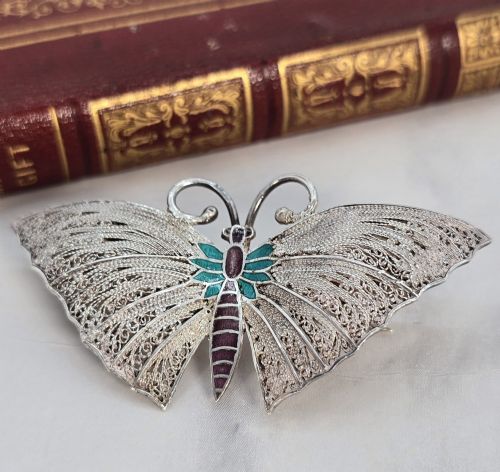


Vintage Butterfly Badge
These vintage butterfly badge designs bring colourful wing and enamel work to the lapel, offering an enduring touch of nature for the collector.
Vintage Butterfly Badge
A vintage butterfly badge usually takes the form of a brooch, presenting winged insects in silver, silver gilt, and glass.
The pieces appearing on this page span several decades, reaching from the Edwardian era through Art Deco and Mid-Century Scandinavian aesthetics to the 1960s.
Brooches form the entirety of the object types seen here, rendered in formats that often combine metalwork with natural wing material or vitreous enamel.
How they were made
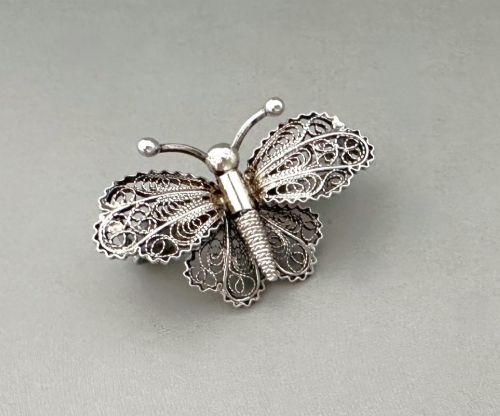
Craftsmen utilised sterling silver and silver gilt to form delicate filigree frames that support the central body and wings of the insect.
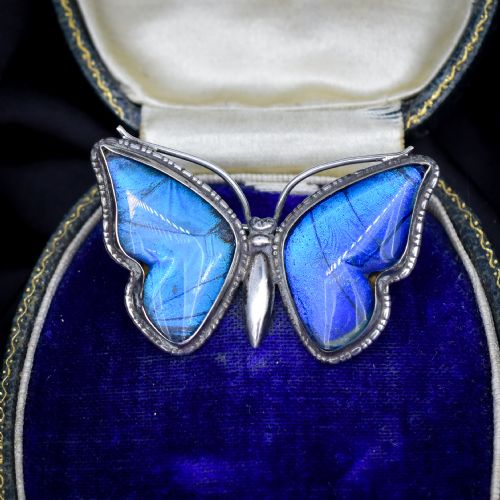
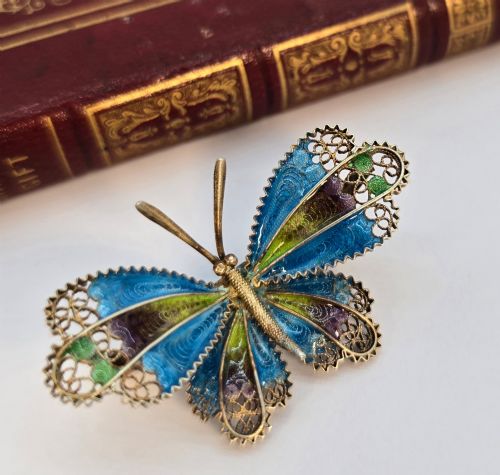
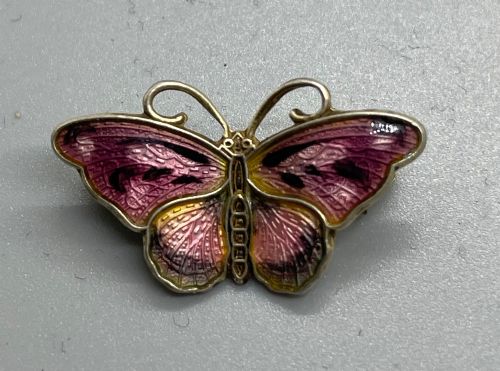
Enamel and guilloche enamel add vibrant colour to the metal framework, while other versions incorporate actual iridescent butterfly wing under glass.
Materials across these listings include sterling silver, enamel, butterfly wing, and glass.
What varies in quality
The finesse of the silver filigree and the precision of the enamel work dictate the distinction between standard examples and finer items.
The clarity of the glass protecting delicate butterfly wing panels and the preservation of the original silver gilt surface determine the overall standard.
The Vintage Butterfly Badge Glossary
- Guilloche enamel
- Enamel applied over a metal surface that has been machined with an intricate geometric pattern. This technique allows light to reflect through the translucent colour.
- Silver gilt
- Silver that has been coated with a thin layer of gold. It provides the warm tone of gold while utilising a silver base.
- Filigree
- Delicate jewellery metalwork made with fine wire soldered together in open patterns. It creates a lacy appearance common in these brooches.
- Vitreous enamel
- Glass fused to metal at high temperatures through firing. It produces a durable coloured surface that resists fading.
Vintage Butterfly Badge: Frequently Asked Questions
How should I wear a vintage butterfly badge?
These brooches fasten easily to lapels, scarves, or hats using a standard pin mechanism on the reverse. They work well as a single focal point on plain fabrics.
Ensure the pin catch is secure before fastening it to heavier wool or tweed garments to prevent loss during daily wear.
What periods do these brooches come from?
The pieces seen here span from the Edwardian period and Art Deco era through the 1950s and Mid-Century Scandinavian designs up to 1960.
Art Deco examples often feature geometric wing shapes or butterfly wing panels, while later Scandinavian pieces lean towards minimalist guilloche enamel.
Are the butterfly wings real?
Certain examples utilise genuine iridescent butterfly wings preserved beneath a protective layer of bevelled glass. This technique was particularly popular during the early twentieth century.
Other versions achieve their colour entirely through vitreous enamel or painted metal rather than organic material.
What metals are used in these pieces?
Makers utilised sterling silver and standard silver, frequently applying a gold wash known as silver gilt to achieve a warmer finish. Filigree wire frames are typical of the construction.
The choice of metal often reflects the period of origin, with Continental and Scandinavian workshops favouring bright silver and enamel combinations.