
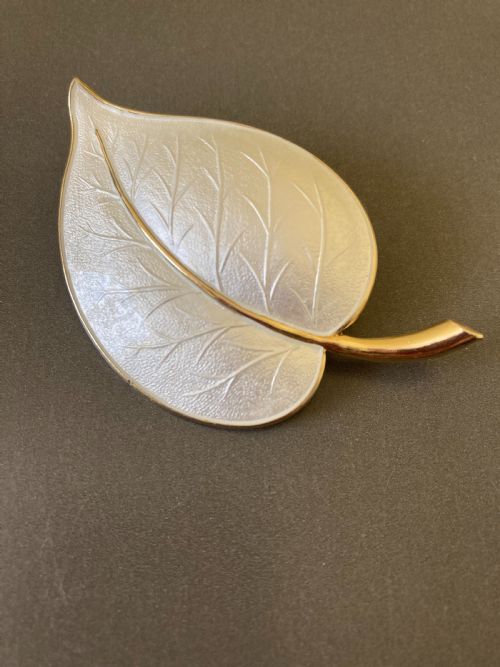


Silver Gilt Enamel Brooch
A silver gilt enamel brooch brings together polished metal and coloured glass decoration in wearable forms from the Victorian period to the mid-century.
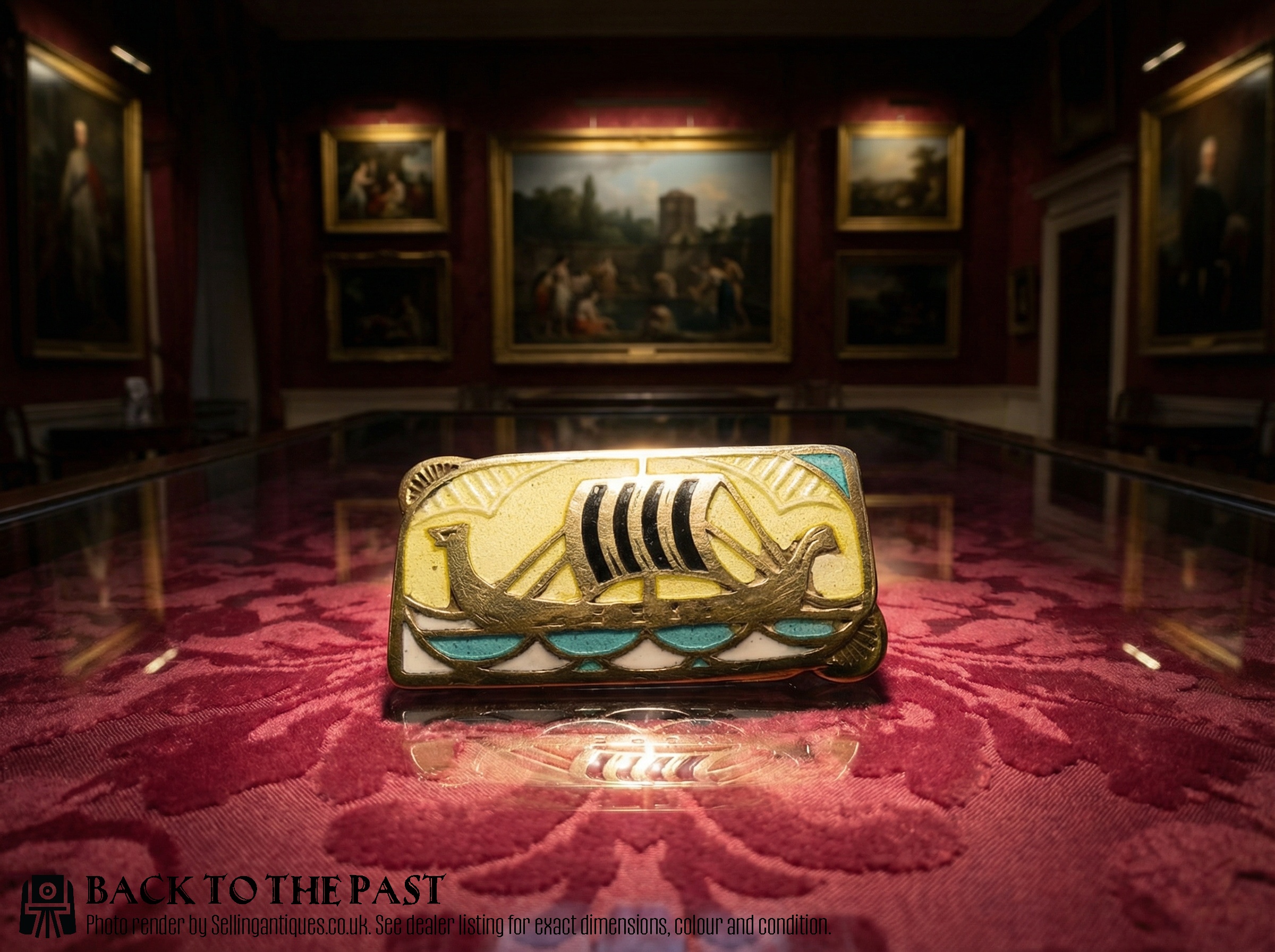
Silver Gilt Enamel Brooch
A silver gilt enamel brooch combines silver coated with a thin layer of gold and vitreous coloured glass fused to the metal surface. These pieces span from the 19th Century and Victorian eras through the Art Nouveau and Art Deco periods into the 1950s and 1960s.
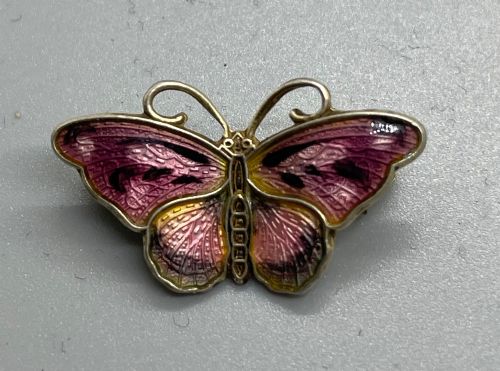
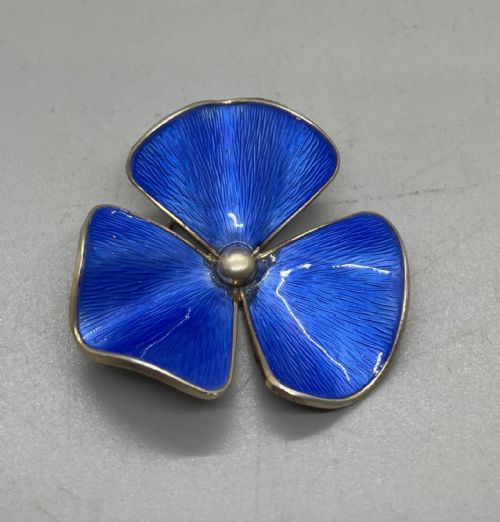
The most common version met on this page is the Scandinavian floral or butterfly pin, particularly from Norway and Denmark. Makers such as David Andersen, Aksel Holmsen, and Anton Michelsen produced substantial numbers of these items.
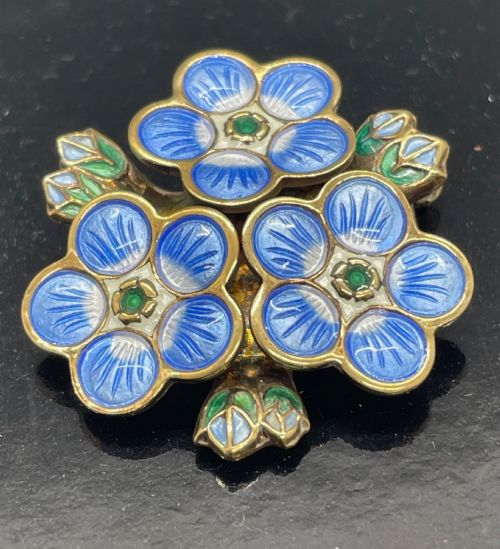
Beyond Scandinavian workshops, designs include Viking ships, coastal scenes, and botanical motifs like daisies and leaves. Forms range from simple bar shapes to pendant combinations and complex multi-part daisies.
Materials and construction
Makers utilised sterling silver or 925 silver as the base metal, applying a gilt wash or vermeil layer of gold over the surface. Vitreous enamel was then fused to the metal through high-temperature firing.
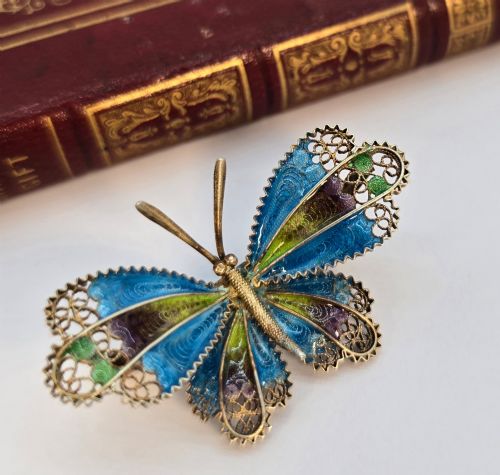
Techniques varied from standard opaque enamelling to translucent guilloche work, where engine-turned patterns beneath the enamel catch the light. Plique-à-jour was also used in Art Nouveau designs, leaving the enamel unbacked by metal to resemble stained glass.
Listings feature pieces spanning the 19th Century, Victorian era, Art Nouveau, Art Deco, and mid-century Scandinavian periods.
Judging quality and execution
Quality rests upon the precision of the metalwork and the clarity of the enamel layer. Finer pieces display intricate engine-turning or delicate filigree work that demands high technical skill.
The complexity of the subject matter also separates items, with multi-coloured butterfly wings and shaded floral petals requiring greater artistry than plain surfaces. The presence of well-preserved gilding over the silver base further marks out superior examples.
David Andersen·Aksel Holmsen·Meyle & Mayer·Arne Nordlie·Marius Hammer·Anton Michelsen·Erik Magnussen·Georg Jensen·Hroar Prydz·Einar Modahl·Ivar Holth·Kristian Hestenes·Bernhard Hertz
The Silver Gilt Enamel Brooch Glossary
- Silver gilt
- Silver that has been coated with a thin layer of gold. This finish gives the piece a warm golden appearance while retaining a silver base.
- Vitreous enamel
- Glass powder melted and fused to metal at high temperatures. It provides a durable, glossy coloured surface.
- Guilloche
- A decorative technique where a mechanical tool etches a precise, intricate pattern into metal. Translucent enamel is often layered over this pattern.
- Plique-à-jour
- An enamelling technique resembling miniature stained glass with no backing metal. Light passes directly through the transparent coloured areas.
- Vermeil
- Quality silver gilt meeting specific thickness standards for the gold layer. The term denotes a substantial gold coating over sterling silver.
Silver Gilt Enamel Brooch: Frequently Asked Questions
How do I identify a Norwegian enamel brooch?
Look for hallmarks indicating silver purity, such as 925, alongside maker marks like those for David Andersen or Aksel Holmsen. Natural motifs such as butterflies and leaves are strongly associated with mid-century Norwegian design.
Many of these pieces feature vibrant guilloche enamel work over engine-turned silver gilt backgrounds. Country of origin stamps are also common on the reverse.
What is a daisy brooch?
A daisy brooch is a specific floral design featuring white enamelled petals radiating from a central silver gilt core. These pieces were famously produced in Denmark during the mid-century.
Anton Michelsen and Georg Jensen are the primary makers associated with this popular botanical style. They appear frequently in both pin and pendant configurations.
How should I clean my enamel brooch?
Use a soft, dry cloth to gently wipe away surface dust and skin oils. Avoid chemical dips, ultrasonic cleaners, and harsh abrasives which can damage the fragile glass enamel.
Store the item separately in a lined box to prevent scratching from other jewellery. Keep the brooch away from prolonged moisture and direct sunlight.