


Yellow Enamel Brooch
A yellow enamel brooch brings together brilliant kiln-fired glass and precious metals, offering collectors a striking piece of wearable history.
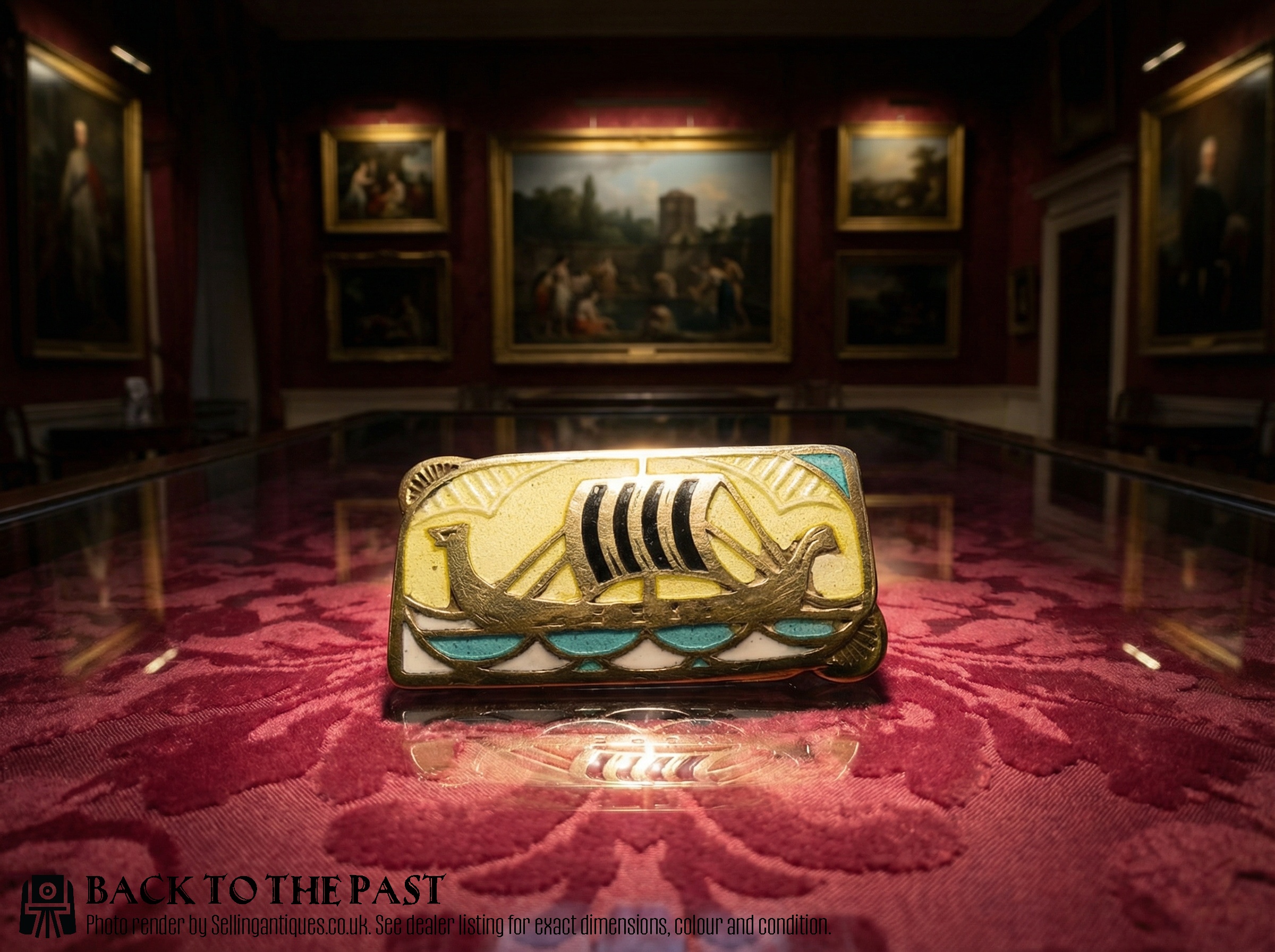
Yellow Enamel Brooch
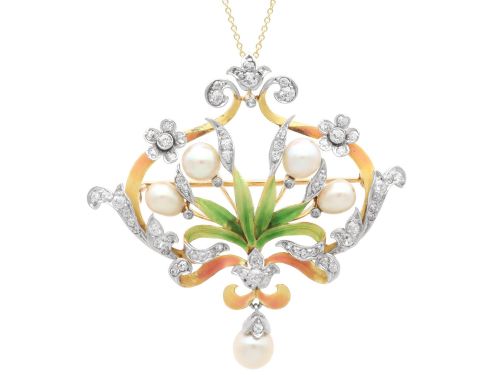
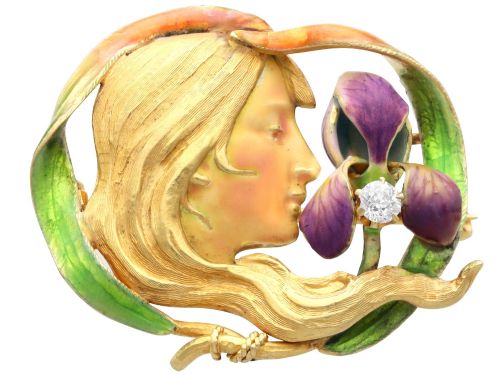
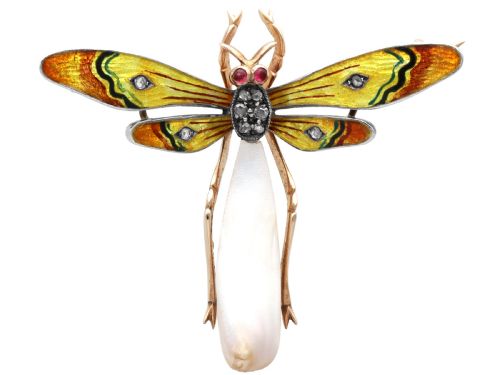
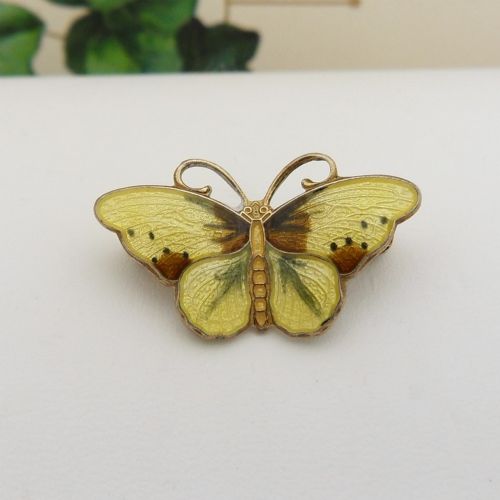
A yellow enamel brooch is a garment fastening ornamented with vitreous glass fused to metal by heat, taking forms that range from naturalistic leaves and butterflies to geometric bar pins. The most common version met on this page is the Scandinavian silver butterfly or leaf brooch from the mid-twentieth century, typically rendered in bright yellow guilloché enamel over textured metal. Earlier examples reach back through the Victorian era and the Arts and Crafts period, utilising gold and silver to frame intricate floral motifs, birds, and locket pendants.
Makers across Norway, France, and Britain produced these ornaments using varied techniques, pairing enamel with diamonds, pearls, amethysts, and rubies. While butterfly and leaf motifs dominate the twentieth-century pieces, nineteenth-century examples often favour clustered gemstones or figural subjects like cockerels and Viking ships. Every period brings its own characteristic palette and weight, allowing buyers to select between delicate silver gilt work and substantial yellow gold mountings.
How they were made
Enamel application required skilled artisans to fuse powdered glass onto a prepared metal base inside a high-temperature kiln, creating a durable and glossy coloured surface. Craftsmen frequently worked with sterling silver, silver gilt, and yellow gold, sometimes adding platinum for fine detail work in Edwardian designs.
Gems such as diamonds, pearls, rubies, amethysts, and opals were then set into the metal framework to accent the vibrant enamel work. Guilloché techniques involved engraving patterns beneath translucent yellow enamel to catch the light, while plique-à-jour methods created stained-glass effects without a solid backing metal.
Several makers transformed tiny cockerels and Viking ships into brightly enamelled creatures ready to scale your lapel.
What varies in quality
Quality in these pieces depends heavily on the precision of the enamel work and the condition of the glass surface. Superior examples display even coloration and complex engine-turned engraving beneath translucent layers, whilst lesser pieces may show uneven firing or pitting in the vitreous coating.
The choice of supporting materials also dictates the tier of the piece, moving from sterling silver and silver gilt up to high-carat yellow gold set with natural pearls and old-cut diamonds. Maker attribution plays a significant role, with documented Scandinavian and French workshops commanding attention for their refined execution and distinct artistic signatures.
Hroar Prydz·Murrle Bennet and Co·Gustav Gaudernack·Aksel Holmsen·David Andersen·Ivar T Holth·Albert Scharning·MN Thune
The Yellow Enamel Brooch Glossary
- Guilloché
- A decorative technique in which a precise pattern is mechanically engraved into a metal surface before translucent enamel is applied over it. This allows light to reflect through the coloured glass and create depth.
- Silver Gilt
- Sterling silver that has been coated with a thin layer of gold, combining the luminous warmth of gold with the structural properties of silver. It is frequently seen on Scandinavian enamel pieces.
- Plique-à-jour
- An enamelling technique where the enamel is applied within a wire framework without a backing metal, letting light pass straight through the transparent or translucent cells like miniature stained glass.
- Bar Brooch
- A long, slender pin format popular during the Victorian and Edwardian eras, often featuring central clusters of gemstones, enamel motifs, or figural subjects positioned along the bar.
- Vitreous Enamel
- A material made by fusing powdered glass to a substrate by firing, usually between eight hundred and nine hundred degrees Celsius. The powder melts, flows, and hardens to a smooth, durable coating.
Yellow Enamel Brooch: Frequently Asked Questions
How do I care for my brooch?
Store your brooch in a soft-lined box away from other jewellery to prevent the enamel surface from scratching against hard metals. Clean the piece gently with a soft, dry cloth and avoid harsh chemical dips that can damage the vintage metal or glass.
Because enamel is essentially glass, it remains sensitive to sharp impacts and sudden temperature drops. Fasten and unpin the piece with care to protect the pin stem and hinge mechanism from undue stress.
Were these worn daily?
Many of these pieces served as everyday dress accessories to fasten collars, lapels, and scarves in the nineteenth and twentieth centuries. Heavier gold and diamond variants were reserved for formal evening wear.
Mid-century Scandinavian butterfly and leaf designs were particularly popular for brightening casual coats and knitwear. Their secure C-clasps and rolling safety catches kept them firmly anchored during daily use.
How do I date a piece?
Examine the metal purity stamps, maker marks, and pin mechanisms on the reverse of the brooch to establish its era. Victorian and nineteenth-century pieces often feature wider pin stems extending past the safety catch alongside hand-engraved details.
Mid-century Scandinavian designs typically display maker monograms alongside silver purity marks like 925s. Arts and Crafts items from around nineteen hundred often exhibit distinct maker signatures and handcrafted elements that differ from later mass production.
What is silver gilt?
Silver gilt is sterling silver that has undergone a process of gold plating to give it a rich golden exterior. This technique provided the luxurious appearance of solid gold while utilising silver as the primary structural base.
Many Norwegian enamel makers utilised silver gilt to contrast warm yellow enamel against a golden frame. Over decades of wear, the thin gold layer may soften in high-friction areas, revealing the silver beneath.