



Enamel Butterfly Pin
An enamel butterfly pin brings colour and charm to a lapel, spanning periods from Art Deco to Mid-Century Modern.
Enamel Butterfly Pin
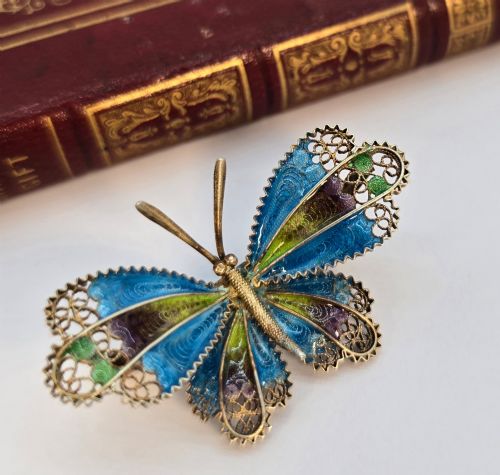
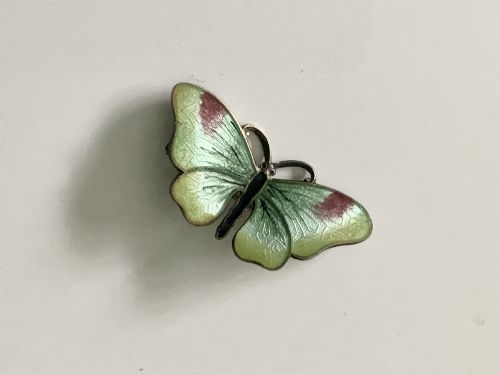
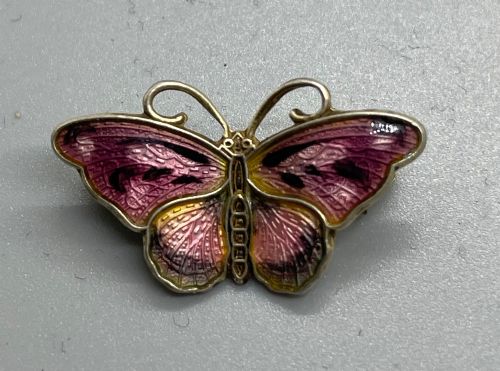
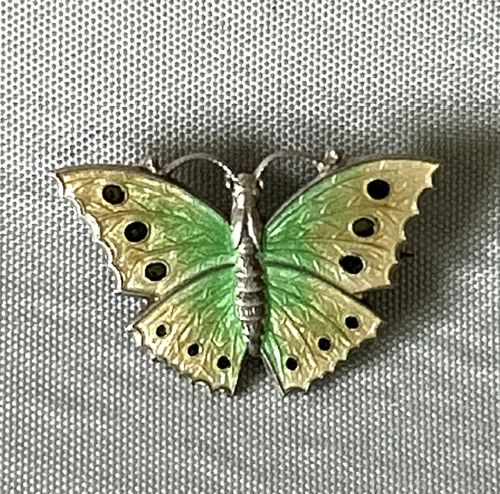
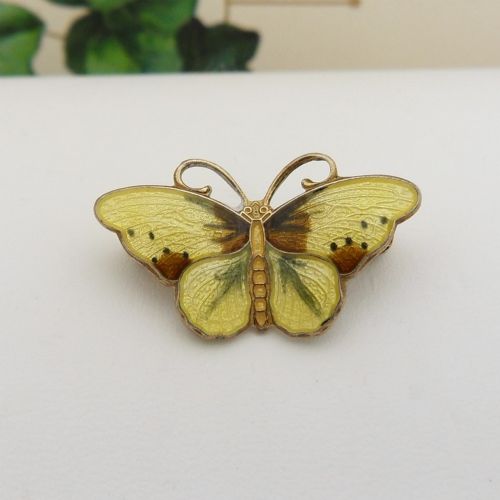
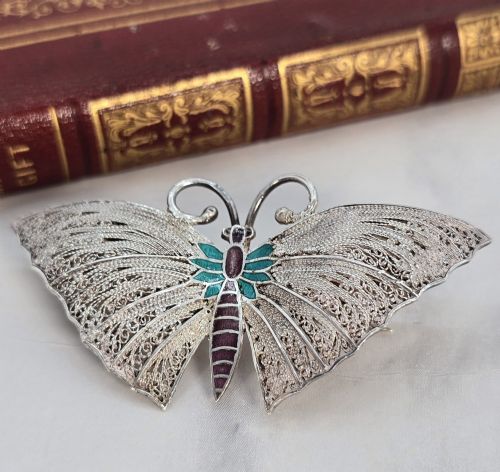
An enamel butterfly pin is a small brooch or lapel pin shaped like a butterfly, produced across several decades from the early to mid-twentieth century. The selection ranges from petite continental pieces to larger Chinese export and Scandinavian designs.
Most examples found here date from the nineteen-twenties, nineteen-thirty, and nineteen-fifties, capturing distinct movements such as Art Deco and Mid-Century Scandinavian. Buyers encounter various forms, including brooches fashioned from silver, silver gilt, and sterling silver.
The decorative wings often combine vitreous enamel or guilloche enamel with butterfly wing or glass panels. These insect motifs served as popular decorative accessories throughout the twentieth century.
How they were made
Maker utilise silver, sterling silver, and silver gilt as the primary foundation for mounting the coloured glass and enamel work. Delicate filigree wire often outlines the wing cells to hold the wet enamel before firing.
Guilloche enamel techniques apply translucent enamel over a machine-turned metal background to create repetitive geometric patterns beneath the glossy surface. Vitreous enamel methods fuse powdered glass to metal under high heat for a permanent, vibrant finish.
Materials across these listings include sterling silver, gold vermeil, butterfly wing, and translucent guilloche enamel.
What varies in quality
The fineness of the metalwork distinguishes different tiers of production, particularly where intricate silver filigree or heavy silver gilt and vermeil are employed. Skilled workshops achieve crisper separation between enamel cells and more precise engine-turned guilloche patterns beneath the glaze.
The complexity of the enamel colour graduation also alters the visual depth of the wings. Pieces attributed to notable Norwegian designers or specific regional workshops display superior attention to surface polish and anatomical proportion in the insect form.
Hroar Prydz·Aksel Holmsen·David Andersen
The Enamel Butterfly Pin Glossary
- Guilloche enamel
- A decorative technique where an engraved metal surface is covered with transparent enamel, allowing the pattern underneath to show through. This method creates a shimmering, patterned depth across the wings.
- Silver gilt
- Silver that has been coated with a thin layer of gold, giving it a warm, golden appearance while retaining a silver base. It provides a rich backdrop for bright enamel colours.
- Vitreous enamel
- A material made by fusing powdered glass to a substrate by firing, usually between seven hundred and eight-five hundred degrees Celsius. The resulting compound is smooth, durable, and chemically resistant.
- Silver filigree
- Delicate jewellery-making work consisting of fine silver threads soldered together in openwork patterns. Makers use this wirework to delineate the delicate veins of insect wings.
- Butterfly wing
- A decorative medium using iridescent butterfly wing fragments sealed beneath bevelled glass panels. This technique gained popularity during the early twentieth century for pictorial jewellery.
Enamel Butterfly Pin: Frequently Asked Questions
How do I date an enamel butterfly pin?
Dating relies on stylistic clues, metal types, and hallmarks stamped onto the reverse of the brooch. Art Deco and nineteen-twenties pieces often feature geometric guilloche patterns, while nineteen-fifties Scandinavian designs lean towards minimalist vitreous enamel.
Examining the clasp type and maker marks provides further chronological context. Archival records and past sales help confirm the production window for specific regional styles.
What is silver gilt?
Silver gilt is solid silver covered with a thin layer of gold. This treatment offers the durability of silver with the rich appearance of solid gold.
Makers frequently utilised this finish to complement warm enamel colours on vintage insect brooches. It protects the underlying silver from tarnishing while enhancing the overall visual appeal.
How do I wear a butterfly brooch?
These pins attach easily to lapels, collars, hats, and scarves using the pin stem and safety clasp on the reverse. Their compact size makes them versatile accessories for everyday wear or formal attire.
Pairing a single coloured pin with neutral fabrics allows the intricate enamel work to stand out. Collectors often group smaller pieces together for a bolder display.
Where were these brooches made?
Production centres for these pins spanned across Norway, China, and wider continental Europe during the twentieth century. Scandinavian workshops became particularly renowned for guilloche and vitreous enamel techniques.
Chinese export makers also produced distinct silver filigree and enamel butterfly designs during the nineteen-thirties. Each region contributed specific aesthetic traditions to this category.