
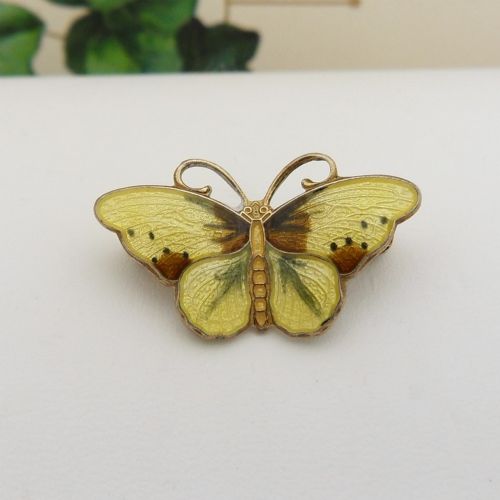


Guilloche Enamel Butterfly Pin
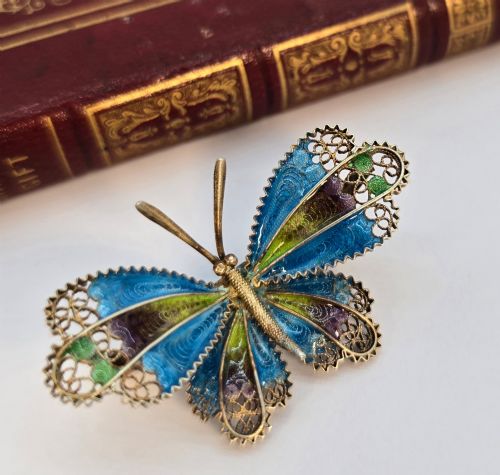
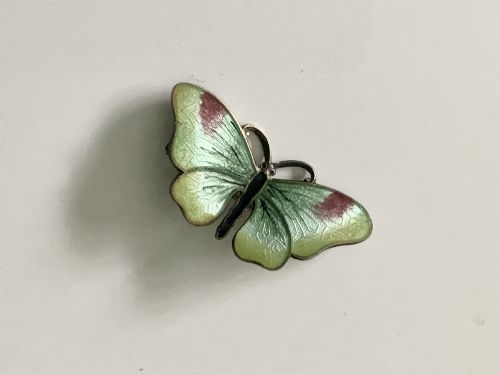
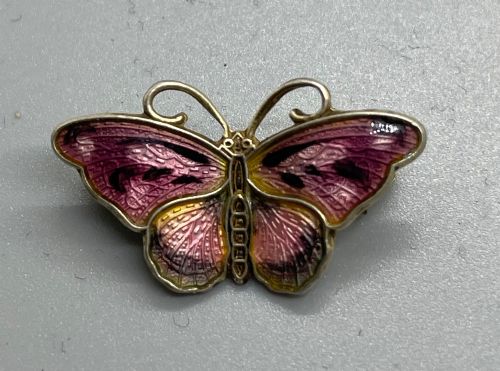
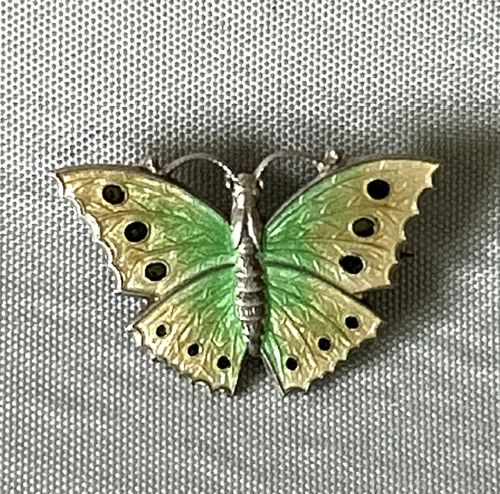
A guilloche enamel butterfly pin brings together vibrant translucent colour and delicate silverwork, offering a wearable piece of miniature artistry.
Guilloche Enamel Butterfly Pin
The buyer meets silver and silver gilt versions most often on this page, frequently originating from Norwegian makers and workshops. These brooches range from tiny petite forms to bolder Scandinavian sterling silver designs, capturing naturalistic insect shapes through stylised metal outlines.
How they were made
Gold vermeil also appears among the materials, providing a rich golden finish beneath the enamel coatings. Artisans shape the silver into detailed antennae and wing veins, fusing the glass enamel through heat to achieve a glossy, durable finish.
The listings show pieces spanning from the nineteen-twenties to the nineteen-sixties, incorporating sterling silver, gold vermeil, and vitreous enamel.
What varies in quality
Quality rests upon the precision of the underlying guilloche engraving and the depth of the translucent enamel applied over the silver. Finer examples display intricate geometric patterns beneath the glass that catch the light evenly across each wing.
The weight and purity of the metal structure also divide the standard of execution, with heavier sterling silver and silver gilt settings offering greater durability. The crispness of the insect's antennae and the even distribution of colour determine the overall refinement of the piece.
Hroar Prydz·David Andersen
The Guilloche Enamel Butterfly Pin Glossary
- Guilloche
- A decorative engraving technique in which a very precise, intricate repeating pattern or design is mechanically etched into a metal surface. This worked metal sits beneath translucent enamel to create shimmering visual depth.
- Vitreous Enamel
- A material made by fusing powdered glass to a substrate by firing, usually between seven hundred and nine hundred degrees Celsius. The powder melts, flows, and solidifies to a smooth, durable glass coating.
- Silver Gilt
- Silver that has been coated with a thin layer of gold over its exterior surface. This provides the warm appearance of solid gold while utilising a silver base.
- Sterling Silver
- An alloy of silver containing ninety-two point five percent by mass of silver and seven point five percent by mass of other metals, usually copper. This standard ensures structural integrity for delicate wearable items.
- Brooch
- A decorative jewellery piece designed to be attached to garments, frequently secured with a pin and catch mechanism on the reverse. These items serve both ornamental and fastening purposes.
Guilloche Enamel Butterfly Pin: Frequently Asked Questions
How are butterfly pins worn?
These pieces function as brooches, secured to lapels, collars, or scarves using a pin mechanism on the reverse. Their small scale allows them to accent everyday garments without weighing down lighter fabrics.
Collectors often group smaller pins together or wear them individually as a subtle splash of colour. The secure fastening keeps the insect resting flat against the textile.
What periods do these pins come from?
The listings span several decades from the early to mid-twentieth century, including Art Deco, Art Nouveau, and mid-century modern aesthetics. Pieces frequently date from the nineteen-twenties through to the nineteen-sixties.
Scandinavian workshops produced a large proportion of these mid-century designs, particularly during the nineteen-fifties. Earlier examples often reflect tighter Art Deco symmetry or softer Art Nouveau curves.
What materials are used?
Construction relies primarily on silver, sterling silver, or silver gilt, paired with vitreous enamel. Some iterations incorporate gold vermeil over a silver base to create a golden tone.
The enamel itself is fired glass applied over engraved metal, which produces the characteristic translucent shine. The combination of silver and glass forms the core of every piece.
How do I identify Norwegian pieces?
Norwegian examples often feature distinct mid-century Scandinavian styling alongside specific designer attribution in the listing details. The use of bright red or multi-coloured enamel on sterling silver is particularly characteristic of this regional output.
Designers from Norway produced notable petite and standard-sized butterfly brooches during the nineteen-fifties and nineteen-sixties. Their work typically emphasises clean metal outlines and vivid translucent colouration.