


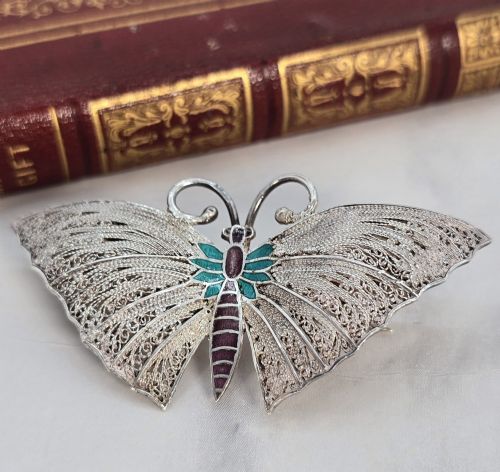


Vintage Enamel Insect Brooch
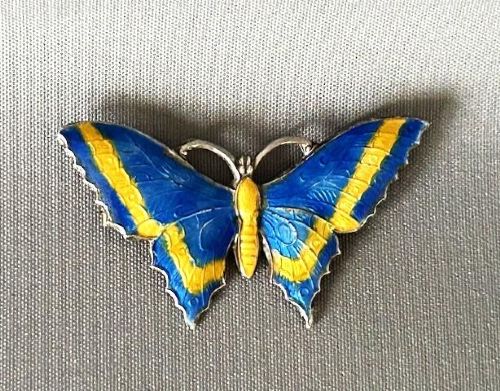
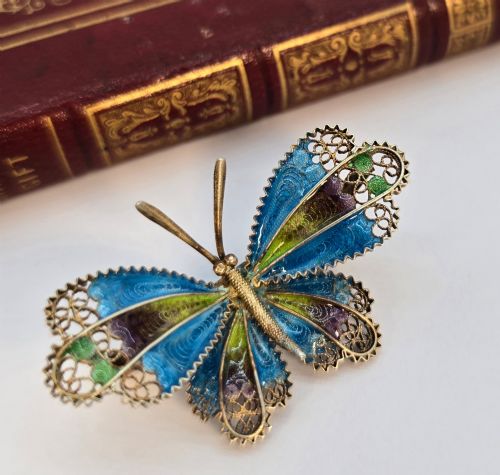
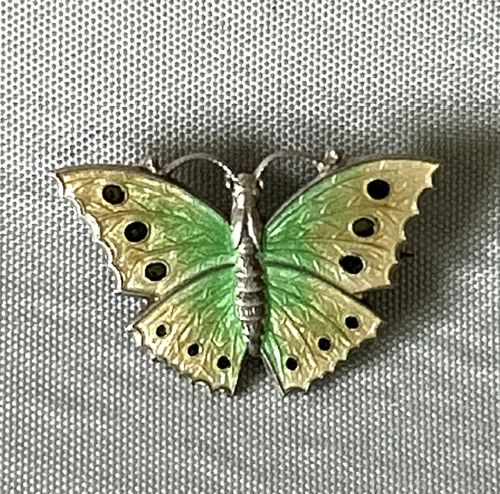
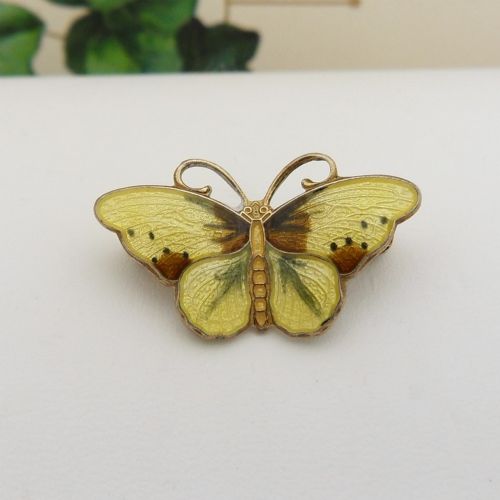
These vintage enamel insect brooches bring bright colour and fine metalwork together in wearable miniatures from the early twentieth century.
Vintage Enamel Insect Brooch
A vintage enamel insect brooch is a small decorative fastening shaped to resemble a butterfly or dragonfly, designed to be pinned to clothing. The pieces gathered here date from the 1920s, 1930s, and 1950s, capturing decades of changing tastes in small-scale jewellery.
Butterflies dominate the forms, rendered in various sizes from petite items to larger statement pieces. These brooches draw on Art Deco, Art Nouveau, Mid-Century Scandinavian, and Chinese Export traditions.
Most examples rely on silver as a base, often enhanced with silver gilt, sterling silver, gold vermeil, or delicate filigree wirework. Alongside opaque and translucent enamel, some designs incorporate butterfly wing or glass elements to build texture and depth.
How they were made
Enamelling techniques required skilled handwork to fuse powdered glass onto metal surfaces under high heat. Guilloche enamel appears alongside smooth coloured applications, producing patterned metallic radiances beneath translucent red or multi-coloured glazes.
Vintage Enamel Insect Brooch Retail Price Guide 2026
Typical asking prices for vintage enamel insect brooch among the pieces listed under this phrase on Sellingantiques today, from the lower quarter to the upper quarter. They describe what is for sale here now, not the wider market.
The inventory here focuses entirely on butterfly and dragonfly motifs executed in silver, enamel, and filigree during the 1920s, 1930s, and 1950s.
What varies in quality
Quality rests upon the precision of the metalwork and the depth of the enamel application. Superior pieces display crisp filigree wire, secure cell boundaries, and rich, even coloration without cloudiness.
Design complexity separates standard production from finer output. Pieces originating from known Scandinavian or Chinese export workshops often demonstrate sharper execution in wing veining and gilt finishes.
Hroar Prydz
The Vintage Enamel Insect Brooch Glossary
- Guilloche enamel
- A decorative technique where the metal surface is engraved with repetitive geometric patterns beneath a translucent enamel layer. This allows light to reflect through the coloured glass.
- Silver gilt
- Silver that has been coated with a thin layer of gold. It provides the warm tone of gold while utilising a silver base.
- Filigree
- Delicate jewellery work formed from fine twisted silver threads soldered together in open lace-like patterns. It is frequently seen outlining insect wings.
- Butterfly wing
- A decorative medium using real butterfly scales sealed beneath bevelled glass panels. Popular in early twentieth-century pictorial jewellery.
- Gold vermeil
- Sterling silver heavily plated with gold. This combination offers durability alongside a rich golden appearance.
Vintage Enamel Insect Brooch: Frequently Asked Questions
What periods do these brooches come from?
The pieces here span the 1920s, 1930s, and 1950s. They reflect distinct decorative movements from Art Deco and Art Nouveau to Mid-Century Scandinavian design.
Design choices shifted over these decades, moving from ornate filigree towards cleaner mid-century lines while retaining the core insect theme.
How do I wear a vintage enamel insect brooch?
These pieces function as traditional lapel or collar pins, securing easily to heavy fabrics and structured jackets. Their vibrant enamel colours make them effective focal points on neutral garments.
Care should be taken to protect the glass and enamel surfaces from sharp knocks against hard objects during daily wear.
What materials make up these brooches?
Silver serves as the primary metal base, appearing as standard silver, sterling silver, silver gilt, or gold vermeil. Artisans combined this metal with fired enamel, glass, and occasionally preserved butterfly wing material.
Wirework filigree frequently shapes the insect wings, creating structured compartments for the coloured enamel.
How do Chinese export pieces differ?
Chinese export examples from this era often feature larger dimensions and heavier silver filigree work. These items showcase distinct regional interpretations of the butterfly motif.
The metalwork tends to incorporate elaborate wire scrolls alongside vibrant traditional enamel palettes.
Are these brooches fragile?
Vitreous enamel is essentially glass fused to metal, meaning it can chip or crack if dropped onto hard surfaces. Fine silver filigree also requires gentle handling to prevent bending.
Proper storage in separate pouches helps protect the enamel and gilt surfaces from scratching against other items.