




Vintage Enamel Brooch
A vintage enamel brooch brings rich colour and fine metallic detail to a lapel, spanning styles from delicate Edwardian flora to bold mid-century Scandinavian geometry.
Vintage Enamel Brooch
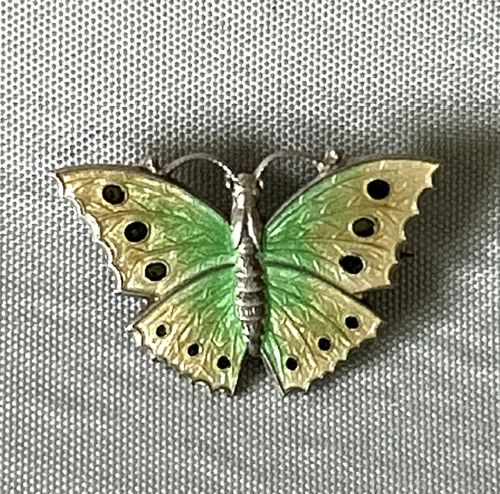
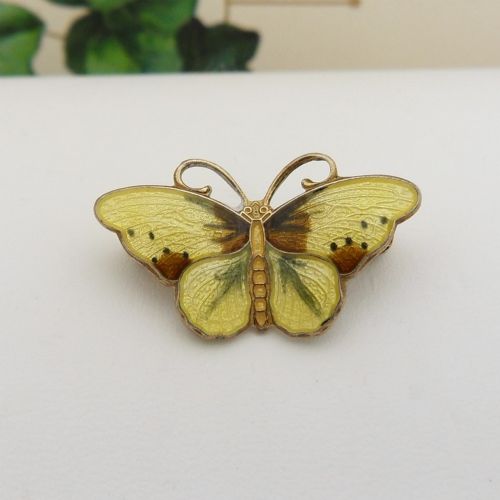
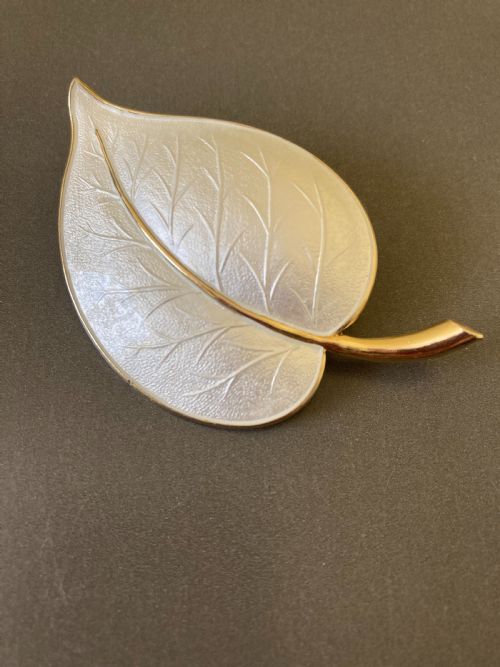
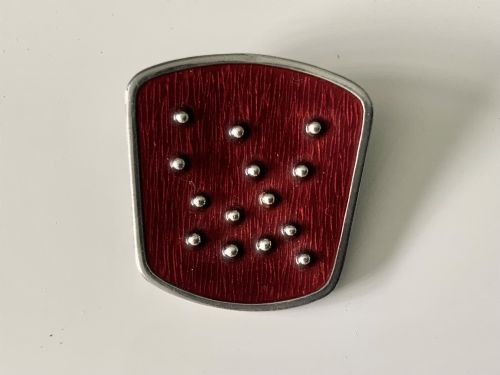
A vintage enamel brooch encompasses wearable metalwork decorated with vitreous glass pastes fused by heat, appearing frequently as butterflies, flowers, and abstract motifs. Collectors exploring this category encounter varied designs spanning the nineteenth century through the mid-twentieth century.
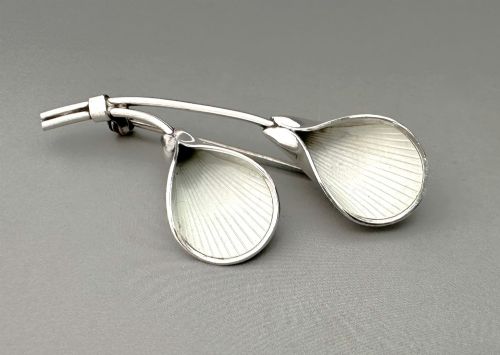
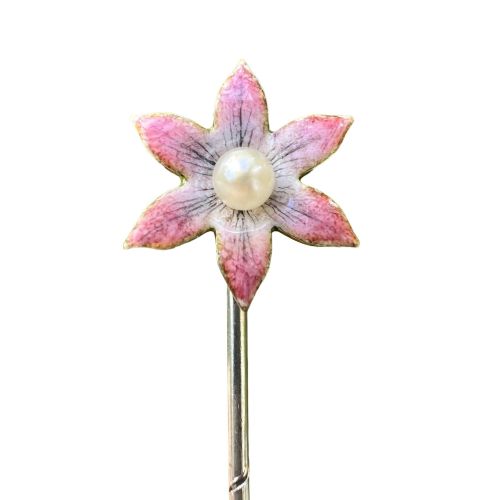
The selections on this page highlight a strong representation of Scandinavian workshops, particularly Norwegian and Danish makers producing guilloche and sterling silver pieces. Alongside these regional works, British Arts and Crafts items and Edwardian gold-set florals populate the selection.
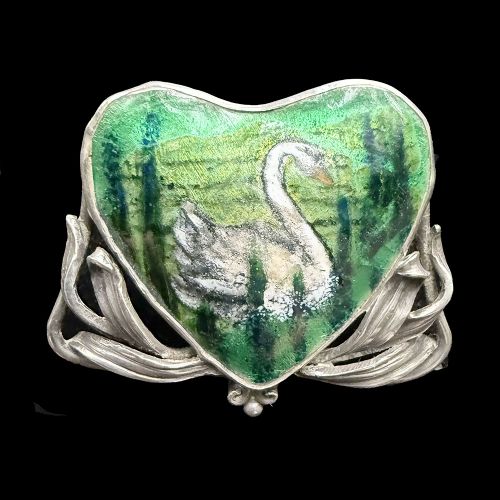
Common forms range from small stick pins and bar brooches to substantial belt buckles and articulated dress clips. Naturalistic subjects such as leaves, birds, and insects dominate the available inventory across multiple decades.
How they were made
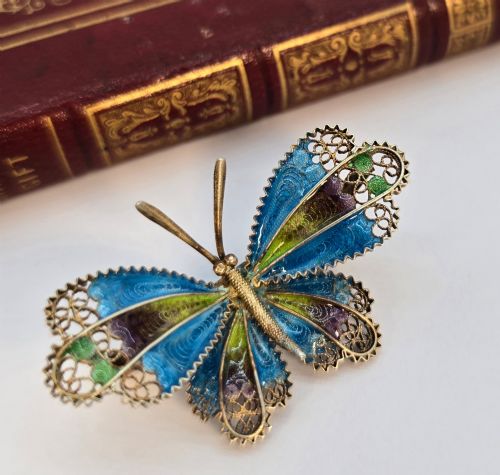
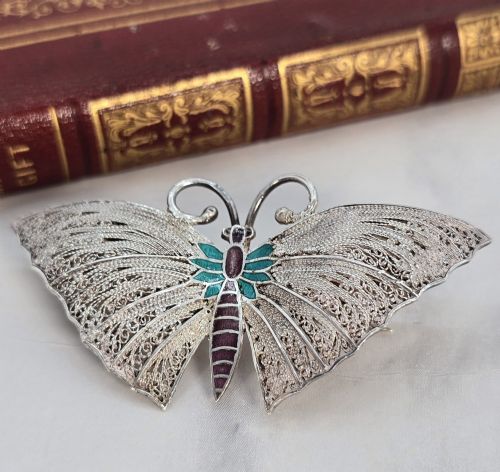
Silversmiths and jewellers constructed the foundations using sterling silver, silver gilt, and various purities of gold, often incorporating filigree wirework to segment the design. These metal bases provided structural compartments for the glass powders applied during the enamelling process.
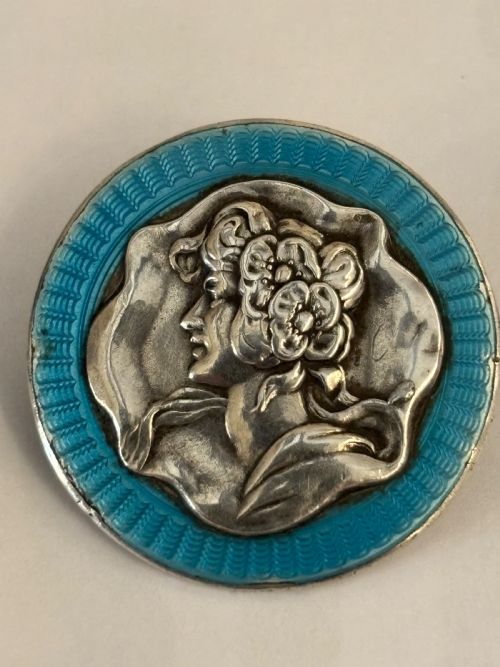
Vitreous enamel involved fusing powdered glass to the metal surface under high kiln heat, creating durable coloured surfaces that could be polished smooth. Techniques such as guilloche relied on machine-engraved metal patterns showing beneath translucent coloured enamels, while plique-a-jour left the enamel unsupported by backing metal to let light pass through like stained glass.
Listings feature extensive examples of mid-century Scandinavian silverwork alongside earlier Edwardian gold and Victorian silver pieces.
What varies in quality
Quality differences depend heavily on the precision of the metalwork and the complexity of the enamelling technique employed by the workshop. Superior examples display even glass distribution without pitting, alongside crisp engine-turned guilloche engraving beneath translucent layers.
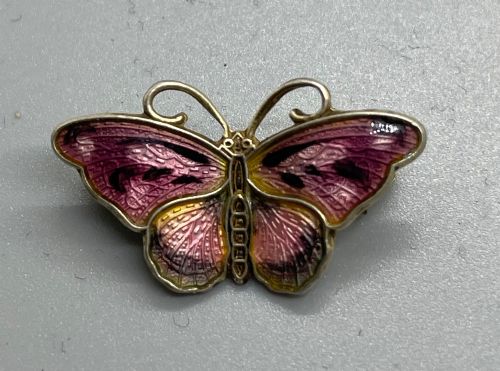
The reputation of the maker and the intricacy of hand-applied details, such as multi-coloured shading on butterfly wings or delicate plique-a-jour cells, distinguish standard production pieces from master-level studio output.
Aksel Holmsen·David Andersen·Hroar Prydz·Ivar T Holth·Bernard Instone·Henry Matthews
The Vintage Enamel Brooch Glossary
- Guilloche
- A decorative technique where a mechanical lathe engraves precise geometric patterns into a metal substrate before translucent enamel is applied over the top.
- Plique-a-jour
- An enamelling technique resembling miniature stained glass, where the enamel is fired within an open wire framework without a backing metal.
- Silver Gilt
- Silver that has been coated with a thin layer of gold, providing a warm yellow metallic finish frequently seen on mid-century Scandinavian pieces.
- Vitrous Enamel
- A material made by fusing powdered glass to a metallic substrate through high-temperature firing, ensuring lasting colour stability.
Vintage Enamel Brooch: Frequently Asked Questions
How do I identify Scandinavian enamel brooches?
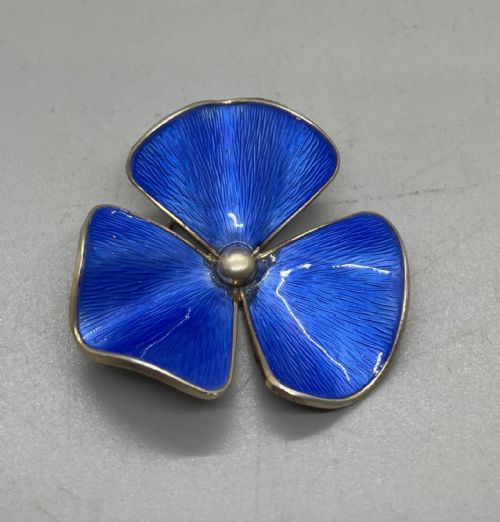
Scandinavian pieces frequently utilise sterling silver or silver gilt paired with vibrant translucent guilloche enamels, often shaped as butterflies, leaves, or minimalist flowers.
Look for maker marks and silver purity stamps such as 925s on the reverse of the setting to confirm Scandinavian origin.
What is the difference between champleve and guilloche?
Guilloche involves machine-engraving a precise pattern into metal beneath translucent enamel, creating repeating wave or ray motifs.
Champleve relies on troughs or cells carved directly into the metal body to hold opaque or coloured enamel pastes.
How should I care for my vintage brooch?
Vitreous enamel is essentially glass and requires gentle handling to prevent chipping against hard surfaces or other items of jewellery.
Clean the metal and glass gently with a soft dry cloth, avoiding harsh chemical dips that might damage vulnerable gilt surfaces or stone settings.
Are all butterfly brooches from the mid century?
While vibrant enamel butterflies became extremely popular during the 1950s and 1960s in Norway, similar winged motifs appeared earlier during the Art Deco period of the 1930s.
Examining the clasp style, metal weight, and hallmark types helps differentiate between earlier twentieth-century iterations and later mid-century designs.